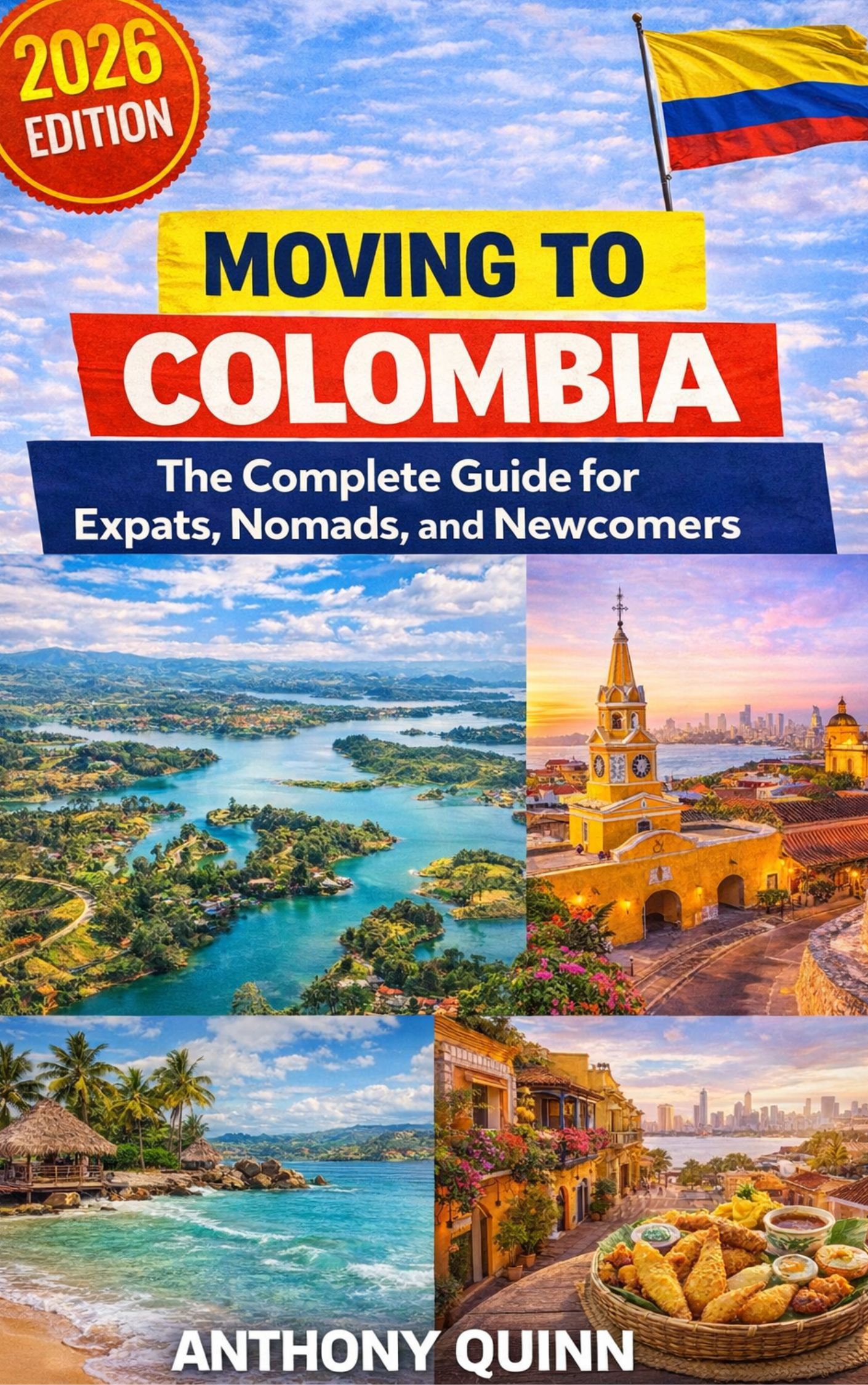
Moving to Colombia in 2026: The Complete Expat Relocation Guide
Colombia has undergone one of the most remarkable national transformations of the past two decades. The country that once dominated international headlines for all the wrong reasons has quietly, steadily, become one of the most exciting relocation destinations in the Americas. Today it draws digital nomads, retirees, young professionals, and families from North America, Europe, and beyond people who have done the research, made the move, and largely never looked back.
The reasons are not hard to understand. The cost of living in Colombia is genuinely low by Western standards without feeling like a sacrifice. The climate across much of the country is extraordinary Medellín’s famously mild “eternal spring” weather is not marketing hyperbole.
The food is satisfying, the people are warm, the landscapes are staggering in their variety, and the pace of life invites a different relationship with time. For remote workers in particular, Colombia in 2026 offers a combination of infrastructure, affordability, and lifestyle quality that is hard to match anywhere in Latin America.
This guide covers everything a serious prospective expat needs to know: visa pathways through Migración Colombia, realistic cost of living figures, the best cities by lifestyle and budget, how to find housing, how to navigate the healthcare and banking systems, and how to actually settle into Colombian daily life in a way that is sustainable and enjoyable.
Why Choose Colombia for Your Next Adventure in 2026
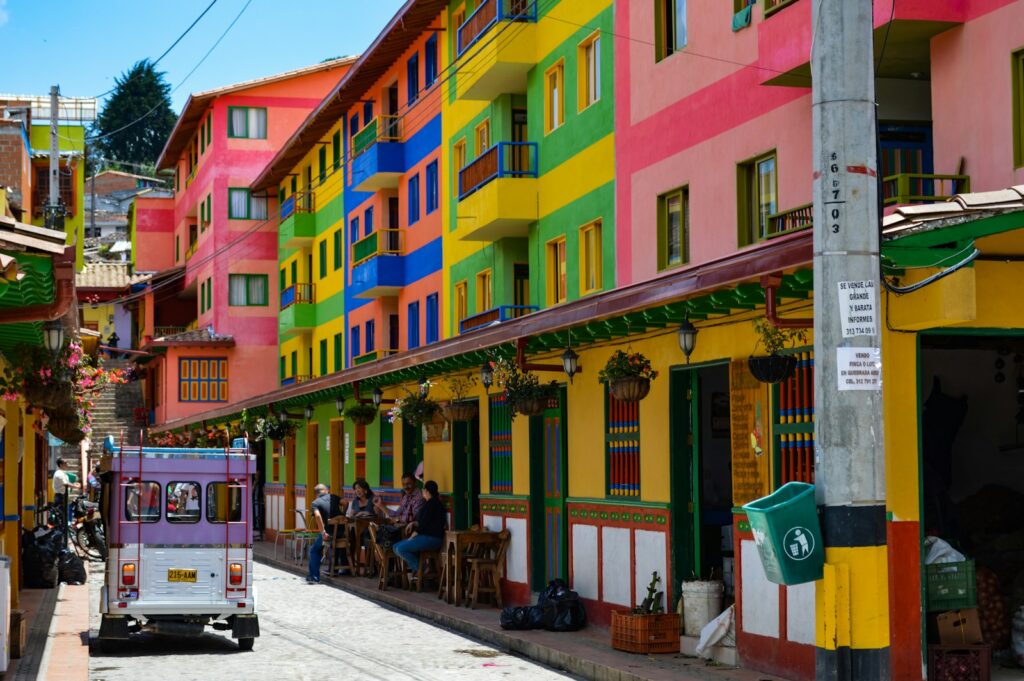
The case for relocating to Colombia starts with geography and climate, because both are genuinely exceptional. Colombia is the only country in South America with coastlines on both the Pacific Ocean and the Caribbean Sea. Within its borders you will find Andean mountain cities with temperate year-round climates, Caribbean beach towns, cloud forests, the Amazon basin, and the lush coffee region of Quindío all within a few hours of each other.
Medellín, sitting at 1,500 metres above sea level in the Andes, enjoys average temperatures between 22 and 28 degrees Celsius throughout the year with no meaningful seasons. Bogotá, higher at 2,600 metres, is cooler and more variable but still mild by the standards of northern Europe or the northern United States. Cartagena on the Caribbean coast is hot and humid year-round which suits some people perfectly and others not at all. The point is that Colombia gives you real options in a single country.
Economically, the value proposition is compelling. A comfortable middle-class lifestyle in Medellín a spacious apartment in a good neighbourhood, regular restaurant meals, travel within the country, private healthcare costs a fraction of what the equivalent would in London, Toronto, or Sydney. For retirees drawing a pension, remote workers earning in US dollars or euros, and location-independent professionals, this differential translates directly into financial freedom and reduced working hours.
The digital nomad community in Colombia has grown substantially, centred primarily on Medellín’s El Poblado and Laureles neighbourhoods. The city’s investment in tech infrastructure through initiatives like Ruta N its innovation and technology hub has attracted startups, coworking spaces, and a genuinely international professional community.
Colombia formally introduced a digital nomad visa in 2022, giving remote workers a legal pathway to remain in the country beyond the standard tourist allowance.
For families, the picture is equally promising: a strong private school sector, improving public infrastructure, and a cultural warmth toward children that makes daily life with kids genuinely pleasant. For retirees, the R visa pathway provides a straightforward route to long-term legal residency for those with a qualifying pension income.
Essential Relocation Checklist Before Moving to Colombia
Arriving in Colombia without adequate preparation creates complications that are entirely avoidable. The country’s bureaucratic systems are functional but require engagement in the right sequence, and several things need to be in place before you leave home.
Begin with your passport. Ensure it has at least six months of validity beyond your intended stay in Colombia this is a standard entry requirement and will be checked on arrival. Make certified copies of key documents and, where required, obtain apostille stamps: birth certificates, marriage certificates, criminal background checks, and academic qualifications may all be needed depending on your visa category. The Hague Convention apostille process varies by country, so check the requirements in your home nation well in advance.
Financial preparation matters more in Colombia than in some other destinations because the banking system takes time to access as a newcomer. Plan for an initial cash buffer ideally $2,000 to $5,000 USD to cover flights, first and last month’s rent, a security deposit, and living expenses while your bank account and residency documentation are established. Currency exchange at authorised cambios in Colombia typically offers better rates than airport exchanges or foreign ATM withdrawals.
For those moving with pets, Colombia’s import requirements are managed by the Instituto Colombiano Agropecuario (ICA). Dogs and cats require a valid rabies vaccination, an international health certificate issued by an accredited veterinarian in the country of origin, and microchipping. Requirements can be updated, so verifying current regulations through the ICA website or your local Colombian consulate before travel is essential.
Job seekers should research the market carefully before assuming Colombian employment is readily available for foreign nationals. The strongest opportunities for non-Spanish speakers exist in multinational companies, international schools, and the tech sector. Spanish proficiency significantly expands the field, and for most local employment, it is effectively a prerequisite.

The Complete Guide
Colombia Visa Requirements and Residency Options Demystified
Colombian immigration is administered by Migración Colombia, the government body responsible for all visa issuance, residency permits, and border control. Understanding which visa category applies to your situation and applying through the correct channel is the foundational step of any successful relocation.
Most nationalities, including citizens of the United States, the United Kingdom, Canada, Australia, and EU member states, can enter Colombia without a visa for tourism and receive a tourist stamp valid for 90 days on arrival, extendable for a further 90 days within the same calendar year. This gives many prospective expats a practical opportunity to explore the country and confirm their decision before committing to a full residency application.
For stays beyond the tourist allowance, or for those who intend to work or establish residency, the main visa categories are:
The M visa (Visa de Migrante) covers a broad range of circumstances including employment with a Colombian company, marriage to a Colombian national, investment, and significantly digital nomad status.
The digital nomad category within the M visa framework requires proof of remote employment or freelance income from outside Colombia, typically demonstrated through employment contracts, bank statements, or client invoices. The income threshold is modest by international standards, set at around three times Colombia’s minimum monthly wage.
The R visa (Visa de Residente) is Colombia’s long-term residency pathway and the goal for most expats planning an indefinite stay. One of the most accessible routes to the R visa is the retiree or pensioner pathway, which requires proof of a monthly pension or passive income of at least approximately $900 USD per month a threshold that many retirees from North America and Western Europe comfortably meet. After holding an M visa for two continuous years, most categories become eligible to apply for the R visa.
The TP-7 investor visa is available to those who invest a minimum of approximately 100 times the Colombian minimum monthly wage in Colombian real estate or business assets a threshold that works out to a relatively modest sum in US dollar terms, making it accessible to a broader range of applicants than similar investor visa programmes elsewhere.
Apply for your visa at least two to four months before your intended move date. Applications are processed online through Migración Colombia’s portal, and required documentation typically includes a valid passport, passport-sized photographs, proof of financial solvency, a clean criminal background check from your home country (apostilled), and valid health insurance coverage for the duration of your intended stay.
Top Places to Live in Colombia for Expats
Colombia’s regional diversity means that the right city for one expat may be entirely wrong for another. The choice between Bogotá’s metropolitan energy, Medellín’s innovation scene, Cartagena’s colonial romance, and the quieter pace of the coffee region is fundamentally a lifestyle decision.
| City / Region | Estimated Monthly Cost (Single Person) | Key Advantages | Key Challenges |
|---|---|---|---|
| Bogotá | $1,000 – $1,800 | Career opportunities, cultural depth, international schools, full urban infrastructure | Altitude adjustment, significant traffic, security variation by neighbourhood |
| Medellín | $800 – $1,500 | Climate, affordability, strong expat community, tech ecosystem, public transport | Rainy seasons in April-May and October-November, gentrification in popular areas |
| Cartagena | $1,200 – $2,000 | UNESCO World Heritage old city, beaches, Caribbean lifestyle | Intense heat and humidity year-round, heavily tourist-oriented economy |
| Pereira | $700 – $1,200 | Coffee region beauty, access to nature, lower costs | Smaller international expat community, limited English infrastructure |
| Santa Marta | $900 – $1,600 | Gateway to Tayrona National Park, coastal lifestyle, growing expat scene | Humidity, neighbourhood safety variation, developing infrastructure |
Bogotá is Colombia’s capital and its undisputed economic centre. With a population of over eight million, it offers the full range of services, employment, and cultural life you would expect from a major Latin American metropolis.
The altitude at 2,600 metres requires an acclimatisation period of a week or two for most people, and the traffic is genuinely challenging. But the city’s restaurant scene is excellent, the cultural infrastructure is impressive, and the international school options important for families are the strongest in the country.
Medellín has become the expat darling of Colombia, and the reputation is largely justified. The city’s turnaround from its difficult past is genuine and visible the urban gondola cable car system connecting hillside comunas to the metro network is both practical and emblematic of that transformation.
El Poblado and Laureles are the primary expat neighbourhoods, with Laureles increasingly preferred by longer-term residents for its more authentic local character and slightly lower costs. The coworking ecosystem is mature, the coffee culture excellent, and the social scene is active.
For those drawn to the Caribbean, Cartagena offers an extraordinary physical setting a walled colonial city of immense beauty, just minutes from beaches. It is, however, expensive by Colombian standards due to its tourism economy, and the heat is not for everyone. Santa Marta, further along the coast, is more affordable and offers the additional appeal of proximity to Tayrona National Park, one of Colombia’s most spectacular natural reserves.
The Eje Cafetero the coffee axis centred on Pereira, Armenia, and Manizales suits those who want a quieter, nature-connected life at a genuinely low cost. It is not a base for those dependent on international travel connections or urban professional networks, but for retirees or remote workers seeking tranquillity amid extraordinary landscape, it is worth serious consideration.
Navigating Housing: Rentals and Buying in Colombia
The Colombian rental market is accessible to foreigners without the institutional barriers that complicate housing in some other countries. The primary listing platforms are FincaRaíz and OLX Colombia, both of which list apartments and houses across all major cities, with prices in Colombian pesos (COP). For furnished short-stay options during an initial arrival period, Airbnb and local furnished rental agencies provide flexibility while you get your bearings.
In Medellín, a well-located unfurnished one-bedroom apartment in Laureles or Envigado costs between $400 and $700 USD per month at current exchange rates. El Poblado, the most popular expat neighbourhood, commands a premium similar apartments run $600 to $1,000. In Bogotá, equivalent apartments in Chapinero or Usaquén range from $500 to $900.
These figures shift with exchange rate movements, which can be significant: Colombia’s peso has shown meaningful volatility against the dollar and euro in recent years, which can work in the favour of dollar or euro earners when the COP is weak.
The standard rental contract (contrato de arrendamiento) in Colombia is a twelve-month agreement, typically requiring a deposit of two to three months’ rent and a local guarantor (codeudor) a Colombian resident who co-signs the lease.
Some landlords in expat-heavy neighbourhoods waive the codeudor requirement for foreigners with demonstrable income, or accept a larger deposit in lieu. Working with a reputable local real estate agent (agente inmobiliario) for your first lease simplifies the process and reduces the risk of misunderstanding contract terms.
Utilities electricity, water, gas, and internet are billed separately from rent and vary significantly based on usage and the estrato system, Colombia’s socioeconomic zoning classification that determines utility tariff levels. Higher estrato properties (4, 5, and 6) pay full or above-tariff rates; lower estrato areas receive subsidies. Expats typically rent in estrato 4 to 6 areas, where combined utilities for a one-bedroom apartment run approximately $80 to $150 USD per month.
Foreign nationals can legally purchase property in Colombia, and many do. The process involves working with a Colombian notary (notaría) to draft and register the sale agreement, obtaining a foreign exchange declaration (Declaración de Cambio) for funds transferred from abroad, and paying the applicable transfer taxes and registration fees.
For those purchasing through a development project, fiducia trust arrangements are common a legal mechanism that holds funds in escrow during construction. Taking independent legal advice from a Colombian property lawyer before any purchase is strongly recommended.
The Complete Guide
Real Cost of Living in Colombia: 2026 Budget Guide
Colombia’s cost of living is one of its most compelling draws for expats from higher-cost countries, and the gap between Colombian prices and those of North America or Western Europe is substantial across almost every spending category.
Food is where the value becomes most immediately apparent. Eating at a local restaurante corriente the canteen-style lunch spots that serve a set meal of soup, a main course, juice, and sometimes dessert typically costs between $2 and $4 USD. Street food is cheaper still: arepas, empanadas, and fresh fruit from market stalls provide filling, nutritious meals for under $2.
Cooking at home from a local supermarket like Éxito or Jumbo, or from a neighbourhood plaza de mercado (covered food market), costs a single person approximately $150 to $250 USD per month depending on dietary preferences and how much imported or specialty food is included in the basket.
Transport is extremely affordable. Medellín’s integrated metro, cable car, and bus system (the Metro de Medellín) is efficient and costs around 3,000 COP per journey under $1 USD. Bogotá’s TransMilenio BRT network is similarly priced. Taxis and app-based ride services like Uber, InDriver, and Cabify are used widely and are inexpensive by international standards a 20-minute journey rarely exceeds $3 to $5 USD.
Healthcare through Colombia’s EPS (Entidades Promotoras de Salud) system is discussed in the following section, but for budgeting purposes, contributions to an EPS plan run between $50 and $150 USD per month for an independently registered contributor, depending on declared income. Out-of-pocket costs for GP consultations are typically $10 to $20 USD even outside the EPS system.
Internet connectivity is good in major cities and increasingly competitive. Fibre broadband plans from providers like Claro, ETB, or Tigo run approximately $20 to $40 USD per month for speeds that are adequate for remote work and video conferencing. Co-working spaces provide an alternative for nomads, with day passes and monthly memberships at established spaces like WeWork Medellín or Selina running $100 to $300 USD per month.
A realistic monthly budget for a single person living comfortably in Medellín including rent in a good neighbourhood, food, transport, healthcare, entertainment, and occasional travel falls between $800 and $1,500 USD. Bogotá sits at the higher end of the range; smaller cities and coffee region towns comfortably below it.
Settling In: Tackling Colombian Bureaucracy Post-Arrival
Once you have your visa and your accommodation sorted, the next priority is establishing your legal and administrative presence in Colombia. As with any country’s bureaucratic system, the process is more straightforward than it appears once you understand the sequence.
The first step for visa holders is obtaining your cédula de extranjería the foreign national identity card issued by Migración Colombia. This document becomes your primary form of identification within Colombia and is required to open bank accounts, sign contracts, register for healthcare, and engage with most government services. Apply at a Migración Colombia service centre with your passport and valid visa. The card typically takes two to four weeks to arrive.
Banking follows, and it is one of the most commonly cited frustrations among new expats. Colombia’s major banks Bancolombia, Davivienda, BBVA Colombia, and Banco de Bogotá serve foreigners with residency visas and a cédula de extranjería. The documentation requirements are specific and vary by institution, but typically include your passport, cédula, proof of address, and evidence of income or financial solvency.
Some banks require a Colombian RUT tax registration number, which adds an additional step. Digital banking platforms like Nequi (owned by Bancolombia) can serve as interim accounts while the formal banking process is completed.
Healthcare registration follows the banking step. Formally employed workers are enrolled in the EPS system through their employer. Independent residents self-employed workers and retirees contribute as cotizantes independientes, calculating their monthly contribution as a percentage of declared income and registering directly with an EPS provider.
Major providers include Sura EPS, Sanitas, and Nueva EPS, each with different networks of affiliated clinics and hospitals. The Ministerio de Salud website provides the official framework for understanding your options.
Tax registration through Colombia’s tax authority, the DIAN (Dirección de Impuestos y Aduanas Nacionales), is required for anyone earning income in Colombia or making significant financial transactions. The RUT (Registro Único Tributario) is the basic tax identification document and is obtained through the DIAN portal.
Colombia taxes residents on worldwide income in some circumstances, and the rules around fiscal residency are worth understanding with the help of a local accountant (contador público) before your first full year of residency is complete.
Healthcare, Schools, and Family Life in Colombia
For expats accustomed to the healthcare systems of the United States or the United Kingdom, Colombia’s medical landscape offers some genuine surprises mostly positive ones. The country’s private healthcare sector in particular delivers a quality of care that competes with the best in Latin America and compares favourably with many developed-world systems, at a fraction of the cost.
The EPS system, Colombia’s managed care health insurance framework, covers approximately 80% of the cost of basic consultations, specialist visits, hospitalisation, and prescription drugs for enrolled members. A GP consultation at an affiliated clinic typically costs the patient between $10 and $20 USD after the co-payment (copago). For routine and emergency care, the EPS system is generally adequate, though wait times at public EPS-affiliated facilities can be significant.
For expats who prefer faster access and more consistent English-language capability, private clinics represent genuinely excellent value. Facilities like Clínica del Country and Clínica de Marly in Bogotá, or Clínica Las Américas and Clínica SOMA in Medellín, offer specialist consultations, diagnostics, and elective procedures at rates that are a fraction of equivalent costs in the United States.
Many expats maintain both an EPS membership (for major incidents and hospitalisation) and a private health insurance policy (for routine care and faster access), with combined monthly costs typically running $100 to $200 USD.
For families with school-age children, the choice between public and private education in Colombia is effectively made for most expat families by language state schools operate entirely in Spanish, which creates a meaningful barrier for children who arrive without the language. Integration programmes exist in some schools, but the pace of Colombian public education assumes Spanish fluency from the outset.
Private bilingual schools range from affordable Colombian bilingual institutions at $2,000 to $5,000 USD per year to fully international schools delivering US, IB, or British curricula at $10,000 to $20,000 USD annually. Colegio Nueva Granada in Bogotá is among the most established international schools in the country, with a largely American curriculum and a well-developed programme for English-speaking children.
In Medellín, Colegio Montessori and the American School of Medellín serve similar needs. For families where long-term Colombia residency is the plan, enrolling children in a reputable bilingual Colombian school rather than a fully international institution accelerates Spanish acquisition and integration at a lower cost.
Embracing Colombian Culture and Daily Expat Life
Colombia rewards cultural engagement generously. The people are and this is not cliché genuinely warm and welcoming to foreigners who make an honest effort to engage with the country on its own terms. The paisa culture of Antioquia (the department in which Medellín sits) in particular is known for its hospitality, entrepreneurialism, and pride in regional identity.
Spanish is the non-negotiable key. Unlike parts of Western Europe or Southeast Asia where expats can function indefinitely in English, Colombia outside of expat-heavy tourist areas operates almost entirely in Spanish. Investing in Spanish language learning before and immediately after arrival pays dividends across every area of daily life from navigating bureaucracy to building genuine friendships to negotiating rental terms without an intermediary.
Local language schools in Medellín and Bogotá offer intensive courses that can take a beginner to functional conversational level in two to three months. The Cervantes Institute and various local institutions accredited by the Colombian Ministry of Education provide structured instruction for those who prefer a formal curriculum.
Socially, InterNations Colombia hosts regular events in Bogotá and Medellín that provide an accessible entry point into the English-speaking expat community. Facebook groups like Expats in Medellín or Bogotá Expats are active and genuinely useful for practical advice from people who have recently navigated the same questions you are likely asking. Over time, most settled expats find their social circle naturally diversifies to include Colombian friends and colleagues, which meaningfully enriches the experience.
Colombia’s festival culture is one of its most joyful aspects. The Carnaval de Barranquilla in February is one of the largest and most vibrant carnivals in the world, a UNESCO Intangible Cultural Heritage event. Medellín’s Feria de las Flores in August transforms the city with silleteros carrying elaborate flower displays.
Cali hosts its famous Cali Vive festival in December, centred on salsa a dance form so embedded in the city’s identity that taking at least a few salsa classes there is less a tourist activity than an act of cultural respect.
A few practical notes on daily life: urban transport in Colombian cities is best navigated through a combination of the metro (in Medellín), app-based taxis, and in appropriate contexts moto-taxis. Personal security awareness is important and context-dependent.
The major expat neighbourhoods in Bogotá and Medellín are generally safe by Latin American standards, but the blanket caution that applied to Colombia a decade ago has been replaced by a more nuanced picture that varies by city, neighbourhood, and time of day. Staying informed through local expat networks about current conditions in specific areas is good practice.
Smart Savings for Your Colombia Move
Relocating to Colombia is already substantially cheaper than moving to most Western countries, but there are meaningful ways to reduce costs further without compromising the quality of the experience.
For the move itself, international freight to Colombia whether from North America, Europe, or elsewhere is most cost-effectively handled through groupage or shared container shipping. Carriers operating the route include established international freight companies that consolidate multiple customers’ goods into a single container, charging by volume. For smaller moves, international couriers like DHL and FedEx provide door-to-door service for boxes, though per-kilogram rates are higher than sea freight.
For flights, Colombia is well served by international carriers from major hubs, with the main international airports at Bogotá’s El Dorado (the busiest in Latin America), Medellín’s José María Córdova, and Cartagena’s Rafael Núñez. Within Colombia, the domestic airline market is competitive: Avianca, LATAM Colombia, and low-cost carrier Viva Air (where operational) offer routes between cities at prices that make internal travel accessible. Booking in advance on Avianca’s website typically yields the best fares.
New fiscal residents in Colombia may benefit from income tax exemptions under certain circumstances during the first few years of residency the renta exenta provisions for new residents are worth exploring with a Colombian tax accountant, as the eligibility criteria and applicable exclusions have changed in recent years and professional advice on current rules is essential.
For digital nomads and remote workers, Medellín’s coworking ecosystem is mature and competitive. Beyond WeWork, a range of independently operated spaces Selina, Atomhouse, and various neighbourhood-specific options offer flexible memberships at rates that undercut their equivalents in European or North American cities significantly. Many include reliable high-speed internet, meeting rooms, printing facilities, and the social infrastructure that matters a great deal to people working in relative isolation.
Everyday savings accumulate through straightforward choices: shopping at local markets and supermarkets rather than imported-goods stores, eating lunch at neighbourhood restaurants rather than tourist-oriented establishments, and using local transport rather than private cars.
The Colombian peso’s volatility against hard currencies means that dollar and euro earners experience their purchasing power fluctuate with exchange rates tracking the COP/USD rate through Banco de la República and timing larger peso purchases accordingly is a habit worth developing.
The Complete Guide
The Bottom Line on Moving to Colombia
Colombia in 2026 is not the Colombia of twenty years ago. That story important to understand for context, not to define the present has given way to something considerably more interesting: a country with genuine momentum, improving infrastructure, a sophisticated urban culture, and an increasingly mature expat infrastructure that makes the relocation process more manageable than ever.
What Colombia asks of you in return for everything it offers is not unreasonable: a willingness to learn Spanish, an honest engagement with the realities of living in a developing country where infrastructure and services are uneven, and the cultural flexibility to approach daily life on Colombian terms rather than imported ones. Expats who bring those qualities tend to thrive, to stay longer than they planned, and to find themselves defending the country enthusiastically to anyone back home who raises an eyebrow at the choice.
The practical steps the visa applications, the banking, the healthcare registration, the housing search are solvable problems. This guide gives you the map. The rest is yours to discover.