Moving to Peru in 2026: The Complete Expat Relocation Guide
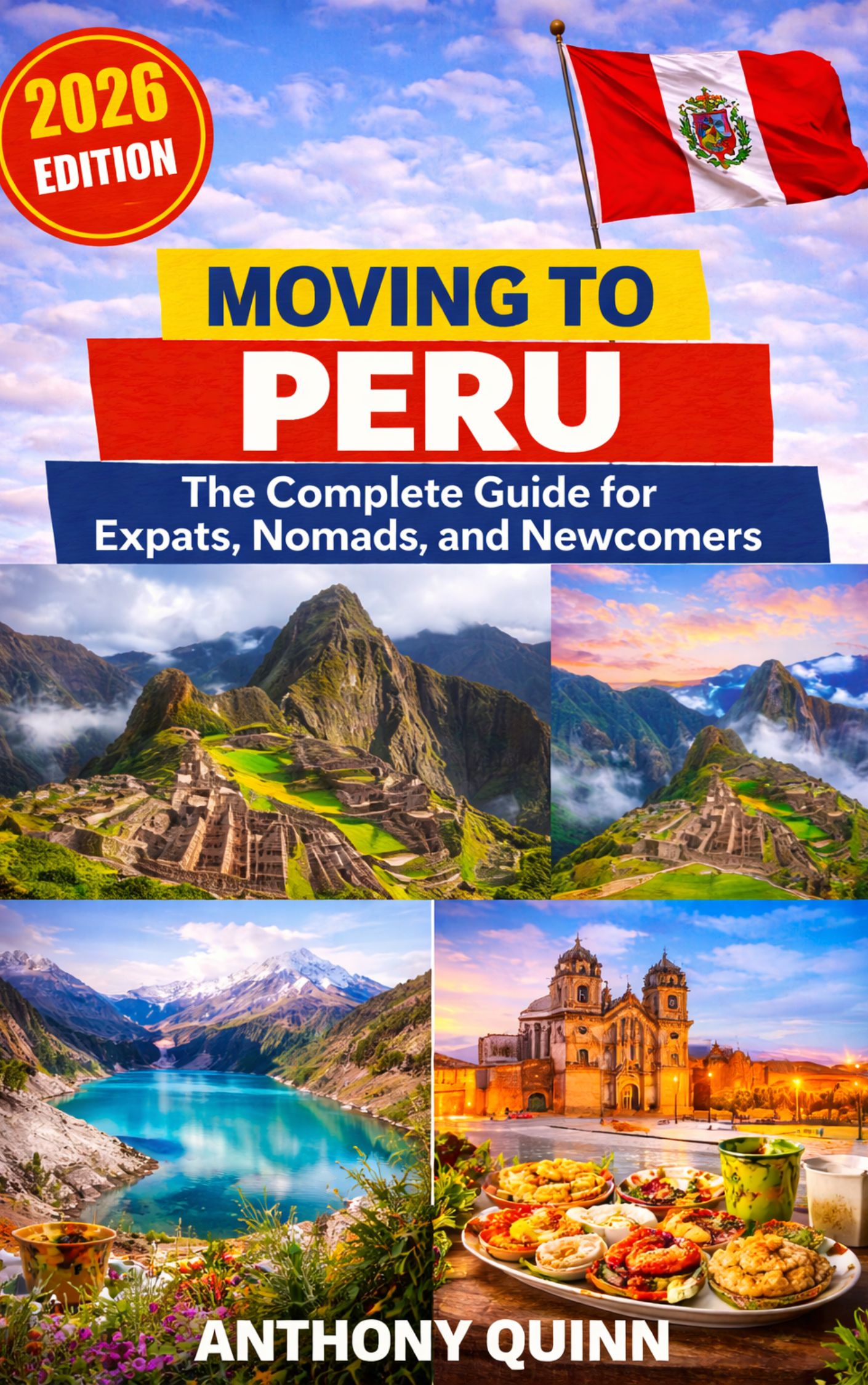
Peru is one of those countries that gets under your skin before you have even decided to stay. Most people arrive for Machu Picchu, stay for the food, and leave quietly wondering whether they could actually build a life here. Many of them come back and do exactly that.
The appeal is layered and genuinely difficult to reduce to a single pitch. Peru offers some of the most dramatic and varied geography on the planet the Pacific coastline, the high Andes, the Amazon basin all within the borders of a single country. Lima has emerged as one of Latin America’s most compelling cities, with a restaurant scene that has attracted global recognition and a coastal urban energy that surprises people who arrive expecting something more provincial.
Cusco offers something entirely different: a highland city built on Inca foundations, surrounded by the Sacred Valley and trail networks that draw serious trekkers from every corner of the world. And between these poles lies Arequipa, Trujillo, Huaraz, and dozens of smaller towns, each with its own character and cost profile.
For expats whether retirees drawn by the affordable cost of living, digital nomads attracted by Peru’s improving infrastructure and low overheads, or families seeking something more adventurous than the suburban familiar Peru in 2026 represents a genuinely compelling proposition.
This guide walks through everything you need to know to make the move successfully: visas, residency pathways, cost of living, housing, healthcare, and the practical realities of daily life.
Why Relocate to Peru in 2026
The case for Peru starts with economics and stays interesting long after the budget comparisons are done. For earners in US dollars, Canadian dollars, British pounds, or euros, Peru’s cost of living creates a financial differential that is difficult to overstate. A comfortable lifestyle in Lima a well-located apartment, regular dining out at good restaurants, private healthcare, cultural activities costs a fraction of what the equivalent would in any major Western city. Outside Lima, that differential widens further.
But Peru is not simply a cheap option. It is, increasingly, a genuinely sophisticated one. Lima’s culinary scene has attracted international attention through chefs like Gastón Acurio, whose work at Astrid y Gastón and beyond helped establish Peru as one of the world’s great food destinations.
Ceviche, tiradito, lomo saltado, and causa are not just national dishes they are expressions of a cuisine that draws on indigenous Andean, Spanish colonial, Japanese, and Chinese influences in ways that produce something truly distinctive.
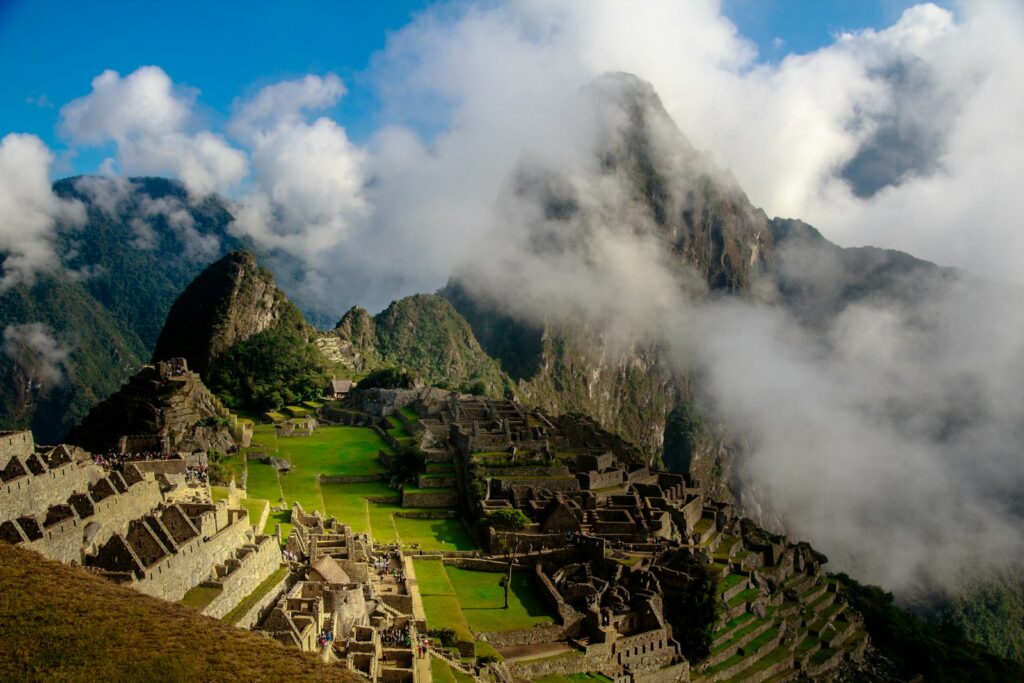
Culturally, Peru is extraordinarily rich. The Inca civilisation left behind not just Machu Picchu the iconic site that draws over a million visitors annually but an entire landscape of archaeological wonders: the Sacred Valley, Pisac, Ollantaytambo, Chan Chan on the northern coast, and the Nazca Lines in the southern desert. Living in Peru means having access to all of this not as a tourist attraction but as the background of ordinary life, which has a way of quietly recalibrating your sense of what is remarkable.
For remote workers, Peru’s digital nomad infrastructure has improved significantly. Lima in particular has seen real investment in coworking spaces and reliable high-speed internet, and the city’s time zone (GMT-5 year-round, with no daylight saving time) aligns conveniently with US East Coast business hours.
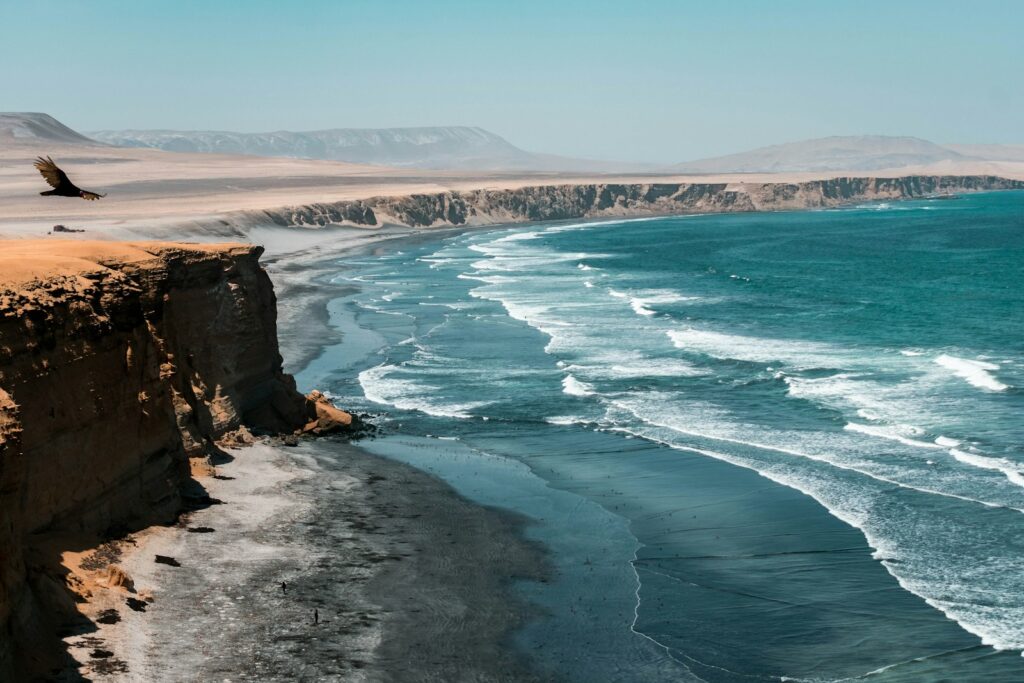
The cost of maintaining a professional home office or coworking membership in Lima or Arequipa is a fraction of equivalent costs in North America or Europe, and the lifestyle dividend weekends in the Sacred Valley, weekend trips to Paracas or Huacachina is hard to match elsewhere.
Retirees have a specific and well-established pathway through the rentista visa, which we cover in detail below. Peru has a long history of welcoming foreign retirees, and the combination of affordable private healthcare, low cost of living, and cultural richness makes it a compelling retirement destination for those willing to engage with a country that operates on its own terms.

The Complete Guide
Pre-Move Relocation Checklist for Peru
Moving to Peru requires more advance preparation than many expats anticipate, particularly around documentation. Peru’s administrative systems function best when you arrive with a complete and properly authenticated set of personal documents, and gaps in your paperwork create delays that are far more frustrating to resolve from within the country than they would have been to address before departure.
Start with your passport and ensure it carries at least six months of validity beyond your intended stay. Peru enforces this requirement at the border, and arriving with a passport close to expiry will cause problems. Make multiple certified copies and store them separately from originals both physically and digitally.
Gather and apostille key documents. The apostille is a form of international authentication governed by the Hague Apostille Convention that validates documents for use in member countries, of which Peru is one.
Documents you are likely to need include your birth certificate, marriage certificate (if applicable), criminal background check from your home country, academic qualifications if relevant to employment, and proof of pension or income if applying for a rentista visa. The apostille process varies by country in the United States, for example, it is handled at the state level through the Secretary of State’s office so check the requirements well in advance.
Budget realistically for the initial phase. The costs of relocating to Peru vary enormously depending on origin country and volume of belongings, but a working budget of $1,500 to $4,000 USD covers flights, initial shipping costs, and a two to three month financial buffer for living expenses while you establish banking and income flows in the country.
Shipping household goods by sea freight from the United States or Europe is typically the most cost-effective option for larger volumes; DHL and international freight consolidators handle smaller consignments.
If you are relocating with pets, Peru’s import requirements are administered by SENASA the Peruvian agricultural and food safety authority. Dogs and cats require a current rabies vaccination, an international veterinary health certificate issued by an accredited vet in your country of origin, and for some origins a SENASA import permit obtained in advance. Requirements can change and vary by country of origin, so confirming current rules with the Peruvian consulate in your home country before travel is essential.
Peru Visa Requirements and Residency Pathways Simplified
Peru’s immigration system is administered by Migraciones Peru, the government body responsible for all visa processing, residency permits, and border control. Understanding where you fit within this system before you arrive is the single most important piece of preparation you can do.
Citizens of most Western countries including the United States, Canada, the United Kingdom, Australia, and EU member states can enter Peru without a prior visa and receive a tourist stamp on arrival valid for 90 days, extendable at a Migraciones office for a further 90 days within the same calendar year, giving a maximum of 183 days of tourist status in any twelve-month period.
For many prospective expats, this provides a practical window to explore the country and assess locations before committing to a formal residency application.
For stays beyond the tourist allowance, or for those who intend to work, retire formally, or establish long-term residency, the main pathways are as follows.
The Carné de Extranjería Peru’s foreign national identity card is the physical residency document that results from a successful visa application and forms the basis of legal long-term residence. It is issued by Migraciones and must be renewed periodically based on the underlying visa category.
The worker or employee visa (visa de trabajador) is sponsored by a Peruvian employer and requires proof of a formal employment contract. Peru’s immigration law imposes a general rule that foreign workers should not exceed 20% of a company’s workforce, though this is applied with some flexibility in practice, particularly for specialist roles. Independent workers and freelancers operating outside formal employment may find the investor or entrepreneur visa pathways more relevant.
The rentista visa Peru’s retiree residency pathway is among the most accessible and well-used by expat retirees from North America and Europe. It requires proof of a regular, guaranteed monthly income of at least approximately $1,000 USD per month from a pension, annuity, or other passive source.
The income threshold is modest by the standards of most Western pension systems, and the visa provides a stable legal basis for long-term residency in the country. Applications are made through the Peruvian consulate in your country of residence before arrival, not on the ground in Peru.
The investor visa is available to those who make a qualified investment in Peruvian business or real estate. Thresholds and qualifying criteria are set by Migraciones and have been subject to periodic revision, so verifying current requirements through an authorised Peruvian immigration lawyer or the official Migraciones portal before proceeding is advisable.
Students undertaking formal academic programmes at recognised Peruvian institutions qualify for the student visa, typically processed through the institution itself.
Begin any visa application at least two to three months before your intended move date. Required documentation across most categories includes a valid passport, passport photographs, a completed application form, a criminal background check from your home country (apostilled), proof of financial solvency, and evidence of health insurance coverage valid in Peru.
Best Places for Expats to Live in Peru
Peru’s geographic and cultural diversity means that the right city for one expat is entirely wrong for another. The choice between Lima’s cosmopolitan energy, Cusco’s highland mysticism, Arequipa’s colonial elegance, and the raw natural intensity of Huaraz depends on your priorities, your health (altitude is a serious variable), your income source, and how much connection to international infrastructure you need.
| City / Region | Estimated Monthly Cost (Single Person) | Key Advantages | Key Challenges |
|---|---|---|---|
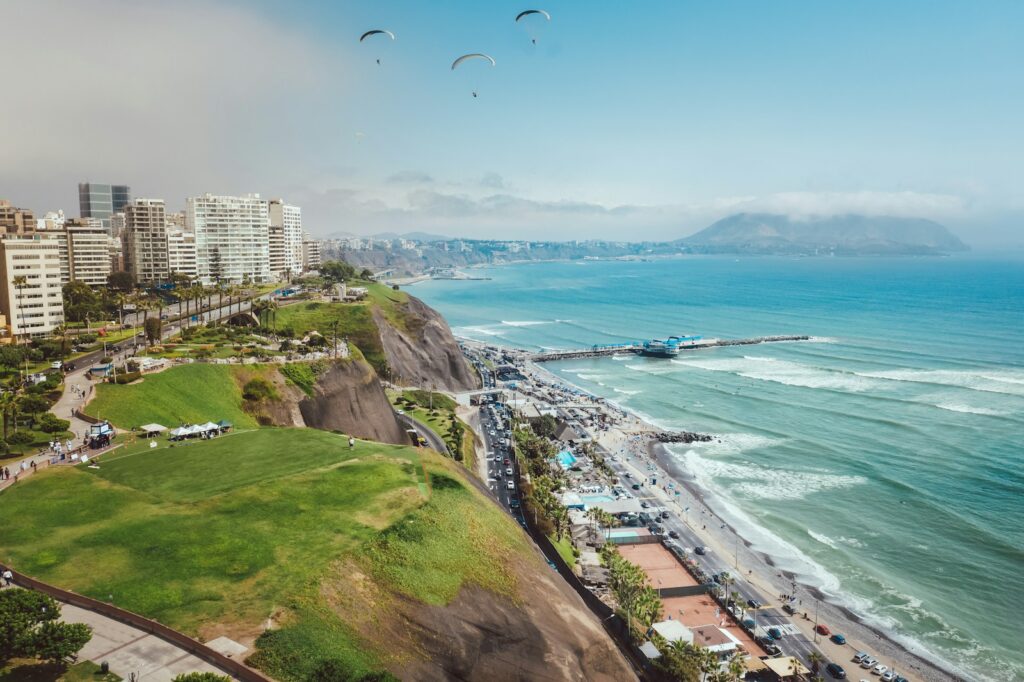
| Lima | $800 – $1,500 | Largest job market, international airport, food scene, beaches in Miraflores and Barranco, strong expat networks | Heavy coastal fog (garúa) June to November, significant traffic congestion, air quality in some districts |
| Cusco | $600 – $1,200 | UNESCO World Heritage city, extraordinary Inca history, gateway to Machu Picchu and Sacred Valley, growing expat community | Altitude at 3,400m requires acclimatisation, limited specialist healthcare, cold nights year-round |
| Arequipa | $700 – $1,300 | Stunning colonial architecture (UNESCO-listed), milder altitude than Cusco, active volcano backdrop, strong local culture | Occasional seismic activity, smaller expat scene than Lima |
| Trujillo | $500 – $1,000 | Warm coastal climate, proximity to Chan Chan and Huanchaco beach, lower cost base, relaxed pace | Limited international connections, smaller English-speaking professional community |
| Huaraz | $400 – $900 | World-class trekking in the Cordillera Blanca, extraordinary mountain scenery, very low cost of living | Remote, limited infrastructure, pronounced rainy season, not suited to those needing urban amenities |
Lima is the default for most first-time expats and for sound reasons. As Peru’s capital and economic centre, it contains the country’s best hospitals, the strongest private school sector, the most developed professional job market, and the only major international airport.
The districts of Miraflores, San Isidro, and Barranco are particularly popular with expats all three offer good security, proximity to the Pacific coastline cliffs and Malecón walking paths, a dense concentration of restaurants and cafés, and reliable access to English-speaking services.
Barranco, the artistic and bohemian district immediately south of Miraflores, has become particularly popular with younger expats and digital nomads for its creative atmosphere and slightly lower rental costs than its northern neighbour.
Cusco demands a particular kind of expat. The city sits at 3,400 metres above sea level, and altitude sickness (soroche) is a real and potentially serious health consideration that everyone experiences differently.
Those who adapt well find themselves living in one of the most historically rich urban environments on earth, with immediate access to the Sacred Valley, Machu Picchu, and a hiking culture that is genuinely extraordinary. The expat community is smaller and more transient than Lima’s, but tight-knit, and the city has developed a solid infrastructure of cafés, restaurants, and coworking spaces catering to the international population.
Arequipa occupies a compelling middle ground. At 2,300 metres, its altitude is significant but far more manageable than Cusco’s, and the city’s colonial centre built largely from white volcanic sillar stone is among the most beautiful in South America. The local food culture is renowned throughout Peru, the pace of life is relaxed, and the cost of living is meaningfully lower than Lima without the infrastructure compromises of smaller cities.
Finding Housing: Rentals and Purchases in Peru
Peru’s rental market is generally accessible to foreigners, and prices remain low by international standards, particularly outside Lima. The primary property listing platforms are Urbania.pe and Adondevivir.com, both of which list apartments and houses across all major cities in Peruvian soles (PEN). For furnished short-term rentals during the initial settling-in period, Airbnb has solid coverage in Lima, Cusco, and Arequipa.
In Miraflores and San Isidro Lima’s most popular expat districts a furnished one-bedroom apartment typically rents for between $600 and $1,000 USD per month at current exchange rates. Barranco offers comparable quality at slightly lower prices. In Cusco, a comfortable furnished apartment in the San Blas or Cusco Centro area runs between $400 and $700 USD.
In Arequipa, similar accommodation is available for $350 to $600 USD. These figures are subject to exchange rate variation Peru’s sol has shown relative stability against the dollar compared to some regional peers, but monitoring the PEN/USD rate through the Banco Central de Reserva del Perú is prudent for those with dollar income.
The standard rental agreement (contrato de arrendamiento) in Peru is typically a twelve-month contract, renewable annually, with a deposit of one to two months’ rent required upfront. Unlike some other Latin American countries, Peru does not generally require a local guarantor for foreigners with demonstrable income and valid residency documentation, which simplifies the process. Contracts should be reviewed carefully ideally with the assistance of a local bilingual attorney or a trusted bilingual real estate agent before signing.
Utilities are billed separately from rent. Electricity through Luz del Sur or Enel, water through Sedapal (in Lima), and gas connections are standard costs that add approximately $50 to $100 USD per month for a one-bedroom apartment with moderate usage. Internet connectivity from providers like Movistar, Claro, or Entel runs $30 to $50 USD per month for fibre broadband of adequate speed for remote work.
Foreign nationals can legally purchase property in Peru, and many do. The process involves working with a Peruvian notary (notaría) to formalise the transaction, registering the transfer with the Superintendencia Nacional de los Registros Públicos (SUNARP), and paying applicable transfer taxes.
For purchases made with funds transferred from abroad, proper documentation of the currency exchange through Peruvian financial institutions is important for eventual resale. Engaging an independent Peruvian property lawyer before any purchase transaction is strongly recommended.
The Complete Guide
Peru Cost of Living Breakdown for 2026
Peru’s cost of living is among the lowest in South America for expats earning in hard currencies, and the gap between Peruvian prices and those of North America or Western Europe is substantial and consistent across most spending categories.
Food represents the most immediately visible saving. A set lunch menu (menú del día) at a local restaurant typically a soup, a main course, a drink, and sometimes dessert costs between $2 and $4 USD virtually everywhere in the country. Street food is cheaper still: anticuchos, picarones, and fresh ceviche at a market stall are rarely more than $1 to $2 USD.
Cooking at home from a local market or supermarket (Wong, Plaza Vea, and Metro are the main chains) costs a single person approximately $150 to $250 USD per month depending on how many imported or specialty items are included.
Transport costs are extremely low by international standards. Lima’s bus and combi network the informal network of minibuses (combis) that covers the city extensively charges fares of approximately $0.30 to $0.50 USD per journey.
The formal Metropolitano BRT bus system and electric Tren Eléctrico metro line in Lima are comparably priced. App-based taxis through InDriver, Beat, or Uber operate across major cities and are inexpensive a 20-minute journey in Lima rarely exceeds $3 to $5 USD. In Cusco, taxis and app-based rides are similarly cheap.
Healthcare costs are detailed below, but for budgeting purposes, contributions to EsSalud as an independent contributor run approximately $30 to $100 USD per month. Private consultations at quality clinics in Lima cost $20 to $50 USD, with specialist appointments running somewhat higher.
Private health insurance plans from providers like Rimac Seguros or Pacífico Seguros provide additional coverage at $50 to $150 USD per month depending on age and coverage level.
Internet and telecommunications are affordable. Mobile plans with data from Claro, Movistar, or Entel cost $15 to $30 USD per month. Home broadband runs $30 to $50 USD per month.
A realistic monthly budget for a single person living comfortably in Miraflores, Lima including rent, food, transport, healthcare, entertainment, and miscellaneous falls between $800 and $1,500 USD. In Arequipa or Trujillo, the equivalent lifestyle costs $600 to $1,000. In Huaraz or smaller Andean towns, the same budget provides significantly more.
Bureaucracy Essentials After Landing in Peru
Settling into Peru’s administrative systems requires patience and a methodical approach. The sequence matters each step builds on the previous one and attempting to shortcut the process typically creates complications that take more time to resolve than the shortcut saved.
The first administrative priority for visa holders is obtaining the Carné de Extranjería Peru’s foreign national identity card from Migraciones. This document becomes your primary form of identification within Peru and is required for bank account applications, property contracts, healthcare registration, and tax enrolment.
The application is made at a Migraciones office with your passport, valid visa, passport-sized photographs, and the applicable processing fee. Processing times vary but typically run two to six weeks.
Simultaneously or shortly after, obtain your RUC (Registro Único de Contribuyentes) Peru’s tax identification number from SUNAT, the national tax authority. The RUC is required for bank account applications and for any formal economic activity in Peru. Registration is done in person at a SUNAT office or through the online portal, and the process is relatively straightforward with a valid passport and Carné de Extranjería.
Banking is the next step and has become more accessible in recent years, though the documentation requirements remain specific. Major Peruvian banks including BCP (Banco de Crédito del Perú), Interbank, BBVA Peru, and Scotiabank Peru serve foreign nationals with valid residency documentation.
Required documents typically include your passport, Carné de Extranjería, RUC number, and proof of address. Some banks require an initial minimum deposit. Digital banking apps have improved significantly BCP’s Yape and Interbank’s app are well-regarded by local users and provide day-to-day convenience once the account is established.
Healthcare registration follows. Options include enrollment in EsSalud Peru’s state social health insurance system as an independent contributor (asegurado potestativo), or taking out private health insurance. EsSalud provides access to a network of public hospitals and clinics, with contributions based on declared income.
Private insurance from providers like Rimac or Pacífico offers faster access, higher-quality facilities, and English-speaking care in some cases, and many expats hold both.
Tax obligations in Peru are administered through SUNAT. Peru taxes residents on Peruvian-source income, with a separate regime applying to income from abroad depending on residency status and income type. The rules are nuanced enough that engaging a Peruvian contador público (certified public accountant) for your first year of residency is worthwhile the cost is low and the peace of mind is considerable.
Healthcare, Education, and Family Relocation in Peru
For families and retirees, the quality and accessibility of healthcare and schooling are often decisive factors in a relocation decision. Peru’s record on both is mixed but improving excellent at the top end of the private sector, more variable in public provision.
Lima’s private healthcare sector is genuinely impressive. Facilities like Clínica Anglo Americana, Clínica San Pablo, and Clínica Ricardo Palma deliver specialist care, diagnostics, and surgical procedures at a standard that rivals major international medical centres, at a fraction of comparable costs in the United States or Western Europe.
English-speaking physicians are available at the major private clinics in Miraflores and San Isidro, and the quality of care for routine and complex medical needs is high. Medical tourism for elective procedures dental work, cosmetic surgery, ophthalmology is a well-established and growing part of Lima’s healthcare economy for this reason.
EsSalud, Peru’s public healthcare system, covers basic consultations, hospitalisation, maternity care, and prescription medication for enrolled contributors. The standard consultation rate is low $15 to $30 USD and reimbursement for EsSalud-affiliated services is meaningful. Wait times at public EsSalud facilities can be lengthy, which is why many expats maintain a dual approach: EsSalud for major incidents and hospitalisation, private clinics for routine care and faster access.
Outside Lima, healthcare quality drops off considerably. Cusco and Arequipa have adequate private clinic infrastructure for routine care, but serious or complex medical conditions may require evacuation to Lima. This is a genuine consideration for those planning to settle in highland or remote areas, and obtaining comprehensive international health insurance that covers emergency evacuation is strongly advisable.
For families with school-age children, the education landscape follows a similar pattern. State schools are free but operate entirely in Spanish, which creates an immediate barrier for non-Spanish-speaking children. Integration programmes exist but are variable in quality. Most expat families with children in Peru opt for the private bilingual school sector, which ranges from affordable Peruvian bilingual institutions at $2,000 to $5,000 USD per year to fully international schools at $10,000 to $20,000 annually.
In Lima, Markham College is among the most respected international schools in Peru, delivering a British-influenced curriculum with strong IB outcomes. The American School of Lima (Colegio Roosevelt), the British American School, and Colegio San Silvestre are other well-regarded options. In Cusco, the international school sector is smaller and primarily serves the city’s substantial expat and tourism worker population.
Immersing in Peruvian Culture and Expat Daily Life
Peru rewards engagement. The country’s cultural depth a genuine layering of pre-Columbian, Inca, Spanish colonial, and contemporary influences means that there is always more to understand, more to explore, and more to appreciate the longer you stay. Expats who approach Peru with curiosity and openness consistently report richer, more sustaining experiences than those who attempt to recreate their home country lifestyle in a Peruvian postcode.
Spanish is the foundation of meaningful engagement. Quechua, the indigenous Andean language spoken by millions of Peruvians particularly in highland regions adds a further layer of cultural depth that even basic knowledge of illuminates enormously. For practical daily life, however, Spanish is the essential tool, and investing in it before and immediately after arrival pays dividends across every domain.
Language schools in Lima (the Centro Cultural Peruano Norteamericano and the Alliance Française both offer structured programmes) and in Cusco and Arequipa provide formal instruction. Apps like Duolingo and Babbel serve daily reinforcement. Private tutors through platforms like iTalki are highly cost-effective given Peruvian hourly rates.
Socially, InterNations Peru hosts regular events in Lima and Cusco that provide a reliable entry point to the English-speaking expat community. Facebook groups including Expats in Lima and Cusco Expats are active forums for practical advice, apartment recommendations, and cultural orientation from people navigating the same questions you are facing.
Most settled long-term expats in Peru report that their social circles become naturally mixed over time, incorporating Peruvian friends and colleagues alongside other international residents.
Peru’s festival calendar is extraordinary in both variety and intensity. Inti Raymi the Inca Festival of the Sun, celebrated on the winter solstice in June draws thousands to Cusco for what is one of the most visually spectacular cultural events in South America.
Semana Santa (Holy Week before Easter) is observed with enormous religious and communal intensity throughout the country. The Vendimia grape harvest festival in Ica in March and the Mistura food festival in Lima (when running) represent the best of Peru’s contemporary cultural life.
On the practical side, urban transport in Peruvian cities requires adjustment. Lima’s traffic congestion is severe and the combi network while cheap takes time to navigate. The Metropolitano and Tren Eléctrico lines cover key corridors efficiently and are the recommended option for regular commutes.
In Cusco, the city’s compact historic centre is largely walkable, though the altitude means that what feels like a short uphill walk at sea level becomes a meaningful effort at 3,400 metres.
Personal security awareness is important and context-specific. Lima’s Miraflores, San Isidro, Barranco, and La Molina districts are generally safe by Latin American standards for urban areas, though petty theft particularly phone snatching and bag grabs in busier public spaces requires basic precautions.
Tourist-heavy areas in Cusco and Arequipa have elevated pickpocketing risk around major sites. Common-sense precautions not displaying expensive equipment unnecessarily, using app-based taxis rather than hailing street cabs at night, staying informed through local expat networks address the large majority of security concerns.
Budget Hacks for Your Peru Move
Peru is already among the most affordable serious relocation destinations available to Western expats, but there are further ways to reduce the cost of the move and the ongoing cost of living without compromising quality.
For the move itself, sea freight groupage sharing container space with other customers is the most cost-effective way to ship household goods from North America or Europe. Freight consolidators operating the routes to Callao (Lima’s port) provide competitive pricing for partial container loads. For smaller moves, international courier services handle boxes adequately, though per-kilogram rates are higher.
For flights, LATAM Airlines operates the most comprehensive network of routes to Lima’s Jorge Chávez International Airport from North America, Europe, and the wider Latin American region. Booking well in advance three to four months for transatlantic routes consistently yields the best fares. Within Peru, LATAM and Sky Airline operate domestic routes connecting Lima to Cusco, Arequipa, Trujillo, and other regional cities at competitive prices when booked early.
For digital nomads and remote workers, Lima’s coworking ecosystem has matured substantially. Selina Lima and a range of independently operated spaces in Miraflores and Barranco offer flexible day passes and monthly memberships with reliable internet, meeting room access, and the social infrastructure that matters for people working independently. Cusco and Arequipa have smaller but growing coworking sectors catering to the digital nomad community.
For everyday expenses, shopping at local markets the Surquillo market in Lima, the Mercado Central in Arequipa, the San Pedro market in Cusco rather than supermarkets provides better produce at lower prices and a more authentic engagement with Peruvian daily life. Eating lunch at a local restaurant rather than tourist-oriented establishments saves money and typically delivers better food.
The menú del día is one of Peru’s most reliable institutions a full, freshly cooked, two to three course lunch for under $4 USD is available virtually everywhere outside of explicitly tourist-facing establishments.
New fiscal residents in Peru may benefit from specific income tax treatment on foreign-source income depending on their residency status and income type. The rules are sufficiently specific that professional tax advice from a Peruvian contador is worth securing early the cost of a consultation is low, and understanding your obligations from the outset prevents complications during SUNAT filing.
The Complete Guide
The Bottom Line on Moving to Peru
Peru is not the easiest country to relocate to the bureaucracy requires persistence, the altitude is a genuine physiological challenge in highland cities, and the infrastructure outside Lima varies considerably.
But the expats who move to Peru with clear expectations, adequate preparation, and a genuine appetite for what the country offers tend to find something that is hard to replicate elsewhere: a combination of affordability, natural wonder, cultural depth, and human warmth that makes daily life feel consistently interesting.
The paperwork is solvable. The language is learnable. The altitude adjusts to in time. And on the other side of those early hurdles lies one of the most rewarding countries on earth to call home a place where a Sunday in the Sacred Valley, a bowl of ceviche overlooking the Pacific, or a festival in the Andes reminds you, without any prompting, exactly why you came.