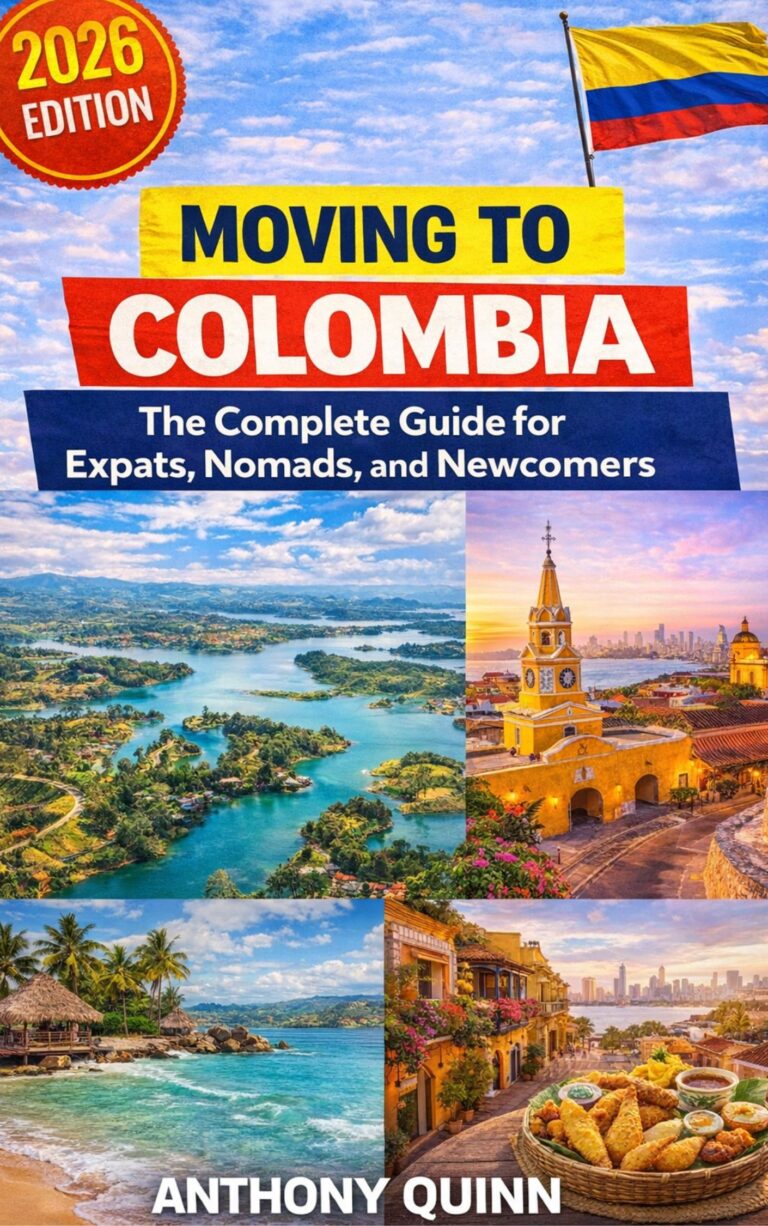

Moving to Brazil in 2026: The Complete Guide for Expats, Digital Nomads and Remote Workers
Brazil is one of those countries that gets inside your head before you even arrive. The images are powerful Carnival in Salvador, the sunset over Rio’s Sugarloaf Mountain, the beaches of Florianópolis, the electric energy of São Paulo’s financial district and they create a strong emotional pull that draws expats, digital nomads, retirees, and adventurous professionals from across the world. But Brazil rewards people who go in knowing what they are actually getting into, not just what the postcards suggest.
The country is the fifth largest in the world by land area, the sixth largest by population, and the largest economy in Latin America. It has a sophisticated banking system, a fast-growing technology sector, world-class healthcare in its major cities, and a cultural depth that few countries of any size can match.
It also has genuine challenges: persistent inflation, a bureaucracy that requires patience, significant inequality between neighbourhoods and regions, safety issues that vary enormously by location, and a language Brazilian Portuguese that is genuinely necessary for anything beyond surface-level daily life.
For digital nomads earning in US dollars, euros, or British pounds, Brazil offers an extraordinary purchasing power advantage. Remote workers with $2,000 to $3,000 per month in foreign income can live extremely well in most Brazilian cities, and significantly better than that income would sustain in North America, Western Europe, or Australia. Brazil’s Digital Nomad Visa (VITEM XIV), updated in 2026, provides a clean, legal pathway to do exactly this for up to two years.
This guide covers everything you need to make that move work.

Why Move to Brazil?
The case for Brazil starts with numbers that are hard to argue with.
As of early 2026, a retiree or remote worker with $2,000 per month can live a comfortable life in Brazil, covering a decent apartment, regular groceries, occasional dining out, a private gym membership, and basic private health insurance in most cities outside the premium neighbourhoods of São Paulo and Rio de Janeiro.
For anyone earning at or above the $1,500 monthly threshold required for the Digital Nomad Visa, Brazil provides purchasing power that simply cannot be replicated in the income’s country of origin.
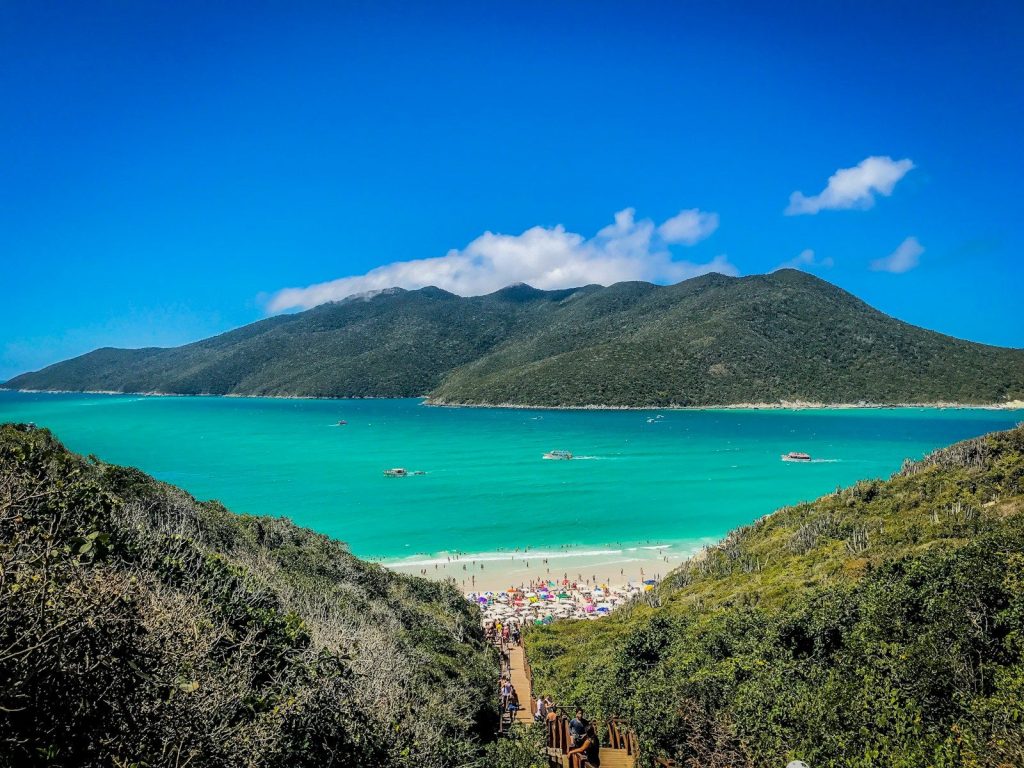
The climate is genuinely extraordinary across most of the country. The northeast cities like Fortaleza, Natal, and Recife enjoys sunshine for over 300 days per year with warm water and minimal seasonal variation. The south Florianópolis, Curitiba, Porto Alegre has four genuine seasons, including occasionally cold winters, but without the extremes of northern Europe or North America.
Rio de Janeiro sits in a year-round tropical belt. São Paulo, at 760 metres above sea level, is one of the few tropical cities with a genuinely temperate climate that suits people who find continuous heat uncomfortable.
The culture is alive in a way that lifts daily mood. Brazilian music samba, forró, bossa nova, baile funk, MPB is woven into daily life in bars, on buses, at street markets, and in homes. Food is excellent and cheap: a prato feito (a full hot lunch of rice, beans, meat, and salad) costs R$15 to R$25 at a neighbourhood restaurant and is a complete, fresh, daily meal.
The social warmth that Brazilians extend to foreigners who make an effort to speak Portuguese is genuine and sustained. And the natural environment the Amazon, the Atlantic Forest, the Pantanal wetlands, the beaches of Santa Catarina, the Chapada Diamantina is on a scale of biodiversity and beauty that has no equivalent on earth.
Who Can Move to Brazil?
Brazil’s immigration framework is open to multiple profiles, and identifying which one fits your situation is the starting point for any move.
Remote workers and digital nomads who earn from outside Brazil are well-served by the VITEM XIV Digital Nomad Visa. Retirees with pension or investment income can apply for the same visa using the savings threshold, or pursue longer-term permanent residency through family ties or extended legal residence.
Workers with Brazilian employment contracts need the standard work visa (VITEM V), which requires employer sponsorship. Students enrolled at Brazilian universities apply for the student visa. Family members of Brazilian citizens or legal residents have family reunification pathways that are among the more generous in Latin America.
There is no golden visa or passive income residency pathway equivalent to Portugal’s D7 or Malta’s GRP. But the combination of the Digital Nomad Visa’s accessible income threshold and Brazil’s natural hospitality to foreigners makes the country accessible to a wide range of internationally mobile people.

The Complete Guide
Main Visa and Residency Options
The Digital Nomad Visa (VITEM XIV) is the most relevant pathway for the majority of people reading this guide. Introduced in 2022 and updated in 2026, it is a clear and well-defined legal route for remote workers and freelancers.
The VITEM XIV Digital Nomad Visa requires proof of at least $1,500 USD per month in foreign-source income, a valid passport, an apostilled criminal background check, and health insurance. The visa is valid for one year and is renewable for one additional year, for a total of two years. Processing through MigranteWeb takes 15 to 30 business days; consulate applications abroad take longer, typically four to eight weeks.
The income requirement can be met in two ways: monthly income of $1,500 USD or more documented through three to six months of bank statements and an employment contract, or a savings balance of $18,000 USD demonstrated through bank statements.
The immigration authorities look for consistency, not just a one-off transfer. The best proof is bank statements showing regular deposits from your employer or clients, combined with a signed employment contract or service agreement.
A significant 2026 update is worth noting: applicants who enter Brazil visa-free (or on an eVisa) may now convert to Digital Nomad status in-country without leaving and re-entering, as long as the online petition is lodged within 30 days of arrival.
Additionally, proof of income can now be shown through six months of bank statements or a consolidated annual tax return. These are practical improvements that make the application process more accessible.
Once the visa is approved and you are in Brazil, you must register with the Federal Police and receive your CRNM (Carteira de Registro Nacional Migratório) the physical residence card that confirms your legal status. The CRNM registration fee is approximately R$204.77 and the card is typically ready within five to fifteen business days of registration.
The Work Visa (VITEM V) is for people employed by a Brazilian company. It requires employer sponsorship and is processed by the Ministry of Justice. Processing times run two to four months from application.
Retirement/Investment Residency is available for retirees and financially independent individuals who can demonstrate sufficient income or savings. Brazil does not have a formalised golden visa programme like some European countries, but long-term legal residents can apply for permanent residency after four years of continuous legal stay.
Family Reunification is available to spouses, dependent children, and dependent parents of Brazilian citizens, and follows separate application procedures through the Federal Police and immigration authorities.
The Digital Nomad Visa: How Remote Work Actually Works
The VITEM XIV specifically prohibits working for Brazilian employers or clients. Anyone paid by a Brazilian entity must use the conventional work visa route (VITEM V). The Digital Nomad Visa is specifically for people whose income comes entirely from outside Brazil whether through a foreign employer, foreign freelance clients, or a foreign-registered business.
This means the visa works cleanly for: remote employees of companies headquartered outside Brazil; freelancers whose clients are based in the US, Europe, or elsewhere; content creators and online business owners whose revenue comes from international sources; and entrepreneurs running foreign-registered companies.
The MigranteWeb platform at migrante.mj.gov.br is the Brazilian government’s online immigration portal where Digital Nomad Visa applications are submitted from inside Brazil. It is in Portuguese and can be complex to navigate without language skills.
Engaging a Brazilian immigration lawyer for the application is not mandatory but is strongly recommended for anyone without Brazilian Portuguese proficiency or prior experience with Latin American bureaucratic systems. The application fee is approximately $175 USD for the visa itself, with total costs including government fees and document translations running $290 to $500.
All foreign documents submitted in the application must be apostilled under the Hague Convention and then translated into Portuguese by a sworn translator (tradutor juramentado). Missing apostilles are the most common cause of application rejection.
First Steps After Arrival
The first things you do after landing in Brazil set up everything that follows, and the sequence matters.
Get your CPF. The Cadastro de Pessoas Físicas is Brazil’s tax identification number, and it is the single most important document for daily life in Brazil. You need the CPF to open a bank account, sign a lease, access the healthcare system, buy a SIM card, and complete many ordinary transactions.
The CPF can now be obtained at the Federal Revenue Service (Receita Federal) offices, at Banco do Brasil branches, and at many Correios (post office) locations. EU and US citizens can also apply for a CPF through the Brazilian consulate before arriving. The application requires your passport and proof of entry. The CPF is issued within a few days of application and is free of charge.
Register with the Federal Police. Digital Nomad Visa holders must register at the nearest Delegacia de Polícia Federal (Federal Police office) and obtain the CRNM within 30 days of receiving the visa or entering Brazil under the new in-country conversion rules.
Bring your passport, visa documentation, proof of accommodation, CPF, and proof of income. The Federal Police offices in São Paulo, Rio de Janeiro, and other major cities handle this regularly for foreign residents, and while queues can be long, the process itself is well-established.
Open a Brazilian bank account. A bank account is important for paying rent, utilities, and mobile bills, and for receiving any locally-denominated payments. Requirements vary by bank, but most require your passport, CPF, proof of address (comprovante de residência), and proof of income.
Nubank Brazil’s largest digital bank and one of the world’s largest fintechs is widely used by expats for its English-language app, zero fees, and ease of account opening for non-residents. Traditional banks including Itaú, Bradesco, and Banco do Brasil also serve expat clients.
Arrange health insurance. Private health insurance (plano de saúde) is required for the Digital Nomad Visa application and is strongly advisable for all residents regardless of visa type. The public system (SUS Sistema Único de Saúde) is available to all legal residents but is significantly overloaded in most cities, with long wait times for non-emergency care.
Get a Brazilian SIM card. The main mobile operators are Vivo, Claro, TIM, and Oi. Prepaid SIMs are available at airports, supermarkets, and operator stores. A plan with 20 to 30 GB of 4G/5G data typically costs R$50 to R$80 per month, and fibre broadband for your apartment runs R$80 to R$150 per month for 200 to 600 Mbps connections.
Best Places to Live in Brazil
Brazil is enormous larger than the continental United States and the choice of where to live shapes almost every aspect of your daily experience.
| City | Avg Rent (1-bed, city centre) | Best For | Key Notes |
|---|---|---|---|
| São Paulo | R$2,500 – R$5,000 ($465 – $925) | Business, finance, tech, careers | Brazil’s economic capital; most international; most expensive |
| Rio de Janeiro | R$2,000 – R$4,000 ($370 – $740) | Culture, beach life, tourism | Iconic lifestyle; varied safety by neighbourhood |
| Florianópolis | R$2,500 – R$4,500 ($465 – $835) | Remote work, outdoor life | Fastest-growing expat/nomad scene; excellent lifestyle |
| Curitiba | R$1,800 – R$3,200 ($333 – $593) | Quality urban planning, families | Cleanest major city; organised; strong infrastructure |
| Brasília | R$2,000 – R$3,500 ($370 – $648) | Government, international orgs | Capital city; modern design; stable services |
| Salvador | R$1,200 – R$2,500 ($222 – $463) | History, Afro-Brazilian culture | Warmest and most cultural city; lower costs |
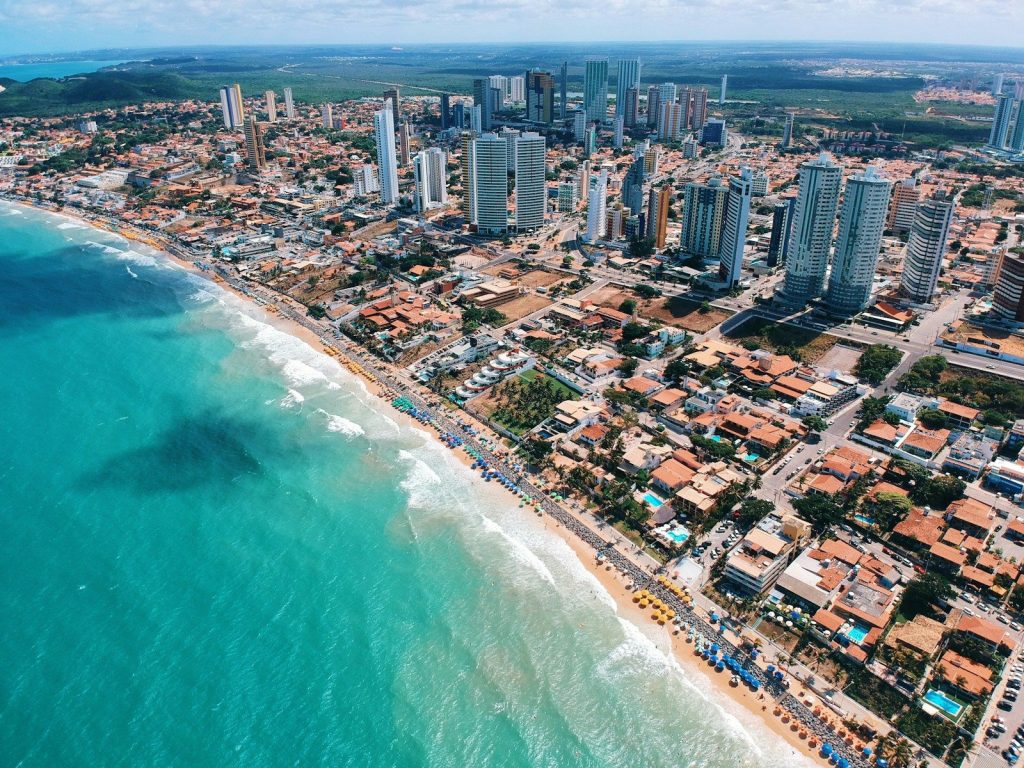
| Recife / Natal | R$1,000 – R$2,200 ($185 – $407) | Sun, beaches, affordability | Best beach-to-price ratio; growing expat scene |
São Paulo is Brazil’s financial and business capital, the largest city in the Southern Hemisphere, and the most internationally connected metropolis in South America. The job market, startup ecosystem, cultural life, and restaurant scene are all extraordinary.
The city also has significant traffic congestion, pollution in some areas, and the widest gap between premium and budget neighbourhoods of any Brazilian city. For expats working in finance, technology, consulting, or international business, São Paulo is the default choice.
Rio de Janeiro combines everything that Brazil’s international image projects the beaches of Copacabana and Ipanema, the Christ the Redeemer statue on Corcovado, the Sugarloaf mountain, Carnival with a vibrant year-round cultural life that makes it one of the most experientially rich cities on earth.
Safety varies enormously by neighbourhood: Ipanema, Leblon, Barra da Tijuca, Santa Teresa, and Botafogo are all well-established and reasonably safe for expats. Parts of the city require more caution, particularly at night, and local knowledge often gained through expat communities is genuinely important.
Florianópolis has become the most popular destination in Brazil for digital nomads and remote workers, and for good reason. The island capital of Santa Catarina combines good quality beaches, a pleasant climate, an educated population, fast internet infrastructure, and a concentration of coworking spaces and English-speaking professionals that is unlike anywhere else in Brazil outside São Paulo.
Remote workers and retirees with foreign income experience substantial purchasing power in Florianópolis, where rents are moderate and the quality of life per dollar spent is among the best in Brazil.
Curitiba is the city that most often surprises people. The capital of Paraná state is consistently ranked as one of Brazil’s most liveable cities, with an urban planning legacy that includes an innovative bus rapid transit system, extensive cycling infrastructure, parks woven through every neighbourhood, and a clean, organised character that is distinctly different from Brazil’s coastal cities. In Curitiba, comfortable living on approximately R$11,000 per month ($2,040) is achievable.
For families and long-term settlers, it offers a quality of daily life that is genuinely outstanding by any standard.
Cost of Living in Brazil
Brazil’s cost of living is one of its most compelling attractions for people earning in foreign currencies, and the purchasing power advantage is real and significant.
Comfortable living in major Brazilian cities costs approximately R$4,000 to R$6,000 per month (USD $800 to $1,200) for a single person, with São Paulo and Rio being the most expensive and Brasília and Salvador cheaper by 25 to 30 percent.
The figures below use an approximate exchange rate of R$5.40 per US dollar, which is broadly applicable to early-to-mid 2026.
| Expense Category | Recife / Natal / Salvador | Curitiba / Brasília | Florianópolis | São Paulo / Rio |
|---|---|---|---|---|
| Rent (1-bed, city centre) | R$1,000 – R$2,500 ($185 – $463) | R$1,800 – R$3,200 ($333 – $593) | R$2,500 – R$4,500 ($463 – $833) | R$2,500 – R$5,000 ($463 – $926) |
| Groceries (single person) | R$700 – R$1,000 ($130 – $185) | R$800 – R$1,200 ($148 – $222) | R$900 – R$1,300 ($167 – $241) | R$1,000 – R$1,500 ($185 – $278) |
| Utilities (electricity, water, internet) | R$300 – R$500 | R$350 – $600 | R$400 – R$700 | R$400 – R$800 |
| Transport (public or ride apps) | R$200 – R$400 | R$200 – R$450 | R$200 – R$450 | R$300 – R$600 |
| Dining out (moderate frequency) | R$400 – R$700 | R$500 – R$900 | R$600 – R$1,000 | R$700 – R$1,500 |
| Health insurance (private, basic) | R$400 – R$800 | R$400 – R$900 | R$450 – R$950 | R$500 – R$1,200 |
| Approx Monthly Total | R$3,000 – R$5,900 ($556 – $1,093) | R$4,050 – R$7,250 ($750 – $1,342) | R$5,050 – R$8,900 ($935 – $1,648) | R$5,400 – R$10,600 ($1,000 – $1,963) |
One critical budget item to understand explicitly is the condomínio fee. Condomínio fees add R$500 to R$1,500 per month on top of rent and cover security, maintenance, pool, gym, and common areas in gated residential buildings. Many Brazilian apartment listings advertise the base rent without condomínio, so always establish the total monthly cost before comparing options.
Private health insurance is a required line item for Digital Nomad Visa holders and strongly advisable for all others. Private insurance plans start at approximately $90 per month for young adults, rising to $220 to $320 per month for retirees. A private doctor visit typically costs $35 to $70, and dental care is significantly cheaper than in the US or UK.
The Complete Guide
Housing and Rentals
Finding housing in Brazil requires understanding a few local conventions that differ meaningfully from North American and European rental norms.
Standard long-term lease contracts in Brazil run 30 months, which is longer than most other countries’ norms. Deposits typically equal two to three months of rent, and landlords additionally often require either a fiador (a Brazilian guarantor with owned property who co-signs the lease) or a seguro fiança (rental guarantee insurance policy, typically costing around R$200 to R$400 per month).
As a foreign expat without Brazilian property or a Brazilian guarantor, the seguro fiança route is usually the most practical option, and mentioning this early in rental negotiations avoids the most common sticking point.
Your CPF is required to sign a lease. Without it, most formal leases cannot be completed. This is another reason why getting the CPF first, before starting your housing search, is the correct sequence.
Safety varies enormously between neighbourhoods and in Brazilian cities, adjacent streets can have dramatically different risk profiles. Before signing a lease in any neighbourhood you are not personally familiar with, research it in current local expat Facebook groups, ask long-term residents, and visit at different times of day.
Gated buildings with 24-hour security (portaria 24h) are standard in most mid-range and above apartment complexes in major Brazilian cities, and they meaningfully reduce the daily security footprint for residents.
The main property search portals in Brazil are ZAP Imóveis and Viva Real, both with comprehensive listings across all major cities. Short-term furnished rentals through Airbnb serve well for the first one to three months while you establish your CPF, Federal Police registration, and neighbourhood knowledge before committing to a long-term lease.
Healthcare and Insurance
Brazil’s public healthcare system the SUS (Sistema Único de Saúde) provides universal coverage to all legal residents, including foreigners with valid visas. In principle, it is one of the most impressive public health frameworks in the developing world. In practice, it is significantly overburdened in most urban areas, with long wait times for elective procedures and non-emergency specialist consultations in busy public facilities.
Most expats and long-term residents use private health insurance (plano de saúde) as their primary healthcare route. The private system in Brazil’s major cities is genuinely of high quality major hospital networks like Hospital Albert Einstein and Hospital Sírio-Libanês in São Paulo, and Hospital Barra D’Or in Rio de Janeiro, compare favourably with the best private facilities in Europe and the United States.
Most expatriates budget R$300 to R$500 per month for health insurance, though costs vary significantly by age, state, coverage level, and chosen insurer.
International health insurance through providers like Cigna Global or AXA International is accepted by most top Brazilian private hospitals and provides coverage that extends to emergency repatriation and care outside Brazil, which domestic Brazilian planos de saúde do not.
Many Digital Nomad Visa holders choose international insurance specifically because it satisfies both the visa requirement and their broader travel needs. The visa application requires that health insurance coverage be valid specifically in Brazil.
Banking and Money
Brazil’s banking infrastructure is technologically sophisticated the country pioneered the Pix instant payment system in 2020, which allows free instant bank transfers between any Brazilian accounts 24 hours a day, seven days a week, and is now used for everything from restaurant bills to rent payments. Understanding how this works early significantly simplifies daily financial life.
To open a bank account, you need your CPF, passport, proof of Brazilian address, and for most banks, proof of income. Nubank is the most accessible option for newly arrived expats because its account opening process can be completed entirely through the app and does not require a physical branch visit.
Traditional banks (Itaú, Bradesco, Banco do Brasil, Caixa Econômica Federal) offer full services but have more complex account opening requirements and are generally navigated more easily with some Portuguese.
For incoming foreign transfers, Wise and Remitly are widely used by expats for converting dollars or euros to Brazilian reais at close to the market rate, which is materially better than most traditional bank wire transfer rates.
Brazil’s central bank regulates foreign currency incoming transfers, and larger transfers may require documentation confirming the source of funds a process that your Brazilian bank will guide you through.
Brazil has persistent inflation currently running approximately 4 to 6 percent annually by official IPCA indices, with some categories running higher. This affects rents, grocery prices, and service costs over time, and should be factored into long-term financial planning.
Dollar or euro-denominated income provides natural protection against this inflation, which is one reason why foreign-income earners living in Brazil benefit from such strong purchasing power.
The Complete Guide
Taxes and Legal Basics
Brazil’s tax system is complex, and the basics that apply to expats are important to understand before assuming that living there on a foreign income is tax-free.
Brazil determines tax residency primarily through length of physical stay. Anyone paid by a Brazilian entity must use the conventional work visa route, and once tax resident in Brazil (which is triggered by having a permanent visa or staying more than 183 days in a calendar year), worldwide income is in principle taxable by the Receita Federal (Brazilian Federal Revenue Service).
The applicable income tax rates are progressive, ranging from zero percent on the lowest bracket to 27.5 percent at the top.
The interaction between Brazilian tax residency and your home country’s tax obligations requires specialist advice. Many countries have double taxation agreements with Brazil, but these treaties differ in scope, and the interaction of a US citizen’s IRS obligations with Brazilian tax rules, for example, is genuinely complex territory.
For Digital Nomad Visa holders, the practical tax position depends on how long they stay each year and what agreements exist between Brazil and their home country. An international tax advisor familiar with Brazil is a sound investment before committing to a full-year residency.
The Receita Federal at gov.br publishes current tax rates, bracket information, and guidance on filing obligations for resident foreigners.
Working in Brazil
Brazil’s job market is the largest in Latin America, and opportunities exist across multiple sectors for the right profile of professional.
São Paulo is the undisputed business and technology capital. The city hosts the Brazilian headquarters of most major multinationals, a growing fintech ecosystem (centred around the Faria Lima financial district), and the country’s most active startup scene. Fluency in Brazilian Portuguese is essential for most roles beyond the most senior international positions at multinational companies.
Rio de Janeiro’s job market is driven by oil and gas (Petrobras is headquartered there), tourism and hospitality, and a growing creative industries sector. The federal government in Brasília provides stable employment for civil servants and contractors.
Teaching English is a consistent income source for native speakers. Brazilian demand for English education is strong and growing, particularly in São Paulo, Rio, and among the business professional class in secondary cities. Hourly rates at reputable language schools range from R$40 to R$120, and private tutoring rates run higher.
Portuguese is genuinely necessary for professional life in Brazil beyond the most internationally-oriented workplaces. The language investment pays off in career access, social integration, and daily quality of life in ways that are felt immediately. Duolingo’s Portuguese course is widely used for preliminary preparation; the Fala Brasil and Português Para Estrangeiros schools offer more structured in-country options.
Education and Family Life
Brazil has a public school system (escolas públicas) that is free and available to all resident children, taught entirely in Portuguese. For families without Portuguese fluency, the transition requires dedicated language support, and most expat families with school-age children who plan to stay for more than a year either enrol in international schools or arrange intensive Portuguese tutoring alongside the local school system.
International schools are available in São Paulo, Rio, Brasília, Curitiba, and a few other major cities. The major options include Saint Paul’s School, Chapel School, and Pan American School in São Paulo; the British School of Rio de Janeiro; and the American School of Brasília.
Annual fees range from approximately $10,000 to $20,000 per child, depending on the school and year group, which is comparable to or below equivalent international school fees in Southeast Asia, the Middle East, or Europe.
Brazilian private healthcare for children, dental care through private plans, and the outdoor lifestyle beaches, parks, sports clubs combine to create a genuinely good family environment in the right city and neighbourhood. Curitiba and Florianópolis consistently score highest for family quality of life among Brazil’s major cities.
Daily Life and Transport
Brazil is a large country and internal distances matter. Flying between São Paulo and Florianópolis takes 1.5 hours and costs R$200 to R$600 with Gol, LATAM, or Azul airlines booked in advance. The same journey by bus takes 10 to 12 hours. For people who intend to explore the country, a domestic flight budget is a practical necessity.
Within cities, the major urban centres have metro systems (São Paulo’s has 11 lines and is one of the best in Latin America), bus networks, and the full Uber/99 ecosystem, which is extensively used for daily transport. São Paulo’s metro monthly pass costs approximately R$220. In smaller or coastal cities, a car is often more practical for reaching beaches and neighbourhoods outside the main transit corridors.
Brazil’s internet infrastructure in major cities is genuinely good. Fibre connections with speeds of 300 to 600 Mbps are available from Vivo, Claro, and Tim at R$80 to R$150 per month. Mobile data on 4G/5G networks works reliably in urban areas and most highways. Rural areas and smaller towns have more variable connectivity.
Language and Culture
Brazilian Portuguese is the language of all official interactions, most commercial transactions, and daily social life in Brazil. The level of English in Brazil is low by European standards a 2023 EF English Proficiency Index ranked Brazil 63rd out of 113 countries measured and outside São Paulo’s most international workplaces and luxury hotels, assuming English will cover daily life is a mistake.
The good news is that Brazilian Portuguese is highly learnable, particularly for speakers of Spanish, Italian, French, or Romanian. Even a basic level A2 proficiency, covering housing, shopping, healthcare, and official interactions transforms the quality of daily experience. Brazilians are consistently encouraging toward foreigners who attempt the language, even imperfectly.
Brazilian culture runs on warmth, relationship, and an orientation toward the present moment that can take adjustment for people from time-driven northern European or North American backgrounds. Social gatherings start late and run long.
Business relationships are built slowly through personal connection before professional transaction. The concept of jeitinho brasileiro a creative flexibility in navigating rules and obstacles is a genuine cultural trait that manifests everywhere from bureaucratic queues to traffic patterns.
Music and food are central to daily social life in ways that few other cultures match. Learning a few dishes, knowing some music, and being willing to sit at a table long after the meal is finished are the practical currencies of social integration in Brazil.
The Complete Guide
Pros and Cons of Living in Brazil
The genuine advantages are compelling. Exceptional purchasing power for foreign-income earners. Natural environment of extraordinary scope and beauty. A warm, socially generous culture. World-class private healthcare at accessible costs. A food and music culture that makes daily life genuinely enjoyable. The second largest tech ecosystem in the Americas.
The honest challenges deserve equal weight. Bureaucracy is slow, Portuguese-language-dependent, and demands patience. Safety in certain neighbourhoods and certain cities requires consistent awareness and risk management that does not apply in equivalent European destinations.
Inflation erodes local purchasing power over time and makes long-term financial planning more complex. Brazilian Portuguese is genuinely necessary and cannot be sidestepped indefinitely. And the country’s geographic scale means that travel between cities and regions is time-consuming in ways that compact European destinations are not.
Moving to Brazil Checklist
Six to three months before:
Choose your visa pathway Digital Nomad (VITEM XIV), Work Visa (VITEM V), student, or family reunification. Gather and apostille all required documents: passport, criminal background certificate from your country of nationality and all countries of residence for the past five years, employment contract or income documentation, and health insurance documentation.
Get your sworn Portuguese translations ordered for all apostilled documents. Apply for your CPF through the nearest Brazilian consulate this saves significant time on arrival. Begin Portuguese language learning in earnest target A2 level before arrival.
One to two months before:
If applying at a Brazilian consulate abroad, submit your visa application. If entering Brazil and applying in-country through MigranteWeb, confirm your entry visa or eVisa if your nationality requires one. Arrange private health insurance covering Brazil required for the visa and strongly advisable regardless. Research housing in your target city using ZAP Imóveis and Viva Real, and arrange a short-term furnished rental for your first two months.
Arrival week:
File your VITEM XIV in-country application through MigranteWeb within 30 days of arrival if converting from tourist/eVisa status. Book your Federal Police appointment for CRNM registration. Complete your CPF registration if not done abroad. Open your Nubank account using your passport and CPF. Purchase a local SIM card with a data plan. Find and sign your short-term rental with your CPF and passport.
Ongoing:
After receiving your CRNM, open accounts at a full-service bank if needed for long-term Brazilian financial operations. Register for private health insurance and identify a private GP (clínico geral) in your neighbourhood.
File your Brazilian annual income tax declaration (DIRPF) with the Receita Federal if tax resident, with the April 30 deadline for the preceding calendar year. After two years on the Digital Nomad Visa, evaluate longer-term residency options through permanent residency application or other qualifying routes.
Common Mistakes to Avoid
Not getting the CPF before everything else. The sequence matters in Brazil: CPF first, then bank account, then housing, then phone. Attempting to get housing before the CPF is a common and frustrating mistake that delays the entire setup process by weeks.
Staying on a tourist visa and working. Brazil’s immigration authorities are aware that some remote workers attempt to live and work in Brazil on rolling tourist entries without the Digital Nomad Visa. This is technically illegal, risks fines, and jeopardises future visa applications. The VITEM XIV costs approximately $290 to $500 in fees and translations a trivial cost compared to the legal and practical risks of non-compliance.
Not apostilling documents. Un-apostilled or non-translated documents mean your criminal record check is not considered valid by the immigration authorities. This is the single most common reason for visa application rejection. Always apostille first, then get the sworn Portuguese translation.
Choosing housing without safety research. Brazilian cities have dramatic neighbourhood-to-neighbourhood variation in safety. A one-bedroom apartment advertised at R$1,500 in a high-risk neighbourhood is not a bargain it is a problem. Research neighbourhoods thoroughly through current expat community resources before viewing, and verify your shortlisted options with people who actually live there.
Underestimating the language requirement. Assuming that English proficiency will cover daily life outside the most internationally-oriented São Paulo environments is a reliable recipe for frustration. Budget time and money for Portuguese learning from the beginning, not as an afterthought.
The Complete Guide
FAQs About Moving to Brazil
Is it hard to move to Brazil?
For digital nomads and remote workers who meet the $1,500 monthly income or $18,000 savings threshold, the VITEM XIV provides a clear and accessible pathway. The document requirements apostilles, sworn translations, criminal certificates are specific and take planning, but the process is well-defined.
With preparation and ideally professional immigration support, it is manageable. Without Portuguese or professional support, the in-country process via MigranteWeb can be genuinely confusing.
How much money do I need to live in Brazil?
A single person with $2,000 per month in foreign income can live a comfortable life in Brazil’s mid-tier cities. In São Paulo or Rio’s more expensive neighbourhoods, $2,000 is tight but workable. In Curitiba, Florianópolis, or northern cities, it goes considerably further. The Digital Nomad Visa income minimum of $1,500 per month is genuinely workable in smaller cities and coastal towns, and comfortable in most of the country.
Do I need Portuguese to live in Brazil?
For genuine daily independence housing, healthcare, banking, administrative processes yes. English functions in international workplaces and tourist-facing businesses in São Paulo and Rio, but the country broadly operates in Portuguese. Even A2 proficiency transforms the quality of daily life and reduces frustration significantly.
What is the best city for expats in Brazil?
São Paulo for career-focused professionals and business. Florianópolis for digital nomads and lifestyle migrants. Curitiba for families and long-term settlers who want the best organised urban environment. Rio for culture, beach life, and an extraordinary physical setting. The northeast Recife, Natal, Fortaleza for maximum sunshine and minimum cost.
Can foreigners work in Brazil?
Yes, with the appropriate visa. The VITEM XIV allows remote work for non-Brazilian employers and clients. The VITEM V work visa allows employment by Brazilian companies with employer sponsorship. Working for a Brazilian employer on a Digital Nomad Visa is not permitted and carries legal risk. Freelancing for Brazilian clients is also outside the scope of the VITEM XIV.