Moving to Argentina in 2026: A Simple Guide to Visas, Costs, and Daily Life
Argentina has one of the most magnetic personalities of any country on earth. Buenos Aires has been called the Paris of South America and the New York of Latin America, and while both comparisons fall short of capturing the real thing, they gesture at something true: the city has a scale, an energy, and a cultural depth that feel European in origin and Latin American in expression, and the combination produces a daily life of genuine richness.
Outside the capital, the country offers wine regions in Mendoza that rank with the world’s best, Patagonian wilderness that stretches to the end of the continent, the colonial beauty of Córdoba’s university city, and a geography that shifts from tropical jungle in the north to glaciers in the south.
For remote workers, retirees, and internationally mobile professionals, Argentina also offers something more practically compelling: a cost of living that, even after significant adjustment since the 2023 peso reforms, remains dramatically lower than North America or Europe for people earning in foreign currencies.
That said, 2026 is a year in which outdated information about Argentina can get you into real trouble. The capital controls that created the famous “blue dollar” exchange rate were removed in April 2025, and the resulting price adjustments have substantially changed the budget calculations that circulated on older websites and social media.
The old guides showing $500 per month budgets are outdated. Rents have doubled since 2023, inflation remains high, and the arbitrage advantage that made Argentina an exceptional bargain has narrowed considerably. Argentina is still excellent value for foreign-income earners but it is no longer the ultra-cheap destination it was three years ago, and planning around current figures matters.
This guide is built on 2026 data. It covers the visa pathways, the real costs, the banking and money situation as it currently stands, and everything else you need to make a serious, informed decision about moving to Argentina.

Why Move to Argentina?
The reasons that pull people toward Argentina fall into several clear categories, and they hold up well under scrutiny.
The cultural life is extraordinary and accessible. Buenos Aires alone has more theatres than any other city except London, a tango scene that has shaped global dance culture, a literary tradition that produced Borges and Cortázar, a football culture of near-religious intensity, and a restaurant and coffee culture that makes daily life genuinely enjoyable.
The social warmth of Argentines the warmth of the asado (barbecue), the long late-night dinners, the friends who talk for hours over coffee in the neighbourhood café is real and not directed only at locals. Expats who make the effort to connect consistently describe Argentine social life as one of the most generous they have experienced anywhere.
The geography is staggering. The country spans 3.7 million square kilometres from the subtropical Iguazú Falls in the north to the Antarctic-adjacent channels of Tierra del Fuego in the south. Wine tourists have the world-class Malbec regions of Mendoza and Salta.
Nature lovers have the Patagonian steppe, the Andes, and Lake District around Bariloche. Beach goers have the Mar del Plata and Uruguayan coast. All of it is accessible within a country that has a functioning domestic flight network and a culture that prioritises travel.
The purchasing power advantage for foreign-income earners is genuine, though more nuanced than before. Rent in Buenos Aires central neighbourhoods typically costs $400 to $600 USD per month for a one-bedroom apartment, while rent in Mendoza or Córdoba ranges from $350 to $500 USD. A steak dinner at a traditional parrilla costs $15 to $25 including wine.
Healthcare at private clinics costs $20 to $50 per consultation. These prices are not Europe in 2019, but they are dramatically below what equivalent quality costs in the US, UK, or Australia.
Who Can Move to Argentina?
Argentina’s immigration framework is more open and accessible than many other countries, and it is worth understanding who it specifically suits.
Remote workers and digital nomads with foreign income are well-served by the Digital Nomad Visa, which provides a legal residency pathway without requiring any connection to the Argentine job market. Retirees with pension income have the Rentista (passive income) Visa, which offers a clear path to temporary and eventually permanent residency.
Professionals offered work by Argentine employers can pursue work-based temporary residency. Families of Argentine citizens have straightforward family reunification pathways. Students enrolled at Argentine universities can obtain student residency.
One important baseline: citizens of many nationalities including the US, Canada, Australia, UK, most of Western Europe, and most of Latin America can enter Argentina visa-free as tourists for 90 days. This means that many newcomers arrive as tourists first, experience the country, and then formalise their status through the relevant residency pathway once they have decided to stay.
Argentina’s immigration culture is pragmatic and relatively welcoming, which makes this a common and generally workable approach for people who are exploring the option.

The Complete Guide
Main Visa and Residency Options
The Digital Nomad Visa (Categoría Especial) is Argentina’s dedicated pathway for remote workers. It allows remote workers employed by companies outside Argentina, or self-employed freelancers with international clients, to legally reside in Argentina for up to 12 months, renewable for another 12 months.
The minimum income requirement is approximately $1,500 USD per month, though $2,000 or more is recommended for a smoother approval process. Required documentation includes proof of remote employment or freelance status, three to six months of bank statements, health insurance valid in Argentina, a clean criminal record certificate (apostilled), and a completed application signed by the applicant.
Applications can be submitted at an Argentine consulate in your home country, or from inside Argentina through the National Directorate of Migration (Migraciones). The official portal is at migraciones.gob.ar.
A notable tax advantage: digital nomad visa holders who are temporary residents are not required to pay Argentine taxes on foreign-sourced income. Non-residents of Argentina, including digital nomads, are exempt from income tax obligations on income earned from sources outside Argentina for the first five years of temporary residence.
The Rentista Visa (Independent Means / Passive Income) is Argentina’s route for retirees, investors, and financially independent individuals who earn passive income from abroad dividends, rental income, pensions, or investment returns.
The programme requires proof of stable passive income of at least five times the Argentine minimum wage approximately $600 to $700 USD equivalent per month at current rates along with a clean criminal record, apostilled documentation, and health insurance.
The visa is initially valid for one year, renewable, and leads to permanent residency after three years of continuous temporary residence. Argentine citizenship is achievable after two years of permanent residency.
The Temporary Work Visa is for people with a formal employment offer from an Argentine company. The employer sponsors the application, which is processed through Migraciones. This route requires a registered Argentine employer and does not apply to remote workers for foreign companies.
The Student Visa is tied to enrolment at an Argentine university, of which there are several world-class options: the University of Buenos Aires (UBA) is consistently ranked among the top universities in Latin America and charges no tuition fees for undergraduate programmes an extraordinary offer by any international standard.
Family Reunification is available to direct relatives of Argentine citizens and legal permanent residents, with the process managed through Migraciones.
First Steps After Arrival
The administrative sequence in Argentina is less rigid than in European countries, but the early steps still create dependencies, and getting them in order early saves significant friction.
Get your DNI (Documento Nacional de Identidad). For residents applying under most visa categories, the DNI is Argentina’s national identity document for legal residents. For temporary residents, a precaria (temporary resident ID) is issued while the full DNI is processed. The DNI and CUIL (fiscal identification number for employment-related matters) are required for many official interactions.
Get your CUIL or CUIT. The CUIL is Argentina’s social security number, and the CUIT is its tax equivalent for self-employed and business purposes. Non-residents can obtain a CUIL at the ANSES (social security administration) office. The CUIL is needed to open a bank account at most Argentine institutions and for various official registrations.
Secure housing. Temporary furnished short-term rentals through Airbnb or dedicated Argentina expat housing platforms serve as the bridge while you establish your residency documentation. Long-term leases require either an Argentine guarantor (fiador), a garantía (guarantee service), or a seguro de caución (guarantee insurance). The CPF equivalent document process runs faster once you have a registered address.
Open a bank account. Argentine bank accounts require a DNI or precaria plus CUIL/CUIT documentation. For the first few months while these are being processed, most expats manage payments through Wise, Revolut, and foreign cards accessing the MEP exchange rate (the legal best rate available to card transactions in Argentina since April 2025).
Arrange health insurance. Private health insurance in Argentina is inexpensive by international standards private insurance plans start at approximately $50 to $100 USD per month for basic coverage, with GP consultations at private clinics running $20 to $50 per visit. The public healthcare system (sistema público de salud) is free for all legal residents, but private cover dramatically improves access speed and English-language capability.
Best Places to Live in Argentina
Argentina’s geography is so large and varied that choosing where to live is genuinely one of the most important decisions of the relocation, with real implications for climate, cost, community, and quality of daily life.
| City | Avg Rent (1-bed, city centre) | Best For | Key Notes |
|---|---|---|---|
| Buenos Aires | $400 – $700 USD | Culture, careers, nomad community | Most expensive; best infrastructure; widest choice |
| Córdoba | $300 – $500 USD | Students, lower costs, university life | Second city; strong expat scene; 20–30% cheaper |
| Mendoza | $350 – $550 USD | Wine, mountains, outdoor lifestyle | Stunning Andes setting; outdoors-focused; very walkable |
| Rosario | $250 – $450 USD | Affordable city life | Major city feel without Buenos Aires prices |
| Bariloche | $300 – $550 USD | Nature, skiing, lake district | One of the most beautiful small cities in South America |
| Salta / Tucumán | $200 – $400 USD | Colonial culture, lower costs | Northwest Argentina; very affordable; distinct culture |
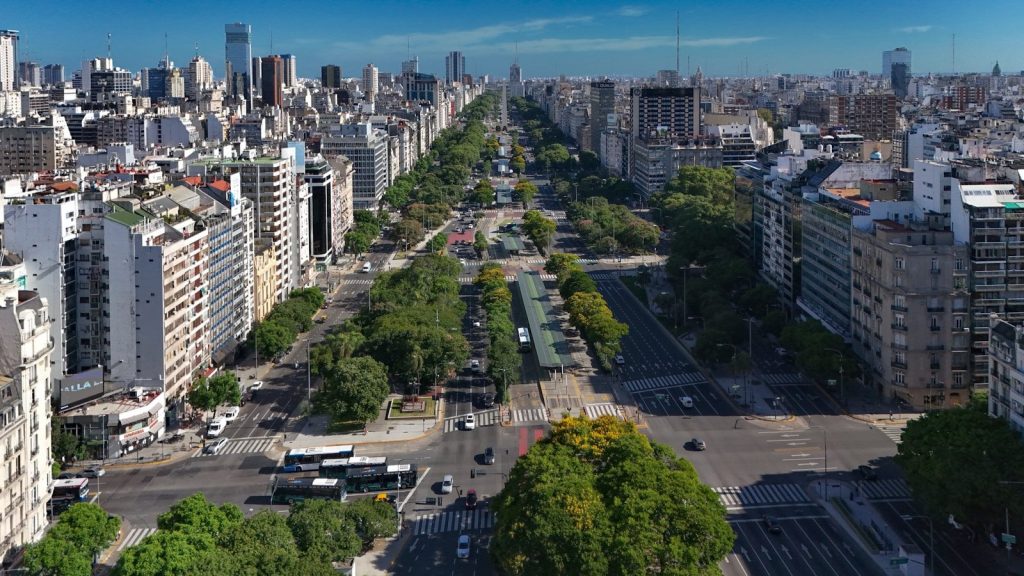
Buenos Aires is the default starting point for most newcomers, and with good reason. The city of approximately 3 million people (15 million in the metropolitan area) offers everything that a modern cosmopolitan city can offer and does it with a personality that Buenos Aires specifically has developed over more than a century of European immigration and Latin American energy.
The neighbourhoods each have distinct characters: Palermo Soho for young professionals and creatives, Recoleta for elegance and the famous cemetery, San Telmo for history and antiques markets, Villa Crespo for value and a growing café scene. Most digital nomads can expect to spend anywhere from $900 to $1,800 per month living in Buenos Aires, depending on lifestyle and accommodation choices.
Córdoba is Argentina’s second city and its university capital, with the Universidad Nacional de Córdoba drawing approximately 100,000 students. The city is noticeably more affordable than Buenos Aires, has a young and dynamic social environment, and offers a pace of life slightly more relaxed than the capital. For expats who want genuine urban life without the full pressure of a 15-million-person metropolis, Córdoba is frequently the better choice.
Mendoza is the city that surprises people most consistently. It sits at the foot of the Andes at 700 metres altitude, with a backdrop of snow-capped peaks that makes every clear day visually extraordinary.
The wine region producing world-class Malbec, Torrontés, and Cabernet Sauvignon extends across the surrounding province, and the city itself is clean, well-planned, and pleasant to walk. The outdoor lifestyle hiking, skiing at Las Leñas and Penitentes, cycling through the vineyards is exceptional, and the costs are meaningfully below Buenos Aires.
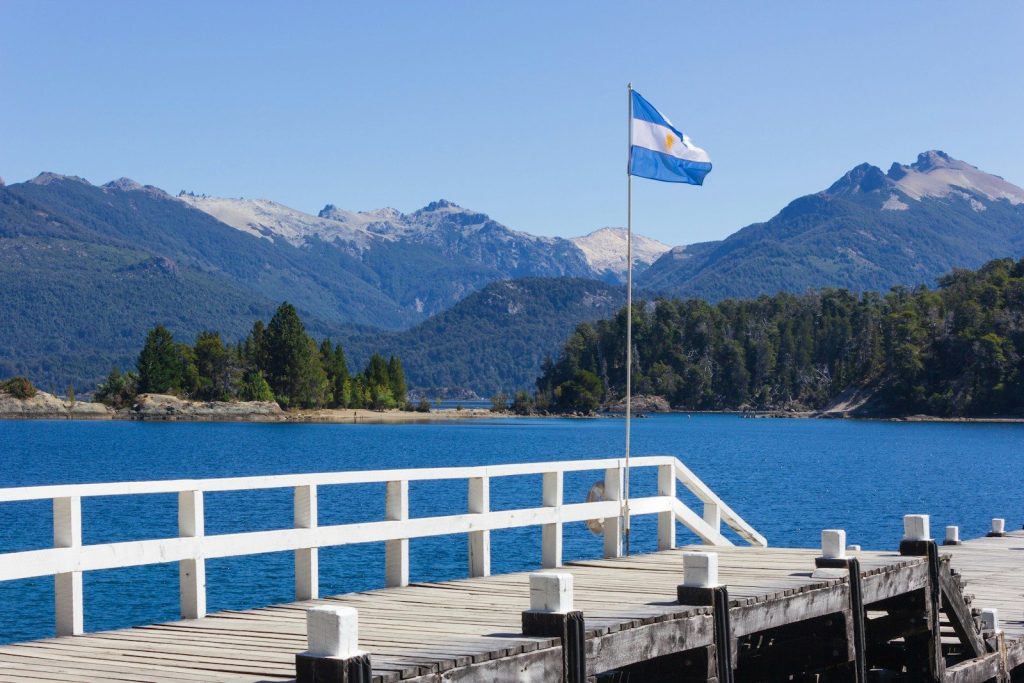
Bariloche is for people who specifically want to be surrounded by the most spectacular mountain and lake scenery in South America. The Swiss-influenced architecture of the city, sitting on the shores of Lake Nahuel Huapi in the Andean Lake District, creates a genuinely distinctive environment.
Skiing in winter, trekking and kayaking in summer, and year-round chocolate shops (a genuine Bariloche specialty) make it one of the most enjoyable small cities in Latin America.
Cost of Living in Argentina
The honest picture on Argentina’s cost of living in 2026 requires facing the fact that significant price adjustments have occurred over the past two years, and that the ultra-cheap Argentina of 2020 to 2022 no longer exists in quite the same form.
Rents have doubled since 2023, and the arbitrage advantage that made Argentina an exceptional bargain has narrowed. A realistic monthly budget for Buenos Aires is now $1,000 to $1,800 for a single person, with smaller cities being 20 to 40 percent cheaper.
For people earning $3,000 to $5,000 USD per month remotely, Argentina still represents extraordinary purchasing power compared to their origin countries. For people earning $1,500 to $2,000 USD per month, it is affordable with careful management but no longer as casually cheap as many older guides suggest.
| Expense Category | Salta / Tucumán | Rosario / Córdoba | Mendoza / Bariloche | Buenos Aires |
|---|---|---|---|---|
| Rent (1-bed, city centre) | $200 – $400 | $250 – $500 | $350 – $600 | $400 – $700 |
| Groceries (single person) | $100 – $200 | $120 – $250 | $130 – $270 | $150 – $300 |
| Utilities (electricity, water, internet) | $50 – $100 | $50 – $120 | $60 – $130 | $60 – $150 |
| Transport (public and ride apps) | $30 – $70 | $40 – $80 | $40 – $90 | $60 – $100 |
| Dining out (moderate frequency) | $80 – $200 | $100 – $250 | $120 – $300 | $150 – $400 |
| Private health insurance | $50 – $100 | $60 – $120 | $60 – $120 | $80 – $150 |
| Approximate Monthly Total | $510 – $1,070 | $620 – $1,320 | $760 – $1,510 | $900 – $1,800 |
A specific note that applies to most Argentine buildings: expensas (building maintenance fees) are charged separately from rent and typically add $30 to $100 USD per month depending on building quality and services. Always establish the full monthly cost including expensas before comparing apartments.
Eating out remains one of Argentina’s genuine value highlights. A steak dinner at a traditional parrilla costs $15 to $25 with wine genuinely exceptional quality at a fraction of what equivalent steaks cost in the US, UK, or Australia.
A cafeteria-style lunch (menú del día) runs $5 to $10. Street food like empanadas costs $1 to $3 per piece. The quality of Argentine beef, wine, and produce is world-class, and accessing it on a daily basis is one of the most consistent pleasures of living there.
The Complete Guide
Housing and Rentals
The Argentine rental market has gone through significant structural changes over the past two years, and the current situation requires specific knowledge to navigate well.
The most important change is that landlords now almost universally price and accept rent in US dollars, particularly in Buenos Aires and other major cities. The collapse of the blue dollar spread following the April 2025 capital control removal means there is no longer a meaningful arbitrage advantage the official card rate (MEP rate) and the informal market have converged, and USD-denominated rents are now simply USD rents, payable in cash or through international transfer.
Long-term lease contracts in Argentina typically run two to three years and used to require a fiador (Argentine property-owning guarantor). For most foreigners, finding a fiador is impractical.
The alternatives that landlords now commonly accept include: garantía services like CUVICA or SOS Garantía, which charge three to five percent of the annual rent to act as guarantor; seguro de caución (guarantee insurance from major insurers, costing approximately one to one and a half months’ rent valid for the lease term); or a larger upfront deposit of three to six months’ rent instead.
The main property portals for long-term rentals in Argentina are Zonaprop and Argenprop, both in Spanish. For furnished short-term and medium-term rentals, Airbnb has a large Argentine inventory, and negotiating a 30 percent or more discount on Airbnb listings for stays of three months or longer is standard practice and widely expected.
Safety varies enormously between neighbourhoods in Argentine cities. This is perhaps the most important practical point for housing selection. Specific neighbourhoods in Buenos Aires Palermo, Recoleta, Belgrano, Villa Crespo, Núñez are considered safe for expat daily life and worth the premium they command.
Research through current expat community sources (the r/BuenosAires subreddit and the Buenos Aires Expats Facebook group are both actively updated) before signing a lease anywhere you have not personally visited.
Healthcare and Insurance
Argentina has a three-tier healthcare system: the public system (sistema público), the obras sociales (employment-linked mutual insurance funds), and private insurance (medicina prepaga).
The public system is free for all legal residents and is genuinely available Argentina has a strong tradition of universal public healthcare and the infrastructure in major cities, particularly Buenos Aires, is of reasonable quality for basic and emergency care. For non-urgent specialist consultations and elective procedures, wait times and facility quality vary significantly.
Most expats and long-term residents use private health insurance (medicina prepaga) for primary healthcare. The main insurers include OSDE, Swiss Medical, Galeno, and Medicus. Plans start at approximately $50 USD per month for basic coverage for a healthy adult, rising to $200 to $300 per month for more comprehensive plans including dental and specialist access without co-payments. Private GP consultations cost $20 to $50 per visit without insurance.
For the Digital Nomad Visa and Rentista Visa applications, health insurance that specifically covers Argentina is a mandatory requirement. International insurance from providers like Cigna Global or AXA International is accepted for this purpose and additionally covers travel outside Argentina.
Banking and Money
The Argentine banking and currency situation in 2026 is significantly different from even two years ago, and understanding the current reality clearly is essential for financial planning.
Since April 2025, Argentina’s capital controls have been lifted and the peso exchange rate has been unified. Foreign cards now process at the MEP rate (approximately 1,460 ARS per USD at the time of writing), making official channels the best option for accessing pesos.
The blue dollar premium that previously made cash transactions advantageous has largely disappeared. This simplifies the financial situation considerably compared to the complex multi-rate environment that existed before.
Argentine pesos depreciate steadily due to persistent inflation, which runs approximately 100 to 150 percent annually by official measures. For people earning in foreign currencies, this means that peso-denominated costs decline in relative terms over time, but also that holding significant peso savings is inadvisable.
The standard approach for foreign-income expats is to receive income in USD or EUR, convert to pesos as needed for local expenses, and maintain savings in foreign currency outside Argentina.
Opening an Argentine bank account requires a DNI or precaria and a CUIL/CUIT. The main retail banks Banco Galicia, Santander Argentina, BBVA Argentina, and Banco Nación all offer peso accounts, and Banco Nación provides free basic accounts that many expats use for everyday peso transactions.
Digital fintech platforms including Mercado Pago (the dominant Argentine fintech, affiliated with MercadoLibre) allow easy QR code payments for almost everything from supermarkets to taxis without needing a traditional bank account.
Wise and Revolut remain widely used by expats for incoming foreign transfers and multi-currency management. Argentina is not on Wise’s standard SEPA transfer network, but USD wire transfers to Argentine bank accounts work through the formal banking system at MEP rates.
Taxes and Legal Basics
Argentina’s tax system affects expats differently depending on residency status and the source of their income.
Tax residency in Argentina is established after twelve months of continuous residence in the country. Before that point, temporary residents including Digital Nomad Visa holders are generally taxed only on Argentine-sourced income, not on foreign income.
Foreign-sourced income is generally not taxed for the first five years of temporary residence under the territorial tax principle for non-permanent residents. This creates a genuinely attractive tax window for short-to-medium-term stays funded by foreign income.
After twelve months of residence or once permanent residency is established, worldwide income becomes potentially taxable in Argentina. The personal income tax (Impuesto a las Ganancias) applies at progressive rates on income above an annual exemption threshold.
Argentina has a limited network of double taxation treaties compared to European countries, so the interaction with your home country’s tax rules should be reviewed with a specialist before establishing long-term residency.
The AFIP (Administración Federal de Ingresos Públicos) is Argentina’s federal tax authority. The AFIP website at afip.gob.ar publishes current rates and resident obligations.
The Complete Guide
Working in Argentina
Argentina’s job market is the largest in the southern cone and offers genuine professional opportunity but primarily in Spanish and primarily for people with local employment authorisation.
The strongest employment sectors for expats are technology and software (Argentina has a substantial IT services export sector, and many Argentine tech companies actively recruit internationally in English), education (teaching English is a consistent income source in Buenos Aires, Córdoba, and Mendoza), tourism and hospitality, and financial services. Buenos Aires’s fintech sector is growing and has attracted international investment and talent.
For remote workers with foreign employers, Argentina is a genuine option under the Rentista visa you work for your international clients or employer, earn in foreign currency, and live in Argentina. The Argentine job market itself is less relevant for this profile.
Local employment at an Argentine company requires a work visa (the Contracted Personnel route), which requires employer sponsorship.
Local salaries in Argentina are paid in Argentine pesos and are significantly lower in dollar terms than equivalent roles in North America or Europe a senior software engineer at an Argentine company might earn the equivalent of $800 to $1,500 per month in local terms, which is comfortable in Argentina but not comparable to international rates.
Spanish fluency is effectively mandatory for any role at a local Argentine employer outside the most internationally-oriented tech firms. For English teaching, native-speaker status and TEFL/CELTA certification are both valuable, and hourly rates at reputable language institutes in Buenos Aires run $15 to $25 per hour.
Education and Family Life
Buenos Aires and Argentina’s major cities have well-established international school sectors that serve the diplomatic, corporate expat, and internationally mobile family communities.
The Lincoln International Academy, the Northlands School, and Saint Andrew’s Scots School in Buenos Aires are among the most established, offering English-medium education with IB, British, and American curriculum options. Annual fees range from approximately $8,000 to $18,000 per child significantly below comparable international schools in Europe, the Middle East, or Asia.
Application timelines at the most popular schools can be competitive, and families planning a move to Buenos Aires for the school year should begin the application process at least six months before the desired enrolment date.
Argentina’s public school system (escuelas públicas) is free and available to all resident children. Teaching is entirely in Spanish, which works well for families committed to full Argentine integration or those arriving with Spanish-speaking children. For recently arrived children without Spanish, the public system provides integration support that varies in quality by school and province.
Buenos Aires specifically is a strong city for family life by Latin American standards, with extensive green spaces (Palermo’s parks are genuinely child-friendly at scale), a well-developed healthcare system, and a cultural life that extends meaningfully to children through museums, theatres, and public events.
Daily Life and Transport
Getting around in Argentina varies enormously depending on whether you live in Buenos Aires or a regional city.
Buenos Aires has a metro system (Subte) with seven lines connecting the central districts, a comprehensive bus network (colectivos), and the full Uber and Cabify ride-hailing ecosystem. The Subte costs under $0.10 per trip at current rates one of the cheapest metro fares of any major city in the world and SUBE cards (rechargeable transit cards) are used for both metro and bus. The bus network is exceptionally comprehensive and covers the entire metropolitan area.
Domestic flights within Argentina are operated primarily by Aerolíneas Argentinas and Flybondi, connecting Buenos Aires to Mendoza (one and a half hours), Bariloche (two hours), Córdoba (one hour), Salta (two hours), and most other major cities.
Roundtrip fares booked in advance typically run $50 to $150, making domestic flight travel genuinely accessible for regular exploration. Long-distance buses (colectivos de larga distancia) cover the same routes at lower cost but much longer travel times the Buenos Aires to Mendoza bus, for example, takes approximately 14 hours.
Internet connectivity in Argentina’s major cities is generally good. Fibre connections offering 100 to 300 Mbps are available in most Buenos Aires residential buildings for approximately $15 to $30 per month. Mobile data with Claro, Personal, or Movistar runs $20 to $40 per month for unlimited or near-unlimited data. Rural and Patagonian areas have more variable connectivity.
Everyday shopping centres around neighbourhood shops (almacenes), supermarket chains (Coto, Carrefour, Disco, Jumbo), and the fresh produce markets (ferias) that operate in almost every Buenos Aires neighbourhood on rotating weekday schedules. The ferias in particular are an excellent source of fresh, affordable produce and a genuinely social experience of Argentine neighbourhood life.
Language and Culture
Spanish specifically Rioplatense Spanish, a variety distinct from Castilian and most other Latin American dialects is the language of Argentina, and it is genuinely necessary for independent daily life outside the most internationally-oriented professional environments in Buenos Aires.
The Rioplatense dialect uses voseo (replacing the standard tú with vos and a distinct conjugation) and has significant Italian influence in its prosody and vocabulary. This makes Argentine Spanish initially unfamiliar to people who have studied standard Spanish in school, but it is highly learnable, and Argentines are consistently patient and encouraging with foreigners who make the effort.
For everyday practical life reading contracts, navigating government offices, understanding healthcare interactions, having conversations with landlords and neighbours Spanish is essential.
In Buenos Aires’s Palermo district and among the English-teaching and tech communities, English functions well in professional social contexts. Elsewhere in the country, English proficiency is limited and Spanish becomes the only practical option.
Language schools in Buenos Aires are excellent and affordable. The Universidad de Buenos Aires offers Spanish courses for foreigners at very low cost. Private language institutes including Coined and Instituto Cervantes branches offer structured programmes at A1 through C2 levels.
Online platforms like italki and Preply are also widely used for one-on-one tutoring with Argentine Spanish teachers before and after arrival.
Argentine culture runs deep, warm, and late. Dinner rarely begins before 9 pm and social events routinely extend well past midnight. Family ties are strong, and Sunday lunch with family is taken seriously. The asado (barbecue) is the central social institution an invitation to someone’s asado is a genuine mark of welcome.
Football (fútbol), tango, literature, and psychology are all subjects of passionate public engagement in Argentina, and knowing something about each even superficially is a reliable way to open conversations.
The Complete Guide
Pros and Cons of Living in Argentina
The genuine advantages are real and compelling for the right person. Buenos Aires’s cultural depth and sophistication at below-Western-European costs. A food and restaurant scene of extraordinary quality, particularly beef and wine.
Natural landscapes on a truly world-class scale Patagonia, the Andes, Iguazú Falls, the lakes district. A warm, socially generous culture with deep European roots. A residency framework that is open, accessible, and leads to citizenship in a relatively short timeframe. Argentine citizenship itself, with visa-free access to over 170 countries.
The honest challenges deserve equal weight. Inflation is persistent and structurally embedded in the Argentine economy. The peso’s value relative to the dollar fluctuates in ways that require ongoing financial awareness. Bureaucracy the DNI process, the AFIP registration, the garantía requirements for housing is slow, paper-dependent, and requires patience.
Spanish is genuinely necessary and cannot be avoided indefinitely. Safety in certain Buenos Aires neighbourhoods requires the same awareness that any major Latin American city demands. And Argentina’s political and economic cycles, while currently stabilising under the Milei government’s reforms, remain subject to reversals that have historically surprised expats who assumed the stability would last.
Moving to Argentina Checklist
Six to three months before:
Choose your residency pathway Rentista, Pensionado, Work, or Student visa. Begin gathering documentation: apostilled criminal background certificate from your country of nationality and any country where you have lived in the past five years; birth certificate (apostilled); proof of income (bank statements, employment contract, pension letters, investment documentation).
Have all foreign documents translated into Spanish by a sworn translator (traductor público). Research Spanish language learning and begin at least A2 level preparation before arrival.
One to two months before:
Arrange short-term furnished accommodation in Argentina for your first two to three months Airbnb is the most practical platform, and Buenos Aires has abundant furnished options at all price points. Arrange private health insurance that covers Argentina from your first day required for visa application and essential regardless.
Notify your home country tax authority of your departure date and intended Argentine residency. Open a Wise or Revolut account for incoming international transfers during the transition period before your Argentine banking is established.
Arrival week:
File your temporary residency application at the nearest Dirección Nacional de Migraciones office or through the online portal at argentina.gob.ar. Obtain your Residencia Precaria the temporary document issued while your full permit is processed. Apply for your CUIL or CUIT at your nearest AFIP office using your passport and Residencia Precaria.
Open a Brubank or Uala digital bank account using your passport and CUIT before your DNI is issued. Download Mercado Pago and link it to your bank account. Purchase a SUBE card for Buenos Aires public transport.
Ongoing:
Apply for your DNI once your temporary residency permit card is issued the DNI application is made at the Registro Nacional de las Personas (RENAPER) with your residency card. After two years of continuous temporary residency, apply for permanent residency at the DNM.
After two years of permanent residency, evaluate Argentine citizenship application. File Argentine income tax declarations with AFIP annually if tax resident, with the June 30 deadline for the preceding tax year.

Common Mistakes to Avoid
Not apostilling documents before leaving home. Argentine immigration authorities require apostilled foreign documents criminal background certificates, birth certificates, income documentation. The apostille process takes different amounts of time in different countries, and leaving it until the last minute is one of the most reliable ways to delay your residency application by weeks or months.
Using outdated cost-of-living figures. Budget guides from 2022 and 2023 showing $500 to $700 per month for comfortable Buenos Aires living are no longer accurate. The 2025 exchange rate unification fundamentally changed the economics. Budget $1,000 to $1,800 per month as your realistic baseline for Buenos Aires and calibrate from there.
Arriving without Spanish. Even A2 level Spanish transforms the quality of your daily experience in Argentina. Administrative offices, healthcare interactions, landlords, and most service providers operate in Spanish. Arriving with none and planning to absorb it passively creates months of unnecessary friction.
Not having a garantía plan. The rental market requires a garantía or a substitute. Arriving without a plan for either a garantía service, larger deposit, or seguro de caución means you will be limited to furnished short-term rentals at significantly higher per-month costs until you solve this problem. Research your garantía option before arrival.
Assuming the financial situation is stable enough to ignore. Argentina’s economic reforms are real and ongoing, but the country’s history of periodic financial crises means that holding six to twelve months of living expenses in a foreign-currency savings account outside Argentina is prudent financial management, not excessive caution.
The Complete Guide
FAQs About Moving to Argentina
Is it hard to move to Argentina?
For most nationalities, entering Argentina is straightforward 90 days visa-free for most Western passports. Converting that tourist entry into formal residency through the Rentista or Pensionado visa requires apostilled documents, income proof, and patience with the DNM process. With professional immigration support and good document preparation, the process is manageable. Without Spanish or professional guidance, it is more challenging.
How much money do I need to live in Argentina?
A realistic minimum for comfortable single-person life in Buenos Aires is $1,000 to $1,500 per month. A more comfortable lifestyle with regular dining out, private health insurance, and occasional travel runs $1,800 to $2,500. In Córdoba, Mendoza, or Rosario, the same lifestyle costs 15 to 25 percent less.
Do I need Spanish to live in Argentina?
For genuine independent daily life housing, healthcare, government offices, neighbourhood interactions yes. In Buenos Aires’s international tech and expat circles, English functions well professionally. For everything outside that bubble, Spanish is necessary and will significantly improve your experience from day one.
What city is best for expats in Argentina?
Buenos Aires for culture, career, international connections, and the broadest range of services. Mendoza for outdoor lifestyle, wine culture, and a growing expat community at lower cost. Córdoba for students and younger professionals who want city life at reduced cost. Bariloche for nature-focused expats who can manage a more limited services environment.
Can foreigners work in Argentina?
Yes, with the appropriate authorisation. Rentista and Pensionado visa holders can work remotely for non-Argentine employers. Working for an Argentine employer requires the Contracted Personnel work visa with employer sponsorship. Self-employed work for Argentine clients requires CUIT registration and monotributo enrolment. Working without authorisation is a legal violation that risks visa cancellation.