Moving to Norway in 2026: The Complete Guide for Expats, Digital Nomads and Skilled Workers
Norway sits near the top of almost every global quality-of-life ranking, and the people who live there will tell you the rankings are not wrong. The country has clean air, efficient trains, world-class public healthcare, some of the safest streets in Europe, and a natural environment that puts ski slopes within metro distance of the capital.
It also costs more than almost anywhere else you could choose to live. A grocery run costs two to three times what the same shop would in Spain. Rent in central Oslo tops NOK 15,000 per month for a modest one-bedroom flat. A single beer at a bar will set you back NOK 100 or more.
None of this is a reason not to go. It is a reason to plan carefully. Norwegian salaries in sectors like technology, oil and gas, engineering, and healthcare are high enough that the numbers work out well for qualified professionals. The quality of what those wages buy the infrastructure, the safety, the nature, the five weeks of paid leave makes Norway a compelling long-term destination for the right person.
Whether you are a skilled worker with a job offer, a remote professional looking at the Digital Nomad Visa, a student, or someone joining a partner who already lives there, this guide covers everything you need to know about moving to Norway in 2026.
Why Move to Norway?
The case for Norway is built on a short list of things it does better than almost anywhere else, and they are all real.
Safety is the one that hits you first when you arrive. Oslo ranks among the top five most expensive cities in the world, yet for skilled professionals earning Norwegian salaries the cost-of-living equation makes sense after-tax income is high, public services are world-class, and the overall quality of life is exceptional.
You can walk alone at midnight in Oslo or Bergen without much thought. You can leave a bag on a café chair. The low crime rate is not a lucky accident it reflects a well-funded social system that addresses inequality before it becomes a public safety issue.
Salaries back up the lifestyle. Norway’s minimum wage is sector-regulated and high, and skilled professionals earn well above it. Technology workers, oil and gas engineers, nurses and doctors, teachers, and public sector employees all earn salaries that provide real purchasing power even after Norway’s income tax.
The general income tax rate sits at roughly 22 percent on net income, with additional bracket surcharges that bring the effective rate to around 26 to 34 percent for most professionals lower than France, Germany, or the United Kingdom at equivalent earnings levels.
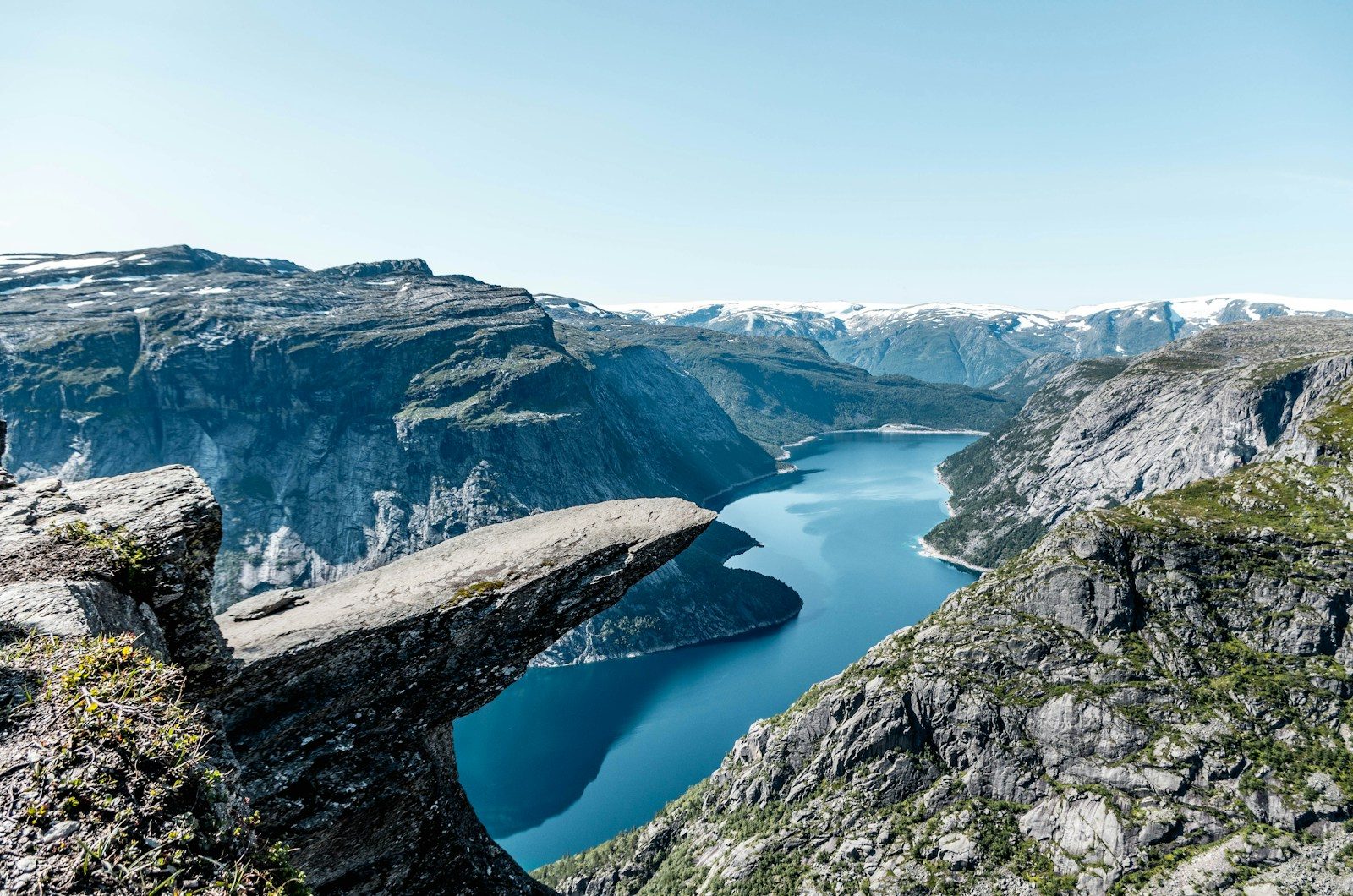
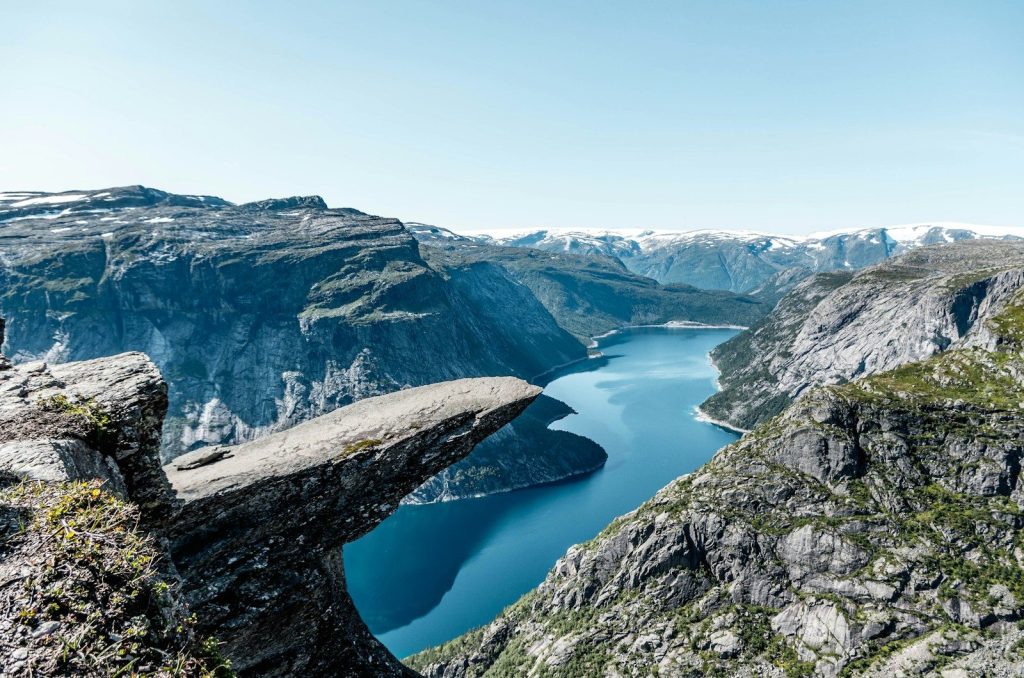
The outdoor access is not a postcard. It is a daily reality. The forests surrounding Oslo the marka have hundreds of kilometres of lit cross-country ski trails in winter. Bergen is ringed by seven mountains with hiking paths above the city.
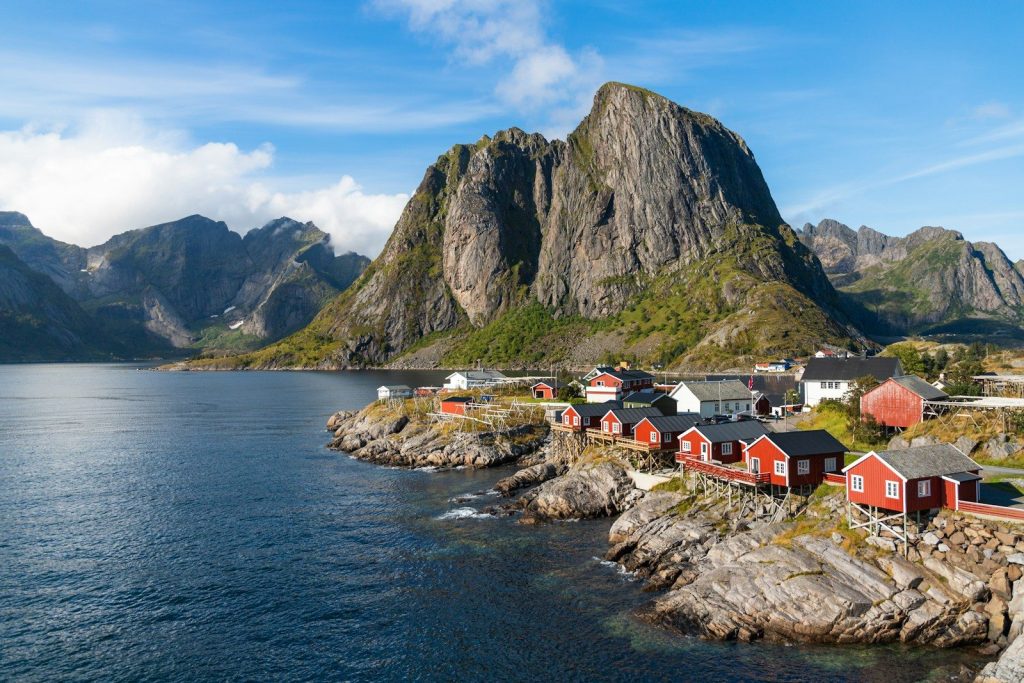
Tromsø’s Northern Lights run from September through March. The Lofoten Islands are a domestic weekend trip. Norway’s geography puts extraordinary nature within easy reach of ordinary daily life, and this consistently comes up as one of the top reasons people stay long after their original plans ran out.
Work-life balance is institutionally protected. Five weeks of statutory paid leave is standard. The concept of Feierabend the firm boundary between work time and personal time is as real in Norway as it is in Germany. Evening emails are not expected. Weekend work is not common. For people arriving from always-on work cultures, this adjustment takes some getting used to, and then becomes one of the things they value most.
Who Can Move to Norway?
Norway is not in the European Union, but it is a member of the European Economic Area (EEA) and part of the Schengen Area. That means it follows EU rules on freedom of movement for EEA citizens while running its own immigration system for everyone else.
EU and EEA citizens can move to Norway freely. They do not need a visa or a work permit. After three months of living there, they need to register their right of residence with UDI (the Norwegian Directorate of Immigration) and report to a local police station with proof of their reason for being in Norway an employment contract, self-employment evidence, student enrolment, or proof of sufficient financial means. The registration produces a certificate, and the process is relatively light by European standards.
Non-EU nationals including British nationals post-Brexit, Americans, Australians, Canadians, and most of the world need a specific residence permit. Norway does not have a passive income visa or a golden visa. If you are not a citizen of the EEA, you need either a job offer from a Norwegian employer, a contract with a Norwegian client for the Digital Nomad Visa, a student place, or a family connection to a Norwegian resident or citizen. There is no route based purely on having savings or investment income.

The Complete Guide
Main Ways to Live in Norway
The Skilled Worker Permit is the most common route for non-EU professionals moving to Norway with a job offer. Your Norwegian employer applies on your behalf to UDI, showing that the role meets Norwegian qualification and salary standards. Processing typically takes three to four months. The permit is tied to your specific employer initially, but you can switch employers after a period. Applications are submitted through the UDI online portal at udi.no.
The Digital Nomad Visa (Independent Contractor Visa) is Norway’s route for self-employed remote workers. It is more specific than most digital nomad visa programmes and requires careful reading before you build plans around it.
The Norway Digital Nomad Visa requires proof of being self-employed or working for a non-Norwegian company, proof of a minimum gross annual income of €35,719, and a signed contract with a Norwegian client stating a minimum salary for a skilled employee set at 189.39 NOK per hour, approximately 40 euros per hour.
The Norwegian client requirement is what makes this visa unusual. You cannot simply move to Bergen and work for your existing US or German clients from a café you must have at least one Norwegian client paying you at Norwegian skilled worker rates.
The permit is also tied to a specific assignment for a specific Norwegian enterprise the holder cannot take other work or work for other clients while in Norway. The application fee is €600. Processing takes approximately 15 days if applied for inside Norway at a local police station, or around 30 days through a Norwegian embassy abroad. The permit lasts up to two years and can be extended.
The Student Permit requires acceptance by a recognised Norwegian educational institution. Norway’s public universities charge no tuition fees one of the most remarkable higher education facts in the developed world and consistently attract strong international student populations. Students may work up to 20 hours per week.
Family Immigration is available to spouses, registered partners, cohabiting partners of at least two years, and dependent children of Norwegian citizens or qualifying permit holders. Income requirements for the sponsoring partner apply.
EU/EEA Registration is the simplified version for EU and EEA nationals. After three months, you register your right of residence with UDI and report to the local police.
Permanent Residency is available after three years of continuous qualifying residence for most permit categories some require five years. Norwegian citizenship requires seven years of legal residence plus proficiency in Norwegian at A2 oral level and a citizenship test.
Visa and Residence Rules
The rules in Norway follow a clear structure, and knowing the deadlines avoids problems later.
Non-EU nationals with approved permits must register at a local police station within one week of arriving in Norway. This step activates your physical residence card, which is the document you will use for everything from opening a bank account to registering with healthcare. The card typically arrives within a few weeks of registration.
EU and EEA nationals have three months before they must register their right of residence. During those three months, they can live and work freely. After three months, registration is required, and the documentation needed depends on your reason for being in Norway employment, self-employment, study, or sufficient means.
Tax residency in Norway begins once you have been in the country for more than 183 days in a calendar year, or when you have established your main home there. Once tax resident, your worldwide income is in principle taxable in Norway. The Norwegian Tax Administration (Skatteetaten) handles registration, filing, and assessment, and their website at skatteetaten.no is available in English.
First Steps After Arrival
Getting the administrative sequence right in the first weeks saves significant time and avoids cash flow problems.
Register at the police station. Non-EU nationals must do this within one week of arriving. Bring your passport, permit approval, and proof of where you are living. This starts the processing of your physical residence card.
Apply for your D-number or personnummer. A D-number is a temporary identification number for people not yet registered as permanent residents. You receive it through the police registration process. Once you have lived in Norway for six months or intend to stay long-term, you register with the Folkeregisteret (National Population Register) through Skatteetaten and receive a permanent personnummer. The personnummer is required for opening a bank account, registering with a GP, filing taxes, and accessing most Norwegian public services.
Get your tax card without delay. Contact Skatteetaten to receive your skattekort (tax deduction card). Your employer needs it to calculate how much tax to withhold from your salary. Without it, the default deduction rate is 50 percent of your gross salary the legal standard for new arrivals without a registered card. This is not a penalty, but the excess is only recovered when you file your annual tax return, creating a significant cash gap in the months before it is resolved. Get the card as soon as possible.
Open your Norwegian bank account. The main retail banks are DNB, Nordea, SpareBank 1, and Handelsbanken. All offer English-language online banking. Account opening requires your D-number or personnummer and your passport. Once your account is open, set up Vipps the Norwegian mobile payment app used universally for transfers, bill splitting, and many retail payments. Having Vipps is, for practical purposes, essential for daily financial life in Norway.
Register with a fastlege. Norway’s GP system assigns every resident to a specific family doctor (fastlege). You register through helsenorge.no. This registration is your entry point to all non-emergency public healthcare. GP visits cost a small co-payment of approximately NOK 170 to 200.
Get a Norwegian SIM card. Telenor and Telia offer the best network coverage, including in remote and mountain areas. Monthly plans with unlimited data run NOK 300 to 600 per month.
Best Places to Live in Norway
Norway’s cities offer genuinely different lifestyles, and the right choice depends on your work, budget, and the kind of daily environment you want.
| City | Avg Rent (1-bed, city centre) | Best For | Key Notes |
|---|---|---|---|
| Oslo | NOK 15,000 – 22,000 | Finance, tech, government, expat life | Most expensive; largest job market; best transport links |
| Bergen | NOK 11,000 – 16,000 | Fjords, outdoor lifestyle, digital nomads | 20–30% cheaper than Oslo; frequent rain |
| Trondheim | NOK 10,000 – 15,000 | Students, research, tech sector | NTNU university city; lower costs; growing tech scene |
| Stavanger | NOK 13,000 – 19,000 | Oil, gas, and energy engineering | High salaries; Equinor HQ; strong expat community |
| Tromsø | NOK 9,000 – 14,000 | Arctic living, Northern Lights, nature | Above Arctic Circle; polar nights; midnight sun |
| Kristiansand | NOK 8,000 – 12,000 | Families, sunshine, quieter lifestyle | Most sunshine in Norway; lower costs; growing appeal |
Oslo is where most internationally mobile professionals land, and for good reason. It combines the full range of employment sectors technology, finance, government, international organisations, healthcare with a compact, walkable city that sits at the meeting point of the Oslofjord and the marka forest. The public transport network is excellent.
The Oslo Ruter monthly pass costs NOK 870 and covers unlimited T-bane metro, tram, bus, and included ferries across all city zones one of the better urban transport deals among expensive European capitals. Popular expat neighbourhoods include Grünerløkka (creative, younger), Majorstuen (more established), Frogner (quieter, leafy), and St. Hanshaugen (central and walkable).
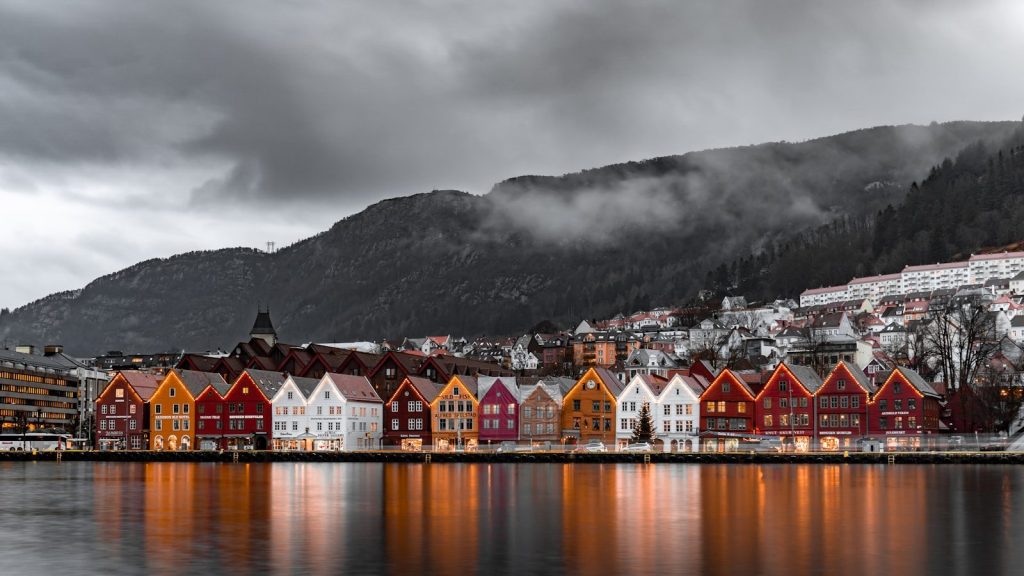
Bergen is Norway’s second city and the one that earns the most enthusiastic long-term praise from expats who chose it over Oslo. It is smaller, slower, and 20 to 30 percent cheaper. The seven mountains surrounding the city, the Bryggen wharf (a UNESCO World Heritage Site), and the fjord access within 30 minutes by car or ferry create an outdoor environment that Oslo cannot match.
The digital nomad and remote working community in Bergen has grown noticeably in recent years. The weather is the trade-off Bergen is one of the rainiest cities in Europe, and packing accordingly is not optional.
Trondheim is Norway’s academic heart, home to NTNU (Norwegian University of Science and Technology), and a city where the combination of lower costs, a young and international student population, and a growing technology sector makes it a strong choice for students, researchers, and tech professionals who do not need Oslo’s full scale.
Stavanger is driven almost entirely by the energy sector. Equinor, Schlumberger, Halliburton, and dozens of oil service firms are based here, and the resulting salary levels for qualified engineers and specialists are among the highest in Norway.
The international expat community historically centred on British and American oil workers has a well-developed English-language social infrastructure that makes it more immediately accessible for newly arrived non-Norwegian-speaking expats than some other cities.
Tromsø is a city unlike any other in Norway. It sits 350 kilometres above the Arctic Circle, experiences polar nights from late November to mid-January (no sun at all), and is one of the best places in the world to see the Northern Lights on clear nights between September and March. The midnight sun in summer brings 24-hour daylight from late May through late July.
The University of Tromsø, Norway’s northernmost university, gives the city a student energy, and a growing remote working community has developed around the combination of Arctic lifestyle and functional modern infrastructure.
The Complete Guide
Cost of Living in Norway
Norway’s overall living costs sit 81 percent above the global median, and Oslo ranks among the top five most expensive cities in the world. Anyone planning a move to Norway needs to budget with current, city-specific figures. Guides that describe Norway as merely “expensive” without providing actual numbers are not useful.
A single person living in Oslo should expect to spend NOK 35,000 to 50,000 per month for a comfortable lifestyle, or NOK 28,000 to 40,000 in Bergen. These numbers are high in absolute terms.
They make sense when set against Norwegian salaries: a software developer at a mid-sized Oslo tech company earns NOK 600,000 to 900,000 per year gross, and a senior oil engineer in Stavanger can earn well above NOK 1,000,000.
| Expense Category | Tromsø / Smaller Cities | Bergen / Trondheim | Oslo / Stavanger |
|---|---|---|---|
| Rent (1-bed, city centre) | NOK 9,000 – 14,000 | NOK 11,000 – 16,000 | NOK 15,000 – 22,000 |
| Groceries (single person) | NOK 3,000 – 4,500 | NOK 3,500 – 5,000 | NOK 3,500 – 5,500 |
| Utilities (electricity, heating, internet) | NOK 1,200 – 2,000 | NOK 1,500 – 2,500 | NOK 1,800 – 3,000 |
| Public transport (monthly pass) | NOK 500 – 700 | NOK 600 – 850 | NOK 870 |
| Dining out (moderate frequency) | NOK 2,000 – 3,500 | NOK 2,500 – 4,000 | NOK 3,500 – 5,500 |
| Dental and private supplements | NOK 300 – 600 | NOK 400 – 700 | NOK 400 – 800 |
| Approximate Monthly Total | NOK 16,000 – 25,300 | NOK 19,500 – 29,050 | NOK 25,070 – 37,670 |
Groceries stand out as one of the highest day-to-day costs, driven by import taxes and high wage costs throughout the supply chain. Budget-conscious expats shop at REMA 1000 and Kiwi, which are typically 15 to 25 percent cheaper than Meny or Coop, and adopt the Norwegian matpakke (packed lunch) habit to avoid expensive café and canteen food at work.
Weekly groceries for one person run NOK 700 to 1,200 depending on diet and shopping habits. Dining out is expensive: a mid-range restaurant meal typically costs NOK 200 to 350 per person, and a pizza delivery NOK 200 to 300.
Alcohol is heavily taxed and available for wine and spirits only at government Vinmonopolet stores. A standard bottle of wine costs NOK 130 to 200. Most Norwegians socialise with drinks at home rather than in bars, and this is a standard social pattern rather than a budget strategy.
Housing and Rentals
Norway’s rental market has two features that consistently catch newly arrived expats off guard, and knowing them before you start searching makes the process considerably less stressful.
The first is the deposit. Norwegian landlords typically require a security deposit of three months’ rent, though it can be as high as six months. This means you could need to pay up to four months’ total rent before you get the keys.
For an Oslo city centre apartment at NOK 16,000 per month, that means NOK 48,000 to 64,000 in upfront costs before you have spent a night there. This needs to be in your relocation budget as a fixed cost.
The second is the electricity situation. Norwegian rental listings on Finn.no the main national property platform typically quote rent excluding electricity. Electricity is metered separately and billed directly to you by the supplier in most cases.
Norwegian winters are cold and long, and heating costs for a poorly insulated older apartment can add meaningfully to the monthly bill. Always ask whether heating and electricity are included before agreeing to rent.
Standard lease terms run one year with automatic renewal. Month-by-month arrangements are rare at the full apartment level. Shared apartments (kollektiv) are common and affordable: a room in a shared Oslo apartment typically costs NOK 6,000 to 8,000 per month significantly cheaper than renting alone and a sensible entry point for newly arrived expats who want to get to know the city before committing to a neighbourhood.
Popular listings in Oslo and Bergen attract multiple applications within hours of posting. Speed matters. Have your documents ready employment contract or income proof, passport or residence card, and a brief personal introduction before you start viewing.
For newly arrived expats waiting for their residence card and Norwegian bank account to be processed, short-term furnished rentals through Airbnb or local furnished flat services work well for the first four to six weeks and provide the address needed for administrative registrations.
Healthcare and Insurance
Norway’s public healthcare system provides comprehensive coverage to all registered residents and is funded through general taxation and social security contributions. The overall standard of care is excellent.
Your access to the system works through the fastlege (GP) registration described in the first steps section. Once registered with a fastlege, you access all non-emergency healthcare through that GP. Co-payments apply approximately NOK 170 to 200 per GP visit and once your total annual co-payments reach the national exemption threshold (frikortgrensen, approximately NOK 3,000 per year), all further care for the remainder of the year is free.
Hospital and specialist treatment are fully covered for registered residents, with small co-payments for outpatient consultations. Emergency care is available to everyone in Norway regardless of status, and the emergency number for medical crises is 113.
Dental care for adults is almost entirely private and not covered by the public system. This is the area where Norwegian healthcare costs catch most expats off guard. A standard check-up and clean at a Norwegian dental practice typically costs NOK 800 to 1,500, and restorative work can cost several thousand kroner per procedure. Many expats arrange private dental insurance or budget separately for annual dental visits.
EU nationals arriving in Norway before their formal fastlege registration is complete can use the European Health Insurance Card (EHIC) for emergency and necessary treatment. Non-EU permit holders during the transition period should arrange short-term travel health insurance to cover any gap.
Banking and Money
Norway uses the Norwegian krone (NOK), not the euro. This is an important practical detail for anyone moving from a eurozone country or planning international transfers. Exchange rate fluctuations between NOK and EUR or USD affect the real value of foreign-currency income for people paid from abroad.
Opening a Norwegian bank account is the essential first financial step, and it requires your D-number or personnummer and passport. The main banks DNB, Nordea, SpareBank 1, and Handelsbanken all offer English-language online and mobile banking interfaces. Processing typically takes one to two weeks from application to active account.
Vipps is the financial app you will hear about within days of arriving. It is a mobile payment system operated through the Norwegian banking system that allows instant peer-to-peer transfers, retail payments via QR code, and bill splitting. It is used universally for everyday financial transactions and is, for practical purposes, essential.
For international transfers, Wise and Revolut are widely used by the Norwegian expat community for converting and transferring money at near-market exchange rates. These are significantly cheaper than traditional bank wire transfers for any amount above NOK 5,000. Norway’s domestic payment system (BankAxept) functions seamlessly for everyday spending.
The Complete Guide
Taxes and Work
Norway’s tax system is progressive and well-organised. The general income tax rate is 22 percent on net income after the standard personal deduction. A bracket surcharge (trinnskatt) applies to higher incomes, bringing the combined effective rate to approximately 26 to 34 percent for most professionals.
The total combined rate including social security contributions reaches a cap of 38.2 percent. This is notably lower than equivalent rates in Sweden, Germany, France, or the UK.
Tax residency is triggered once you have been in Norway for more than 183 days in a calendar year, or once you have established your primary home there. Once tax resident, your worldwide income is in principle taxable in Norway, with double taxation treaty relief for income already taxed elsewhere. Norway has treaties with most major countries.
The most important immediate tax action is getting your tax card (skattekort) from Skatteetaten as soon as you arrive. Without it, your employer withholds 50 percent by default. The annual tax return (skattemelding) is filed online through Skatteetaten’s portal, typically by 30 April each year.
Norway’s job market is strongest in specific sectors. Oil and gas dominates in Stavanger, paying some of the highest professional salaries available anywhere in Europe. Technology is growing across Oslo, Trondheim, and Bergen.
Healthcare employs a significant number of internationally recruited professionals, particularly doctors and nurses. Shipping and maritime services are strong in western Norway. Education and public sector roles are available across the country but generally require Norwegian language ability.
For remote workers on the Digital Nomad Visa, the tax situation is important to understand clearly. Staying in Norway for more than 183 days triggers tax residency, which means income from your Norwegian client and potentially your worldwide income becomes taxable in Norway. Tax advice from a Norwegian adviser before and during your stay is worth the cost.
Education and Family Life
Norway has a high-quality public school system (folkeskole) that is free for all resident children. Teaching is in Norwegian, and schools have established processes for integrating children who arrive without Norwegian language ability. The transition takes time typically one to two years before a child is fully comfortable in a Norwegian school setting but the support structures are genuine and well-funded.
International schools are available in Oslo, Bergen, Stavanger, and a few other cities. The Oslo International School and the International School of Stavanger are the two most established.
Annual fees run approximately NOK 120,000 to 200,000 per child, which is significant but covers high-quality English-medium education with IB curricula. Many employers in multinational companies offer school fee assistance as part of senior expat packages this is worth negotiating explicitly at the offer stage.
NTNU in Trondheim, the University of Oslo, and the University of Bergen are all internationally recognised universities. NTNU in particular ranks consistently in the global top 200 and produces graduates in engineering, natural sciences, and technology who go on to lead major Norwegian and international companies.
Childcare in Norway is among the most heavily subsidised in the world. The national maximum price for barnehage (kindergarten) is set annually by the government in 2026 it is approximately NOK 3,315 per month for a full-time place which is dramatically below the unsubsidised market rate and makes Norwegian childcare one of the most affordable in Western Europe for working parents.
Family life in Norway is shaped substantially by the outdoor culture. Children ski and skate from a young age as a matter of course. Friluftsliv the Norwegian philosophy of open-air life as essential to wellbeing means families spend weekends in the forest, by the fjord, or in the mountains as a normal routine rather than a special occasion.
For families moving from urban environments where outdoor access requires travel, this aspect of Norwegian life is one of the most consistently appreciated.
Daily Life and Transport
Norway’s transport infrastructure is genuinely good, and for residents of major cities, car ownership is optional rather than necessary.
The SJ Norge national rail network and local operators connect Norwegian cities by train. The Oslo to Bergen route takes approximately six to seven hours and is one of the most scenically dramatic train journeys in Europe.
Oslo to Trondheim takes approximately 6.5 hours. For faster intercity travel, domestic flights on Norwegian, SAS, and Wideroe are frequent and affordable when booked in advance NOK 300 to 900 for many routes.
Within Oslo, the Ruter network of T-bane metro, tram, bus, and ferry is comprehensive and runs until midnight on weekdays and around the clock on weekends. The NOK 870 monthly pass covers unlimited travel across all zones.
Bergen, Trondheim, and Stavanger all have functional local bus and ferry networks. Train and bus timetables and tickets are bookable through the Entur national journey planner at entur.no, which covers all Norwegian public transport in one place.
Cycling is well-supported in most Norwegian cities, with dedicated cycling infrastructure expanding year on year. Many Norwegians cycle to work from April through October. Bike-sharing schemes operate in Oslo, Bergen, and Trondheim at affordable monthly rates.
Car ownership is possible but expensive. Fuel is among the highest-priced in Europe, car insurance is significant, and urban parking can cost NOK 30 to 50 per hour in city centres.
Norway has the highest electric vehicle penetration of any country in the world in 2026, the majority of new cars sold in Norway are electric driven by generous tax incentives that make EVs substantially cheaper than petrol equivalents. If you do buy a car in Norway, an electric one is the financially rational choice.
Internet connectivity in Norway is fast and reliable. Fibre connections with 200 to 1,000 Mbps speeds are standard in residential buildings across all major cities at NOK 400 to 600 per month. Mobile data is widely available at NOK 300 to 600 per month for unlimited or high-data plans.
Language and Culture
Norwegian is the official language of Norway and is essential for full participation in daily life. In Oslo and among the professional classes of Bergen and Trondheim, English proficiency is extremely high arguably the highest in Europe after the Netherlands. You can navigate Oslo’s professional and social world in English for an extended period without feeling excluded.
But Norwegian is still necessary. Administrative documents, official correspondence, healthcare interactions outside major hospitals’ international units, and neighbourhood life all happen in Norwegian. Career progression beyond the most internationally-facing roles at multinational companies typically requires Norwegian proficiency.
The quality of social integration the transition from professional acquaintance to genuine friendship with Norwegian people correlates closely with language investment.
Norwegian is a Germanic language and relatively accessible for English speakers. The grammatical structure is simpler than German, and vocabulary has significant overlap with English. Most people who commit to learning reach functional conversational level within six to twelve months of consistent study.
The Goethe-Institut equivalent for Norwegian, Norskopplæring, operates through municipal adult education centres (voksenopplæring) in every Norwegian city, offering free or subsidised Norwegian language courses for registered residents. Online options including Duolingo’s Norwegian course and iTalki Norwegian tutors supplement in-person learning.
Norwegian culture runs on a few defining values. Equality (likhet) is fundamental hierarchy is genuinely flatter than in most European countries, and the social distance between a CEO and a junior employee in a Norwegian office is measurably smaller than in, say, a French or British equivalent. Directness is normal and not considered rude.
Punctuality matters. The concept of janteloven a cultural pressure toward not considering yourself better than others is real in Norwegian social dynamics and worth understanding early.
The seasons shape daily life dramatically. Summer, with its long evenings and sometimes 24-hour daylight in the north, brings an explosion of outdoor socialising. Winter in most of mainland Norway brings dark mornings and evenings, cold temperatures, and the need for psychological as well as physical preparation.
Seasonal affective disorder (SAD) is a real consideration for people who have not experienced northern winters, and investing in a daylight lamp and maintaining outdoor activity habits throughout winter makes a measurable difference to wellbeing.
The Complete Guide
Pros and Cons of Living in Norway
The genuine advantages are exceptional and consistently validated by people who live there. Safety that ranks near the top of any global measure. An outdoor environment of extraordinary quality accessible from every Norwegian city.
A public healthcare system that is comprehensive and well-staffed. Five weeks of statutory paid leave that is actually used. A tax burden that is lower than many comparable Western European countries at equivalent income levels.
A childcare system that is genuinely affordable for working parents. A natural trustworthiness in institutions and infrastructure that reduces the background anxiety of daily life.
The honest challenges are equally real. Norway is one of the most expensive countries in the world to live in, and the numbers require a Norwegian salary or a strong foreign currency income to sustain comfortably.
The Digital Nomad Visa requires a Norwegian client, which significantly limits its accessibility compared to similar programmes in other countries. The dark winters and particularly the polar nights in Tromsø and the north require preparation and active management that not everyone anticipates. Administrative processes take time.
Norwegian language, while accessible, requires genuine commitment. And for non-EU nationals, the permit quota of 8,500 per year means that even highly qualified people can face competition for available places.
Moving to Norway Checklist
Six to three months before:
Choose your residency pathway. Skilled worker permit applicants should begin the employer-led UDI application process early, as processing takes three to four months. Digital Nomad Visa applicants need to identify a Norwegian client contract before the visa can be applied for.
Gather documentation: apostilled criminal background certificate from your country of nationality and any country where you have lived in the past five years, university degree certificates, employment contract or income documentation. Begin Norwegian language learning. Even A1 level before arrival meaningfully reduces administrative and daily life friction.
One to two months before:
Arrange short-term furnished accommodation in Norway for your first four to six weeks Finn.no is the main search platform. Arrange bridging health insurance if you are a non-EU national without an EHIC card. Notify your home country tax authority of your departure date. Open a Wise or Revolut account for international transfers during the transition period before your Norwegian bank account is active.
Arrival week:
Register at the local police station within one week. Bring your passport, permit approval, and proof of accommodation. Apply for your D-number and tax card from Skatteetaten at the same time. Book your fastlege registration through helsenorge.no.
Open your bank account at DNB, Nordea, or SpareBank 1 with your D-number and passport. Set up Vipps once your account is active. Purchase a Telenor or Telia SIM with a data plan. Buy a Ruter monthly pass if you are in Oslo.
Ongoing:
Register with the Folkeregisteret for a permanent personnummer once you have been in Norway for six months or intend to settle long-term. File your annual skattemelding (tax return) by 30 April each year via skatteetaten.no. After three years of continuous qualifying residence, apply for permanent residency. After seven years, evaluate Norwegian citizenship.
Common Mistakes to Avoid
Not getting the tax card immediately. The 50 percent default deduction for new arrivals without a registered tax card is one of the most expensive and most avoidable mistakes in Norway. The excess is recovered through your tax return, but you will wait months to see that money. Contact Skatteetaten in your first week.
Underestimating the rental deposit. Three to six months of rent as a deposit plus the first month’s rent means the entry cost to renting in Oslo can easily reach NOK 50,000 to 80,000 before you have spent a week there. This is a fixed cost that must be in your relocation budget.
Assuming the Digital Nomad Visa works like other countries’ programmes. Norway’s Digital Nomad Visa requires a contract with a Norwegian client paying Norwegian skilled worker rates and prohibits work for other clients while in Norway. Carefully read the requirements at UDI before building a move around this visa.
Not learning Norwegian. English functions well in Oslo’s professional environment. It does not carry you through administrative processes, healthcare interactions, neighbourhood life, or long-term career progression. Start learning before you arrive and commit to consistent study once you get there. The payoff is significant.
Delaying paperwork. The chain of steps police registration, D-number, tax card, bank account, fastlege registration is sequential. Delays in one step push back everything that follows. Starting each step as soon as you are eligible rather than when it is convenient is the single biggest time-saver in the Norwegian arrival process.
The Complete Guide
FAQs About Moving to Norway
Is it hard to move to Norway?
For EU and EEA citizens, the administrative process is light and well-defined. For non-EU nationals without a job offer from a Norwegian employer, options are limited the Digital Nomad Visa requires a Norwegian client, and there is no passive income or investor residency route. With a qualifying job offer or a Norwegian client contract, the process is structured and manageable with six months of advance planning.
How much money do I need to live in Norway?
A single person in Oslo should budget NOK 35,000 to 50,000 per month for a comfortable lifestyle, or NOK 28,000 to 40,000 in Bergen. In smaller cities like Tromsø or Kristiansand, the same lifestyle runs NOK 20,000 to 30,000. As a liquid reserve before your first Norwegian salary, budget a minimum of four months’ expected monthly costs to cover rental deposits, setup expenses, and the period before your tax card is processed.
Do I need to speak Norwegian?
In Oslo’s international professional environment and at most multinational companies, English is sufficient for work. For administrative processes, healthcare, and neighbourhood life, Norwegian is genuinely necessary over the medium term. For career progression beyond internationally-facing roles, it is essentially required. Starting with Norwegian before you arrive and continuing consistently after arrival is the approach that produces the best results.
What city is best for expats in Norway?
Oslo for the broadest job market, transport, and international community. Bergen for outdoor lifestyle and lower costs. Stavanger for oil and gas professionals. Trondheim for students and tech workers. Tromsø for a genuinely unique Arctic experience. The right answer depends almost entirely on what you are there to do.
Can foreigners work in Norway?
EU and EEA nationals can work in Norway freely without any permit. Non-EU nationals need either a skilled worker permit tied to a specific Norwegian employer, or the Digital Nomad Visa with its Norwegian client requirement. Working in Norway without the appropriate permit is a legal violation that risks permit cancellation and future immigration complications.