Moving to Germany in 2026: The Complete Guide for Expats, Digital Nomads and Skilled Professionals
Germany does not need to sell itself particularly hard. It is the largest economy in the European Union, home to some of the world’s most respected engineering, technology, and pharmaceutical companies, and sits geographically at the centre of a continent that values freedom of movement.
For skilled professionals, students, and remote workers looking for a stable, high-functioning country to base themselves in, Germany has been on the shortlist for decades. What has changed in recent years is the accessibility. A series of significant immigration reforms most notably the introduction of the Opportunity Card and an updated EU Blue Card framework have made Germany more welcoming to international talent than at any point in its recent history.
That shift matters because the old reputation still lingers. Germany’s immigration system was, until recently, considered inflexible, employer-dependent, and linguistically demanding. The country was seen as a destination for people who already had a job lined up, not one where you could arrive, find your feet, and build from there.
The reforms passed since 2023 have genuinely changed that calculus. Combined with a healthcare system that functions, infrastructure that works, and a quality of life that Mercer consistently ranks among the best in the world, Germany in 2026 is a compelling destination for a much wider range of international migrants than it has ever been before.
This guide covers everything you need to make an informed decision and a well-prepared move from visa options and cost of living by city, to the Anmeldung process, healthcare, taxes, housing, cultural integration, and the bureaucratic realities that catch people off guard.
Is Germany Right for You?
The question deserves a direct answer before you get deep into logistics. Germany suits certain profiles of person extremely well and presents genuine friction for others.
The country works best for people with recognised professional qualifications in fields where German industry has clear demand: engineering, software development, medicine, natural sciences, skilled trades, and finance. The EU Blue Card is designed around this reality, and if you fit the profile, the pathway from application to permanent residency is one of the fastest and most clearly structured in Europe.
Germany also has a maturing digital nomad scene, particularly in Berlin, where co-working spaces, freelancer communities, and an international social environment make remote working genuinely viable.
Retirees are a more nuanced case. Germany does not have a dedicated passive income visa equivalent to Portugal’s D7. Without local employment, self-employment, or EU citizenship, the routes are narrower.
However, EU citizens face no barriers whatsoever, and non-EU retirees with strong connections to the country German heritage, a German partner, or long-term established residency do make it work.
The honest case against Germany centres on three things. First, the language. English proficiency in German cities is solid among younger professionals and in international workplaces, but day-to-day life appointments, official correspondence, neighbourhood interactions runs in German, and the assumption that you can navigate indefinitely without it is usually proved wrong. Second, the bureaucracy.
Germany’s administrative systems are thorough, paper-based in many contexts, and have a rhythm that requires patience and methodical preparation. Third, the cost. The narrative of affordable Germany belongs mostly to the early 2010s. Munich and Frankfurt share the top spot for the most expensive cities in Germany, followed by Berlin, Hamburg, and Cologne, and rents across all major cities have risen substantially over the past five years.
If you go in prepared, Germany rewards that preparation generously. Strong worker protections, 20 or more days of statutory paid leave, world-class public transport, excellent schools, and a healthcare system of genuine quality the social infrastructure that underpins life here is real and tangible.
Germany’s Main Cities and Where to Live
Germany has no single dominant megacity in the way that France has Paris or the UK has London. Power, culture, industry, and population are distributed across a network of major cities, each with a distinct character and economic base. Where you land will shape your daily life, your career opportunities, and your monthly budget more than almost any other decision you make.
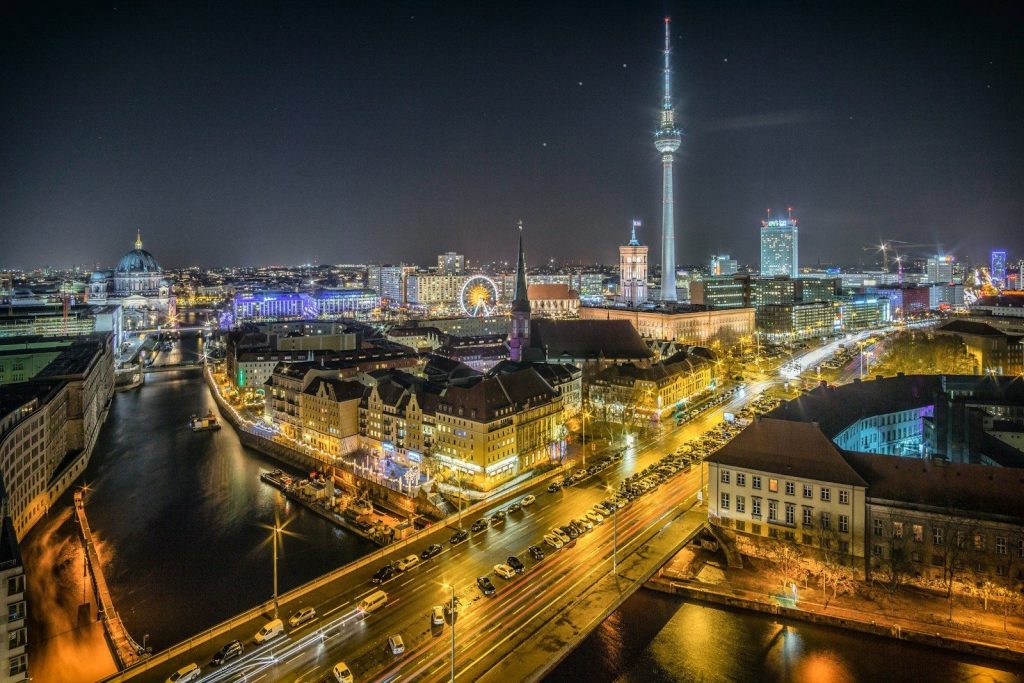
Berlin is the obvious starting point for most internationally mobile newcomers, and with good reason. The capital is the most cosmopolitan, the most English-friendly, the most culturally diverse, and relative to its status as a European capital still more affordable than comparable cities like Paris or Amsterdam. The average cost of renting a one-bedroom apartment in Berlin city centre is currently about €1,231 per month.
It is also the city with the most established expat infrastructure: Facebook groups, international schools, English-language events, and a freelancer community that is genuinely mature. Neighbourhoods like Prenzlauer Berg, Mitte, Friedrichshain, and Kreuzberg each have distinct atmospheres and different price points. Berlin is the default choice for digital nomads, creative professionals, tech workers, and startup employees.
Munich is Germany’s most expensive major city by a significant margin and also its most consistently liveable. In 2026, Munich remains the most expensive market by a significant margin, where a one-bedroom apartment in a central neighbourhood typically runs €1,500 to €2,000 per month in cold rent (Kaltmiete).
What you get in return is exceptional: outstanding public transport, proximity to the Bavarian Alps, a world-class food and beer culture, and a concentration of major employers in automotive, aerospace, technology, and insurance.
Siemens, BMW, Allianz, and MAN are all headquartered here. Families with children tend to find Munich particularly suited to long-term settlement, given the quality of public schools and the relative safety of its neighbourhoods.
Frankfurt is the financial capital of Germany and, by extension, one of the most important financial centres in the European Union post-Brexit. The city is smaller than it first appears on paper the city proper has around 750,000 residents but it punches well above its weight in terms of international connectivity.
Frankfurt Airport is Europe’s third busiest, making the city an obvious base for people who travel regularly for work. Frankfurt ranks 7th on Mercer’s 2024 quality of living index, the highest of any German city. Rents are high, the city can feel corporate at first, but the expat community in banking, consulting, and tech is substantial.
Hamburg is Germany’s second largest city, a historic port metropolis with a distinct northern character, a strong media and logistics sector, and neighbourhoods Eimsbüttel, Altona, Ottensen that are among the most pleasant urban residential environments in the country. Hamburg combines coastal charm with urban life and rents are lower than in Munich but still above average, especially in popular districts.
Stuttgart is the heart of Germany’s automotive industry Porsche and Mercedes-Benz are both headquartered here and offers strong employment in engineering and manufacturing. It is often overlooked by expats who default to the larger cities, but the quality of life is high and international school options have expanded significantly in recent years.
Leipzig and Dresden, in eastern Germany, represent the most compelling value proposition for those willing to look beyond the headline cities. Cities like Leipzig, Jena, or Dresden offer rents up to 50 percent lower than Munich or Berlin, while still offering good infrastructure and opportunities. Leipzig in particular has developed a growing creative and tech scene, a strong university, and a cultural life that surprises most visitors who arrive expecting something peripheral.

The Complete Guide
Visa and Residency Options in Germany
Germany’s visa landscape underwent substantial reform with the Skilled Immigration Act (Fachkräfteeinwanderungsgesetz) and its subsequent updates. The result is a system that is more flexible and more accessible than it was five years ago, though it still rewards those who understand how the different pathways work.
EU, EEA, and Swiss citizens can move to Germany freely, register their address through the Anmeldung process (more on that below), and begin working without any additional visa or permit. The process is administratively simple by German standards.
Non-EU citizens need either a national visa (Type D) or a residence permit. The most important options in 2026 are:
The EU Blue Card (Blaue Karte EU) is Germany’s flagship route for highly qualified non-EU professionals with a job offer. The 2026 salary thresholds are €50,700 gross per year for standard occupations and €45,934.20 for shortage occupations including IT, engineering, and healthcare.
For IT specialists in particular, a significant reform now allows the Blue Card without a formal university degree: IT specialists with at least three years of relevant professional experience in the past seven years can qualify, provided they meet the salary threshold. The Blue Card offers an accelerated path to permanent residency: Blue Card holders can apply for permanent residence after just 27 months with basic German at A1 level, or after only 21 months with B1 German proficiency.
Spouses receive the right to live and work in Germany without restrictions under simplified family reunification rules. You can find the official EU Blue Card requirements and application forms on the Make it in Germany portal, the German government’s official resource for international skilled workers.
The Opportunity Card (Chancenkarte), introduced in mid-2024 and now fully operational, is one of the most genuinely innovative immigration instruments Germany has introduced in a generation.
It is a revolutionary one-year residence permit that allows you to come to Germany to look for a job no pre-existing contract required. It works on a points-based system: a recognised degree or vocational qualification earns four points; B2 German earns three, B1 earns two, A2 earns one; a C1 English certification earns one. You need a minimum of six points.
Most senior professionals with a relevant degree hit six to eight points without needing German language skills if they can demonstrate C1 English. While in Germany on the Opportunity Card, you can work up to 20 hours per week and undertake trial employment, allowing you to build relationships with potential employers before committing.
The National Visa for Employment (D-Visa) covers a broader range of employment situations where the EU Blue Card does not apply for instance, where the salary threshold is not met but the employer has demonstrated a need. This visa is employer-sponsored and requires approval from the Federal Employment Agency (Bundesagentur für Arbeit) in most cases.
The Student Visa is straightforward for those enrolled at a recognised German university. Germany’s public universities charge minimal tuition semester fees of €100 to €400 are typical which makes it one of the most cost-effective higher education options in the developed world. Students may work up to 20 hours per week during term time.
The Freelancer Visa (Freiberufler-Visum) applies to independent professionals in recognised liberal professions writers, designers, certain engineers, and IT consultants. Registration with the local Finanzamt and a credible client base are required. Berlin has the most established administrative infrastructure for processing these applications, and its reputation as Germany’s freelance capital is reflected in the practical experience of the local Ausländerbehörde.
One administrative step that catches almost every newcomer off guard is the Anmeldung the mandatory address registration. Within 14 days of moving into a new address, you must register at your local Einwohnermeldeamt (residents’ registration office) or Bürgeramt. You need a signed Wohnungsgeberbescheinigung (landlord’s confirmation of tenancy) from your landlord to complete this.
Without the Anmeldung, you cannot open a German bank account, register for health insurance, or apply for a residence permit. Book your appointment as early as possible appointment slots at Bürgeramts in Berlin, Munich, and Frankfurt fill weeks in advance.
Cost of Living in Germany: What to Budget
The most consistent mistake expats make when budgeting for Germany is using figures that either predate the rental market increases of recent years or that average out the enormous gap between cities. A realistic budget requires city-specific numbers.
Germany’s Deutschlandticket is one of the best transport deals in Europe €63 per month gives you unlimited travel on all local and regional trains, buses, trams, and metros across the entire country. That is the one budget item that applies across the board and flatters the overall monthly total considerably.
The table below gives a working monthly budget for a single professional in four major cities.
| Expense Category | Leipzig | Berlin | Hamburg | Munich |
|---|---|---|---|---|
| Rent (1-bed, city centre) | €650 – €800 | €1,200 – €1,600 | €1,100 – €1,500 | €1,500 – €2,000 |
| Utilities (Nebenkosten) | €150 – €200 | €200 – €300 | €200 – €280 | €220 – €350 |
| Groceries | €200 – €280 | €250 – €350 | €250 – €350 | €280 – €380 |
| Deutschlandticket | €63 | €63 | €63 | €63 |
| Health insurance (GKV) | ~14.6% of salary | ~14.6% of salary | ~14.6% of salary | ~14.6% of salary |
| Internet | €30 – €50 | €35 – €55 | €35 – €55 | €35 – €55 |
| Dining out / leisure | €150 – €250 | €200 – €350 | €200 – €320 | €250 – €400 |
| Approximate Monthly Total | €1,443 – €1,843 | €2,148 – €3,014 | €2,048 – €2,763 | €2,548 – €3,648 |
A note on health insurance: unlike many countries where it is a fixed monthly premium, statutory health insurance (Gesetzliche Krankenversicherung / GKV) in Germany is a percentage of your gross salary the standard rate is approximately 14.6 percent, split equally between employer and employee.
This means higher earners pay more but also have no additional out-of-pocket costs for most healthcare services. Employees earning above the income ceiling (Versicherungspflichtgrenze, currently around €69,300 per year) can opt into private health insurance instead.
Groceries in Germany are moderate compared to other European countries. Budget supermarket chains Aldi, Lidl, Penny, and Netto offer genuinely affordable everyday shopping, while REWE and Edeka provide more variety at slightly higher prices. Eating out is reasonable by the standards of northern Europe: a casual dinner runs €15 to €18, and a sit-down restaurant for two with drinks typically costs €50 to €70.
One additional line item worth knowing: the Rundfunkbeitrag (broadcasting fee), commonly called the GEZ fee, is a mandatory household contribution of €18.36 per month that covers public broadcasting (ARD, ZDF, Deutschlandradio). It applies to every household in Germany regardless of whether you watch or listen to public media.
Finding Housing and Renting in Germany
The German rental market has its own terminology, logic, and conventions that are worth understanding before you start searching, because misunderstanding them is both common and expensive.
The first and most important distinction is between Kaltmiete (cold rent) and Warmmiete (warm rent). Kaltmiete is the base rent excluding utilities this is the number typically displayed in listings.
Warmmiete includes Nebenkosten (ancillary costs: heating, water, waste collection, building insurance) but usually excludes electricity and internet, which you arrange separately. When comparing apartments, always establish whether the listed price is Kalt or Warm. Utilities typically add €150 to €250 per month depending on the apartment size and building age.
Deposits in Germany are typically three months of Kaltmiete, held in a separate account and returned at the end of the tenancy minus any legitimate deductions for damage. Agency fees (Maklergebühren) are now legally the responsibility of the party who commissioned the agent which in most cases is the landlord following a 2015 reform of the tenancy law.
This means you should not normally be paying agent fees directly, though it still happens in practice with some less scrupulous landlords.
The Wohnungsgeberbescheinigung (landlord’s confirmation form) is not optional. Without it, your Anmeldung cannot be completed, and without your Anmeldung, your entire administrative life in Germany stalls. Establish this expectation with your landlord before signing.
For apartment hunting, the major German portals are ImmobilienScout24, Immowelt, and WG-Gesucht. WG-Gesucht is the dominant platform for Wohngemeinschaft (WG) shared apartment listings, which are particularly common among younger expats and students. Shared flats remain the most affordable option in expensive cities a room in a Berlin WG typically costs €600 to €900 per month, all-inclusive.
You will likely be asked for a Schufa-Auskunft a credit history report from Germany’s main credit bureau, Schufa. As a new arrival, you will not have a German credit history, which some landlords treat as a risk. Solutions include offering additional months of deposit upfront, providing income documentation, or using an employer guarantee letter. Having your Anmeldung, bank account, and employment contract in place before searching substantially improves your negotiating position.
One cultural note: German apartments are frequently let unfurnished to an extreme degree meaning literally no kitchen, no light fixtures, and bare walls. The kitchen unit (Einbauküche) is a separate purchase or negotiation. This is standard practice, not an oversight, and first-time renters in Germany are routinely surprised by it.
The Complete Guide
Healthcare and German Social Security
Germany’s healthcare system is considered one of the best in the world and, for most residents, it is both mandatory and largely employer-funded, which makes it less of an individual budget decision and more of an administrative formality. Understanding how it works is still important.
The system is divided into two tracks. Statutory health insurance (Gesetzliche Krankenversicherung / GKV) covers employees earning below the annual income ceiling and is the default for most new arrivals. The major GKV providers AOK, Techniker Krankenkasse (TK), Barmer, and DAK all offer broadly similar coverage, but differ in supplementary benefits, English-language service quality, and administrative efficiency.
TK has a strong reputation among expats for its English-language support and digital services. You can compare providers and find contact information through the GKV Spitzenverband.
Coverage under the GKV is comprehensive: GP visits, specialist referrals, hospital treatment, maternity care, dental treatment (with some co-payments), and mental health services are all included. Prescription co-payments are modest typically €5 to €10 per medication.
Family members without their own income can be covered under a single GKV policy at no additional cost, which is a significant financial advantage for families compared to private insurance models.
Private health insurance (Private Krankenversicherung / PKV) is available to employees earning above the Versicherungspflichtgrenze, self-employed individuals, civil servants, and high earners. PKV typically offers shorter waiting times, access to senior consultants (Chefarztbehandlung), and private rooms during hospital stays.
The trade-off is that premiums are age and health-status dependent, which means PKV becomes substantially more expensive as you age and can present financial challenges in later years. Most expats starting out in Germany default to GKV unless their income level or employment status makes PKV the only option.
Registration for health insurance is required before or immediately upon starting work. Some GKV providers allow online registration; others require an in-person visit. Your employer handles the payroll deduction once you provide them with your insurance membership number (Mitgliedsnummer).
Taxes, Banking, and Money in Germany
Germany’s tax system is thorough, progressive, and once you understand the structure relatively straightforward for employees. The complexity increases significantly for freelancers, self-employed individuals, and those with income from multiple countries.
Tax residency in Germany is established once you have a registered address (Anmeldung) or spend more than 183 days per calendar year in the country. Once tax-resident, you are subject to German income tax (Einkommensteuer or Lohnsteuer when deducted at source by an employer) on your worldwide income.
German income tax is progressive. The first approximately €11,784 (2026 basic allowance) is tax-free. Rates then rise from 14 percent through to a top rate of 42 percent on income above approximately €66,761, with a further 45 percent rate applying to very high incomes.
On top of income tax, employees pay a solidarity surcharge (Solidaritätszuschlag) though this has been eliminated for most taxpayers since 2021 and, if registered as a member of the Catholic or Protestant churches, a church tax (Kirchensteuer) of approximately 8 to 9 percent of your income tax liability.
Church tax registration is entirely voluntary: it requires actively being on the church register. Expats who were never registered with a German church have no obligation.
Germany has double taxation agreements with most major countries, including the United States, the United Kingdom, Australia, Canada, and India. These treaties prevent the same income being taxed fully in both jurisdictions, but they do not eliminate the administrative requirement to file in both countries. US citizens in particular should be aware that American tax obligations follow citizenship globally, requiring annual IRS filings regardless of residence.
A German tax advisor (Steuerberater) familiar with cross-border situations is worth engaging from the outset. The Federal Central Tax Office (Bundeszentralamt für Steuern) publishes current rates and treaty information.
Banking in Germany is accessible but has some quirks. The traditional German approach to banking is conservative and cash-heavy by European standards Germany has historically had a higher cash usage rate than most comparable economies, though this is shifting.
For everyday banking, digital banks like N26 and Revolut are widely used by expats for their English-language interfaces and low international transaction fees. For salary payments, direct debits, and official transactions, a German bank account at an established institution Deutsche Bank, Commerzbank, Sparkasse, or Postbank is generally recommended.
Most landlords and employers expect a German IBAN. Opening an account typically requires your Anmeldung confirmation, passport, and in some cases your Aufenthaltstitel (residence permit). SEPA transfers within the Eurozone are free and typically settle within one business day.
Work, Digital Nomad Life, and Remote Working
Germany’s reformed immigration framework has created genuinely new possibilities for people who want to build a professional life in the country without having a pre-existing job offer.
For employed professionals, the EU Blue Card remains the gold standard. Once obtained, it allows direct hiring by a German employer with employer-sponsored relocation, and the pathway to permanent residence is among the fastest for any major European economy.
For those without a job offer, the Opportunity Card (Chancenkarte) represents a meaningful shift. You can live and work part-time in Germany for up to twelve months while searching for a qualifying position. Cities like Berlin and Munich have established co-working ecosystems Mindspace, WeWork, Factory Berlin, and dozens of independent spaces that cater specifically to international remote workers and provide both workspace and community.
Freelancers operating in Germany fall into two categories that have significant administrative implications. Freiberufler (liberal professionals) which includes writers, designers, certain IT consultants, engineers, and other classified professions register directly with the Finanzamt, issue invoices with VAT (Mehrwertsteuer), and are not required to join the Handelskammer (Chamber of Commerce).
Gewerbetreibende (commercial business operators) must register with the Ordnungsamt, join the Chamber of Commerce, and in some cases pay the Gewerbesteuer (trade tax). Misclassification is a common and costly mistake if you are unsure which category applies to your situation, a Steuerberater consultation before you register is well worth the fee.
For people working entirely remotely for foreign employers while living in Germany, the position is straightforward in principle but requires attention: you are a German tax resident, your worldwide income is taxable in Germany, and your employer may have payroll and social security obligations in Germany depending on the employment structure.
Remote workers who treat their German residency as an invisible backdrop to a foreign employment contract can find themselves in a complicated position when tax season arrives.
Day-to-Day Life: Language, Culture, and Integration
Learning German is not optional in the way that learning Portuguese might be described as strongly advisable. It is, in practice, necessary for a full and independent life in Germany outside of a handful of internationally-oriented workplace environments.
The language requirement for the Opportunity Card includes English at B2 level as a partial substitute for German, and there is no language requirement at the point of EU Blue Card application. But outside the office, interactions with the Bürgeramt, the Finanzamt, your Krankenkasse, your landlord, and your neighbours will be in German.
Healthcare outside major international clinics is conducted in German. Official correspondence arrives in German. Even in Berlin, where English proficiency is high among younger people, assuming that you can operate fully in English is a fragile strategy.
The Goethe-Institut, with centres in most major countries and cities across Germany, remains the gold standard for structured German learning. Online platforms like Babbel (German-founded and German-focused) and italki provide supplementary options.
Culturally, Germany rewards some adjustment of expectations. Punctuality is a genuine social norm, not a cliché arriving late to appointments, meetings, or social arrangements is considered disrespectful in a way that goes beyond professional convention.
Privacy is valued highly: German neighbours may not introduce themselves for months, which newcomers from more socially outgoing cultures sometimes misread as coldness. It is not coldness so much as a different calibration of what constitutes appropriate social space.
The concept of Feierabend the clear, firm boundary between work time and personal time is deeply embedded in German professional culture. Calls and emails after work hours are generally not expected to be answered, and the respect for the working day’s end is a genuine cultural institution rather than a formal rule. For people coming from always-on work cultures, this adjustment is usually experienced as a very welcome one.
Integration into genuine local life, as distinct from the expat social circuit, takes deliberate effort. Vereine Germany’s extraordinary network of registered clubs covering every conceivable sport, hobby, and cultural activity are one of the best pathways into local community. Most towns and cities have a Vereinsregister accessible through the local Amtsgericht.
Sprachkurse (language courses) through the VHS (Volkshochschule, the public adult education centres available in every German city and town) offer both structured German learning and an immediate entry point into local social networks.
The Complete Guide
Transport, Safety, and the Environment
Germany’s transport infrastructure is one of its genuinely exceptional qualities, and it gets more useful once you understand how the different layers of the system work together.
Within cities, the combination of U-Bahn (underground metro), S-Bahn (suburban rail), trams, and buses creates networks that are dense enough to make car ownership unnecessary for most urban residents.
The Deutschlandticket at €63 per month covers all local and regional public transport across the entire country it is, by any objective measure, extraordinary value. Deutsche Bahn, the national rail operator, connects the major cities with a mixture of ICE (Intercity Express) high-speed trains and IC/EC intercity services.
Long-distance train journeys Berlin to Munich in roughly four hours, Hamburg to Frankfurt in under four hours are efficient and increasingly used as an alternative to domestic flying. You can book and plan routes through Deutsche Bahn’s website.
Cycling culture in Germany is mature and practical rather than aspirational. Most German cities have extensive dedicated cycling infrastructure, and a commuter bicycle is a standard household item rather than a lifestyle statement. In flatter cities like Berlin and Hamburg, cycling is a genuinely competitive travel option for journeys under eight kilometres.
Car ownership is more expensive in Germany than in most countries, partly due to the mandatory Kfz-Versicherung (motor insurance), road tax, and comparatively high fuel costs. For people living in major cities, the combination of Deutschlandticket, cycling, and occasional car-sharing (through services like Share Now or Sixt Share) covers most transport needs without the overhead of owning a vehicle.
Safety in Germany is genuinely strong. Violent crime rates are low by international standards, and most major cities are considered safe to walk around at night. Petty theft exists in tourist areas and on public transport, and the precautions that apply in any major European city apply here. Germany’s Federal Criminal Police Office (BKA) publishes annual crime statistics for those who want detailed regional data.
Germany’s environmental credentials are significant. The Energiewende (energy transition) is the country’s long-term commitment to renewable energy, and the infrastructure that supports sustainable living recycling systems, cycling networks, energy-efficient housing standards is woven into everyday life.
Germany’s complex waste sorting requirements (Pfand deposit system, colour-coded bins for paper, glass, plastics, and organic waste) require some initial orientation but become second nature quickly.
Bureaucracy, Pitfalls, and Common Expat Mistakes
No guide to moving to Germany is honest without spending adequate time on this section. The administrative processes here are genuinely demanding, and the cost of getting them wrong in terms of delays, fines, or immigration complications is real.
Missing the Anmeldung deadline. Registration is required within 14 days of moving in. Failure to register on time can result in a fine and, more significantly, will block your access to every other administrative process: bank account, health insurance, residence permit, everything. Do not wait until you have found a permanent apartment to initiate this process; if you are living in temporary furnished accommodation, register there first and update your address when you move.
Not understanding Kaltmiete vs. Warmmiete. Signing a lease on the basis of the listed Kaltmiete without factoring in Nebenkosten is one of the most reliable ways to end up with a monthly housing bill that is 20 to 30 percent higher than expected. Always request the full cost breakdown before signing.
Underestimating health insurance costs and timing. Health insurance is mandatory from your first day in Germany. There is no grace period. If you arrive without arranging coverage and then cannot access healthcare or register for insurance retroactively, you can face both healthcare gaps and potential penalties. Contact a GKV provider before you arrive and confirm your start date of coverage.
Assuming the Bürgeramt appointment will be available quickly. In Berlin, Munich, and Frankfurt, appointments for Anmeldung and other Bürgeramt services are routinely booked three to six weeks in advance. Start the booking process before you arrive. Some cities have introduced limited walk-in capacity, but relying on this in a major city is a gamble.
Not getting a Schufa report or understanding its implications. Germany’s credit culture is built around the Schufa score. Missed payments, unpaid bills, or defaulted contracts will damage your score and affect your ability to rent apartments or take out contracts for years. Pay bills on time, avoid subscriptions you do not use, and request your free annual Schufa report through Meine Schufa to know where you stand.
Freelancers misclassifying their business type. Registering as a Freiberufler when you should be a Gewerbetreibende or vice versa creates complications with the Finanzamt that are disproportionately difficult to unwind. Get a Steuerberater consultation before you register.
Step-by-Step Checklist: Before and After Your Move
The following timeline is calibrated to a target arrival date six months out and assumes a non-EU citizen applying for either the EU Blue Card or Opportunity Card.
Six to three months before:
Identify your visa pathway. If applying for the EU Blue Card, secure your job offer and verify salary compliance with 2026 thresholds. Have your qualifications checked against the anabin database for recognition status; if your university is not listed or not rated H+, commission a Statement of Comparability from the ZAB (this can take three to four months).
Begin German language learning at a minimum to A2 level for basic administrative functionality. Research cities based on your employer or job search target and compare cost-of-living implications.
Three to one month before:
Submit your visa application at the German embassy or consulate in your home country. Book temporary accommodation in Germany to give yourself a registered address for Anmeldung. Research GKV providers and select one; contact them to confirm your start date. Notify your current tax authority of your impending departure. Arrange apostilling of any documents that may be required (criminal background check, birth certificates, academic credentials).
Arrival week:
Book and attend your Bürgeramt appointment for Anmeldung as early as possible ideally within the first few days. Bring your Wohnungsgeberbescheinigung, passport, and visa. Register with your chosen GKV provider using your Anmeldung confirmation. Open a German bank account. Apply for your Aufenthaltstitel (residence permit) at the local Ausländerbehörde. Get a German SIM card and establish internet service.
Ongoing:
Invest consistently in German language learning B1 proficiency meaningfully accelerates your path to permanent residency on the Blue Card and opens the full breadth of daily life. File your German Einkommensteuererklärung (annual tax return) by the July 31 deadline for the previous fiscal year, or October 31 if you use a Steuerberater.
Join a Verein of some kind in your area of interest it is genuinely the most effective route into the social fabric of German community life.
The Complete Guide
Conclusion: Is Moving to Germany Right for You in 2026?
Germany in 2026 is a country that has made a deliberate and genuine effort to become more accessible to international talent. The Opportunity Card, the updated EU Blue Card, and the Skilled Immigration Act represent a real shift in policy intent, not just rhetoric.
For engineers, software professionals, healthcare workers, researchers, and skilled tradespeople, the combination of a well-functioning economy, world-class infrastructure, fast-tracked permanent residency, and one of Europe’s most respected passports represents a serious long-term proposition.
The realities of bureaucracy, the language requirement, and the cost of living in the major cities deserve honest respect in the planning stage. Moving to Germany without a Steuerberater, without a realistic budget based on current Warmmiete figures in your target city, and without a credible plan for Anmeldung and health insurance within the first 14 days is a recipe for a stressful start. The preparation pays off.
Germany’s best quality is perhaps its reliability. The infrastructure works. The institutions are stable. The healthcare is real. The worker protections are enforced.
In a period when many expats are reassessing what they actually want from a country they choose to live in, Germany’s foundational strength has become a more compelling argument than it might have been in the era when lifestyle was the dominant consideration. It is not the easiest place to land in, but for those who invest in the relationship, it tends to hold.
If you are seriously planning a move, start with the Make it in Germany portal for immigration pathways, the Federal Foreign Office visa navigator for consular requirements, and How-to-Germany.com for the practical daily-life detail that official sources do not always cover. For tax questions, the German Bar Association (DAV) can help you find an accredited tax advisor or immigration lawyer in your area.