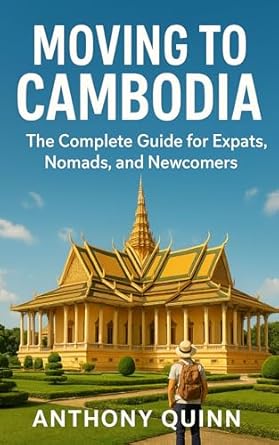
Moving to the Cambodia: Complete Guide for Expats, Digital Nomads & Foreigners
Cambodia does not ease you in gently. From the moment you land whether at Phnom Penh International Airport into the noise and heat and chaos of the capital, or at Siem Reap surrounded by the quiet industry of a town built entirely around one of the world’s greatest archaeological sites the country announces itself immediately and without apology.
It is loud, hot, complicated, occasionally maddening, and for a growing number of expats from North America, Europe, and Australia, it is exactly where they want to be.
The reasons people choose Cambodia are not difficult to understand once you look past the clichés. The cost of living is among the lowest in Southeast Asia for a country with functioning urban infrastructure. The visa situation while subject to periodic change remains among the most accessible and flexible in the region for long-term foreign residents.
The US dollar economy eliminates exchange rate anxiety for American expats in particular. The local people, shaped by a history that is both ancient and recent in ways that most visitors take time to fully understand, are genuinely warm toward foreigners who approach the country with respect.
And the food, the temples, the river life along the Mekong and the Tonle Sap, the morning markets, the evening street stalls daily life in Cambodia has a texture and a vividness that many expats find, once experienced, very difficult to give up.
This guide covers the full picture the practical, the administrative, and the cultural so that your decision to relocate to Cambodia in 2026 is made with clear eyes and solid preparation.
Is Cambodia the Right Place for You?
Cambodia is not the right destination for every expat, and being honest about that upfront is more useful than the breathless enthusiasm that characterises some relocation content about Southeast Asia.
Cambodia works exceptionally well for the following profiles:
- Retirees on fixed incomes who want to stretch a pension or social security payment significantly further than it goes at home, without entirely sacrificing quality of life or access to English-speaking services. The cost-of-living differential with North America, Australia, or Western Europe is substantial and real.
- Digital nomads and remote workers earning in dollars, pounds, or euros who want low overheads, warm weather, and a community of like-minded people. Phnom Penh and Siem Reap both have established coworking infrastructure and fast internet by Southeast Asian standards.
- NGO and development sector workers Cambodia hosts one of the highest concentrations of international non-governmental organisations per capita in the world, and Phnom Penh is a genuine hub for development professionals.
- English teachers for whom Southeast Asia provides the most accessible and well-compensated teaching market globally, with Cambodia offering competitive salaries relative to its cost of living.
- Entrepreneurs and small business owners drawn by low setup costs, a relatively light regulatory touch, and a genuinely entrepreneurial expat community.
- Budget-conscious adventurers who want genuine Southeast Asian cultural immersion ancient temples, river life, local markets without the tourist pricing that has increasingly characterised Thailand and Vietnam.
Cambodia is a harder fit for those who require sophisticated specialist healthcare immediately available, who are uncomfortable with infrastructure variability and bureaucratic inconsistency, who need a large formal corporate job market for local employment, or who find hot and humid tropical climates genuinely debilitating rather than merely uncomfortable.
An honest assessment of the pros and cons:
Pros: extremely low cost of living by any international standard, flexible and accessible long-term visa options, USD-denominated economy eliminating currency anxiety, warm and hospitable local culture (Khmer hospitality is genuine), strong and established expat communities particularly in Phnom Penh, extraordinary cultural and historical environment, excellent street food and dining at very low cost, easy regional travel within ASEAN.
Cons: significant infrastructure gaps including unreliable electricity in some areas, air and noise pollution particularly in Phnom Penh, bureaucratic inconsistency and periodic policy changes without warning, healthcare limitations outside the capital, road safety challenges, heat and humidity for ten or more months of the year, and an undercurrent of political complexity that requires awareness without necessarily dominating daily life.
Cambodia’s Main Cities and Where to Live
Cambodia’s geography is relatively compact about the size of Missouri with most expat life concentrated in a handful of cities and towns that each offer a very different experience of the country.
Phnom Penh
Cambodia’s capital of approximately two million people is the default for expats who need urban infrastructure the strongest concentration of international schools, the best private hospitals, the widest range of English-speaking professional services, the most developed coworking ecosystem, and the largest and most diverse expat community in the country.
It is also the economic and administrative heart of the country, which matters for those working in NGOs, business, government-adjacent roles, or the growing startup scene.
Phnom Penh is a city of genuine contrasts. The French colonial architecture of the riverside district, the chaos of the Russian Market (Tuol Tom Poung), the sobering history of Tuol Sleng Genocide Museum (S-21), and the gleaming new developments rising around BKK1 and Tonle Bassac coexist in a city that is simultaneously processing a very difficult recent history and building something new at considerable speed.
The expat neighbourhoods BKK1, BKK2, Toul Kork, and the Riverside each have their own character and price point, with BKK1 being the most established and most expensive.
The city’s traffic is challenging and worsening as car ownership rises. Air quality is a real concern during dry season when dust and pollution accumulate. But the restaurant and bar scene, the café culture, the access to international goods, and the sheer density of interesting people expats, development workers, entrepreneurs, journalists, artists make Phnom Penh one of Southeast Asia’s more underrated cities for long-term living.
Siem Reap
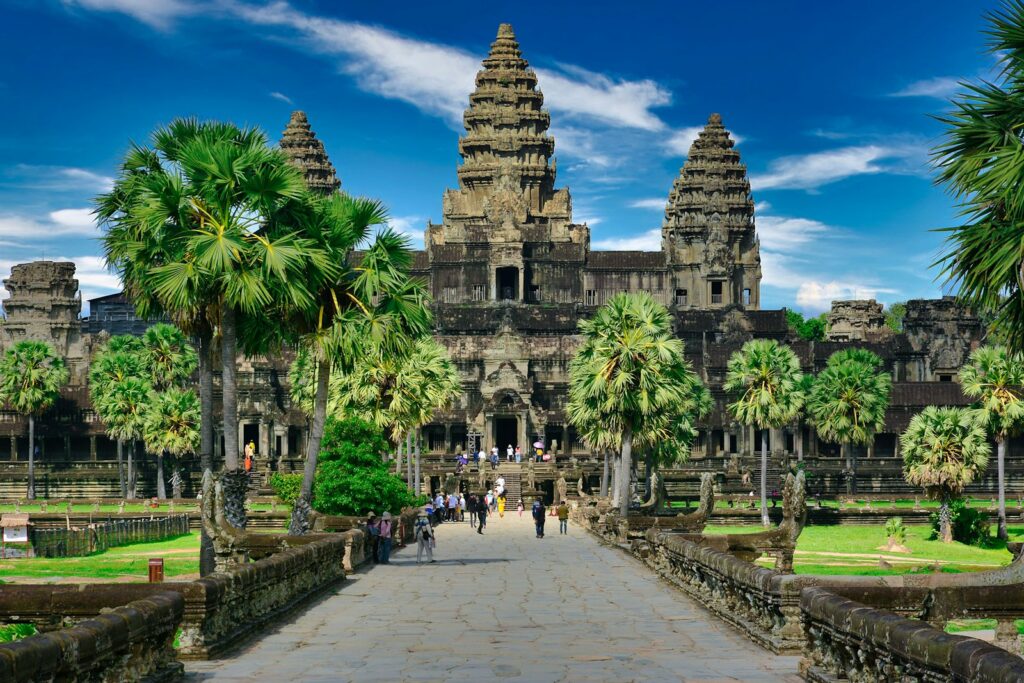
Siem Reap is built around Angkor Wat, and the entire economy of the town reflects that reality hotels, restaurants, tour operators, and transport services are configured around the millions of visitors who arrive to see the temples each year.
For expats who choose to live here, the trade-off is a smaller, slower town (population around 250,000) with a strong community feel and lower costs than Phnom Penh, offset by a more limited range of professional opportunities and services.
The expat community in Siem Reap is warm and tight-knit, and the town has a quality of life particularly for retirees and remote workers that many find superior to the noise and pollution of the capital. The temples are not just a tourist attraction: living minutes from Angkor Wat and being able to cycle through the complex at dawn before the tour groups arrive is a genuinely extraordinary daily privilege.
Siem Reap’s Pub Street area caters heavily to backpackers and short-stay tourists, but the residential neighbourhoods away from the centre offer a much quieter and more authentic environment.
Sihanoukville, Kampot, and Kep
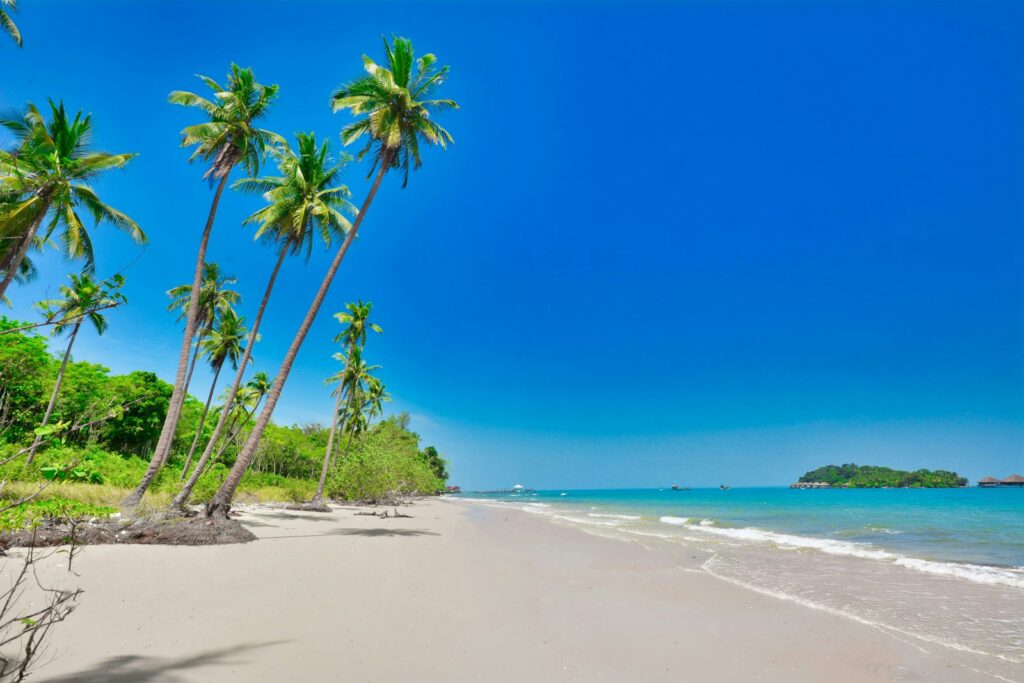
Sihanoukville on the Gulf of Thailand coast has had a turbulent recent history a wave of Chinese casino investment in the late 2010s transformed it dramatically, followed by a sharp reversal during the COVID-19 period that left the city in an uncertain state. The beaches remain beautiful, and the islands offshore Koh Rong, Koh Rong Sanloem are genuinely spectacular, but Sihanoukville proper requires clear-eyed assessment of current conditions before committing to a stay.
Kampot, 100 kilometres east along the coast, has become one of Cambodia’s most beloved expat towns and with good reason. Set on the Praek Tuek Chhu river with Bokor Mountain rising behind it, Kampot offers a genuinely charming, slow-paced rivertown lifestyle at very low cost, with a strong community of artists, writers, retired travellers, and remote workers who have found in it exactly the pace they were looking for.
Kep, a small former French colonial beach resort nearby, offers a similarly relaxed atmosphere with excellent seafood.
Battambang and Smaller Towns
Battambang, Cambodia’s second city, has a well-preserved French colonial town centre and a genuinely thriving arts scene it is home to the remarkable Phare Ponleu Selpak circus, which has produced performers who have toured internationally.
The expat community is small but welcoming, and the cost of living is among the lowest of any Cambodian city with reliable services. For those willing to sacrifice urban diversity for authenticity and value, Battambang is worth serious consideration.
Visas and Long-Term Stay Options in Cambodia
Cambodia’s visa and residency framework is more flexible than many Southeast Asian countries but requires careful navigation and regular management. The system is administered by the General Department of Immigration under the Ministry of Interior, and the rules particularly around extensions can change with limited notice, which is why many long-term expats work with local visa agents to manage their status.
Tourist Visa (T-Class)
The standard tourist visa (T-class) is available on arrival or through the official e-visa portal for most nationalities, valid for 30 days. It can be extended once for a further 30 days from within Cambodia. This is a short-term solution only not a pathway to long-term residency.
Ordinary Visa (E-Class) — The Expat Standard
The E-class ordinary visa is the foundation of most long-term expat stays in Cambodia and is the most important visa to understand. It is available on arrival at land and air borders for most nationalities and is initially granted for 30 days.
From there, it can be extended through the General Department of Immigration or through licensed visa agents the practical preference for most expats given the administrative friction of doing it independently.
Extension options include:
- One-month extension — for those who prefer flexibility or are still determining their long-term plans
- Three-month extension — the most common choice for working expats; available as both single-entry and multiple-entry
- Twelve-month extension — the most convenient option for committed long-term residents; multiple-entry is available and widely used
The 12-month E-class extension effectively functions as an annual residence permit for most practical purposes, though it does not confer legal residency status in the formal sense. Most long-term expats in Cambodia have been on rolling E-class extensions for years, and while this is legally somewhat informal, it is widely accepted and well-established in practice.
Retirement Visa
Cambodia introduced a formal retirement visa category for foreign nationals aged 55 and above. Applicants must demonstrate proof of sufficient financial means typically evidenced through bank statements or proof of pension income and the visa provides a pathway to longer-term legal residency specifically for retirees.
Requirements and specific income thresholds should be verified with the General Department of Immigration or a reputable local visa agent, as they are subject to periodic revision.
Business and Investor Visa
Foreign nationals establishing or investing in a Cambodian-registered business can obtain residency through the business visa route, linked to company registration with the Ministry of Commerce. Cambodia’s investment environment is administered by the Council for the Development of Cambodia (CDC), which provides official information on qualifying investment categories and procedures. A work permit must be obtained separately for those taking formal employment.
CM2H — Cambodia My 2nd Home
Cambodia’s CM2H programme often described as the country’s Golden Visa equivalent is designed for investors and retirees seeking a more formalised multi-year residency pathway through qualifying real estate investment or financial deposits.
The programme has evolved since its introduction and specific requirements should be verified through official channels, as thresholds and conditions have been subject to revision. For those considering property investment as part of their relocation strategy, CM2H provides a more structured legal residency framework than the standard E-class extension route.
Visa options at a glance:
| Visa Type | Who It Suits | Initial Duration | Extension Options |
|---|---|---|---|
| T-class Tourist | Short-stay visitors | 30 days | Once (30 days) |
| E-class Ordinary | Most long-term expats | 30 days | 1, 3, or 12 months |
| Retirement Visa | Expats aged 55+ with proof of income | Varies | Annual renewal |
| Business / Investor | Entrepreneurs, investors | Linked to company | Annual renewal |
| CM2H | Investors in real estate or deposits | Multi-year | Renewable |
Cost of Living in Cambodia: What to Budget
Cambodia’s cost of living is genuinely low by any international benchmark, and the contrast with North America, Western Europe, or Australia is substantial across almost every spending category. The figures below reflect realistic 2026 estimates for expats living comfortably at different lifestyle levels.
| Category | Phnom Penh (Monthly) | Siem Reap (Monthly) | Kampot / Smaller Towns (Monthly) |
|---|---|---|---|
| Rent — 1 bed apartment / condo | $400 – $900 | $250 – $600 | $150 – $400 |
| Rent — 2 bed apartment / villa | $600 – $1,500 | $400 – $900 | $250 – $600 |
| Utilities (electricity, water) | $60 – $150 | $50 – $120 | $40 – $100 |
| Groceries (couple, mix of local and imported) | $150 – $350 | $120 – $280 | $90 – $200 |
| Eating out (local restaurants daily) | $80 – $200 | $70 – $160 | $50 – $120 |
| Transport (Grab, tuk-tuk, motorbike rental) | $50 – $150 | $30 – $100 | $20 – $70 |
| Mobile data and internet | $20 – $50 | $20 – $45 | $15 – $40 |
| International health insurance | $80 – $200 | $80 – $200 | $80 – $200 |
| Entertainment and leisure | $100 – $300 | $70 – $200 | $50 – $150 |
A single person living comfortably in Phnom Penh a good one-bedroom apartment in BKK1 or Toul Kork, regular restaurant meals at a mix of local and international establishments, private health insurance, transport, and entertainment can expect to spend between $1,000 and $1,800 per month.
In Siem Reap, the equivalent lifestyle costs $700 to $1,300. In Kampot or smaller provincial towns, the same quality of life is achievable for $500 to $900.
Cambodia’s economy is significantly dollarised the US dollar is accepted everywhere in cities and most towns, with the Cambodian riel (KHR) used primarily for small change and transactions below $1. This makes budgeting straightforward for American expats and eliminates exchange rate risk for USD earners. For expats earning in other currencies, services like Wise and Revolut are used widely for favourable conversion rates.
One specific cost worth noting: electricity in Cambodia is among the most expensive in Southeast Asia per kilowatt-hour, and air conditioning which is essential for comfort in the tropical climate can make electricity bills meaningfully higher than comparable apartments in Thailand or Vietnam. Budgeting $60 to $150 per month for utilities in an air-conditioned apartment in Phnom Penh is realistic.
Finding Housing: Renting and Buying in Cambodia
Cambodia’s rental market is informal by the standards of most Western countries cash is king, contracts are often loosely written or entirely verbal, and the norms around deposits and lease terms are less standardised than expats from regulated rental markets are accustomed to. Understanding this before you start searching prevents frustration and protects you from the most common pitfalls.
Key points for renters:
- The primary channels for finding rental housing are Facebook groups Phnom Penh Housing, Phnom Penh Expats, and Siem Reap Expats Community are the most active and useful alongside local real estate agents and platforms like Realestate.com.kh, Cambodia’s leading property listing site.
- Rental contracts in Cambodia are typically short three to six months is common, with longer leases available for those who negotiate them.
- Deposits of one to two months’ rent are standard, paid in cash. Ensure the deposit terms are written clearly in any agreement before paying.
- Utilities electricity, water, and internet are typically billed separately from rent. Electricity is the most variable cost, and the per-unit rate charged by landlords sometimes differs from the national grid rate, so clarifying the billing method before signing is important.
- Furnished apartments are widely available and are the norm for expat rentals, particularly at the entry and mid-range price points.
Typical housing options:
- Serviced apartments and condos in BKK1 and Tonle Bassac in Phnom Penh offer the most hotel-like experience with included maintenance, pool access, and security at a premium over the standard market
- Villas standalone houses with private gardens are popular with families and those working from home who need space; available at competitive rates in residential neighbourhoods outside the expat-heavy centre
- Studio apartments in guesthouses or small residential buildings are the entry point for budget-focused expats, starting from as little as $200 to $300 per month in Phnom Penh and significantly less in provincial towns
- Shared housing is common among younger expats and digital nomads and further reduces the accommodation cost
Buying property in Cambodia:
Foreign property ownership in Cambodia is legally restricted foreigners cannot own land (classified as first-floor or ground-floor titles) in their own name. The Condominium Law of Cambodia permits foreign nationals to own strata-title units in registered condominium developments up to 70% of the units in any given building, making condominiums the primary vehicle for foreign property investment.
Alternative arrangements nominee ownership through a Cambodian national, or long-term land leases exist but carry legal risks that require thorough independent legal advice before proceeding.
Engaging an established, expat-friendly Cambodian law firm before any property transaction is strongly recommended. Several reputable firms in Phnom Penh specialise in real estate transactions for foreign nationals and can be identified through the Cambodia Chamber of Commerce.
Healthcare and Medical Services in Cambodia
Healthcare is the area where Cambodia’s infrastructure limitations are most consequential for expat decision-making, and it requires honest assessment. The public hospital system underfunded and under-resourced is not a realistic option for most foreign residents for anything beyond absolute emergencies.
Cambodia’s private hospital sector in Phnom Penh has improved considerably over the past decade, but it remains limited compared to neighbouring Thailand, and serious or complex medical conditions often require evacuation to Bangkok, Singapore, or further afield.
Private hospitals and clinics serving the expat community:
- Royal Phnom Penh Hospital — one of the leading private hospitals in the capital, associated with Bangkok Hospital Group. Offers a reasonable range of specialist services and English-speaking physicians. royalphnompenhhospital.com
- Khmer–Soviet Friendship Hospital (Calmette Hospital) — the main public referral hospital, but private facilities are strongly preferred by expats
- International SOS — operates a medical clinic in Phnom Penh catering specifically to the expat and diplomatic community, with evacuation coordination capabilities. internationalsos.com
- Sunrise Japan Hospital — a Japanese-managed facility in Phnom Penh with strong general medical services
- Naga Clinic — well-regarded by Phnom Penh expats for general practice and routine care
In Siem Reap, the Royal Angkor International Hospital is the primary private option and handles routine expat healthcare adequately, with evacuation protocols in place for cases beyond its capacity.
International health insurance is not optional for expats in Cambodia it is essential. The combination of limited local specialist capability and the real possibility of medical evacuation to Thailand or Singapore (costing $5,000 to $20,000 or more without insurance) makes adequate coverage a non-negotiable budget item.
Providers commonly used by Cambodia-based expats include Cigna Global, AXA International, Pacific Cross (which has strong Southeast Asia network coverage), and BUPA International. Annual premiums for an individual in their 40s typically run $1,000 to $2,500 depending on coverage level, deductible, and whether evacuation is included.
Pharmacies in Phnom Penh and Siem Reap stock a reasonable range of medications, often without prescription requirements that would apply in Western countries which is convenient for routine medications but requires care and medical advice for anything more complex.
Taxes, Banking, and Money in Cambodia
The Tax Situation
Cambodia’s tax framework is one of the more straightforward in Southeast Asia for foreign residents, and for those earning income from outside the country which covers most digital nomads, remote workers, and retirees the situation is genuinely favourable.
Cambodia does not tax foreign-source income. Expats living in Cambodia on income earned from employers or clients based outside the country are not subject to Cambodian income tax on that income. This makes Cambodia one of the most tax-friendly residency options available for remote workers and retirees with passive income from abroad.
For those earning locally whether through Cambodian-registered employment, a local business, or local clients Cambodian income tax applies on a progressive scale administered by the General Department of Taxation:
| Monthly Income (USD) | Tax Rate |
|---|---|
| $0 – $167 | 0% |
| $168 – $417 | 5% |
| $418 – $833 | 10% |
| $834 – $1,250 | 15% |
| Above $1,250 | 20% |
Cambodia has a limited number of double taxation agreements. US citizens retain their worldwide income tax obligations to the IRS regardless of where they live, which is a separate consideration requiring specialist US expat tax advice firms like Bright!Tax or Greenback Expat Tax Services specialise in this area.
Banking in Cambodia
Cambodia’s banking sector has developed considerably and offers genuinely functional options for expats, though it remains less sophisticated than banking in Thailand or Singapore.
ABA Bank is widely regarded as the best banking option for expats in Cambodia. Its mobile app is excellent by regional standards, supports multi-currency accounts (USD and KHR), and offers a VISA debit card with relatively low foreign ATM fees. Account opening requires a passport and a Cambodian address, and the process can be completed relatively quickly for E-class visa holders. ababank.com
ACLEDA Bank is Cambodia’s largest bank by branch network and is widely used for utility payments and local transactions. acledabank.com.kh
Wing Money and the Bakong system Cambodia’s National Bank-operated blockchain-based payment infrastructure represent the country’s significant investment in digital financial infrastructure. Wing Money is Cambodia’s leading mobile money platform and is used widely for peer-to-peer transfers, bill payments, and small business transactions.
Cambodia remains largely a cash economy outside the major cities. ATMs are widely available in Phnom Penh and Siem Reap and dispense US dollars. Card payment acceptance has improved in established restaurants and shops catering to expats and tourists, but smaller local establishments, markets, and transport operate almost entirely in cash. Carrying adequate USD cash for daily spending is the practical norm for most expats.
Work, Teaching, and Remote-Work Opportunities
Cambodia’s formal job market for foreign nationals is relatively small but offers genuine opportunities in specific sectors, and the remote work environment for those bringing income from outside the country is increasingly well-supported.
Common expat employment paths:
- English teaching remains the most accessible entry point for expats without specialist skills or development sector experience. Phnom Penh has a strong market for qualified English teachers (a CELTA or TEFL qualification significantly improves earning potential and school quality), with monthly salaries ranging from $800 to $2,000 depending on the institution, qualifications, and hours. International schools pay at the higher end; language centres and community schools, at the lower.
- NGO and development sector work represents a significant portion of the formal expat job market in Phnom Penh. The NGO Forum on Cambodia provides a directory of member organisations and is a useful starting point for those with relevant experience in development, humanitarian work, or public health.
- Entrepreneurship and small business restaurants, cafés, tour operations, guesthouses, and retail have historically attracted expats willing to navigate the regulatory environment. Foreign ownership of businesses in Cambodia requires a locally registered company, typically with a Cambodian co-director, and engaging a reputable local law firm for company setup is essential.
- Remote work and digital nomad income for those working for foreign employers or freelancing for international clients, Cambodia provides an excellent base: low overheads, decent internet, a strong coworking community, and no tax on foreign-source income.
Coworking spaces in Phnom Penh:
- The Hive — established coworking space in BKK1, well-regarded by the digital nomad community. thehive.asia
- The Factory Phnom Penh — creative hub with coworking, event space, and a community of local and international entrepreneurs
- Emerald Hub — popular with NGO workers and development professionals
In Siem Reap, a smaller but functional coworking scene has developed to serve the growing digital nomad community choosing the town as a base.
Day-to-Day Life: Language, Culture, and Integration
Cambodia will reward the expats who take the time to engage with it genuinely, and one of the most immediate ways to do that is through language. Khmer the official language of Cambodia is not an easy language for English speakers. The script requires learning from scratch, the phonology is unlike European languages, and the politeness register system adds another layer of complexity.
That said, basic conversational Khmer greetings, numbers, food ordering, directions is achievable with modest study and is received by Cambodian people with warmth and appreciation entirely disproportionate to the effort involved.
In Phnom Penh and Siem Reap, English is widely spoken in the service sector, tourist areas, and among younger urban Cambodians, which means daily life can be conducted primarily in English. But attempting Khmer even badly consistently opens doors, generates goodwill, and deepens the experience of living in the country in ways that purely English-based interaction cannot.
Resources for learning Khmer:
- The Royal University of Phnom Penh offers Khmer language courses for foreigners
- Several private language schools in Phnom Penh and Siem Reap cater specifically to expats seeking Khmer instruction
- NGO-run language programmes provide subsidised instruction in some cases
Culturally, Cambodia is shaped by a combination of Theravada Buddhism, the legacy of the Khmer Empire at its height, the profound trauma of the Khmer Rouge period (1975-1979) and its aftermath, and an extraordinary resilience and forward energy in the generation that has grown up since.
Respect for monks, elders, and the royal family is deep and genuine these are not merely formal conventions but reflect real social values. Dressing modestly when visiting wats (temples), removing shoes before entering homes and religious sites, and using both hands when giving or receiving objects are basic courtesies that are noticed and appreciated.
Key festivals and public holidays:
- Khmer New Year (Chaul Chnam Thmey) — mid-April, three days of celebration marking the traditional new year; the country largely shuts down and cities empty as people return to their home provinces
- Pchum Ben — the fifteen-day festival of the dead in September/October, one of the most important religious observances in the Cambodian calendar
- Water Festival (Bon Om Touk) — November, celebrating the reversal of the Tonle Sap River flow, with boat races in Phnom Penh and nationwide celebrations
- Independence Day — November 9th, marking independence from France in 1953
Joining the expat community through Facebook groups (Phnom Penh Expats, Siem Reap Expats Community), attending local events, and most importantly making deliberate effort to build relationships with Cambodian colleagues and neighbours rather than remaining entirely within the expat bubble is what transforms a stay in Cambodia from an extended holiday into a genuinely life-changing experience.
Transport, Safety, and Environment
Getting Around Cambodia
Cambodia’s transport options range from the genuinely excellent (Grab in Phnom Penh) to the authentically chaotic (intercity bus travel during monsoon season on provincial roads). Understanding what works and what requires patience is part of settling in.
In Phnom Penh and Siem Reap:
- Grab — the dominant ride-hailing app across Southeast Asia, operating in both Phnom Penh and Siem Reap. Provides tuk-tuks, cars, and motorbike rides at transparent, pre-agreed prices. grab.com
- PassApp — a Cambodian-developed ride-hailing alternative with good Phnom Penh coverage
- Tuk-tuks — the iconic three-wheeled covered carriages are ubiquitous and can be hired by the trip or by the hour for longer excursions
- Motorbike rental — widely available and a popular choice for expats who are comfortable on two wheels; costs run $5 to $15 per day for a basic scooter. Helmets are legally required and should always be worn.
- Private car rental with driver — practical for longer trips and available at reasonable rates through local agencies
Between cities:
- Intercity buses operated by companies including Phnom Penh Sorya, Giant Ibis, and Mekong Express connect major destinations. Giant Ibis in particular is consistently rated as the most reliable and comfortable option for the Phnom Penh to Siem Reap route (approximately six hours).
- Domestic flights operated by Lanmei Airlines and other regional carriers connect Phnom Penh and Siem Reap and are worth the price premium for those who value time over cost, particularly during rainy season when road conditions deteriorate.
Safety
Cambodia is generally safe for expats exercising ordinary awareness, and serious violent crime targeting foreigners is rare. The most commonly reported issues are:
- Bag snatching from motorbikes particularly in Phnom Penh, where thieves operating from moving motorbikes snatch bags, phones, and cameras from pedestrians and tuk-tuk passengers. Keeping bags on the side away from the road and avoiding visible phone use in slower-moving traffic addresses the majority of this risk.
- Petty theft in tourist areas and markets standard precautions apply
- Traffic Cambodia’s roads, and Phnom Penh’s traffic in particular, are a genuine safety risk. Road fatalities are among the highest per capita in Southeast Asia. Defensive driving, consistent helmet use, and avoiding driving at night on provincial roads are strongly advisable.
- Scams tuk-tuk commission scams, gem scams, and overpriced tour packages are common in tourist areas; research and a healthy scepticism protect effectively
Your home country embassy in Phnom Penh the US Embassy, UK Embassy, or relevant mission maintains current safety advisories and emergency contact information.
Climate and Environment
Cambodia has a tropical monsoon climate with two primary seasons. The dry season (November to April) brings cooler temperatures (relatively speaking 25 to 35 degrees Celsius) and minimal rainfall. The wet season (May to October) brings the southwest monsoon, with heavy afternoon rainfall most days, lush green landscapes, and the extraordinary annual flooding of the Tonle Sap lake that has sustained Cambodian civilisation for millennia.
Air quality in Phnom Penh is a genuine concern during dry season, when dust, vehicle emissions, and agricultural burning combine to create pollution levels that are problematic for those with respiratory conditions. Air quality monitoring apps including IQAir provide real-time data and are worth tracking during dry season months.
Drinking tap water in Cambodia is not safe bottled water or a good filtration system is essential. Dengue fever is endemic and mosquito bite prevention (long sleeves at dawn and dusk, repellent, mosquito nets) is sensible precaution, particularly during and immediately after the wet season.
Bureaucracy, Pitfalls, and Expat Mistakes to Avoid
Cambodia’s administrative system is characterised by informality, inconsistency, and a reliance on intermediaries particularly visa agents that can feel uncomfortable to expats from highly regulated administrative environments but is simply the reality of how things work.
Common bureaucratic friction points:
- Visa extension procedures that change without formal public announcement
- Inconsistent document requirements at different immigration offices
- Language barriers in government offices outside the capital
- Periodic crackdowns on specific visa categories or extension arrangements with limited advance warning
The most common and consequential expat mistakes:
- Overstaying your visa. The consequences range from fines (currently $10 per day) to entry bans. Track your visa expiry date carefully and initiate extensions with at least a week of buffer. A reputable visa agent manages this process reliably for a modest annual fee typically $50 to $150 above the official extension cost.
- Signing a lease without clear written deposit terms. Verbal agreements about deposit refunds are difficult to enforce. Ensure the deposit amount, conditions for return, and timeline are written explicitly in any lease agreement, however informal.
- Underestimating initial setup costs. The combination of first month’s rent, security deposit, utility connection, initial grocery stock, SIM cards, and miscellaneous setup expenses means the first month costs significantly more than subsequent months. Budget at least $500 to $1,000 above your regular monthly budget for the setup period.
- Skipping international health insurance. Medical costs for serious incidents in Cambodia, particularly evacuation to Thailand or Singapore, are financially devastating without adequate coverage. This is the most consequential financial mistake expats in Cambodia make.
- Buying property through a nominee arrangement without thorough legal advice. Nominee land ownership by a Cambodian national on behalf of a foreigner carries real legal risks and has resulted in disputes that are difficult or impossible to resolve through the courts. Independent legal advice from a reputable firm before any property investment is non-negotiable.
Checklist: Step-by-Step Before You Move to Cambodia
Six to three months before departure:
- Determine your visa pathway E-class ordinary visa with extensions, retirement visa, business visa, or CM2H based on your age, income profile, and plans
- Gather required documents: passport with at least six months of validity, passport-sized photos (many are needed for various administrative processes), proof of income or funds, and any health documentation
- Research neighbourhoods in your target city and identify temporary accommodation for the first four to eight weeks
- Arrange comprehensive international health insurance covering Cambodia and medical evacuation do not arrive without this
- Notify your home country bank of your move and ensure your cards work internationally; open an account with ABA Bank as soon as possible after arrival
- Download and set up Grab before you land you will need it immediately from the airport
One to two months before departure:
- Book temporary accommodation Airbnb has good coverage in Phnom Penh and Siem Reap, or established guesthouses in the expat neighbourhoods provide reliable short-stay options while you find a longer-term place
- Research international schools or language programmes if relocating with children
- Arrange any prescription medications for at least three months’ supply, as availability in Cambodia is variable
- Join the key Facebook groups Phnom Penh Expats, Phnom Penh Housing, Siem Reap Expats Community and begin building knowledge of current conditions from people on the ground
- Prepare a cash buffer of at least $2,000 to $3,000 in USD for initial setup costs
Arrival week:
- Obtain your E-class visa on arrival (or use the e-visa if obtained in advance) and begin planning the first extension immediately do not wait until the last week
- Get a local SIM card at the airport Smart, Metfone, and Cellcard all offer good data plans; expect to pay $10 to $20 for a starter package with adequate data
- Open your ABA Bank account with your passport and address details
- Begin the neighbourhood walk-around visiting target areas on foot, talking to local expats in cafés and coworking spaces, and viewing rental apartments in person gives infinitely more useful information than any online research
- Connect with a reputable local visa agent for ongoing extension management recommendations circulate reliably in the expat Facebook groups
Conclusion — Is Moving to Cambodia Right for You in 2026?
Cambodia in 2026 is a country of genuine contradictions that somehow resolve themselves, for the right kind of expat, into something deeply compelling. It is simultaneously one of the most affordable and one of the most complex countries in Southeast Asia to navigate as a foreign resident. It is extraordinarily beautiful and culturally rich, and administratively inconsistent and sometimes frustrating. It is warm and hospitable in human terms and demanding in practical ones.
The expats who thrive in Cambodia are those who approach the country with flexibility, genuine curiosity, and a willingness to engage with the reality in front of them rather than the idealised version they arrived with. Those who come expecting the administrative predictability of Germany or the infrastructure of Singapore will be quickly disappointed.
Those who come prepared for the informality, armed with adequate health insurance, and genuinely interested in the country and its people tend to find something that is very hard to replicate elsewhere: a life of real richness, real community, and real daily pleasure at a cost that seems almost implausibly low by Western standards.
The paperwork is manageable especially with a good visa agent. The language is learnable, at least to the level that matters for daily respect and connection. The heat adjusts to, mostly. And on the other side of the initial friction is a country that rewards sustained engagement with remarkable generosity in its landscapes, its temples, its food, its festivals, and above all in the warmth of its people, who have been through more than most and emerged with a capacity for joy and hospitality that continues to surprise and move the expats who choose to make Cambodia home.