Moving to Switzerland in 2026: The Complete Guide for Expats, Digital Nomads and International Professionals
Switzerland is not the easiest country in the world to move to. It will tell you that upfront, through its quota system for non-EU workers, its strict cantonal registration requirements, and a cost of living that makes even well-paid professionals stop and recalculate. But those who do make it there and hundreds of thousands of internationally mobile people have built long, rewarding lives in Switzerland tend to stay.
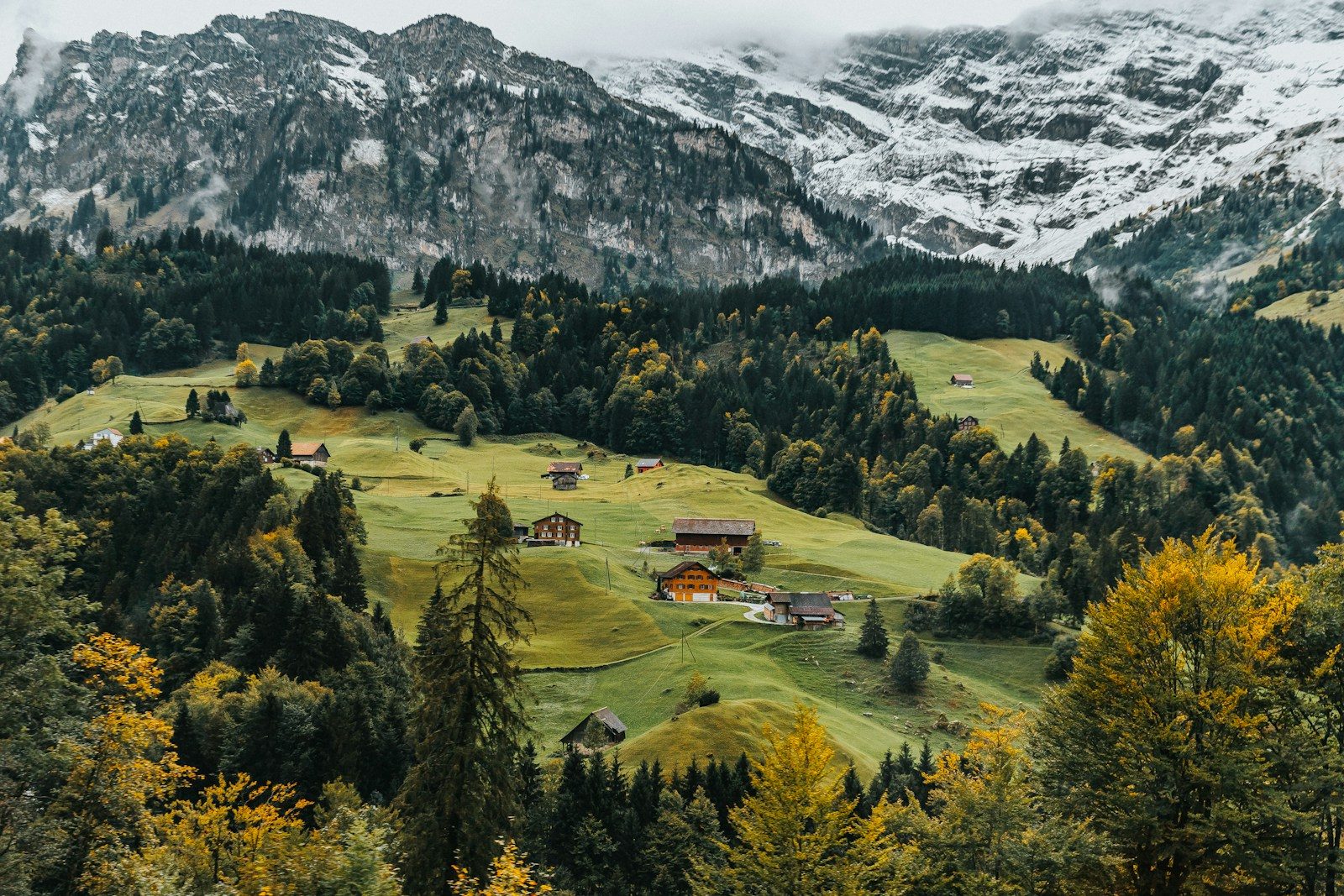
The country consistently tops global quality-of-life rankings, not because of marketing, but because what it delivers in safety, infrastructure, natural beauty, healthcare, and civic organisation is genuinely without equal at the scale of a modern European nation.
Switzerland is not a member of the European Union, though it shares borders with Germany, France, Italy, and Austria and has extensive bilateral agreements with the EU. It uses the Swiss franc (CHF) rather than the euro. It has four official languages. And it runs its immigration system with the kind of precision you would expect from a country that invented modern banking and makes the trains run on time.
For EU and EFTA citizens, the path to living in Switzerland is clear and well-worn. For non-EU nationals, it requires employer sponsorship, a quota system that limits numbers annually, and more planning than most other European destinations. This guide explains how all of it works, with 2026-current figures throughout.
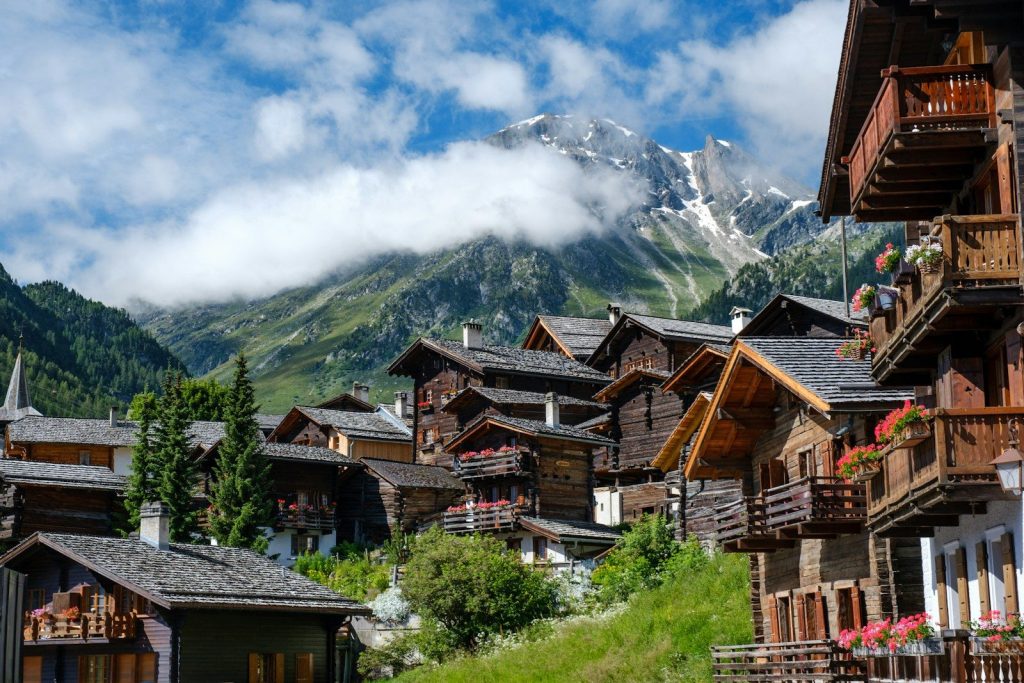
Why Move to Switzerland?
The reasons are serious and consistent, and they hold up under scrutiny better than most destination marketing.
The economy is one of the strongest in the world. Switzerland’s unemployment rate sits at approximately 3.1 percent in 2026 forecasts, and the concentration of global corporations Nestlé, Novartis, Roche, UBS, Credit Suisse (now UBS), ABB, Zurich Insurance, and dozens more creates a professional job market that is genuinely world-class in pharmaceuticals, finance, engineering, and technology.
Average salaries in Switzerland are among the highest of any country in the world: professionals can expect monthly salaries ranging from CHF 6,000 to CHF 10,000 depending on sector, and Switzerland’s average national wage in 2026 is approximately CHF 80,000 per year.
When combined with a tax burden that is substantially lower than France, Germany, or the United Kingdom, the after-tax purchasing power of Swiss incomes is extraordinary.
The quality of daily life is real and not overstated. Swiss cities are clean in a way that feels institutional rather than aspirational. The public transport network the Swiss Federal Railways (SBB/CFF/FFS), supplemented by trams, buses, and PostBus services is widely considered the best in Europe.
Healthcare is excellent, even if the mandatory private insurance system is expensive. The Alpine landscape provides an outdoor environment within an hour of every major Swiss city that most countries cannot match anywhere.
Safety is near-universal and consistently measured. Switzerland ranks among the world’s safest countries by every available metric, and the day-to-day security environment in Swiss cities for residents of all backgrounds is one of the most immediate quality-of-life advantages of living there.
For the right profile of expat, Switzerland delivers. The honest qualification is that “the right profile” involves either being an EU national or having qualifications that a Swiss employer wants badly enough to sponsor a permit through a competitive quota system.
Who Can Move to Switzerland?
Switzerland operates a two-tier immigration system, and which tier you fall into determines almost everything about how accessible the country is.
EU and EFTA citizens benefit from the Agreement on the Free Movement of Persons (AFMP) between Switzerland and the EU. They can enter Switzerland, take up employment, register their residency, and receive the appropriate L or B permit with a straightforward administrative process.
There are no quotas, no labour market tests, and no employer-by-employer approval process. For EU nationals with a job offer or the financial means to support themselves, Switzerland is administratively accessible.
Non-EU, non-EFTA nationals including British nationals post-Brexit, Americans, Australians, Canadians, Indians, South Africans, and most of the world’s population face a fundamentally different system.
Switzerland applies strict annual quotas to non-EU work permits, a labour market test ensuring no Swiss or EU candidate is available for the role, and salary requirements aligned with Swiss median wages.
The Swiss Federal Council has confirmed that the 2026 quota for B and L permits available to professionals from outside the EU and EFTA will remain unchanged at 8,500 specifically 4,500 B permits for stays over one year and 4,000 L permits for stays up to twelve months.
In a country with significant demand for international talent, 8,500 total permits across all sectors and cantons is a genuinely competitive allocation.
This means that for most non-EU nationals, moving to Switzerland requires either finding an employer willing and able to sponsor a permit application, or qualifying through family reunification or another specific route. The independent lifestyle move arriving with savings and figuring it out is not a realistic strategy for non-EU nationals outside the EU.

The Complete Guide
Main Ways to Move to Switzerland
Work Permit (Permit L and Permit B) is the primary pathway for most non-EU professionals. The Permit L covers employment contracts between four and twelve months; the Permit B covers contracts of twelve months or more. The employer typically leads the work authorisation process before the employee relocates, submitting to the competent cantonal authority along with business rationale, evidence of recruitment efforts, and supporting documentation.
The canton reviews the application, followed by federal review at the State Secretariat for Migration (SEM), and then for non-EU nationals who need a visa a Type D entry visa is issued.
Processing typically takes four to twelve weeks depending on the canton and permit type, and the process should be started well in advance of the planned start date. For EU citizens, the process is simpler: secure an employment contract, enter Switzerland, receive the permit.
The Permit C (Permanent Residence) is issued after five years of continuous legal residence for EU/EFTA nationals, and after ten years for most non-EU nationals. It grants rights equivalent to Swiss citizens in terms of employment and residence.
Student Permits are available for non-EU nationals enrolled at Swiss universities. ETH Zurich and EPFL Lausanne are consistently ranked in the global top 20 of world university rankings among the most prestigious in continental Europe and attract large international student populations. Swiss public universities charge modest tuition fees of approximately CHF 500 to CHF 2,500 per year, which is dramatically lower than equivalent-quality institutions in the UK or US.
Family Reunification is available to spouses and dependent children of Swiss citizens, EU nationals resident in Switzerland, and qualifying permit holders. Income thresholds and accommodation requirements apply.
Residence Without Gainful Employment Switzerland’s equivalent of a passive income or retirement residency route is available for people who can demonstrate sufficient financial means and a health insurance policy. Requirements are set cantonly, and the bar is high applicants typically need to demonstrate significant wealth and agree not to work in Switzerland. Approval is at cantonal discretion and is not guaranteed.
The official Swiss government immigration portal at sem.admin.ch provides current documentation requirements by permit category.
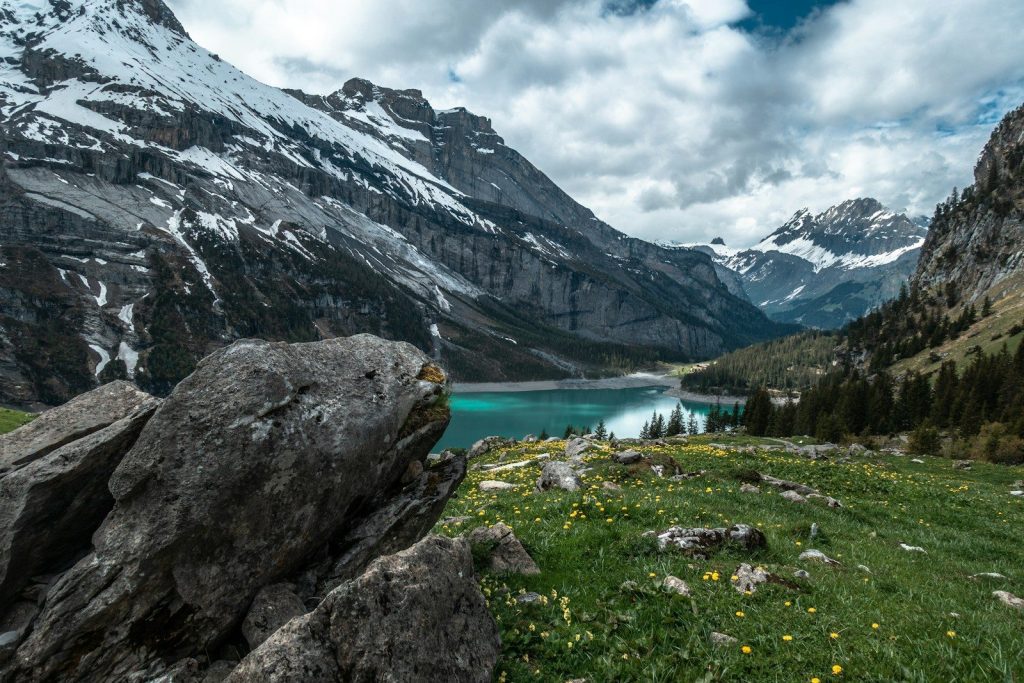
First Steps After Arrival
The first days in Switzerland require prompt action. The registration timeline is short, and delays create administrative complications that ripple through subsequent processes.
Within 14 days of arrival: Register your address at your local commune’s residents’ registration office (Einwohnerkontrolle in German-speaking cantons, contrôle des habitants in French-speaking cantons). You will need your passport, rental contract, and for non-EU nationals, the approved permit documentation. This registration produces the Anmeldebestätigung (registration confirmation) that is required for almost every subsequent administrative step.
Within three months of arrival: Arrange mandatory health insurance (KVG/LAMal). This is a legal requirement in Switzerland and one that catches a surprising number of newly arrived expats off guard. Every person registered as a resident must have a qualifying basic health insurance policy from a Swiss-approved insurer.
The Swiss Health Insurance Comparison service at comparis.ch allows comparison of premiums by canton, insurer, and deductible level. Failure to arrange insurance within three months can result in compulsory assignment to an insurer at above-market rates.
Open your Swiss bank account at one of the main retail banks UBS, Credit Suisse (now integrated into UBS), PostFinance, Raiffeisen, or one of the cantonal banks (Zürcher Kantonalbank, Banque Cantonale Vaudoise, etc.). Account opening requires the Anmeldebestätigung, passport, and permit documentation.
Online banks including Neon, Yuh, and international services including Wise and Revolut are widely used by the expat community for everyday spending and international transfers.
Register for social security and taxes. For employed workers, both social security contributions (AHV/AVS for pensions, IV/AI for disability, and ALV/AC for unemployment) and income tax (withholding tax, or Quellensteuer, for non-C permit holders) are typically handled through the employer. Self-employed individuals must register independently.
The cantonal tax authority (Steueramt / Administration fiscale cantonale) handles your tax dossier; your canton of residence determines your applicable tax rates.
Best Places to Live in Switzerland
Switzerland’s cities are small by global standards but genuinely diverse in character, and the choice of location affects your daily costs, language environment, commute, and quality of life significantly.
| City | Best For | Avg Rent (1-bed, city centre) | Language | Key Notes |
|---|---|---|---|---|
| Zurich | Finance, tech, international careers | CHF 2,200 – 3,200 | German | Most expensive; highest salaries; largest city |
| Geneva | International organisations, diplomacy | CHF 2,500 – 3,400 | French | UN, WHO, ICRC HQ; 30% above Swiss average cost |
| Basel | Pharma, biotech, border access | CHF 1,600 – 2,200 | German | Roche & Novartis; access to France and Germany |
| Bern | Government, balanced city life | CHF 1,400 – 2,000 | German | Federal capital; moderate costs; compact |
| Lausanne | Universities, lake living | CHF 1,700 – 2,400 | French | EPFL campus; IOC HQ; vibrant student city |
| Lucerne | Tourism, scenic lifestyle | CHF 1,400 – 1,900 | German | Smaller; strong tourism; Alpine lake setting |
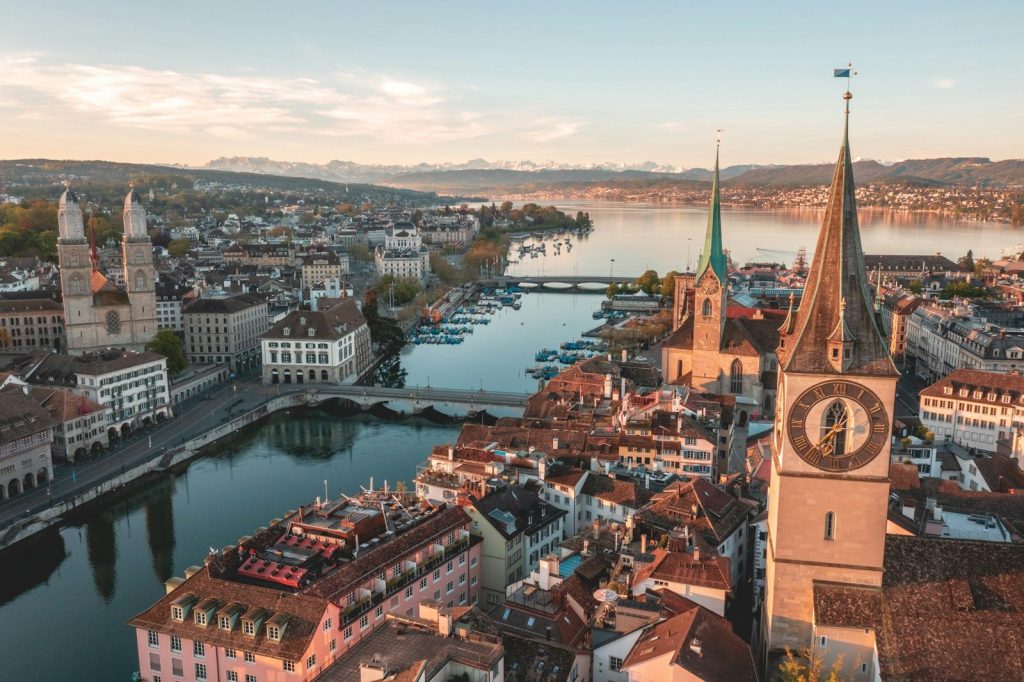
Zurich is the first choice for most internationally arriving professionals, and the concentration of global financial institutions, technology companies, and pharmaceutical firms makes it the most internationally oriented job market in Switzerland.
A single person’s average monthly expenditure in Zurich is estimated at around CHF 3,500 in 2026, including rent, food, transportation, and leisure making it one of the most expensive cities in the world in absolute terms, but one where the typical professional salary of CHF 6,000 to CHF 10,000 per month provides genuinely strong purchasing power after taxes.
Zurich’s public transport, cultural institutions, and proximity to the Alps create a residential quality that justifies the premium for most people who experience it.
Geneva is a different kind of international city defined less by private sector finance and more by the United Nations, the World Health Organization, the International Red Cross, and approximately 40 other international organisations headquartered there.
The city is approximately 30 percent more expensive than the Swiss average. Geneva’s one-bedroom apartments in the city centre cost CHF 2,800 on average, reflecting the combination of international institution demand, limited housing supply, and a resident population with above-average incomes. For people working in the UN or international NGO world, there is no better-suited city in Europe.
Basel is the home of Roche and Novartis two of the world’s largest pharmaceutical companies and offers a more manageable cost of living than Zurich or Geneva while maintaining strong professional opportunity.
The city’s position on the Rhine at the corner of Switzerland, France, and Germany also enables cross-border shopping in France and Germany for groceries and everyday goods at significantly lower prices than Swiss equivalents, which is a practical advantage that long-term Basel residents routinely exploit.
Basel offers an average monthly budget of CHF 3,000 for a single person, with one-bedroom city-centre apartments averaging CHF 1,800.
Bern, the federal capital, has a calm, somewhat bureaucratic character that suits certain personalities very well. Costs are lower than Zurich and Geneva, the old town is UNESCO-listed, and the concentration of federal government employment creates a stable, professional residential base.
Lausanne sits on the northern shore of Lake Geneva (Lac Léman) and combines the EPFL campus one of Europe’s premier engineering and technology universities with a lively student culture and extraordinary views across the lake toward the Alps. The International Olympic Committee is headquartered here, and the French-speaking environment makes it a natural choice for Francophones who want to access Swiss quality of life.
The Complete Guide
Cost of Living in Switzerland
Switzerland is genuinely, significantly, and consistently more expensive than almost anywhere else in Europe. Understanding the actual numbers before arriving prevents the most common form of expat shock the gap between expected and actual monthly expenditure.
The good news, which matters enormously for the financial maths, is that Swiss salaries are equally extraordinary and Swiss income taxes are dramatically lower than in comparable European economies.
A CHF 150,000 salary in Zurich results in approximately 18 percent total tax including income tax and social contributions compared with around 42 percent in Germany, 40 percent in the UK, and 45 percent in France for equivalent earnings.
The gross-to-net retention rate in Switzerland is one of the most favourable in the developed world, which means that the sticker shock of Swiss prices has to be assessed alongside the sticker bonus of Swiss net salaries.
A single professional in Zurich typically needs CHF 5,000 to CHF 7,000 per month for a comfortable lifestyle covering rent, insurance, food, and transport. That figure is high in absolute terms but reflects both the quality of life it purchases and the salary context in which it typically sits.
| Expense Category | Bern / Lucerne | Basel / Lausanne | Zurich / Geneva |
|---|---|---|---|
| Rent (1-bed, city centre) | CHF 1,400 – 2,000 | CHF 1,700 – 2,400 | CHF 2,200 – 3,400 |
| Mandatory health insurance | CHF 350 – 550 | CHF 380 – 580 | CHF 400 – 650 |
| Groceries (single person) | CHF 400 – 550 | CHF 450 – 600 | CHF 500 – 650 |
| Public transport (monthly pass) | CHF 70 – 100 | CHF 80 – 110 | CHF 90 – 120 |
| Utilities (electricity, water, heating) | CHF 150 – 220 | CHF 160 – 240 | CHF 170 – 270 |
| Dining out (moderate frequency) | CHF 300 – 500 | CHF 350 – 600 | CHF 400 – 700 |
| Approximate Monthly Total | CHF 2,670 – 3,920 | CHF 3,120 – 4,530 | CHF 3,760 – 5,790 |
Several specific costs deserve attention. Groceries in Switzerland are 50 to 100 percent more expensive than in Germany or France, and residents should budget around CHF 550 per month per person for supermarket shopping.
Shopping at Migros and Coop Switzerland’s two main supermarket chains, which cover the budget to mid-range market is standard practice for cost-conscious residents. Many people living near the French or German border make regular cross-border shopping trips for groceries, particularly meat (where Swiss prices can be 2.5 times German prices due to Swiss Animal Welfare Act standards) and alcohol. The savings are real and consistent.
Health insurance is a fixed monthly overhead that cannot be reduced below the basic LAMal policy. Basic health insurance premiums range from CHF 250 to CHF 450 per adult per month, depending on canton, insurer, deductible level, and insurance model.
Choosing a higher deductible (franchise) reduces the monthly premium but increases out-of-pocket costs when you use healthcare. For healthy working-age adults, a higher deductible is typically the rational financial choice.
Housing and Rentals
The Swiss rental market is competitive in every major city, and Zurich and Geneva in particular have some of the tightest housing markets in Europe. Vacancy rates in these cities consistently sit below 0.5 percent, meaning that good apartments rent within days of listing and typically attract multiple applications.
Understanding the Swiss rental process avoids expensive surprises. Standard lease deposits are three months of rent, held in a blocked bank account in the tenant’s name a legal protection for both parties that must be returned at lease end minus legitimate deductions.
Lease periods in Switzerland are typically annual, with notice periods of three months given at specific contract dates (Kündigungstermine) rather than rolling monthly. Missing a Kündigungstermin means your notice resets by another year understanding this is important before signing any Swiss lease.
Swiss apartments are typically let unfurnished and without kitchen fittings in many cases a convention shared with Austria and Germany that adds CHF 2,000 to CHF 8,000 of setup cost for kitchen installation and basic furnishings. Always verify whether a kitchen (Küche) is included before viewing, as listings are not always explicit.
The main rental portals in Switzerland are homegate.ch and immoscout24.ch, both of which have comprehensive listings across all cantons. New expats often find shared apartments (Wohngemeinschaft / colocation) the most accessible entry point WG rooms in Zurich city centre typically cost CHF 900 to CHF 1,400 per month inclusive of utilities, which represents a significant saving over a solo one-bedroom apartment.
One specific practical note: finding housing before arriving in Switzerland is significantly easier when you have an employer, because a Swiss employment contract is a meaningful credibility signal to landlords.
Without local employment documentation, non-EU nationals in particular may find landlords reluctant to proceed. Some employers offer temporary corporate housing during the first one to three months, which provides a bridge while permanent accommodation is found.
For many residents, commuter towns offer the best financial solution. Living in Winterthur and commuting to Zurich, or in Morges and commuting to Geneva or Lausanne, can reduce rent by 30 to 50 percent while maintaining access to all the professional and lifestyle amenities of the larger city. Switzerland’s rail network makes this genuinely practical rather than aspirational.
Healthcare and Insurance
Switzerland’s healthcare system is private, mandatory, and operated through competing insurance funds a model that is different from most European public systems but that produces outcomes of extremely high quality.
Every person registered as a resident in Switzerland must hold a qualifying basic health insurance policy (Grundversicherung / assurance de base, governed by the KVG/LAMal law) from an approved insurer.
This obligation begins within three months of registration and is enforced. The basic policy covers a defined catalogue of healthcare services GP visits, specialist consultations, hospitalisation in a general ward, and prescription medications with co-payments of 10 percent of costs above the chosen deductible.
The insurer cannot refuse coverage based on health status for the basic policy, and premiums cannot be adjusted for pre-existing conditions the basic LAMal policy is community-rated within age bands and canton.
What varies between insurers is the premium amount, the insurance model (family doctor model, health maintenance organisation, or standard free-choice model), and the quality of customer service. Comparing providers at comparis.ch before selecting is strongly recommended premiums for the same coverage can vary by 20 to 30 percent between insurers in the same canton.
Supplemental insurance (Zusatzversicherung / assurance complémentaire) covering private room hospitalisation, dental, vision, and complementary medicine is offered by all major insurers on an opt-in basis. Unlike the basic policy, supplemental insurance can be declined based on health history. Most expats arrange basic coverage immediately and evaluate supplemental options over their first year.
For the period between arriving in Switzerland and completing insurance registration, the European Health Insurance Card (EHIC) covers EU nationals for emergency and necessary treatment. Non-EU nationals arriving without existing coverage should arrange bridging travel insurance to cover the transition period.
The Complete Guide
Banking and Money
Switzerland’s banking infrastructure is world-class and, once you are a registered resident with a permit, relatively straightforward to access.
The main retail banking options are UBS, PostFinance (operated by Swiss Post), Raiffeisen, and the network of cantonal banks (Kantonalbanken), each of which operates primarily within its canton but offers standard full-service retail banking.
Account opening requires the Anmeldebestätigung, passport, and permit documentation. For non-EU nationals with a Type B permit, most banks are cooperative, though some require in-person opening rather than fully digital processes.
Switzerland uses the Swiss franc (CHF), not the euro. This is a meaningfully different proposition from euro-zone moves foreign income converted to CHF, international payments from CHF, and the interaction between CHF and the currencies of neighbouring countries are all relevant considerations.
The CHF has historically been a strong safe-haven currency and has appreciated significantly against the euro over the past decade, which affects purchasing power calculations for residents paid in CHF who have euro-denominated expenses or liabilities.
Digital banking options including Neon (a CHF current account app) and Wise are widely used by the expat community for everyday transactions and low-cost international transfers.
The Swiss inter-bank payment system (SWISS Interbank Clearing, SIC) handles domestic payments; international SEPA transfers to euro-zone accounts are available but note that Switzerland, while using SEPA for some transfer purposes, has its own pricing and processing norms.
Cross-border transfers via Wise typically save significant amounts compared to traditional bank rates for amounts above CHF 1,000.
Taxes and Work
Switzerland’s tax system is one of its most significant practical advantages for high earners, and understanding its structure before you arrive prevents both unpleasant surprises and missed opportunities.
Tax in Switzerland operates at three levels: federal, cantonal, and municipal. The rates at each level stack, and the combined rate varies substantially depending on which canton and which municipality you live in.
Zug, Schwyz, Nidwalden, and Obwalden are the lowest-tax cantons in Switzerland; Geneva and Basel-City are among the higher-tax ones though even the highest Swiss cantonal rates are typically lower than the income tax rates of France, Germany, or the UK at equivalent incomes.
For employees who do not hold a Permit C and are not married to a Swiss citizen, income tax is withheld at source by the employer (Quellensteuer / impôt à la source). This simplifies the annual tax process considerably the employer deducts and remits, and many standard employee situations do not require an additional annual tax return. Holders of Permit C and Swiss citizens file a full annual return.
There is no national capital gains tax on private securities holdings in Switzerland a significant advantage for investors and those with equity compensation. There is a wealth tax (Vermögenssteuer / impôt sur la fortune) at the cantonal level, which is modest by international standards but real.
Switzerland has an extensive network of double taxation treaties; American residents continue to owe IRS worldwide income reporting regardless of Swiss residency.
The Swiss job market rewards qualifications and specialisation. Beyond the pharmaceutical and financial sectors, engineering, IT, education, and healthcare are all sectors where Swiss employers actively recruit internationally.
English is widely used in multinational workplaces across all major Swiss cities, but German (in the German-speaking majority) or French (in Geneva and Lausanne) is important for career progression, social integration, and daily administrative life.
Education and Family Life
Switzerland is widely regarded as one of the world’s best countries for raising a family, and the combination of safety, educational quality, outdoor environment, and civic stability is genuinely hard to match.
The public school system is free, well-resourced, and delivers high outcomes. Swiss compulsory education runs from age four through fifteen and is administered at the cantonal level, meaning curriculum and structure vary somewhat between German-, French-, and Italian-speaking cantons.
Teaching is in the local language German, French, or Italian depending on your canton which means children who arrive without the relevant language need language integration support in their first year. Most Swiss schools have established processes for this, and children typically integrate linguistically within one to two years.
International schools are available in all major Swiss cities and serve a large population of diplomatic, corporate, and internationally mobile families. The International School of Zurich (ISZ), the International School of Geneva (La Grande Boissière), and the Zurich International School (ZIS) are among the most established.
Annual fees range from approximately CHF 25,000 to CHF 40,000 per child depending on school and year group significant in absolute terms, though some multinational employers cover school fees as part of expat packages.
ETH Zurich and EPFL Lausanne are both consistently ranked in the global top ten to twenty universities and provide higher education of extraordinary quality at fees that are a fraction of equivalent US or UK private institutions. For families with university-age children, these institutions represent one of the strongest arguments for a Swiss residency.
Childcare and nursery provision is available but expensive full-time nursery care in Zurich or Geneva typically costs CHF 2,000 to CHF 3,000 per month, which is among the highest in Europe. Many international employers provide childcare subsidies as part of benefit packages for senior hires, and this should be negotiated explicitly at the offer stage.
The Complete Guide
Daily Life and Transport
Switzerland’s transport network is the single most consistently praised feature of daily life in the country, and the praise is warranted in a way that does not apply to every European country’s self-assessment.
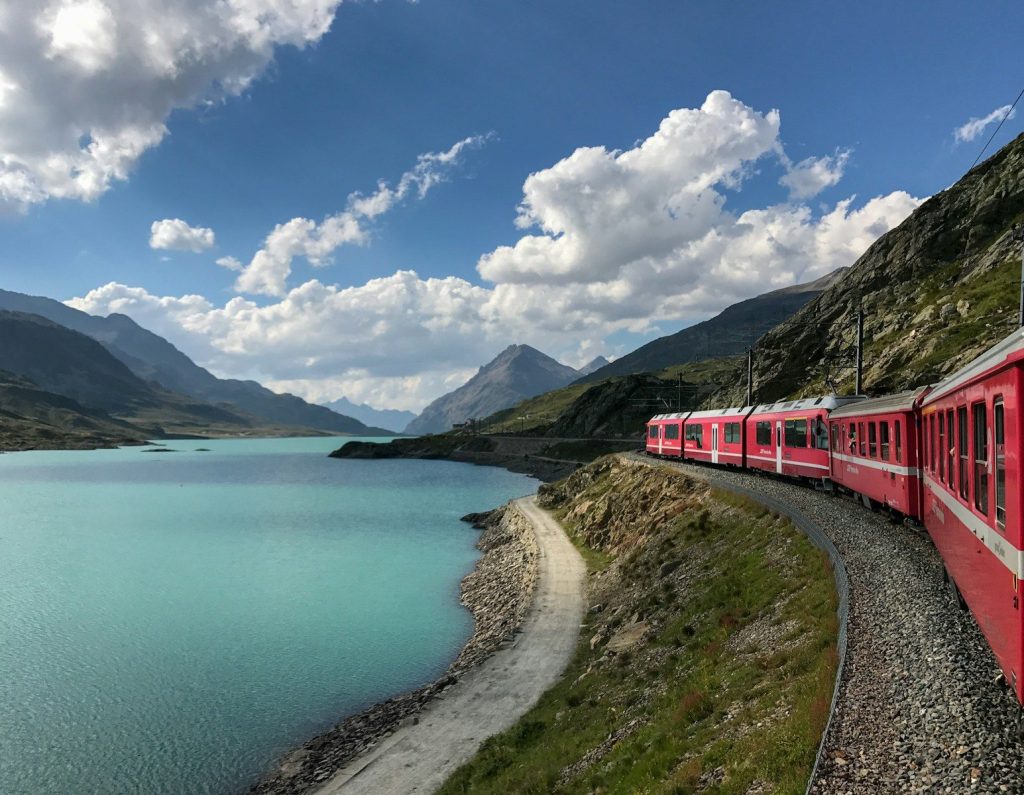
The SBB/CFF/FFS (Swiss Federal Railways) operates one of the densest and most punctual train networks in the world. Intercity connections Zurich to Bern in 58 minutes, Zurich to Geneva in under three hours, Lausanne to Basel in 90 minutes are frequent, reliable, and bookable online at sbb.ch.
The GA (Generalabonnement / abonnement général) annual travel pass covers unlimited travel on virtually all SBB trains, trams, buses, and lake ferries across Switzerland and costs CHF 3,860 per year for second class (approximately CHF 322 per month) one of the best-value national transport passes in Europe given the network density.
Within cities, trams and buses operate with the precision and frequency that Swiss transport culture demands. Zurich’s tram network is extensive and connects virtually every part of the city to the main Hauptbahnhof. Geneva has a lighter metro (CEVA cross-city rail line) and extensive tram network. Urban monthly passes typically cost CHF 70 to CHF 120 per city.
Car ownership is possible but optional for city residents and expensive by European standards mandatory insurance (Haftpflichtversicherung), road tax, and Vignette (the annual motorway toll sticker, CHF 40 per year) are all additional costs above the vehicle itself. Petrol costs approximately CHF 1.90 per litre.
For residents of major Swiss cities with good transport networks, the rational calculation usually favours car-free living supplemented by car-sharing services (Mobility in Switzerland is the main provider) for occasional large shopping or mountain trips.
Mobile phone plans have become significantly more competitive in recent years. Salt, Swisscom, and Sunrise offer unlimited data plans from approximately CHF 25 to CHF 60 per month, and the coverage across even rural and mountain areas is excellent.
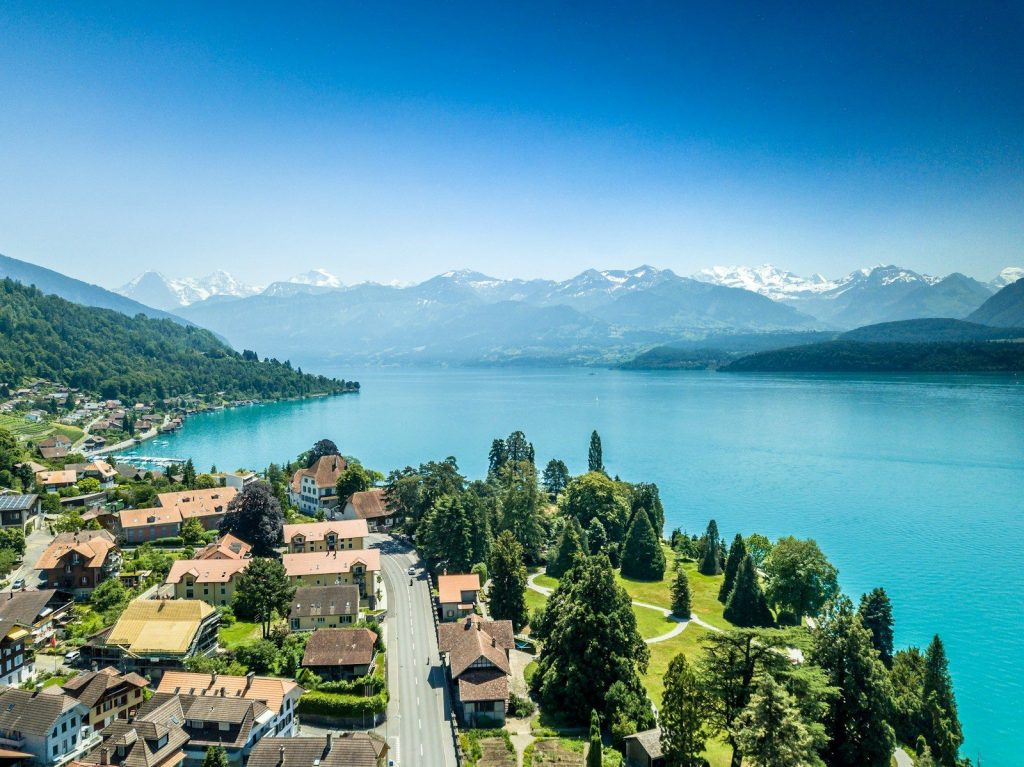
Language and Integration
Switzerland’s four official languages German (spoken by approximately 63 percent of the population), French (23 percent), Italian (8 percent), and Romansh (less than 1 percent) make language choice a real decision for incoming residents rather than a single obvious answer.
The language you need depends directly on where you live. In Zurich, Bern, Basel, Lucerne, and all of German-speaking Switzerland (the Deutschschweiz), German is the language of daily life, bureaucracy, and social integration.
Swiss German (Schweizerdeutsch) is a dialect that differs from standard Hochdeutsch in ways that can initially surprise people who have studied formal German pronunciation, vocabulary, and idioms are all distinctive, and native Swiss people switch to Hochdeutsch in formal and written contexts. Learning standard German is the correct preparation and transfers directly to written communication; the spoken dialect comes with time.
In Geneva, Lausanne, Neuchâtel, and the French-speaking Romandy region, French is the operative language. In Ticino (the Italian-speaking southern canton), Italian applies.
English is widely spoken in professional and international settings in Zurich, Geneva, and other major cities, and many multinational workplaces operate primarily in English. This means that English-speaking expats can function professionally from day one.
But administrative offices, healthcare providers, schools, and everyday neighbourhood life operate in the local language, and the quality of long-term integration is closely correlated with language investment.
The most effective structured pathways for German learning are the Goethe-Institut (with locations in Zurich and Bern), the Migros Klubschule (which offers excellent value German courses across Switzerland), and the Volkshochschule (VHS) in each canton. French courses through Alliance Française are available in all major Romand cities.
Integration in Switzerland builds slowly but genuinely. Swiss social culture is reserved at first it takes time to build friendships beyond professional relationships but the depth of connection once established is real. Sports clubs (the Verein culture, shared with Germany and Austria), neighbourhood events, and volunteering provide the most organic access to local community life.
Pros and Cons of Living in Switzerland
The genuine advantages are substantial. Safety that is among the best in the world, without qualification. An infrastructure transport, healthcare, public services that functions at the highest standard of any country in this series of guides.
After-tax purchasing power for well-paid professionals that is genuinely exceptional. Natural environment of extraordinary quality accessible from every major city. Political stability, institutional reliability, and a government that delivers what it promises.
The genuine challenges are equally real. Switzerland is genuinely expensive, and the cost of living requires either a Swiss salary or substantial independent wealth to sustain comfortably. Housing is competitive and in major cities genuinely constrained.
The non-EU permit quota system means that for most of the world’s population, moving to Switzerland requires employer sponsorship through a limited annual allocation. The language commitment is real and cannot be skipped indefinitely. And Swiss social culture, while warm once penetrated, has a reserve and formality at first contact that some people find cold.
Moving Checklist
Six to three months before:
Confirm your permit eligibility and route EU/EFTA citizens can proceed to job offer stage immediately; non-EU nationals need employer sponsorship and should begin the cantonal application process well ahead of their planned start date.
Gather documentation: employment contract, passport, university qualifications, criminal background check (apostilled), and proof of financial means if applying for a non-employment route. Begin German or French language preparation depending on your target canton. Research health insurance options at comparis.ch decide on deductible level and insurer before arrival.
One to two months before:
Confirm your accommodation in Switzerland a signed rental contract is required for commune registration. Research international schools if moving with children and begin application processes. Notify your home country tax authority of your departure date. Arrange a Wise or Revolut account for international transfers during the transition period before your Swiss bank account is established.
Arrival week:
Register your address at the commune’s residents’ registration office within 14 days. Bring your passport, permit documentation, and rental contract. Receive your Anmeldebestätigung this document enables everything that follows. Arrange mandatory health insurance (KVG/LAMal) within three months of registration.
Open your Swiss bank account at PostFinance, Raiffeisen, or a cantonal bank using the Anmeldebestätigung. Buy a half-fare card (Halbtax-Abo, CHF 185 per year) from SBB immediately it halves the price of all Swiss train tickets and pays for itself in the first month.
Ongoing:
Evaluate your annual tax position with a Swiss Steuerberater (tax advisor), particularly if you have complex income sources or are in a high-income bracket where cantonal tax competition makes relocation within Switzerland financially meaningful.
File your annual tax return if required by your permit category and canton. After five years of continuous residence (EU) or ten years (non-EU), apply for the Permit C (permanent residence). Continue language investment throughout B2 level in the local language meaningfully improves both career mobility and social integration.
The Complete Guide
Common Mistakes to Avoid
Underestimating total monthly costs. The gap between what people budget and what Switzerland actually costs is consistently the largest single source of financial stress for newly arrived expats. Build your budget using CHF figures from current sources not euro or dollar equivalents estimated at unflattering exchange rates and include health insurance explicitly.
Delaying mandatory health insurance. The three-month registration window is a hard deadline. Missing it results in compulsory assignment to an insurer at standard rates, without the deductible choice or insurer comparison that would otherwise reduce costs. Arrange this in the first weeks, not the last days of the window.
Not checking the cantonal registration process. Each Swiss canton has its own registration procedures, required documents, and administrative timescales. The process in Geneva differs from Zurich, which differs from Basel. Check your specific canton’s requirements before arrival rather than assuming a uniform national process.
Signing a lease without understanding Kündigungstermine. Missing the contractual notice date by a single day means your notice period resets. Understand the notice structure of any Swiss lease before you sign, and calendar the relevant dates immediately.
Assuming the housing market will wait. Good apartments in Zurich and Geneva are taken within hours of listing. Attempting to house-hunt remotely and leisurely before arrival typically means arriving without accommodation. Use your employer’s temporary housing, stay with contacts, or arrange a short-term furnished apartment for your first month while you compete for the permanent rental market in person.
Ignoring the cross-border shopping opportunity. For residents of Basel, Geneva, or other border regions, regular shopping trips to France or Germany for groceries, alcohol, and everyday goods can save CHF 200 to CHF 500 per month depending on household size. This is not a marginal saving it is a genuine lifestyle optimisation that most long-term Swiss residents in border cantons use routinely.
FAQs About Moving to Switzerland
Is it hard to move to Switzerland?
For EU and EFTA nationals with a job offer or financial means, the administrative process is manageable and clearly defined. For non-EU nationals, it is genuinely competitive the annual quota of 8,500 non-EU work permits means employer sponsorship is necessary and not guaranteed. Planning a minimum of three to six months ahead of a desired start date is essential for non-EU applicants.
How much money do I need to live in Switzerland?
A single professional in Zurich or Geneva needs CHF 5,000 to CHF 7,000 per month for a comfortable lifestyle including rent, health insurance, food, and transport. In more affordable cities like Bern or Lucerne, CHF 3,500 to CHF 4,500 covers equivalent needs. A liquid reserve of three to six months of expected monthly costs approximately CHF 15,000 to CHF 30,000 is prudent to cover setup expenses and the gap before first Swiss salary.
What city is best for expats?
Zurich for career-focused professionals in finance, tech, and general business. Geneva for international organisation employees and Francophones. Basel for pharmaceutical and biotech professionals who want lower costs and border access. Lausanne for academics, students, and anyone who prioritises French-speaking Switzerland and lake living.
Can I live in Switzerland without speaking German?
In Zurich’s international professional environment, English covers most workplace interactions. In Geneva and Lausanne, French-speaking Switzerland, English is also widely used in international settings. For full independent living administrative processes, healthcare outside international clinics, neighbourhood life, long-term career mobility the local language is necessary. Plan for active language investment within the first year of residence.
Is Switzerland good for families?
Consistently among the best in the world by every available measure. Safety is near-absolute. Public schools deliver high outcomes. ETH Zurich and EPFL Lausanne provide exceptional higher education. Outdoor activities skiing, hiking, cycling, swimming in Alpine lakes are accessible from every Swiss city within an hour. The primary challenge is cost: childcare, international schooling, and the overall cost of family life in Switzerland requires planning around Swiss salary levels or significant independent means.