Moving to Andorra in 2026: The Complete Guide for Expats, Digital Nomads and Retirees
Andorra is one of those places that sounds almost too good to be true when you first hear about it. A small, independent principality tucked between France and Spain in the Pyrenees mountains, with a maximum income tax rate of 10 percent, no wealth tax, no inheritance tax, a consumption tax of just 4.5 percent, clean mountain air, world-class ski resorts, and crime rates so low that many residents leave their doors unlocked.
It is a real country, not a loophole and for the right kind of person, it delivers on almost everything it promises.
That said, 2026 is a particularly important year to get the facts right before you act on any Andorra move. The Principality passed a significant new law in January 2026 known as the Omnibus 2 law (Llei de continuïtat i consolidació de les mesures per al creixement sostenible) that came into force in February 2026 and substantially changed the investment thresholds for passive residency.
The figures that circulate on older websites and social media posts are now out of date, and planning a move to Andorra on the basis of pre-2026 numbers will produce a budget that is significantly below the actual requirement.
This guide is updated to the current rules. It explains what moving to Andorra actually involves in 2026, who it is realistically accessible to, what the process looks like, what daily life costs, and what mistakes to avoid.
Why Move to Andorra?
The motivations that bring people to Andorra tend to cluster around three things: taxes, lifestyle, and privacy and the country delivers genuinely on all three.
The tax system is the most commonly cited draw, and it is real. Andorra’s personal income tax (IRPF) has a maximum rate of 10 percent, with the first €24,000 of annual income completely exempt from tax. For someone earning €70,000 per year, the total IRPF liability is approximately €3,800 a fraction of what the same income would cost in France (where the top marginal rate is 45 percent), Spain (47 percent), or Germany (42 to 45 percent).
There is no wealth tax, no inheritance tax between family members, and the IGI (Andorra’s consumption tax, equivalent to VAT) sits at just 4.5 percent compared to 20 percent in France, 21 percent in Spain, and 20 percent in the UK. For high earners, entrepreneurs, and investors who can genuinely establish tax residency in Andorra, the financial difference over a decade of residence is transformative.
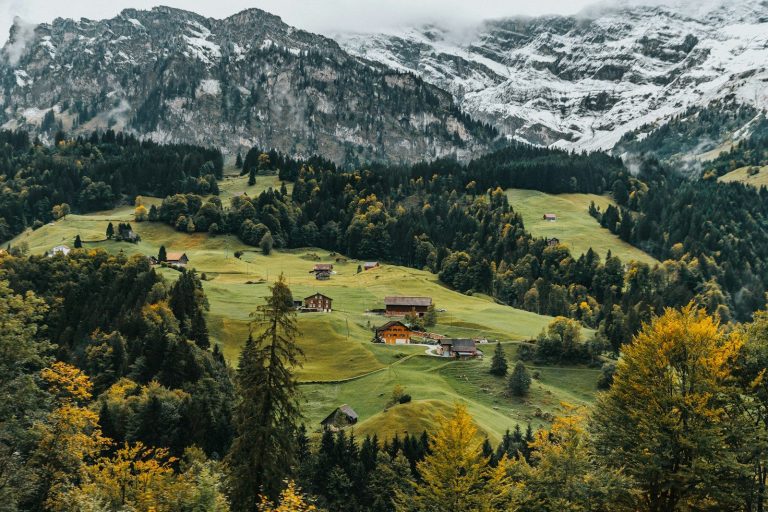
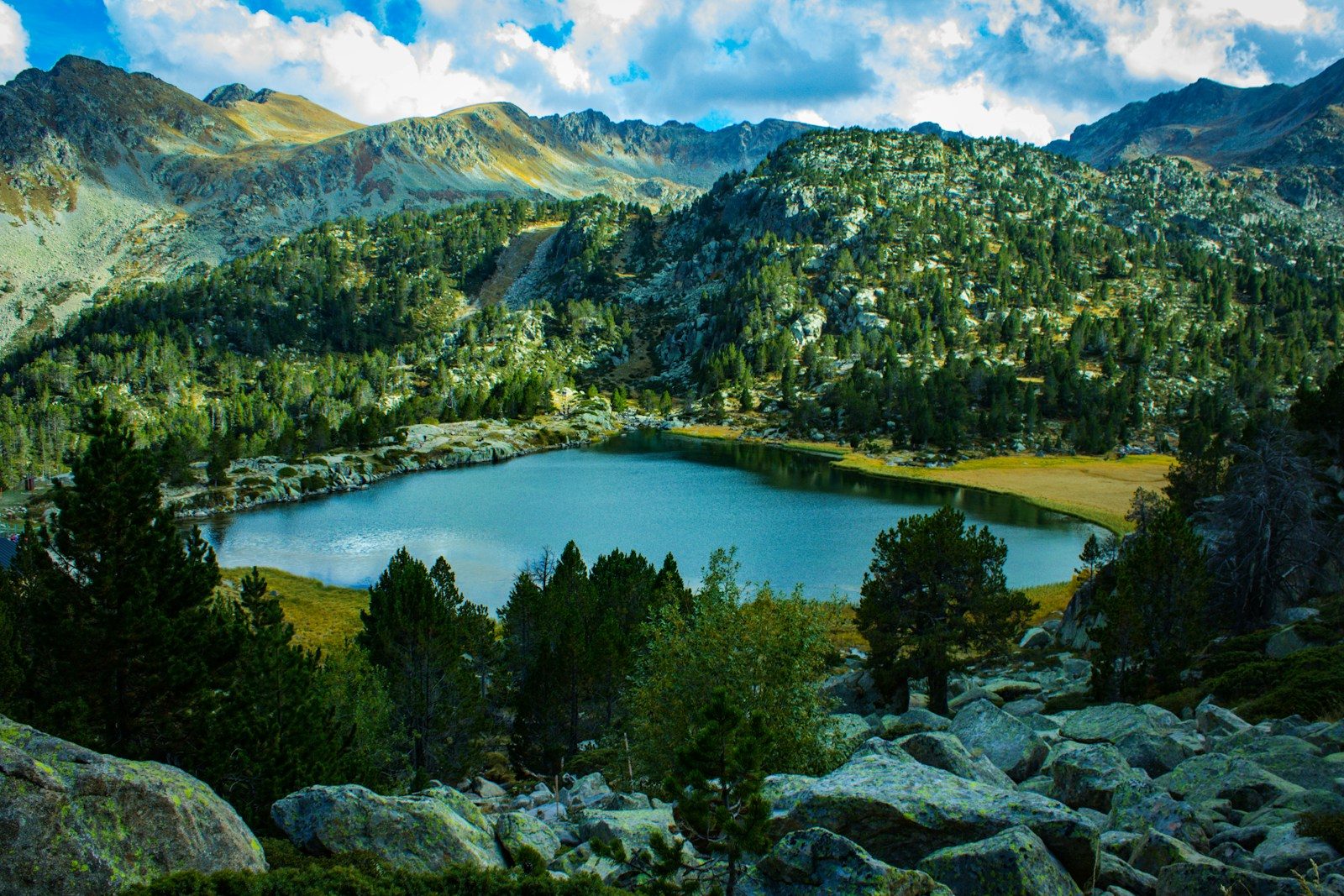
The lifestyle is the part that often surprises people most. Andorra has two ski resorts Grandvalira (the largest ski area in the Pyrenees) and Vallnord accessible from every major town within 30 to 45 minutes. The summer transforms the mountain terrain into hiking, cycling, and mountain biking territory of extraordinary quality.
The air quality is among the cleanest in Europe. The food is good Andorran cuisine combines Catalan, French, and Spanish influences and shopping for consumer goods is genuinely cheaper than in neighbouring countries due to the low IGI.
Safety is exceptional. Andorra consistently ranks among the countries with the lowest crime rates in the world. The population is small approximately 77,000 people across 468 square kilometres and the community feel is genuine. People know their neighbours. Things work as they should. It is, for people who value this quality, deeply reassuring.
Who Can Move to Andorra?
Andorra has no automatic right of residence for any nationality not even for EU citizens, since Andorra is not an EU member state. Everyone who wants to live in Andorra for more than three months needs a residency permit.
The good news is that the system is open to all nationalities without discrimination. The requirements are the same whether you come from the UK, the US, Argentina, or anywhere else. What Andorra is looking for, fundamentally, is evidence that you are financially self-sufficient, have a clean criminal record, have health insurance, and have a genuine reason to be there.
The two main categories of residency are passive and active, and they work in meaningfully different ways. Which one you qualify for depends on whether your income comes from outside Andorra or whether you plan to work or run a business there.
Most digital nomads, retirees, and investors will fall into passive residency. Entrepreneurs who want to establish real Andorran businesses and employees of Andorran companies will pursue active residency.
There is also a Digital Nomad permit (Category D.3) but it is worth understanding its limitations clearly before building plans around it. It is quota-limited to just 100 total authorisations, requires a minimum 90-day annual presence, and is exceptionally difficult to obtain in practice.
Most remote workers who genuinely want to move to Andorra end up going through the passive or active self-employed routes instead.
Main Ways to Get Residency
Passive Residency (Residència Administrativa Passiva) is the route for people who will live in Andorra but earn their income from outside the country. This includes retirees, investors, dividend recipients, and remote workers whose clients and employers are all foreign.
Following the approval of Omnibus 2 in January 2026, passive residency now requires a minimum investment of €1,000,000 in Andorran assets raised from €600,000 or €800,000 in real estate combined with a €400,000 contribution to the new Housing Fund, plus a €50,000 non-refundable payment to the Andorran Financial Authority (AFA).
This is a significant change from the figures that circulated prior to 2026, and anyone budgeting based on older information needs to update their calculations immediately.
Passive residents must spend a minimum of 90 days per year in Andorra. This is the administrative residency requirement. However, it is important to understand that 90 days is below the 183-day threshold typically required for Andorran tax residency if you want to actually benefit from Andorra’s tax system, you need to spend more than 183 days per year in the country and be able to demonstrate that your centre of economic interests is there.
Active Residency (Residència Administrativa Activa) is for people who want to work or operate a business in Andorra. The most common form is the self-employed active residency, which requires setting up a genuine Andorran company, holding a majority stake in it, demonstrating real economic activity, and paying a €50,000 non-refundable contribution to the AFA.
The €50,000 AFA contribution for active residency was made explicitly non-refundable under the January 2026 Omnibus 2 law. Active residents must spend more than 183 days per year in Andorra and register with CASS (the Andorran social security system).
Residency for Internationally Projected Professionals (D.1.2) is a specific passive residency variant designed for freelancers and digital professionals who can demonstrate that at least 85 percent of their business activity is conducted outside Andorra.
It removes the large investment requirement but requires establishing an Andorran company and making a €50,000 deposit to the AFA. This route has become more popular among high-earning remote professionals who want Andorran tax residency without the million-euro passive investment threshold.
Family reunification is available to spouses and dependent children of existing Andorran residents. The principal applicant must demonstrate sufficient income to cover the family unit, and the reunification permit is typically renewable alongside the principal’s permit.
The official Andorran immigration authority is the Servei d’Immigració del Govern d’Andorra, and current application requirements are published at govern.ad.

The Complete Guide
Residency Requirements
Regardless of which route you take, certain core requirements apply across all Andorran residency applications.
Clean criminal record. A certificate from your country of nationality and any country where you have lived for the past five years. The certificate must be recent generally no more than three months old and apostilled. If not in Catalan, French, or Spanish, a certified translation is required.
Proof of financial means. For passive residency, this means evidence of the investment commitment and sufficient ongoing income to support yourself without working locally. The minimum income requirement for passive residency is calculated at 300 percent of the Andorran minimum wage per applicant, with additional percentages for each dependent.
Private health insurance. A qualifying Andorran or internationally valid health insurance policy must be in place from the point of application. If you are employed by an Andorran company as an active resident, CASS (Caixa Andorrana de Seguretat Social) contributions will provide healthcare access. Passive residents typically maintain private international health insurance policies until CASS access is established through a qualifying route.
Proof of accommodation. A signed rental contract or property ownership documentation. The accommodation must be a genuine primary residence a tourist apartment or short-term rental does not satisfy this requirement.
In-person application and biometrics. The residency application is submitted in person in Andorra. You cannot complete the full process remotely. Most applicants engage a licensed Andorran immigration advisor (Assessoria d’Immigració) to manage the process, which significantly reduces errors and delays.
First Steps After Arrival
Moving to Andorra in the right sequence matters. The steps below apply to the initial establishment of residency.
Step one: Arrange accommodation. You cannot submit a residency application without a confirmed Andorran address. Begin your housing search before arrival and secure a signed lease of at least one year. This is step one everything else follows from it.
Step two: Open an Andorran bank account. The AFA investment deposit and housing payments require an Andorran bank account. The main Andorran banks are MoraBanc, BancSabadell d’Andorra, Creand, and BPA.
Account opening requires your passport, proof of address, and source of funds documentation. The documentation standards are thorough Andorran banking operates under strong AML compliance requirements but account opening for new residents is well-practised at all major institutions.
Step three: Make the required AFA deposit. For passive residency, the €50,000 non-refundable AFA payment is one of the first formal steps. For the investment residency route, the qualifying investment must also be in place before submission.
Step four: Gather and apostille all documents. Criminal background check, birth certificate, health insurance documentation, proof of income or investment, and the signed lease all need to be in order, apostilled where required, and translated if not in Catalan, French, or Spanish.
Step five: Submit the residency application in person. Present your complete file to the Servei d’Immigració. Processing typically takes one to four months for standard applications.
Step six: Register with CASS. Once your residency card is issued, active residents must register with CASS for health insurance and social security purposes. Passive residents with private insurance should review whether transitioning to CASS contributions is advantageous, as CASS healthcare access provides comprehensive coverage at generally lower cost than ongoing private premiums.
Step seven: Register with the tax authority. If establishing Andorran tax residency which requires 183-plus days of physical presence annually register with the Ministeri de Finances for the IRPF (personal income tax) system. The tax year coincides with the calendar year, and annual returns are filed between April 1 and September 30 for the preceding year.
Best Places to Live in Andorra
Andorra covers 468 square kilometres and has seven parishes (parròquies), each functioning as a distinct municipality with its own character and price points. The country is small enough to drive across in about 30 minutes, so “location” in Andorra is more about daily environment and community feel than about access.
| Parish | Best For | Avg Monthly Rent (1-bed) | Character |
|---|---|---|---|
| Andorra la Vella | Services, shopping, central access | €900 – €1,400 | Capital; commercial; most urban |
| Escaldes-Engordany | Modern living, spa, convenience | €850 – €1,300 | Blends into capital; Caldea thermal spa |
| La Massana | Mountain setting, outdoor access | €750 – €1,100 | Scenic; Vallnord ski area nearby |
| Ordino | Quiet, nature, community feel | €600 – €900 | Smallest and quietest; hiking trails |
| Encamp | Affordable, ski access, practical | €600 – €850 | Practical; direct Grandvalira access |
| Sant Julià de Lòria | Quiet, near Spanish border | €600 – €850 | Most southern; calmer pace |
| Canillo | Rural, scenic, very quiet | €550 – €800 | Mountain character; smallest population |
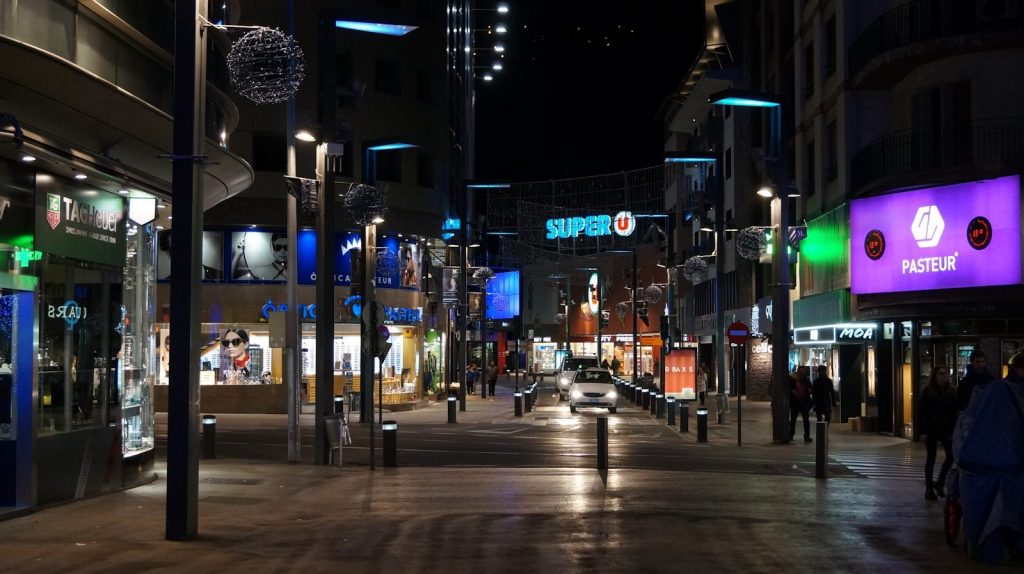
Andorra la Vella is the capital and the country’s commercial and administrative centre. It has the best concentration of services banks, doctors, lawyers, restaurants, supermarkets, and government offices and its commercial strip along the Avinguda Meritxell is one of the most shopping-dense streets in Europe per square metre, driven entirely by the low-tax consumer goods advantage. Rent in the capital is the highest in Andorra, and the urban environment, while pleasant, is more town than city in feel.
Escaldes-Engordany merges seamlessly with the capital and is home to Caldea, Europe’s largest thermal spa and one of Andorra’s defining lifestyle amenities. For residents who want modern apartment buildings, good services, and proximity to the capital without being at the heart of the commercial district, this parish is a strong default.
La Massana is where many Andorran families and expats who have been in the country for several years end up settling. The parish sits in a mountain valley above the capital, with direct access to the Vallnord ski and bike area, a genuine village character, and rents noticeably below the capital.
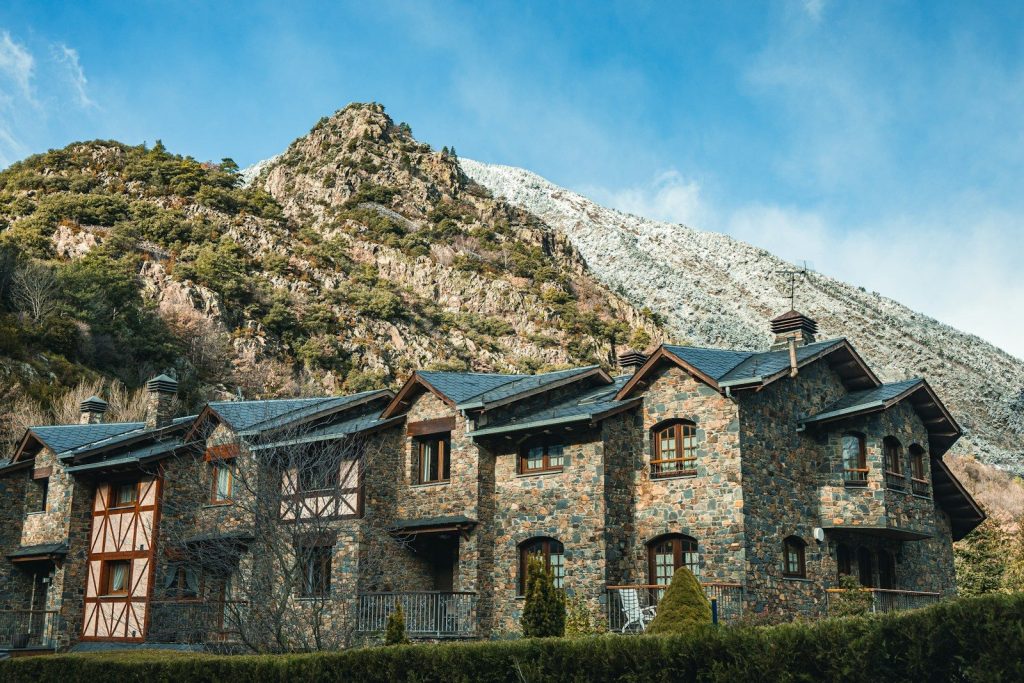
Ordino is the quietest and perhaps the most purely Andorran of the parishes, with traditional stone buildings, excellent hiking, and a pace of life that is several registers slower than the capital. For retirees and remote workers who want the full Pyrenean mountain experience without tourist infrastructure, it is the most authentic choice.
The Complete Guide
Cost of Living in Andorra
Andorra is cheaper than many western European capitals but not as cheap as some of the breathless articles on the internet suggest. Rent is the dominant cost and is driven by a genuinely constrained housing supply, and some imported goods carry price premiums.
The overall cost advantage over France or Spain lies primarily in the tax savings on income and consumption rather than in dramatically lower everyday prices.
Andorra’s cost of living is notably cheaper than major cities such as Paris, London, or Geneva, and broadly comparable to mid-sized Spanish cities, with the added advantage of very low taxes. Most expats find their overall purchasing power significantly higher than in neighbouring countries once the tax benefit is reflected in their take-home income.
| Expense Category | Ordino / Canillo / Encamp | La Massana / Sant Julià | Andorra la Vella / Escaldes |
|---|---|---|---|
| Rent (1-bed apartment) | €550 – €900 | €700 – €1,100 | €900 – €1,400 |
| Groceries (single person) | €200 – €300 | €220 – €320 | €250 – €380 |
| Utilities (electricity, water, heating) | €80 – €120 | €90 – €140 | €100 – €160 |
| Transport (fuel or local buses) | €50 – €120 | €60 – €130 | €40 – €100 |
| Dining out (moderate frequency) | €150 – €250 | €180 – €280 | €200 – €350 |
| Private health insurance | €80 – €150 | €80 – €150 | €80 – €150 |
| Approximate Monthly Total | €1,110 – €1,840 | €1,330 – €2,120 | €1,570 – €2,540 |
Consumer goods in Andorra benefit from the low IGI rate of 4.5 percent. Electronics, alcohol, tobacco, perfume, and clothing are all meaningfully cheaper than in France or Spain, and the country’s commercial district exists partly as a destination for cross-border shoppers from both neighbours who come specifically to take advantage of the price differential. For residents, this means everyday consumer spending is somewhat lower than it would be across either border.
Food prices at Andorran supermarkets the main chains are Bonpreu, Punt de Trobada, and the French-owned Pyrénées are broadly comparable to Spanish cities, though some imported speciality items carry a premium. Eating out in Andorra is affordable by Western European standards, with a good lunch menu (menu del dia in the Spanish tradition) available for €12 to €18 in most towns.
One specific cost that requires careful planning is the absence of a national free healthcare system for residents who are not contributing to CASS through employment. Passive residents and self-employed individuals who have not yet established CASS access need private health insurance, which adds a fixed monthly cost that should be explicitly included in any budget projection.
Housing and Rentals
Housing is the most frequently cited practical challenge of moving to Andorra, and it deserves honest attention.
The country is small and the supply of rental apartments is limited. Demand from new residents, seasonal workers, and the broader Andorran population puts consistent upward pressure on rents, particularly in the capital and Escaldes-Engordany.
Finding a good apartment quickly requires acting fast listings in Andorra move quickly, and the total inventory at any given moment is much smaller than in a comparably priced Spanish or French city.
Standard lease terms in Andorra are typically one year, renewable. Deposits are usually two months of rent. Agency fees, where applicable, are commonly equivalent to one month of rent.
Many Andorran landlords require proof of residency permit application or existing residency status, which creates a circular challenge for new arrivals you need accommodation to apply for residency, but many landlords prefer existing residents.
The way around this is to start by arranging a short-term furnished apartment for the first two to three months while you establish your residency application, then move to a longer-term unfurnished or furnished apartment once the permit is issued.
The main property search platforms in Andorra are ImmobilierAndorre.com and Habitaclia, which covers the Andorran market alongside Spanish and Catalan listings. Local real estate agencies in each parish also hold inventory that does not always appear on the online portals, and building relationships with agencies directly is often the most effective approach.
Property purchase is possible for residents. A specific tax on foreign investment in real estate was introduced in Andorra, applying to individuals who have not been residents for at least three years. Non-residents and very recent residents face a substantially higher tax rate on property purchases, designed to moderate speculative buying and protect local housing affordability.
After three years of residency, these elevated rates no longer apply. The implication for new arrivals is clear: unless you have held residency for three or more years, purchasing is significantly more expensive than renting, and renting for the first several years while establishing residency is the financially rational approach.
Taxes and Financial Life
The Andorran tax system is one of the clearest expressions of what the country is offering its residents, and understanding it correctly is one of the most important things you can do before making the move.
Personal income tax (IRPF) applies a maximum rate of 10 percent on all income above €40,000 per year. The first €24,000 of annual income is completely exempt from IRPF, and income between €24,000 and €40,000 benefits from a relief that reduces the effective rate on that bracket to approximately 5 percent.
To illustrate: someone earning €70,000 per year pays approximately €3,800 in total income tax an effective rate of under 5.5 percent. In France or Spain, the same income would trigger a tax liability four to seven times larger.
Capital gains on assets held for more than ten years are fully exempt from Andorran income tax. For investors with long-term portfolios, this is a meaningful additional advantage. There is no annual wealth tax, no inheritance tax between spouse and children, and the IGI consumption tax is 4.5 percent on most goods and services.
Corporate income tax is a flat 10 percent, with a 2 percent effective rate available for qualifying international holding and trading structures. This makes Andorra genuinely competitive for company formation compared to most European jurisdictions.
One critical point to understand clearly: administrative residency and tax residency are not the same thing. Receiving your Andorran residency card does not automatically make you an Andorran tax resident.
Tax residency requires spending more than 183 days per year in Andorra or being able to demonstrate that your primary economic interests are based there and actively managing the transition from your previous tax jurisdiction.
Leaving Spain or France without properly exiting their tax system, while attempting to claim Andorran tax residency, is a route that ends with both countries claiming tax jurisdiction simultaneously. This requires specialist cross-border tax advice before you move, not after.
For banking, the main Andorran institutions are MoraBanc, Creand (Crèdit Andorrà), and BancSabadell d’Andorra. All are well-regulated, financially stable, and offer online banking, SEPA transfers, and standard retail services.
The documentation requirements for account opening are thorough expect to provide source of funds evidence, proof of Andorran residency, and full identity documentation. Most residents also maintain accounts in France or Spain for practical cross-border use.
Healthcare and Insurance
Andorra’s healthcare system is centred on CASS the Caixa Andorrana de Seguretat Social which provides comprehensive public healthcare coverage to residents who contribute through employment or self-employment.
The Andorran health system is described as one of the best in the world according to many international rankings, and the medical infrastructure, while modest in scale given the country’s size, is of high quality with good access to French and Spanish specialist services for complex cases.
Employees of Andorran companies automatically contribute to CASS through payroll deductions. Self-employed active residents register with CASS directly and pay contributions proportional to their declared income. The CASS system covers GP consultations, specialist referrals, hospital treatment, and prescription medications, with co-payments varying by service type.
Passive residents who do not have a CASS-qualifying employment or business activity must arrange private health insurance that covers all medical costs in Andorra and abroad. This is a mandatory requirement for the residency application and must be in force before submission.
Once a passive resident has been in Andorra long enough and established sufficient economic activity, transitioning to CASS contributions becomes possible your immigration advisor can guide the timing of this transition.
Medical costs in Andorra outside the covered CASS framework are generally reasonable by European standards. There are over 55 pharmacies in the Principality, which helps keep medication costs low, and healthcare expenses are generally more affordable than in France or Spain for out-of-pocket items.
The Complete Guide
Working and Running a Business
Andorra’s approach to work and business activity by residents reflects its broader philosophy: it wants people who have genuine economic activity there, not people who maintain a nominal presence while conducting all their real work elsewhere.
For active residents, the core requirement is a real Andorran company with genuine management and activity. The Andorran government has tightened scrutiny of company substance requirements in recent years, and the days of setting up a shell company to satisfy immigration requirements without real activity are over.
The company must conduct real business, the resident must be its genuine director, and the economic activity must be demonstrable. Companies whose activities are primarily outside Andorra which includes most digital service businesses serving international clients fall into the D.1.2 internationally projected professional category, which has its own specific requirements including the 85 percent external activity threshold.
Foreign workers hired by Andorran companies as employees follow an employment-based active residency route that is employer-sponsored, similar in structure to the Swiss or Austrian employment permit model.
For entrepreneurs and remote workers, the company setup process involves engaging a licensed Andorran gestor (business administrator) for company registration with the Registre de Societats Mercantils i de les Fundacions, notarial deed preparation, and tax registration with the Ministeri de Finances. Standard timelines for company formation run four to eight weeks, and the process is considerably more streamlined than in Spain or France.
Daily Life in Andorra
Daily life in Andorra has a character that is genuinely distinct from any other European country. It feels like a mountain village that somehow also has the services of a mid-sized European city, and the gap between those two descriptions captures most of what is interesting about it.
The outdoor life is extraordinary. In winter, Grandvalira with its 210 kilometres of pistes spread across several interconnected valleys and Vallnord provide skiing from approximately December through April. In summer, the same terrain converts to mountain biking, hiking, and trail running.
The GR11 long-distance trail and dozens of shorter routes provide year-round access to the high mountain environment. The cycling community in Andorra is particularly notable the country hosts professional cyclists including some of the world’s best road riders who train on the mountain roads year-round.
Shopping is an unusual experience. The Avinguda Meritxell in Andorra la Vella is essentially a duty-free shopping street where everything from perfume to electronics to alcohol is sold at prices below what either France or Spain charge.
Weekly cross-border trips in the other direction into Spain for fresh produce and larger supermarket ranges, or into France for French specialities are common among residents who know the logistical pattern.
Driving is the primary mode of transport for most residents. Andorra has no railway. Inter-parish bus services (bus interurbà) connect the main towns, and there are international coach services to Barcelona (approximately three hours), Toulouse (approximately two and a half hours), and Lleida (approximately one hour and forty-five minutes).
The nearest airports are Barcelona (three hours), Toulouse (two and a half hours), and the smaller Andorra–La Seu d’Urgell Airport, which operates seasonal routes. Most residents who travel internationally regularly maintain habits around Barcelona or Toulouse as departure points.
Education and Family Life
Andorra offers three parallel school systems, which reflects its trilingual cultural history and is one of the more unusual features of daily life for families with children.
The Andorran system (Sistema Educatiu Andorrà) teaches primarily in Catalan and is the official state education system. The Spanish system (Escola Espanyola) teaches primarily in Spanish with Catalan and French as second languages. The French system (Escola Francesa) teaches in French following the French national curriculum.
All three are publicly funded and free for resident children. Most international families with children who already speak Spanish or French tend toward those systems for the language continuity; families committed to longer-term integration often opt for the Andorran system specifically to build Catalan proficiency from the start.
There is no international school in the British or American curriculum sense within Andorra. Families who need IB, British, or American curriculum education must arrange private schooling across the border there are options in La Seu d’Urgell in Spain (approximately 10 kilometres from Andorra la Vella) and in the Toulouse area in France, though these require daily or weekly commuting logistics.
For young children, childcare and nursery facilities (llars d’infants) are available in all major parishes at costs that are reasonable by Pyrenean regional standards. Family life in Andorra with the combination of safety, outdoor environment, and village-scale community is frequently cited by established resident families as one of the best decisions they made.
Language and Integration
Catalan is Andorra’s official language and the language of government, education, and formal public life. It is also the language in which street signs, official documents, and administrative communications are written.
Spanish (Castilian) and French are widely spoken and understood by virtually all Andorrans a reflection of the country’s position between two large Spanish- and French-speaking neighbours, and the reality that a significant portion of Andorra’s workforce has historically come from both countries. Portuguese is also widely spoken among the large Andorran-Portuguese community.
For practical daily life, Spanish or French is sufficient for navigating most services. In government offices, Catalan is the operative language, and having at least a basic reading knowledge of Catalan which is relatively accessible for Spanish or French speakers makes the bureaucratic side of life considerably easier.
Learning Catalan is not merely a practical consideration it is also a social one. Andorrans respond with particular warmth to foreign residents who make the effort. The language is a marker of genuine engagement with the country rather than simply using it as a tax base.
Free Catalan language classes are available through the government’s Ministeri de Cultura i Patrimoni programme, and online resources including the Institut Ramon Llull at llull.cat support structured self-study.
Integration into Andorran social life happens naturally for most long-term residents through sports clubs, the local festas (traditional festivals in each parish), hiking groups, and the intimate scale of a country where professional and social circles overlap constantly. The rhythm of life in Andorra is slow and connected in a way that large-city expats sometimes need time to adjust to and then rarely want to leave.
The Complete Guide
Pros and Cons of Living in Andorra
The genuine advantages are compelling for the right person. A maximum income tax rate of 10 percent with the first €24,000 exempt. No wealth tax, no inheritance tax, no capital gains tax on long-held assets. A consumption tax of 4.5 percent on most purchases.
One of the lowest crime rates in the world. Extraordinary mountain environment with ski access, hiking, and cycling. Clean air and clean cities. A small, close community where things generally work and people know each other. Access to both France and Spain within an hour.
The honest challenges are equally real. Housing supply is constrained and rents have risen with the influx of new residents attracted by the tax system. The passive residency investment requirement now €1 million following the 2026 law change is a serious barrier that narrows the accessible market significantly.
There is no railway, which means car ownership is essentially non-negotiable for practical independence. The job market is small and oriented around tourism, retail, construction, and finance for people dependent on the local employment market, options are limited.
The country is physically small, and people with strong needs for urban variety, anonymity, or the scale of a large city find the constraints accumulate over time.
Moving Checklist
Six to three months before:
Choose your residency route passive (investment), active self-employed (D.1.2 or standard), or employed active residency. For passive residency, prepare for the €1,000,000 investment commitment plus the €50,000 non-refundable AFA deposit.
Engage a licensed Andorran immigration advisor (assessor d’immigració) the process requires in-country professional guidance. Begin gathering documentation: criminal background check (apostilled), proof of income or investment, health insurance, and passport.
One to two months before:
Begin your housing search in Andorra using online portals and local agencies. Arrange a short-term furnished apartment for your first one to three months as a bridge before permanent accommodation is secured.
Open your Andorran bank account you will need it for the AFA deposit and to receive your residency card. Notify your current country’s tax authority of your planned departure date and begin the formal exit from your previous tax jurisdiction with specialist cross-border tax advice.
Arrival week:
Move into your accommodation and confirm the lease is in order for the residency application. Submit all documentation to the Servei d’Immigració through your Andorran advisor. Confirm your private health insurance policy is in force.
Register with the Ministeri de Finances for tax purposes once your residency card is issued. Purchase a vehicle or arrange transport Andorra has no train and limited bus services outside major routes.
Ongoing:
File your annual IRPF tax return between April 1 and September 30 for the preceding tax year. Track your days of physical presence in Andorra carefully 183 days is the threshold for tax residency, and the records matter.
After three years of residency, the elevated non-resident property purchase taxes no longer apply, making property purchase financially more viable. Learn Catalan progressively even basic proficiency noticeably improves your quality of daily life and your relationships with Andorran neighbours and officials.
Common Mistakes to Avoid
Using pre-2026 investment figures for passive residency. The Omnibus 2 law that came into force in February 2026 raised the passive residency investment threshold from €600,000 to €1,000,000. Many websites and social media posts still cite the old figures. Planning your finances around these numbers will produce a significant shortfall.
Confusing administrative residency with tax residency. Getting your Andorran residency card does not automatically make you a tax resident of Andorra. Tax residency requires 183 or more days of physical presence per year and a clean exit from your previous tax jurisdiction. Failing to manage this transition correctly leaves you potentially liable for tax in both Andorra and your previous country simultaneously.
Not planning the housing gap. Many Andorran landlords prefer to rent to established residents, and the application for residency requires an existing address. Starting with a short-term furnished apartment and layering into a permanent rental during the application period solves this but adds cost. Budget for two to four months of short-term accommodation costs in your initial relocation budget.
Underestimating the total cost to establish passive residency. Beyond the €1 million investment and the €50,000 non-refundable AFA deposit, first-year setup costs include legal and immigration advisor fees (€3,000 to €8,000 for a full managed process), bank account setup, housing deposit and first month’s rent, health insurance, and general relocation costs. The total cost of establishment excluding the qualifying investment realistically runs €10,000 to €15,000 in professional fees and setup costs.
Assuming Andorra is a short-cut to tax freedom without real presence. The Andorran authorities, and increasingly the Spanish and French tax authorities, look very carefully at people who claim Andorran tax residency while spending most of their time across the border. Genuine physical presence of 183 or more days per year is required and can be verified. Treat the residency requirement as a real commitment, not a formality.
The Complete Guide
FAQs About Moving to Andorra
Is it hard to move to Andorra?
More so in 2026 than before the Omnibus 2 law changes. The passive residency investment threshold has roughly doubled to €1 million, making the route genuinely exclusive to high-net-worth individuals.
Active and self-employed residency remains accessible to professionals who can establish genuine Andorran business activity, but the AFA contribution of €50,000 now non-refundable is a meaningful upfront cost. With proper professional guidance, the process is clear and structured; without it, it is easy to make costly errors.
How much money do I need to live in Andorra?
A single person can live comfortably in a smaller parish like Ordino or Encamp on approximately €1,200 to €1,500 per month excluding health insurance. In Andorra la Vella, budget €1,600 to €2,000 per month for a comfortable lifestyle. Beyond the monthly budget, establishment costs for passive residency excluding the qualifying investment realistically total €10,000 to €15,000.
Can I work in Andorra as a foreigner?
It depends on your residency type. Active residents who have set up a qualifying Andorran company can work through it. Employees of Andorran companies follow the employed active residency route.
Passive residents cannot work for Andorran employers but can manage administrative roles in a local company and receive income from abroad. The D.1.2 internationally projected professional category allows remote work for foreign clients from Andorra, subject to the 85 percent external activity requirement.
What is the best town to live in Andorra?
For services, convenience, and urban feel: Andorra la Vella or Escaldes-Engordany. For mountain lifestyle at lower cost: La Massana or Ordino. For practical ski access and affordability: Encamp. Most new residents start in the capital and move to a smaller parish once they have a better sense of the country’s geography and their own lifestyle preferences.
Do I need to speak Catalan?
For daily life in Spanish or French, no both languages are widely understood and used. For formal administrative and government interactions, Catalan is the operative language, and basic reading comprehension is genuinely useful. For long-term integration and genuine community connection, Catalan is worth learning and will be rewarded with notable warmth by the Andorran community.