Moving to Denmark in 2026: The Complete Guide for Expats, Digital Nomads and International Professionals
Denmark rarely shouts about itself. While other European countries run major campaigns to attract remote workers and expats with splashy visa programmes and tax incentives, Denmark quietly gets on with being one of the most liveable countries on earth.
It has a top-five ranking on almost every measure that matters human development, happiness, safety, gender equality, trust in institutions and the people who live there tend to agree with the rankings. The country is clean, the cities work, the services are funded and functional, and the quality of daily life in Copenhagen, Aarhus, or Odense is genuinely excellent.
Denmark also has the second highest income tax rate in the EU, a rental market in Copenhagen where deposits alone can exceed DKK 40,000, and a language that takes real effort to learn. None of that is a reason not to go. It is a reason to go in knowing what you are dealing with.
The good news for 2026 is that Denmark’s immigration framework has become somewhat more accessible for internationally mobile professionals. The Pay Limit Scheme the main fast-track employment route for skilled non-EU workers now uses updated salary thresholds based on current wage data. The Start-up Denmark programme provides a pathway for entrepreneurs.
While Denmark notably does not offer the EU Blue Card (it has an opt-out from this EU directive), it has built its own well-functioning national routes that work for the right profile of applicant.
This guide covers every part of the move from your first visa decision to your first month living there.
Why Move to Denmark?
The case for Denmark is built on a small number of things it does extremely well, and they tend to be the things that matter most over a lifetime of living somewhere.
Safety is consistent and deep. Denmark routinely places in the top three countries globally on the World Happiness Report and among the top five on the Global Peace Index. Violent crime is rare by any European standard, and the day-to-day sense of personal security walking alone at night, cycling home from a bar, leaving a bag on a café chair is one of the most immediately striking features of Danish daily life for people arriving from larger or less secure environments.
The work-life balance is institutionally protected. Five to six weeks of paid leave per year is standard, overtime is genuinely unusual, and the culture of leaving work at a reasonable hour is not aspirational it is simply how things work. The average Danish professional finishes work by 4 to 5pm, picks up children from daycare, and is home for dinner before 6pm. This is not marketing. It is the daily reality that drives much of Denmark’s happiness ranking.
The public services are excellent and tangible. Free university education for EU residents, heavily subsidised childcare, comprehensive public healthcare accessible to all registered residents, and a social safety net that functions properly these translate directly into monthly budget savings that partially offset Denmark’s famously high taxes. The tax burden, in other words, buys something real.
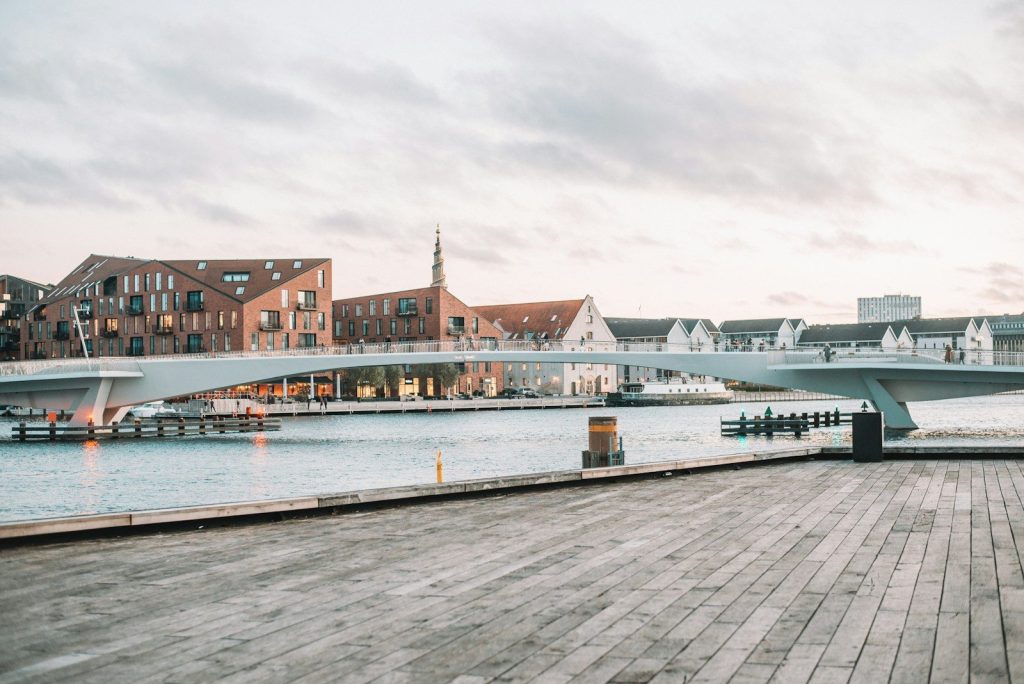
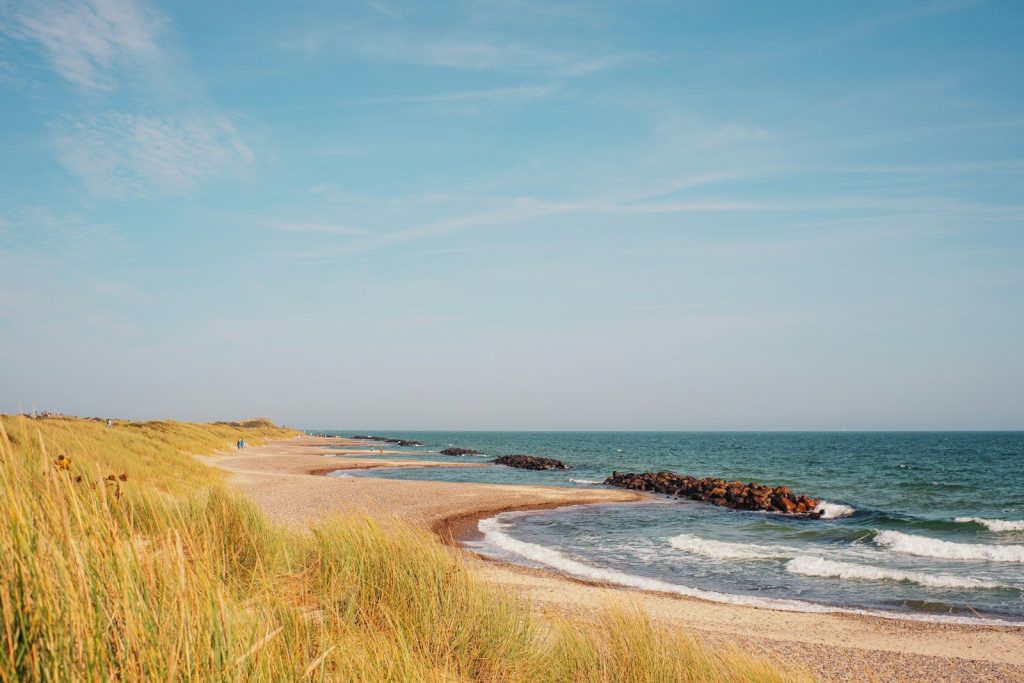
Copenhagen is one of Europe’s most liveable capital cities. It is compact, bike-friendly, architecturally beautiful, and culturally active in a way that its modest size does not immediately suggest. Aarhus, Odense, and Aalborg each offer genuine urban quality at lower cost. And Denmark’s geography flat, green, and coastal creates an outdoor lifestyle of cycling, sailing, and open-air living that is deeply embedded in how people actually spend their time.
Who Can Move to Denmark?
Denmark’s immigration system has a clear split between two categories of person, and which one you fall into shapes the complexity and cost of your move considerably.
EU, EEA, and Swiss citizens can live and work in Denmark freely without a permit. They do, however, need to register their right of residence with the Danish Agency for International Recruitment and Integration (SIRI) if they stay for more than three months. This registration is done online or at a SIRI branch office and requires evidence of employment, self-employment, financial self-sufficiency, or study enrolment.
Nordic citizens (Swedes, Norwegians, Finns, and Icelanders) have even simpler treatment they need no permit and no registration. EU citizens can apply for permanent residency after five years of continuous legal residence.
Non-EU nationals need a Danish residence permit before they can legally stay longer than a tourist visit. Applications are processed by SIRI and the Danish Immigration Service, submitted either from abroad through a Danish embassy or consulate, or from inside Denmark in certain circumstances. Non-EU nationals wishing to study must apply for a residence permit before coming to Denmark. For work-based permits, most applications are submitted by the employer on the worker’s behalf.
One important 2026 distinction worth knowing upfront: Denmark is outside both the EU Blue Card Directive and the EU Single Permit Directive. This means anyone comparing Danish immigration routes to those available in Germany, Poland, or the Netherlands needs to specifically research Denmark’s own national routes rather than assuming they are the same. The gap between what you read about European work permits generally and what Denmark actually offers can be significant.

The Complete Guide
Main Ways to Live in Denmark
The Pay Limit Scheme (Beløbsordningen) is the most commonly used fast-track employment route for skilled non-EU workers in Denmark. Foreign workers applying under the Pay Limit Scheme and the Supplementary Pay Limit Scheme face higher salary thresholds starting in 2026, as SIRI now uses updated income statistics based on recent wage data.
The Pay Limit Scheme allows Danish employers to hire non-EU professionals without a labour market test, provided the salary meets the minimum threshold. The fast-track processing time is approximately one month, and the government fee for this route is DKK 6,810 in 2026. It is the most accessible and fastest route for professionally employed non-EU nationals with a Danish employer.
The Start-up Denmark Programme is aimed at non-EU entrepreneurs who want to establish a company in Denmark with a viable and innovative business concept. Applications are assessed by an expert committee, and approval depends on the strength of the business plan. Processing takes approximately one month with a fee of DKK 3,060. This is a serious route for genuine entrepreneurs with scalable businesses it is not designed for freelancers or consultants looking to formalise a self-employed lifestyle.
The Student Residence Permit covers non-EU nationals accepted at Danish universities or higher education institutions. Non-EU students get a residence permit for study, processed by SIRI, requiring an acceptance letter, proof of roughly DKK 80,328 for the first year, and an application fee of about DKK 2,170. Processing takes around one to two months. Students may work up to 20 hours per week alongside their studies.
Family Reunification is available to spouses, registered partners, and dependent children of Danish citizens or qualifying permit holders. Processing times for spouse family reunification currently average approximately seven months one of the longer processing timelines in Denmark’s immigration system. Income and housing requirements for the sponsoring partner apply.
Permanent Residency is available after at least eight years of legal continuous residence in Denmark for non-EU nationals, with certain conditions around active participation in Danish society, clean criminal record, and Danish language at a defined level. EU citizens can apply after five consecutive years.
The official portal for all Danish residence permit applications and guides is newtodenmark.dk, run by SIRI and the Danish Immigration Service.
Visa and Residence Basics
Every non-EU national staying in Denmark beyond a tourist visit needs a residence permit. The application must generally be submitted before arriving in Denmark, through a Danish embassy or consulate in your home country. Applications can also be submitted online, but biometric features photo and fingerprints must be provided in person within 14 days.
Typical official decision windows range from about one month for most mainstream work schemes to two months for students, around seven months for spouse family reunification, and eight months for permanent residence. These are not guaranteed timescales, and SIRI advises applying as early as possible.
The usual first-time government fee range is roughly DKK 3,060 to DKK 8,490 depending on category, and applicants filing from abroad may also face an additional embassy handling fee of DKK 1,875 plus translation, legalisation, courier, or outsourcing centre costs where applicable.
A late 2026 development worth monitoring: the European Travel Information and Authorization System (ETIAS) is scheduled to begin operations in the last quarter of 2026 for visa-exempt travellers entering Schengen countries including Denmark.
This will require pre-travel authorisation for nationals of countries that currently do not need a Schengen visa Americans, Britons, Canadians, and Australians, for example. The ETIAS fee is €20, and approval is valid for three years. This does not affect people with existing residence permits but will affect anyone entering Denmark on a short visit before a permit is in place.
First Steps After Arrival
The first days in Denmark follow a clear administrative sequence. Getting through it efficiently makes everything that follows much smoother.
Register your address at the kommune within five days. Your local municipality office (borgerservice) is where you register your address and receive your CPR number. The CPR number (Central Persons Register number) is the Danish personal identification number, and it is the administrative key to everything in Denmark healthcare, banking, tax, phone plans, library cards, and most public services.
Register as soon as you move into your accommodation. You need to bring your passport, residence permit, and proof of your Danish address. Processing is typically quick the CPR number is issued within one to two weeks in most municipalities.
Open your Danish bank account. A CPR number is the main requirement for opening an account at most Danish banks. The main retail banks are Danske Bank, Nordea, Jyske Bank, and Sydbank. All offer English-language digital banking. Once your account is open, download and set up MobilePay Denmark’s near-universal mobile payment app, used for everything from splitting dinner bills to paying at markets, small shops, and between individuals. Without MobilePay, some day-to-day financial interactions become more cumbersome than they need to be.
Get your tax card from Skat. The Danish Tax Agency (Skat) is accessible at skat.dk. Your employer needs your tax card before your first payroll run to calculate the correct withholding rate. Without it, the default rate applies, which will likely be higher than your actual tax rate. Use Skat’s online salary calculator before accepting any job offer to understand your actual net take-home pay Danish income tax rates look high on paper, and having the precise figure before you negotiate your contract is important.
Register with a GP. Once you have your CPR number and yellow health insurance card (det gule sundhedskort), you register with a local general practitioner (praktiserende læge / læge) who becomes your primary healthcare contact for all non-emergency medical needs. Registration is done through sundhed.dk. Your yellow health card confirms your access to the public healthcare system and lists your registered doctor.
Get a Danish SIM card. The main mobile operators are TDC, Telenor, Telia, and Onfone (budget option). Monthly plans with generous 5G data run DKK 100 to 200 per month, which is among the more affordable mobile pricing in Scandinavia.
The Complete Guide
Best Places to Live in Denmark
Denmark is a small country roughly the size of Switzerland but it has real variation between its cities, and choosing where to land makes a genuine difference to your daily costs and lifestyle.
| City | Avg Rent (1-bed, city centre) | Best For | Key Notes |
|---|---|---|---|
| Copenhagen | DKK 12,000 – 16,000 | Finance, tech, international life | Most expensive; largest job market; best cultural life |
| Aarhus | DKK 7,500 – 11,000 | Students, creative industries, families | 25–30% cheaper than Copenhagen; European Capital of Culture 2017 |
| Odense | DKK 6,500 – 9,000 | Families, central location, lower costs | Hans Christian Andersen’s birthplace; good transport links |
| Aalborg | DKK 5,500 – 8,000 | Industry, quieter lifestyle, affordability | Fastest-growing city in Denmark; lower costs; northern location |
| Smaller towns / islands | DKK 4,000 – 7,000 | Rural living, nature, very low costs | Limited services; requires car; strong community feel |
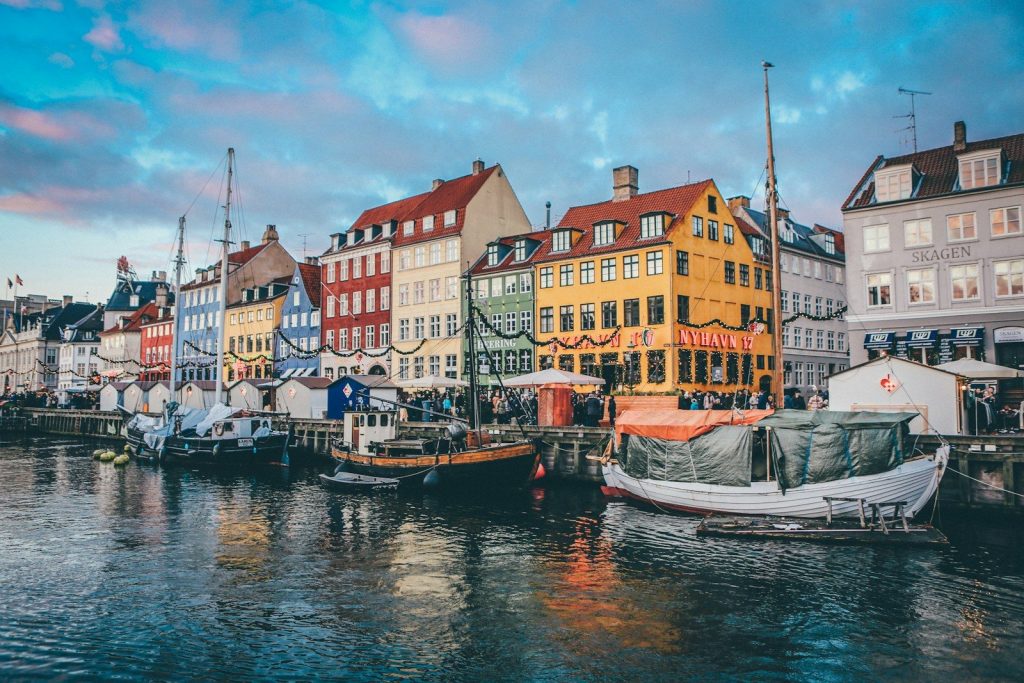
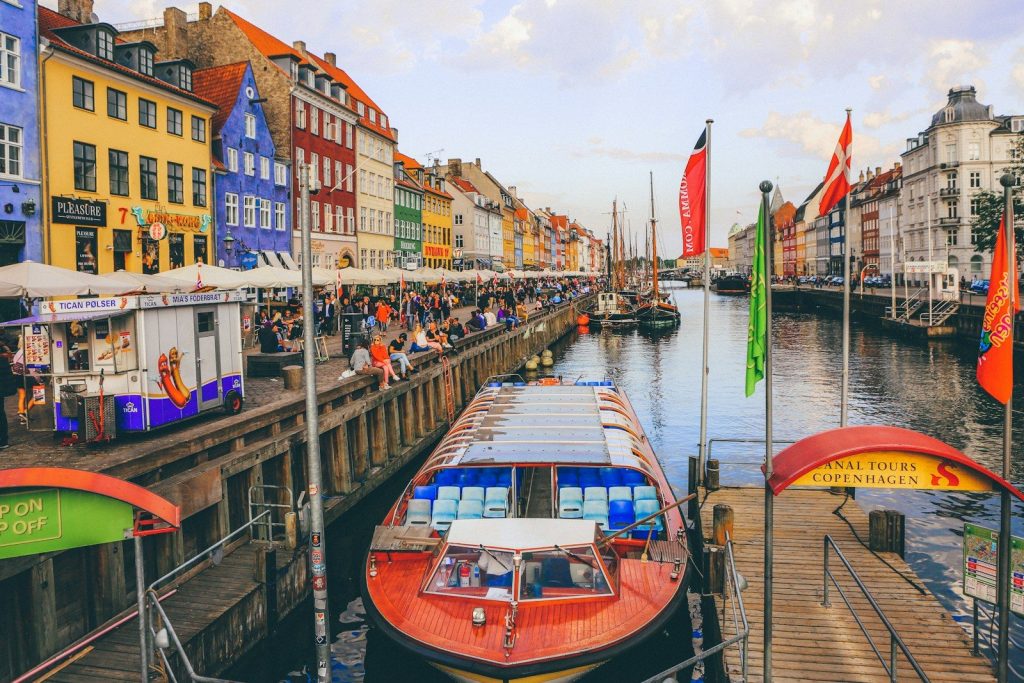
Copenhagen is the obvious first choice for most internationally mobile professionals and the city that Denmark’s global reputation is built on. The capital combines excellent employment across technology, finance, pharmaceutical, maritime, and design sectors with a built environment the canals of Christianshavn, the Tivoli Gardens, the Nyhavn harbour that is genuinely beautiful.
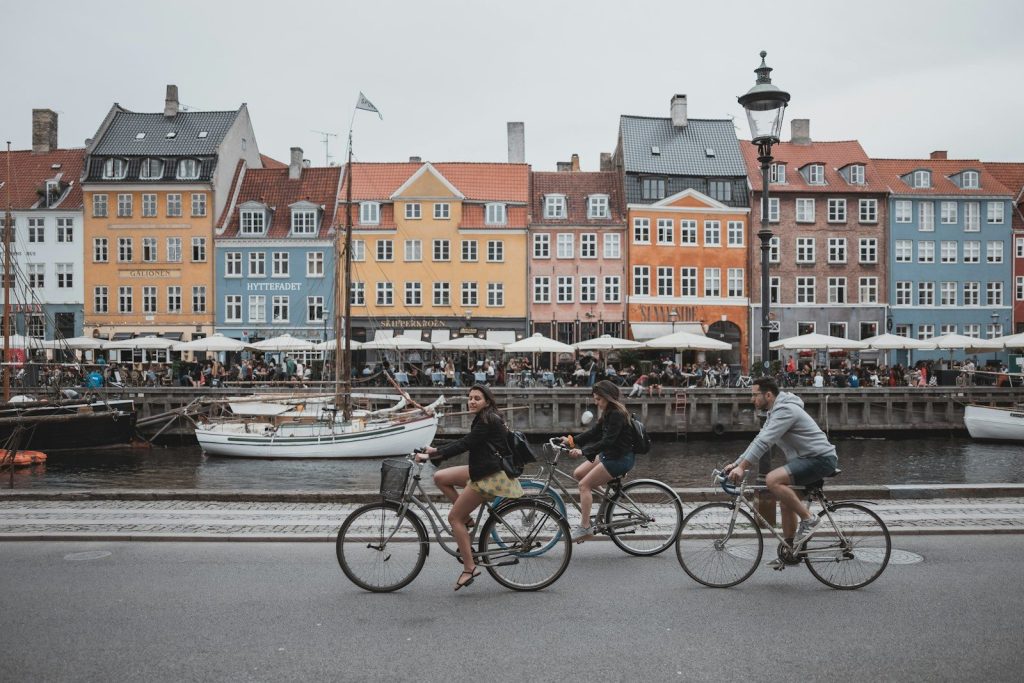
Cycling infrastructure is extraordinary: the city has more bicycles than residents, and cycling to work is not a lifestyle statement but the default transport choice for most Copenhageners. Popular expat neighbourhoods include Nørrebro (diverse, younger, creative), Vesterbro (converted meatpacking district, now fashionable), Frederiksberg (quieter, family-oriented), and Østerbro (established, leafy, good schools).
Aarhus is the city that consistently earns the strongest endorsement from expats who researched their options before choosing. Denmark’s second largest city, with approximately 350,000 residents, it combines a major university (Aarhus University, one of Scandinavia’s largest), a genuine cultural scene the ARoS art museum alone justifies significant attention and costs that run 25 to 30 percent below Copenhagen for most expense categories.
Aarhus is Denmark’s second-largest city and has a strong claim to being Scandinavia’s most underrated expat destination. For digital nomads, students, and mid-career professionals who want urban quality without capital city prices, it is the most compelling alternative in the country.
Odense, on the island of Funen, is Denmark’s third largest city and one of its most family-friendly. It is the birthplace of Hans Christian Andersen, and the city wears its literary heritage well. It sits centrally in Denmark’s geography 90 minutes from Copenhagen and 90 minutes from Aarhus by train and offers reasonable costs, good schools, and a relaxed pace.
Aalborg, in the north of Jutland, is Denmark’s fourth largest city and the most affordable of the major ones. It has a significant industrial and higher education base, a surprisingly active nightlife scene for its size, and the kind of costs that make a comfortable Danish lifestyle available on a much lower income than Copenhagen requires.
Cost of Living in Denmark
Denmark sits alongside Norway and Switzerland as one of Europe’s most expensive countries, and the numbers require honest planning. The important context is that Danish salaries are high, and the public services that Danish taxes fund healthcare, childcare, education provide real monthly savings that partially offset the cost headline.
A single person living in a major Danish city should expect monthly living costs of around DKK 23,100, approximately €3,100, per month. That budget covers decent housing, moderate dining out, some leisure activities, and saving for an annual holiday. Copenhagen landlords typically require a three-month rent deposit plus first month’s rent upfront budget DKK 40,000 or more, approximately $5,800 USD, before your first day in a Copenhagen apartment.
The table below gives 2026-current monthly estimates across Denmark’s four main cities.
| Expense Category | Aalborg / Smaller Cities | Odense / Jutland | Aarhus | Copenhagen |
|---|---|---|---|---|
| Rent (1-bed, city centre) | DKK 5,500 – 8,000 | DKK 6,500 – 9,500 | DKK 7,500 – 11,000 | DKK 12,000 – 16,000 |
| Groceries (single person) | DKK 2,000 – 2,800 | DKK 2,200 – 3,000 | DKK 2,200 – 3,200 | DKK 2,500 – 3,500 |
| Utilities (electricity, heat, internet) | DKK 800 – 1,300 | DKK 900 – 1,500 | DKK 1,000 – 1,600 | DKK 1,100 – 1,800 |
| Public transport (monthly pass) | DKK 300 – 450 | DKK 350 – 500 | DKK 600 | DKK 750 |
| Dining out (moderate) | DKK 1,500 – 2,500 | DKK 1,800 – 2,800 | DKK 2,000 – 3,000 | DKK 2,500 – 4,000 |
| Private dental supplement | DKK 200 – 400 | DKK 200 – 400 | DKK 250 – 450 | DKK 300 – 500 |
| Approximate Monthly Total | DKK 10,300 – 15,450 | DKK 11,950 – 17,700 | DKK 13,550 – 19,250 | DKK 19,150 – 26,550 |
Budget grocery stores Netto, Rema 1000, and Lidl are significantly cheaper than premium chains like Irma or Føtex. Shopping at budget chains can save DKK 500 to 800 per month versus premium options. Alcohol in Denmark is taxed at a meaningful rate not as punishingly as in Norway, but enough that wine from a Danish supermarket costs more than it would in Germany or France. Dining out runs DKK 150 to 250 for a mid-range restaurant main course with a drink, making regular restaurant meals a significant budget line item.
Dental care is the healthcare cost that surprises most new arrivals. Public healthcare in Denmark covers almost everything except adult dental treatment, which is largely private. A routine check-up and clean at a Danish dental clinic typically costs DKK 700 to 1,200, and restorative work significantly more.
Private dental insurance is widely recommended and costs approximately DKK 200 to 400 per month for a basic plan. The alternative many expats use it is crossing to Germany, particularly in southern Jutland near the German border, for dental treatment at significantly lower prices.
Housing and Rentals
Denmark’s rental market has specific conventions that differ meaningfully from North American and most European norms, and the one that catches almost every newcomer off guard is the upfront cost.
Standard rental deposits in Denmark are three months of rent, with landlords additionally requiring the first month’s rent paid in advance. For a central Copenhagen apartment at DKK 12,000 per month, this means DKK 48,000 in upfront costs before your first night an amount that needs to be planned as a fixed relocation expense, not a variable one.
Danish leases typically run for one year with an option to renew, or as indefinite leases with specific notice periods. Notice periods on most residential leases are three months from the tenant’s side. Furnished apartments exist but at a significant premium over unfurnished equivalents Denmark, like most Scandinavian countries, defaults to unfurnished at the long-term residential level, which means budgeting for furniture and kitchen equipment as part of your setup costs.
Most Danish landlords ask for proof of income (typically three months of payslips), a signed employment contract, and valid ID. Having your CPR number, bank account, and employment contract ready before you start viewing apartments significantly improves your chances, because competition for good apartments in Copenhagen and Aarhus is high and landlords can be selective.
The main apartment search platforms in Denmark are boligsiden.dk for sales and long-term rentals, lejebolig.dk for rental-focused searches, and Facebook’s housing groups for each city, which are actively used and sometimes carry listings before they appear on official portals. Many expats also find accommodation initially through their employer’s HR team, who often have relationships with housing agencies serving international hires.
For the first few weeks after arrival before your CPR number is processed, furnished short-term apartments through Airbnb or local furnished flat agencies provide a bridge address while you search for long-term accommodation. Starting your apartment search from a confirmed address also resolves the CPR catch-22 you need an address to get a CPR number, and you sometimes need a CPR number to sign a lease. Most communes accept a temporary furnished rental address for initial CPR registration.
Healthcare and Insurance
Denmark’s public healthcare system is one of the genuinely outstanding features of life there, and it is free to all registered residents once your CPR number and yellow health card are in place.
Once you have your CPR number, you receive your yellow sundhedskort (health card), which confirms your access to the public system. You then register with a local praktiserende læge (GP) through sundhed.dk. Your GP is the entry point to all non-emergency healthcare you cannot access specialist care without a GP referral in most cases. GP appointments are free. Referrals to specialists, diagnostic tests, hospital treatment, and maternity care are all covered under the public system at no direct cost to the patient.
Wait times in the public system for non-urgent specialist care can be weeks to months for some services, and some expats supplement public coverage with private health insurance for faster access to certain specialists or private hospital rooms.
Private supplemental insurance is not required but is commonly held, particularly among older residents and families with children who want guaranteed-speed access to paediatric care. Annual premiums for basic supplemental coverage typically run DKK 3,000 to 8,000 depending on age and coverage level.
Dental care for adults is the main gap in the public system. Danish public healthcare covers dental care for children and adolescents up to age 22, but adult dental treatment is predominantly private. This is one of the budget items that is easy to overlook when planning a move to Denmark and worth budgeting explicitly from the outset.
Mental health services are available through the public system via GP referral, though waiting lists for therapy and psychiatric services exist in some regions. Private therapy in English is available in Copenhagen and Aarhus, typically at DKK 800 to 1,400 per session.
The Complete Guide
Banking and Money
Denmark uses the Danish krone (DKK), not the euro. Despite being an EU member, Denmark has an opt-out from the eurozone and has maintained the krone, which is pegged closely to the euro. This means day-to-day exchange rate volatility is minimal relative to the euro, but currency conversion costs apply for euro-denominated transfers in and out.
Opening a bank account at a Danish bank requires your CPR number, passport, and proof of Danish address. The main retail banks are Danske Bank, Nordea, Jyske Bank, and Sydbank. Danske Bank and Nordea both offer full English-language digital banking interfaces and are commonly used by expats. Account opening typically takes one to two weeks from the time your CPR number is issued.
MobilePay is the payment app that makes Danish financial life significantly more convenient. It is operated by the major Danish banks and works for instant peer-to-peer transfers, retail payments, event ticket purchases, and bill splitting. Most social payments in Denmark splitting a dinner, paying a friend back for groceries, buying from a small trader at a market happen through MobilePay rather than cash. Setting it up within your first week is genuinely one of the more useful practical steps you can take.
Denmark is strongly cashless. Card and contactless payment is accepted essentially everywhere. ATMs are available but rarely needed. Many smaller local businesses and market vendors who do not use card readers specifically use MobilePay as an alternative cash as a backup is less reliably accepted than in most other European countries.
For international transfers, Wise and Revolut operate normally in Denmark and provide cost-effective currency conversion for euro or dollar income converted to DKK or vice versa.
Taxes and Work
Danish income tax is genuinely high and deserves direct engagement before you accept any employment contract or make final financial plans.
The effective income tax rate for most Danish employees including state income tax, municipal tax, and social contributions runs from approximately 37 to 55 percent depending on income level and municipality. The average municipal tax rate in 2026 is approximately 24.8 percent. State income tax applies at progressive rates on top of this, with the top bracket kicking in on income above approximately DKK 586,600 per year.
For most expat professionals earning DKK 500,000 to 800,000 per year, effective total tax rates of 40 to 45 percent are realistic. The financial reality check: Danish income tax is genuinely high 37 to 55 percent. Always calculate net salary before accepting offers.
Two specific tax schemes are relevant for internationally arriving professionals. The Expat Tax Scheme (26 percent flat tax) allows qualifying foreign researchers and highly paid employees to pay a flat 26 percent gross tax rate on Danish income for up to seven years, in place of the standard progressive rates.
To qualify, you must not have been tax resident in Denmark for the past ten years, and your monthly salary must meet a minimum threshold DKK 70,400 per month (approximately DKK 844,800 per year) in 2026. For high earners who meet the criteria, this is a very significant advantage. The Danish Tax Agency (Skat) administers the scheme, and details are available at skat.dk.
The main employment sectors for internationally mobile professionals in Denmark are technology (a strong and growing sector anchored by companies including Maersk Technology, Novo Nordisk, Vestas, and a vibrant Copenhagen startup scene), pharmaceutical and biotech (Novo Nordisk, Leo Pharma, and others are headquartered in Denmark), shipping and maritime services, green energy (Denmark leads the world in offshore wind, and the sector is a major employer), healthcare, education, and design.
Education and Family Life
Denmark is consistently considered one of the world’s best countries for family life, and the practical infrastructure behind that reputation is real.
The public school system (folkeskole) provides free education for all resident children from age six through sixteen. Classes are taught in Danish, and children who arrive without Danish language ability receive integration support through the school system. Quality is generally high and consistent across most regions.
Childcare (daginstitutioner vuggestue for ages zero to three, børnehave for ages three to six) is subsidised and of high quality. The national maximum parental contribution for daycare is set annually by the government. In 2026, the subsidy covers 75 percent or more of daycare costs for most families, and many municipalities cover even higher proportions based on income.
Full-time nursery care typically costs DKK 2,000 to 3,500 per month for most families after subsidy dramatically below unsubsidised market rates and one of the most tangible financial benefits of Danish residency for families.
International schools are available in Copenhagen and to a lesser extent in Aarhus. The Copenhagen International School (CIS), Virum Gymnasium’s international stream, and several others offer English-medium IB education. Annual fees range from approximately DKK 80,000 to 150,000 per child, depending on school and year group. Many multinational employers in Copenhagen include school fee contributions as part of senior expat packages.
Danish universities the University of Copenhagen, Aarhus University, the Technical University of Denmark (DTU), and the Copenhagen Business School are all internationally respected and rank well in global university tables. Many master’s programmes are taught in English and attract large international student populations.
Daily Life and Transport
Denmark’s transport infrastructure is one of its defining practical strengths, and for residents of major cities, cycling is not a cultural quirk but a functional daily choice that makes everything else simpler.
Copenhagen has cycling infrastructure that is genuinely among the best in the world. More than 62 percent of Copenhagen residents cycle to work or school on a typical day. Dedicated cycling lanes are separated from both car traffic and pedestrian paths, and the city has invested in cycling infrastructure over decades in a way that makes it safe and fast even in winter. Most expats who move to Copenhagen report buying a bicycle in the first week as one of the most useful practical decisions they made.
For longer distances within the city, Copenhagen has a Metro with two main lines (M1 and M2, running 24 hours a day seven days a week including at night), and DSB’s S-tog (S-train) suburban rail network. A monthly Copenhagen transit pass costs DKK 750 and covers metro, S-tog, and bus within city zones.
The DSB national rail network connects Copenhagen to Aarhus in approximately three hours, Odense in approximately 90 minutes, and Aalborg in approximately three and a half hours. Advance booking on DSB reduces fares significantly; tickets are available at dsb.dk.
Shopping for everyday groceries is easy across the country. Budget supermarket chains Netto, Rema 1000, Lidl, and Aldi provide excellent value. Netto in particular is widely regarded as the best value-to-quality balance in the Danish discount market. Larger supermarkets Føtex, Bilka, SuperBrugsen carry broader ranges including international products.
Internet connectivity is fast and reliable nationally. Fibre home broadband connections offering 250 Mbps to 1 Gbps are widely available for DKK 200 to 350 per month. Denmark consistently ranks among the top countries in Europe for internet infrastructure.
The Complete Guide
Language and Culture
Danish is the official language of Denmark and is the language used in government offices, schools, courts, most workplaces, and daily social life across the country. In Copenhagen and among the professional classes of Aarhus and Odense, English proficiency is very high particularly among people under 50. Many international companies in Copenhagen operate primarily in English.
That said, Danish is not optional for long-term life quality. Administrative letters, tax documents, healthcare communications, and lease contracts are in Danish. Neighbours, local shops, GP receptionists, and most service providers outside the most internationally-oriented companies will interact in Danish. And the social transition from professional acquaintance to genuine friendship with Danish people is closely correlated with language investment.
Danish is a Germanic language, closely related to Norwegian and Swedish, and broadly accessible for English speakers in written form. The pronunciation is the genuine challenge spoken Danish involves significant consonant reduction and vowel softening that makes it sound very different from written Danish and takes real time to acquire.
Most newcomers who commit to structured study reach functional conversational level within nine to fifteen months. Danish lessons are available through local municipalities (often free or subsidised for registered residents with a CPR number), language schools including Studieskolen and Studiesprog in Copenhagen, and online through platforms like Babbel (which focuses on Scandinavian languages) and iTalki.
The concept of hygge a Danish and Norwegian word that roughly describes the feeling of cosiness, warmth, and contentment in good company is not a marketing invention. It is a genuine cultural orientation toward creating comfortable, inclusive, candlelit social environments that Danes actively pursue. Understanding it provides immediate insight into why Danish social gatherings feel as they do: unhurried, food-centred, candle-heavy, and oriented around genuine conversation rather than performance.
Danish culture has a particular relationship with equality and modesty. The janteloven the unwritten code of not considering yourself better than anyone else runs through Danish social interaction and is worth understanding early. Directness is normal and not considered rude. Hierarchy is flat. Your title matters less than your contribution. First names are used immediately, with everyone from the CEO to the receptionist.
Pros and Cons of Living in Denmark
The genuine advantages are significant. Safety that ranks among the best in Europe. A public healthcare system that is comprehensive and free at point of use. Subsidised childcare that meaningfully reduces the cost of family life. Free or near-free university education for EU residents. Some of the most bicycle-friendly cities in the world.
A work-life balance that is genuinely protected rather than aspirationally discussed. A cultural depth in design, architecture, food, and social philosophy that punches well above the country’s size.
The honest challenges are equally real. Danish income tax is genuinely high, and net salary calculations must be done before accepting any job offer. The upfront costs of renting in Copenhagen three months’ deposit plus first month’s rent can exceed DKK 40,000 to 60,000 for a typical apartment. Winters are dark, grey, and wind-driven in a way that requires psychological preparation and active management.
The Danish language requires consistent effort and is genuinely necessary over the medium term. And the processing times for some residency permits particularly family reunification at approximately seven months require patience and forward planning.
Moving to Denmark Checklist
Six to three months before:
Choose your residency route Pay Limit Scheme, Start-up Denmark, student, family reunification, or EU registration. Non-EU nationals should begin the SIRI application process as early as possible given processing times of one to eight months depending on permit type.
Gather documentation: valid passport with minimum six months’ validity beyond your planned stay, clean criminal background certificate apostilled from your home country, employment contract or university acceptance letter, proof of financial means where required.
Have all foreign-language documents professionally translated into Danish. Begin Danish language learning even A1 level before arrival reduces administrative friction noticeably.
One to two months before:
Arrange short-term furnished accommodation for your first four to six weeks Airbnb and local furnished flat agencies are practical for this period. Non-EU nationals confirm their visa status or residence permit approval before booking flights. Notify your home country tax authority of your departure. Set up a Wise or Revolut account for international transfers during the gap before your Danish bank account is open.
Arrival week:
Register your address at the local borgerservice (municipality office) within five days. Bring passport, permit documentation, and proof of your Danish address. This registers you with the CPR system and starts the processing of your yellow health card. Once your CPR number is issued typically within one to two weeks open your bank account at Danske Bank or Nordea.
Contact Skat to obtain your tax card. Set up MobilePay once your bank account is active. Register with a GP through sundhed.dk. Purchase a Danish SIM card. Buy a bicycle if you are in Copenhagen, Aarhus, or Odense it will immediately become your primary transport.
Ongoing:
File your annual Danish tax return through Skat’s online portal by 1 May for the preceding tax year. Review whether you qualify for the 26 percent Expat Tax Scheme and apply within six months of starting employment if you do. After five years of continuous legal residence, EU nationals can apply for permanent residency.
After eight years, non-EU nationals with qualifying residence can apply. Keep investing in Danish language study throughout B1 proficiency noticeably expands both career access and daily social quality.
Common Mistakes to Avoid
Not calculating net salary before accepting a job offer. Denmark’s income tax rates make gross salary a poor indicator of take-home pay. A DKK 700,000 gross salary becomes approximately DKK 420,000 to 440,000 net after tax a large gap that significantly affects your monthly financial planning. Use Skat’s salary calculator at skat.dk before signing anything.
Not budgeting for the rental deposit upfront. Three months of deposit plus first month’s rent is standard in Denmark, and the total for a typical Copenhagen apartment can exceed DKK 50,000 before you have spent a night there. This is a fixed cost that needs to be in your relocation budget as a specific line item, not a vague contingency.
Delaying CPR number registration. Without your CPR number, you cannot open a bank account, register with a doctor, access public healthcare, or complete most administrative tasks. Registering at the borgerservice within five days of arrival is a hard deadline that everything else depends on. Prioritise it above everything else in your first week.
Assuming English covers all situations. Copenhagen’s international professional environment functions in English. The rest of your Danish life official letters, healthcare, local government, most neighbourhoods in Aarhus, Odense, and smaller cities operates in Danish. Start learning before you arrive.
Not checking whether you qualify for the 26 percent Expat Tax Scheme. If your salary meets the DKK 70,400 monthly threshold and you have not been tax resident in Denmark for the past ten years, the scheme can dramatically reduce your tax burden for up to seven years. Missing this opportunity simply because you did not know it existed is a costly oversight.
The Complete Guide
FAQs About Moving to Denmark
Is it hard to move to Denmark?
For EU and EEA citizens, the registration process is straightforward. For non-EU nationals, the permit system requires advance planning and careful document preparation, but SIRI processes mainstream work permits in approximately one month. The main challenge for non-EU nationals is that Denmark does not offer an EU Blue Card or digital nomad visa routes need to be assessed against Denmark’s specific national scheme rather than general European equivalents.
How much money do I need to live in Denmark?
A single person in Copenhagen needs approximately DKK 20,000 to 25,000 per month for a comfortable lifestyle, including rent. In Aarhus, the equivalent is DKK 15,000 to 19,000. In Aalborg or Odense, DKK 12,000 to 16,000. Budget a minimum of DKK 40,000 to 50,000 as a liquid reserve for the first month’s deposit, rental costs, and setup expenses in Copenhagen.
Do I need to speak Danish?
In Copenhagen’s international professional community, English covers most workplace interactions. For administrative processes, healthcare, leases, and neighbourhood life, Danish becomes necessary over the medium term. Learning at minimum A2 level before arrival is strongly recommended.
What city is best for expats in Denmark?
Copenhagen for the broadest job market, international community, and cultural life. Aarhus for excellent value, a strong university environment, and a genuine city feel at 25 to 30 percent lower cost. Odense for families who want a stable, central base. Aalborg for the most affordable lifestyle in a genuinely urban setting.
Can foreigners work in Denmark?
EU and EEA nationals can work freely without any permit. Non-EU nationals need either a Pay Limit Scheme permit (tied to a specific employer who meets the salary threshold) or another qualifying national route. Working in Denmark without the appropriate authorisation is a legal violation that risks permit cancellation and future immigration complications.