Moving to Poland in 2026: The Complete Guide for Expats, Digital Nomads and International Professionals
Poland does not always appear at the top of expat destination lists, and that is precisely what makes it interesting. While the world’s attention has drifted between Portugal’s sunshine and Germany’s infrastructure, Poland has been quietly building one of Central Europe’s most dynamic economies, transforming its major cities into genuine European hubs, and developing an expat community that is both well-established and, by the standards of western European capitals, relatively uncrowded with newcomers.
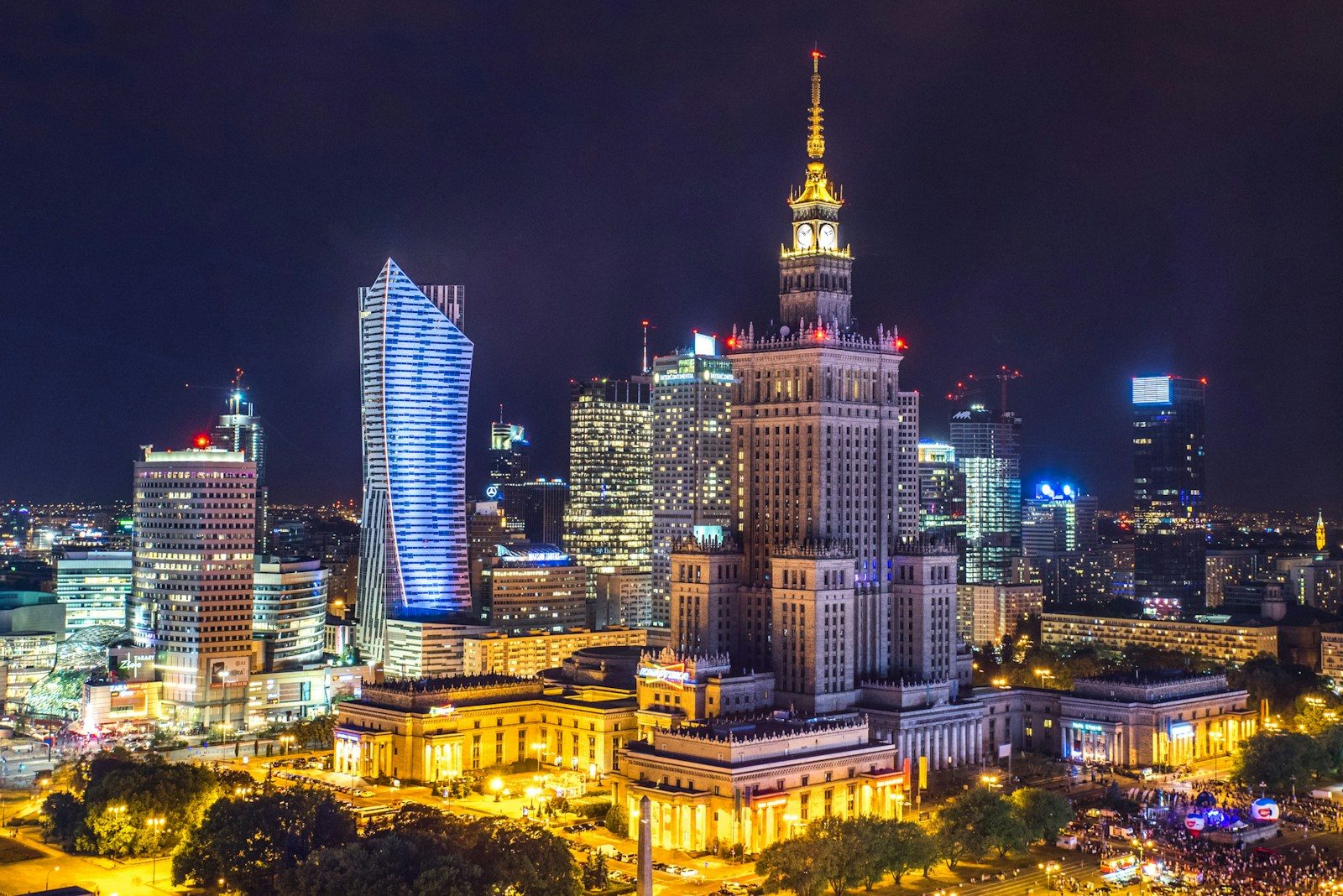
The numbers tell a compelling story. Poland is now the sixth largest economy in the European Union. Warsaw has become a significant tech and financial services centre, with major global firms including Google, Microsoft, Goldman Sachs, and Allegro operating large offices in the capital. Wrocław has developed a reputation as one of Europe’s most liveable mid-size cities.
Kraków draws a constant stream of international students, remote workers, and academics who arrive for a semester and end up staying for years. And across the country, the cost of living remains dramatically lower than in Western Europe a lifestyle that costs €3,000 per month in Berlin or London typically runs €1,600 to €1,800 in Warsaw, and even less in smaller cities.
For digital nomads earning in euros or dollars, Poland represents one of the most compelling value propositions in the EU. For skilled professionals in IT, finance, engineering, and business services, it offers a job market that is growing, a visa pathway that has been meaningfully simplified, and a quality of life that consistently surprises people who arrive with low expectations.
This guide gives you the full picture honest, current, and detailed of what moving to Poland in 2026 actually involves.
Is Poland Right for You?
The answer depends on what you are optimising for, and being clear about that from the outset will save you from arriving with the wrong set of expectations.
Poland suits certain profiles very well. IT professionals in particular find the country extremely welcoming the tech sector has been growing at pace, salaries in the sector are significantly above the national average, and the combination of strong internet infrastructure and a culture of remote-friendly work makes it a natural fit for globally connected professionals.
Students at European level will find that Poland’s major universities the University of Warsaw, Jagiellonian University in Kraków, Wrocław University of Technology offer genuine academic quality at tuition costs that are a fraction of Western European equivalents.
Entrepreneurs with business connections to Ukraine, Belarus, or the broader Central and Eastern European market find Poland a natural base: it shares borders with both, has significant economic and cultural connections to the region, and offers EU legal infrastructure.
EU citizens face no barriers whatsoever and can move, work, and build here with minimal administrative overhead. Non-EU nationals face a meaningful bureaucratic process, but one that has been substantially streamlined since 2023 with the implementation of the revised EU Blue Card Directive and reforms to the Polish work permit system.
The honest challenges are three. First, the language. Polish is a Slavic language with a complex grammatical structure and a phonological system that most English speakers find genuinely difficult. English proficiency in Polish cities is relatively high among younger professionals, but administrative offices, healthcare providers, and landlords outside major city centres often operate almost entirely in Polish.
Second, the winters. Poland has a continental climate with cold, grey winters that can stretch from November to March, and the air quality in some cities particularly Kraków and the Silesian conurbation has historically been problematic during the heating season.
Third, the bureaucracy. Polish administrative processes are improving but remain slow, paper-dependent in many contexts, and language-heavy in a way that creates real friction for non-Polish speakers.
None of these is insurmountable. Hundreds of thousands of non-EU nationals have navigated them successfully. But going in with clear eyes about what the adjustment involves is more useful than being surprised by it.

The Complete Guide
Poland’s Main Cities and Where to Live
Poland’s major cities offer a more diverse range of lifestyle options than the country’s external image sometimes suggests. The choice of where to settle is one of the most important decisions of the relocation process, with real implications for cost, career opportunity, and quality of daily life.
Warsaw is the capital, the economic engine, and the most international city in Poland. It hosts the largest expat community in the country, the widest range of English-language services, the most developed international school system, and the highest concentration of multinational employers.
The city’s Mokotów district home to many corporate offices and serviced apartment complexes is a natural first landing point for professionally relocated expats. Śródmieście (the city centre), Żoliborz, and Praga Północ each offer distinct characters, with Praga in particular having developed into a genuinely creative neighbourhood over the past decade. Warsaw is also the most expensive city in Poland, and it commands a premium that requires realistic budgeting.
Warsaw is the baseline against which other Polish cities are measured, with Kraków and Gdańsk roughly 15 to 20 percent cheaper, Wrocław and Poznań 20 to 30 percent cheaper, and Łódź and Katowice 25 to 35 percent cheaper.
Kraków has a claim to being the most atmospheric city in Poland. The historic centre a UNESCO World Heritage Site is one of the best preserved medieval city centres in Europe, and the city’s character as a university town (with a student population approaching 200,000 across multiple institutions) gives it a perpetual energy that purely business-focused cities sometimes lack.
The expat community in Kraków is substantial and particularly strong in the academic, creative, and tech sectors. For digital nomads, the combination of affordable living, excellent café infrastructure, multiple coworking spaces, and an active international social scene makes it one of the best Polish cities to base from. For expats, a net salary of 8,000 to 10,000 PLN per month allows comfortable living in Kraków, with room to save.
Wrocław is increasingly the city that draws the most enthusiastic reviews from expats who have spent time there. The city offers Western European-standard amenities excellent public transport, international dining, a thriving startup ecosystem at prices that are 20 to 30 percent below Warsaw.
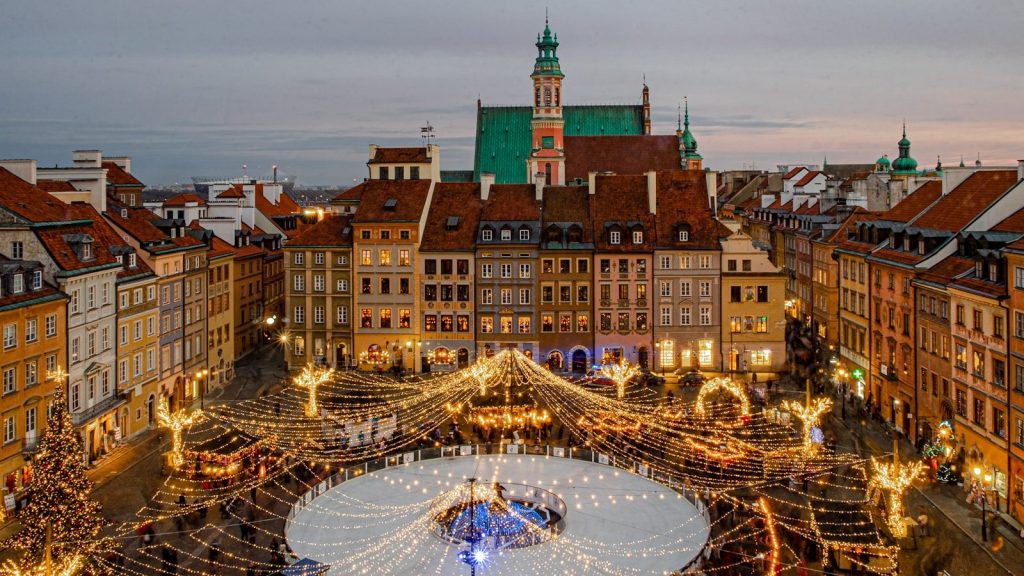
The historic market square (Rynek) is stunning, the nightlife is lively, and the strong student population from Wrocław University of Technology and the University of Wrocław keeps the city culturally active. For tech professionals in particular, Wrocław has become a genuine hub: companies like Nokia, Volvo, and Credit Suisse (now UBS) have significant operations here.
Gdańsk occupies a unique position as Poland’s premier coastal city, sitting at the southern end of the Bay of Gdańsk in the Baltic Sea. The tri-city metropolitan area (Gdańsk, Gdynia, and Sopot) offers a distinctly different quality of life from the inland cities beach access, a maritime cultural identity, and strong connections to Scandinavian and German business culture. Intel and Amazon have significant presences here, and the city has developed a growing technology sector over the past decade.
Poznań sits on the main Berlin-Warsaw rail corridor and benefits from strong economic and cultural connections to Germany. It is a pragmatic, business-focused city with lower costs than Warsaw and a well-developed infrastructure. Regular Poznań International Fair events have historically made it one of Poland’s most internationally connected cities from a business perspective.
Łódź and Katowice represent the most compelling value tier for expats who do not need the full amenities of the major cities. Łódź, once an industrial textile city, has undergone significant urban regeneration the Manufaktura complex and the OFF Piotrkowska arts district are genuine destinations and rental costs are among the lowest of any major Polish city.
Katowice, at the heart of the Silesian metropolitan area, offers a strong job market in mining, energy, and increasingly IT, with costs noticeably below the national average for major cities.
Visa and Residency Options in Poland
Poland’s immigration framework was significantly reformed through the 2023 implementation of the EU Blue Card Directive and subsequent 2025 amendments to the Act on Foreigners. The result is a system that is meaningfully more accessible to international talent than it was five years ago, though it retains some bureaucratic friction points that require patient management.
EU, EEA, and Swiss citizens can move to Poland freely, register their address (zameldowanie) within 30 days of arrival, and begin working without any permit. The registration process is handled at the local office of municipal affairs (Urząd Dzielnicy or Urząd Gminy) and is the trigger for subsequent administrative processes including the PESEL number.
Non-EU citizens require either a national visa or a residence permit. The main pathways in 2026 are as follows:
The EU Blue Card (Niebieska Karta UE) is the flagship route for highly qualified non-EU professionals. From February 9, 2026, the EU Blue Card salary threshold increased to PLN 13,355.34 gross per month 150 percent of the average national salary as determined by the Central Statistical Office (GUS) up from PLN 12,272.58 in 2025. This threshold applies nationwide, unlike Belgium’s regionalised system.
The contract must be for a minimum of six months, and the applicant must hold a recognised higher education qualification or, for IT professionals, at least five years of relevant professional experience. The 2025 amendments introduced significant facilitations: the labour market test has been abolished, the minimum contract period requirement has been shortened, and Blue Card holders have greater flexibility to change employers.
Processing times vary significantly by voivodeship: Warsaw and Kraków currently process applications in 7 to 9 months on average, while Wrocław averages 12 or more months and some other offices significantly longer. Applications are submitted to the voivodeship office (Urząd Wojewódzki) competent for the applicant’s registered address. The official portal for the Blue Card application process is gov.pl.
The Single Work Permit (Zezwolenie na pobyt czasowy i pracę) is the combined temporary residence and work permit that covers the majority of employment-based cases that do not meet the Blue Card salary threshold. The employer applies on behalf of the employee, and the permit is issued for a specific employer and role. Processing times have improved since the introduction of the MOS (Case Management Module) online platform but still typically run two to four months in practice.
The National Visa (Type D) is the entry visa for non-EU nationals who have been granted a work permit or Blue Card and are approaching from outside Poland. It is applied for at the Polish consulate in your home country, usually after the work permit has been granted in Poland, and allows you to enter and begin the residence permit process on arrival.
The Student Visa is tied to enrolment at a Polish university. Major international institutions include the University of Warsaw (UW), Jagiellonian University in Kraków, Wrocław University of Technology, the Warsaw University of Technology, and Adam Mickiewicz University in Poznań. Tuition fees at Polish public universities are considerably lower than in Western Europe, and the student visa allows part-time work of up to 20 hours per week.
The Poland.Business Harbour programme an expedited immigration pathway originally introduced for Ukrainian, Belarusian, Georgian, and other post-Soviet nationals continues to operate in 2026 for eligible nationalities, with processing times of approximately two weeks rather than months. Eligibility by nationality is updated regularly and should be checked at the current Polish government immigration portal.
One administrative step that defines the entire subsequent process is the zameldowanie the address registration. All residents must register their address within 30 days of arrival at their local municipal office. This registration is required to obtain the PESEL number (Powszechny Elektroniczny System Ewidencji Ludności), which is Poland’s universal identification number.
Without a PESEL, you cannot open a bank account, enrol in the public health insurance system (NFZ), file taxes, or complete your residence permit application. In most municipalities, the zameldowanie requires a signed rental contract and your passport or visa documentation. Do not delay this step it is the foundation on which every subsequent administrative process is built.
Cost of Living in Poland: What to Budget
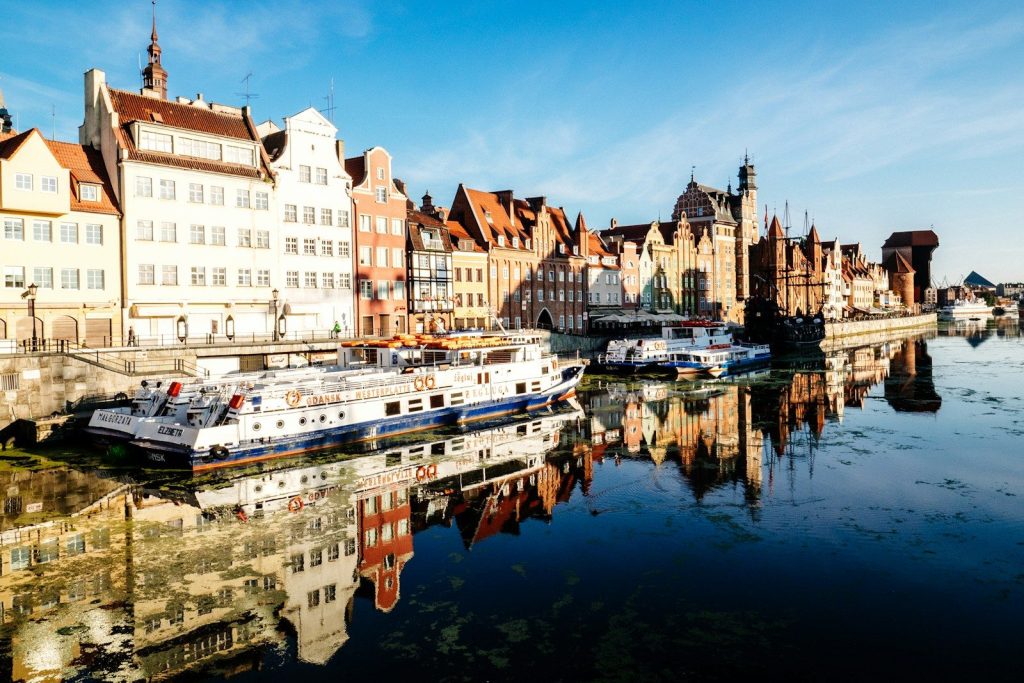
Poland’s cost advantage over Western Europe is real, substantial, and one of the primary drivers of its growing attractiveness to internationally mobile professionals. Poland is approximately twice as cheap as Germany and 2.4 times cheaper than the UK. For remote workers earning Western salaries, this creates a genuine financial opportunity that compounds over years of residence.
That said, the market has moved. Rent in major Polish cities has risen 25 to 40 percent since 2021, driven by demand from Ukrainian refugees, remote workers, and domestic migration from smaller towns to major cities. The bargains that existed in 2019 are not the same bargains that exist in 2026. Planning your budget based on outdated figures will produce an unrealistic result.
The table below gives a working monthly budget for a single professional across four city tiers, with figures converted from PLN at the approximate 2026 rate of €1 = PLN 4.25.
| Expense Category | Łódź / Katowice | Wrocław / Poznań | Kraków / Gdańsk | Warsaw |
|---|---|---|---|---|
| Rent (1-bed, city centre) | PLN 1,800 – 2,400 (€423 – €565) | PLN 2,200 – 3,000 (€518 – €706) | PLN 2,500 – 3,500 (€588 – €824) | PLN 3,000 – 4,500 (€706 – €1,059) |
| Utilities (electricity, heating, water) | PLN 400 – 600 | PLN 450 – 700 | PLN 500 – 800 | PLN 600 – 900 |
| Groceries | PLN 700 – 900 | PLN 800 – 1,000 | PLN 850 – 1,100 | PLN 900 – 1,200 |
| Public transport (monthly pass) | PLN 80 – 110 | PLN 100 – 120 | PLN 100 – 130 | PLN 110 – 130 |
| Internet (fibre) | PLN 50 – 80 | PLN 55 – 85 | PLN 55 – 85 | PLN 60 – 90 |
| Private healthcare (basic plan) | PLN 100 – 150 | PLN 100 – 180 | PLN 120 – 200 | PLN 150 – 250 |
| Dining out / leisure | PLN 400 – 700 | PLN 500 – 900 | PLN 600 – 1,000 | PLN 700 – 1,200 |
| Approximate Monthly Total | PLN 3,530 – 4,940 (€830 – €1,162) | PLN 4,205 – 6,005 (€989 – €1,413) | PLN 4,725 – 6,815 (€1,112 – €1,604) | PLN 5,520 – 8,270 (€1,299 – €1,946) |
Several items deserve specific attention. Poland has some of the fastest and cheapest internet in Europe fibre connections offering 300 to 600 Mbps are available for 60 to 90 PLN per month, and 5G mobile data with 100 or more gigabytes costs 40 to 60 PLN. This is a meaningful practical advantage for remote workers compared to Germany or Belgium.
Groceries at Poland’s dominant discount chains Biedronka and Lidl are 40 to 50 percent cheaper than Western European equivalents for everyday items like dairy, bread, local produce, and meat. Dining out remains genuinely affordable: a restaurant lunch with a drink typically costs 40 to 65 PLN, and a beer in a Kraków or Wrocław bar runs 14 to 20 PLN.
Dental care in Poland is three to five times cheaper than in Western Europe, and many expats specifically travel to Poland for dental work.
The Complete Guide
Finding Housing and Renting in Poland
The Polish rental market has its own terminology and conventions that are worth understanding before you start searching, and the landscape varies meaningfully between cities.
The two most common apartment types you will encounter in listings are kawalerka (a studio apartment, literally “bachelor flat”) and dwupokojowe mieszkanie (a two-room apartment one bedroom plus living room). In Polish listing conventions, room counts include the living room but not the kitchen or bathroom, so a one-bedroom in Polish terms is typically described as a two-room apartment (2 pokoje). This can cause confusion for expats using the main rental platforms Otodom and OLX without understanding the local convention.
Deposits are standard at two to three months of rent, held by the landlord and returned at the end of the tenancy minus legitimate deductions. Agency fees, where applicable, are typically one month’s rent. Many landlords in Warsaw and Kraków now advertise directly without agency involvement, and Facebook groups targeted at the international community in each city are an effective parallel channel for finding rentals without paying agency fees.
Polish lease contracts are legally required to specify which party is responsible for utilities. In practice, many apartments are let with utilities paid separately by the tenant on top of the base rent (czynsz). Before signing, always establish the full monthly cost including the czynsz (a building administration fee covering communal maintenance, building insurance, and in many cases heating), utilities, and any additional charges. Failing to ask these questions upfront is one of the most reliable routes to an unexpectedly high first month’s bill.
Furnished apartments are available in all major cities and typically command a premium of 15 to 25 percent over equivalent unfurnished properties. For newly arrived expats who are not certain of their long-term location preferences, starting in a furnished apartment while you establish your zameldowanie and PESEL, then moving to a longer-term unfurnished apartment once you have your bearings, is a sensible approach.
Critically, your rental contract is the document you will need to register your address (zameldowanie), and you will be asked for this at the municipal office. Make sure the contract is signed, dated, and identifies both landlord and tenant clearly.
Some landlords are reluctant to facilitate zameldowanie an important issue since this registration underpins your PESEL and subsequent residence permit application. If a landlord explicitly refuses to allow zameldowanie, treat this as a serious red flag.
Healthcare and Polish Social Security
Poland’s public healthcare system, the Narodowy Fundusz Zdrowia (NFZ), provides universal coverage for all insured residents. Access to it is linked directly to social security (ZUS) contributions employees have their contributions paid automatically through their employer’s payroll, which means that for most professionally employed expats, NFZ coverage begins from the first day of employment.
The NFZ covers GP consultations, specialist referrals, hospital treatment, maternity care, and emergency services. The practical limitation is waiting times: the public system covers essential care but wait times for specialist appointments can be long, and many international residents supplement with private healthcare. Waiting several months for a dermatology, cardiology, or orthopaedic appointment is not unusual in the public system.
Private healthcare networks have developed substantially in Poland and offer a practical solution to the waiting time problem at costs that remain very affordable by Western European standards. The main private networks are Medicover, Lux Med (part of Bupa), and Enel-Med.
A basic private health insurance plan covering unlimited GP visits, specialist consultations, and basic diagnostics typically costs PLN 100 to 250 per month for a working-age adult a modest addition to the monthly budget that most expats consider well worth it. Many larger employers in Poland include private health insurance as a standard employment benefit.
Polish private health insurers including PZU Zdrowie and ERGO Hestia also offer standalone packages for self-employed individuals and those not covered by an employer plan.
For EU citizens, the European Health Insurance Card (EHIC) provides coverage for necessary medical treatment during initial stays before formal NFZ registration is completed. Non-EU citizens should arrange travel health insurance to cover the period between arrival and the establishment of their NFZ entitlement through employment.
ZUS (Zakład Ubezpieczeń Społecznych) is Poland’s social security institution, managing pensions, disability insurance, sickness benefits, and family allowances in addition to coordinating health insurance contributions. Employed workers have ZUS contributions deducted automatically through payroll.
Self-employed individuals must register with ZUS directly and pay quarterly contributions, which in 2026 are structured as a combination of a fixed social contribution and a health insurance contribution proportional to income.
Taxes, Banking, and Money in Poland
Poland operates a relatively straightforward income tax system by European standards, which is one of its understated advantages for working professionals compared to Belgium or France.
Personal income tax (PIT Podatek Dochodowy od Osób Fizycznych) is levied at a standard rate of 12 percent on income up to PLN 120,000 per year, and 32 percent above that threshold. The first PLN 30,000 of annual income is tax-free (the personal allowance).
Entrepreneurs registered as self-employed (JDG) can alternatively opt for a flat 19 percent linear tax rate (podatek liniowy) on all income above the allowance, which is typically more advantageous for higher earners. Capital gains on securities are taxed at a flat 19 percent. There is no wealth tax in Poland, and inheritance tax operates on an exemption structure that is relatively generous for direct family members.
Social security contributions through ZUS represent a meaningful additional cost. Employees contribute approximately 13.71 percent of gross salary to ZUS-covered insurance categories (pension, disability, and sickness), while employers contribute a further 20.48 percent on top. The combined employer-employee burden is lower than in Belgium and comparable to Germany, but higher than in some CEE neighbours.
Tax residency in Poland is established by maintaining a registered address in Poland or by spending more than 183 days per calendar year in the country. Once tax resident, you are subject to Polish PIT on worldwide income.
Poland has double taxation agreements with most major countries including the US, UK, Australia, Germany, and France preventing the same income from being taxed twice but not eliminating filing obligations in both countries. The Polish Ministry of Finance (Ministerstwo Finansów) maintains current rate tables and treaty information.
Banking in Poland is genuinely user-friendly by European standards, with a particularly strong digital and mobile banking culture. The dominant retail banks are PKO BP, Pekao, mBank, ING Bank Śląski, Santander Bank Polska, and Millennium.
Most offer account opening with a passport and PESEL number, though some require a residence permit card for non-EU nationals. Digital banks including Revolut, N26, and Wise are widely used by the international community for international transfers and multicurrency management.
One specifically Polish innovation that expats quickly adopt is BLIK a mobile payment system unique to Poland that allows instant bank-to-bank transfers, cashless payments, and ATM withdrawals using a six-digit code generated by your banking app.
BLIK is accepted by virtually every Polish retailer, restaurant, and e-commerce platform, and its convenience makes it the default payment method for most residents. Understanding how to use BLIK early in your stay will meaningfully smooth everyday financial transactions.
SEPA transfers to eurozone banks work normally, settling within one business day. Currency exchange costs between PLN and EUR are a consideration for expats receiving income in euros comparison of Wise, Revolut, and direct bank transfers for regular large conversions is worthwhile given the cumulative impact on monthly income.
The Complete Guide
Work, Digital Nomad Life, and Remote Working
Poland’s job market has several distinct layers, and which one applies to you will shape your visa pathway, your tax position, and your practical daily working life quite differently.
For employed professionals, the combination of a reformed EU Blue Card process and a growing concentration of multinational employers in Warsaw, Wrocław, Kraków, and Gdańsk creates a genuine professional opportunity. Major tech employers Google, Microsoft, Samsung R&D, Allegro, and a growing number of scale-ups in the Polish tech ecosystem actively recruit internationally.
The IT sector in Poland is notable for offering salaries that, while below Western European equivalents in absolute terms, create exceptional purchasing power when combined with Polish living costs.
For digital nomads working remotely for foreign employers, Poland is one of the most practical Central European bases. The internet infrastructure is excellent, the time zone (CET/CEST) aligns well with both European and East Coast US working hours, and the cost structure allows meaningful savings on Western European salaries.
The legal position for remote workers living in Poland is straightforward in principle: once resident, you are subject to Polish PIT on worldwide income, and your foreign employer may have payroll obligations in Poland depending on the employment structure. A Polish accountant familiar with cross-border employment is worth engaging from the outset.
For those who want to formalise their self-employed status, the JDG (Jednoosobowa Działalność Gospodarcza) a one-person business structure is straightforward to register through the CEIDG (Central Registration and Information on Business) portal at biznes.gov.pl.
Registration is free, can be completed online for EU citizens, and enables invoicing, VAT registration (if income exceeds the threshold), and access to the self-employed ZUS contribution track. Many IT contractors and freelancers in Poland use the JDG structure in combination with B2B contracts with their main clients.
Poland’s coworking infrastructure in the major cities is strong and growing. In Warsaw, Brain Embassy and CitySpace operate multiple locations; in Kraków, the Hub and Cluster coworking are well-regarded; in Wrocław, SpotUp and Business Link are established options. Monthly hot desk memberships typically cost PLN 300 to 600, and dedicated desks run PLN 600 to 1,000 modest by any European standard and an effective way to build local professional networks.
Day-to-Day Life: Language, Culture, and Integration
Polish is genuinely challenging for native English speakers. The grammatical system is highly inflected nouns, adjectives, and pronouns all change form depending on their grammatical role in the sentence and the phonology includes sounds absent from English (notably the nasal vowels and consonant clusters).
That said, the practical imperative to learn Polish varies significantly depending on where you live and what you do. In Warsaw’s international business environment and in the expat communities of Kraków and Wrocław, English is sufficient for most professional and social interactions. In administrative offices, healthcare settings, and smaller cities, Polish becomes necessary relatively quickly.
Investment in Polish pays dividends that go well beyond the administrative. Poles respond very positively to foreigners who make the effort, and the transition from being perceived as a temporary international presence to being accepted as a genuine community member is closely correlated with language.
The Polish Language School Network (Szkoła Języka i Kultury Polskiej) operates certified programmes at institutions across the country, and online options through the Polonicum centre at the University of Warsaw are available for pre-arrival preparation. Most cities also have municipal adult education centres offering affordable Polish courses.
Polish culture has a warmth and depth that takes some adjustment to access. The public presentation can be formal and reserved Polish people do not typically smile at strangers or engage in small talk with unknown people in the way that is common in, say, Australia or the United States.
This is cultural rather than unfriendly, and once personal relationships are established, Polish hospitality is generous and genuine. The concept of how you treat guests in a Polish home the care taken with food, the attention to comfort, the expectation that a visitor does not leave hungry is a real cultural institution.
Food is central to Polish social life and is one of the more pleasant aspects of settling in for most expats. Polish cuisine pierogi (dumplings with various fillings), bigos (hunter’s stew), żurek (sour rye soup), and kielbasa (smoked sausage) is hearty, flavourful, and deeply embedded in the cultural identity.
The restaurant and café scene in major cities has developed enormously over the past decade and now encompasses everything from outstanding traditional Polish cooking to international cuisine of genuine quality.
Summer festivals are a defining feature of Polish cultural life. Warsaw’s Wianki (midsummer festival on the Vistula riverbank), the Kraków Film Festival, the Wrocław Good Beer Festival, and countless local music and cultural events fill the calendar from May to September.
Winter brings Christmas markets of real quality and the distinctly Polish tradition of intense pre-Christmas social gatherings.
Public holidays are partly Catholic in origin (Poland is still a majority-Catholic country, though practice has declined among younger generations) and partly historical Independence Day on November 11 is taken seriously, and Warsaw’s citywide commemoration of the 1944 Warsaw Uprising on August 1 is one of the most emotionally significant public events in the country.
Transport, Safety, and Environment
Poland’s transport infrastructure in its major cities is genuinely good, and the combination of metro, tram, and bus networks makes car ownership optional for urban residents in a way that would not have been possible a decade ago.
Warsaw’s metro system runs two lines M1 (north-south) and M2 (east-west) and is being extended. The metro operates from approximately 5am to midnight on weekdays and around the clock on Friday and Saturday nights. The ZTM (Zarząd Transportu Miejskiego) operates the tram and bus network across Warsaw; a monthly integrated pass (covering all modes within the metropolitan zone) costs around PLN 110 to 130 and represents exceptional value.
Kraków, Wrocław, Gdańsk, and Poznań each have extensive tram networks that are the backbone of daily urban commuting. Kraków’s tram system is particularly comprehensive and covers most of the historic centre.
For intercity travel, PKP InterCity operates the national express train network, with IC and EIC services connecting Warsaw to Kraków in roughly 2.5 hours, Warsaw to Wrocław in around 3.5 hours, and Warsaw to Gdańsk in approximately 2.5 to 3 hours. Advance booking significantly reduces fares tickets purchased weeks ahead can be genuinely cheap.
The PKP InterCity website offers advance booking in English. Regional services operate through PKP Polregio and local operators; they are slower but cover smaller cities and towns that express trains bypass.
Poland’s safety record is solid. It consistently ranks well on the Global Peace Index, and violent crime rates in major cities are low. Petty theft in tourist areas particularly around Kraków’s Rynek Główny (main market square) in summer and Warsaw’s public transport system warrants standard precautions, but the overall security environment is calm and stable. Poland’s police (Policja) maintain a public information portal at policja.pl.
The one environmental concern worth flagging is air quality. Poland has historically had some of the worst air quality in Europe during the heating season (October through March), driven by the prevalence of coal-burning household furnaces a problem concentrated in smaller towns and the Silesian region rather than in major cities, which have district heating systems.
Kraków has invested heavily in reducing smog through a coal furnace ban and air quality monitoring, and while improvements are measurable, some days in winter still see elevated particulate matter levels. Expats with respiratory conditions should check airly.org a real-time air quality monitoring platform that is well-used in Poland before making a city choice.
Cycling infrastructure has improved substantially in all major Polish cities over the past decade. Both Kraków and Wrocław have invested heavily in segregated cycling lanes, and Gdańsk’s flat topography makes it one of the most naturally cycle-friendly cities in the country. Warsaw’s cycling network is extensive and continues to expand.
Bureaucracy, Pitfalls, and Common Expat Mistakes
Poland’s administrative system has improved significantly with the introduction of digital portals and online application platforms, but it retains enough friction points to cause real problems for people who arrive unprepared. The mistakes that catch expats out tend to follow a consistent pattern.
Delaying the zameldowanie. The 30-day deadline for address registration is the critical first step in the entire administrative chain. Delaying it delays your PESEL, which delays your bank account, NFZ registration, and residence permit. In cities with high application volumes Warsaw and Kraków particularly book your municipal office appointment before you arrive if the system permits it.
Not having a permanent address for zameldowanie. Temporary accommodation that does not come with a cooperating landlord creates the zameldowanie problem described in the housing section. If you are staying in a hotel or Airbnb on arrival, you will not be able to complete your zameldowanie until you have a longer-term rental with a signed contract and a landlord willing to support the registration.
Underestimating residence permit processing times. The EU Blue Card and single permit processes take substantially longer than the legal maximum timescales suggest. Warsaw processes applications in seven to eight months on average, Kraków eight to nine months, and Wrocław twelve or more months.
During this period, your right to remain in Poland is protected by the stamp in your passport indicating a pending application, but you are in administrative limbo and cannot easily switch employers. Plan for this timeline and do not make financial commitments like a long-term rental that assume your permit will arrive faster.
Not managing ZUS registration if self-employed. Self-employed individuals who fail to register with ZUS from their first day of business activity accumulate arrears that are difficult to resolve and can affect their residence permit renewal. ZUS registration should happen simultaneously with or immediately after CEIDG registration.
Language assumptions. The Urząd Wojewódzki (voivodeship office) that handles residence permit applications operates in Polish. While many officers in the larger cities have some English, correspondence, forms, and formal decisions are issued in Polish.
A Polish-speaking immigration lawyer or relocation agent is not a luxury for non-Polish speakers navigating the residence permit process it is a practical necessity that will save time, reduce errors, and significantly lower your stress levels. The Polish Bar Association (Naczelna Rada Adwokacka) can help identify qualified immigration lawyers.
Signing a lease contract without understanding the full cost structure. Polish rental listings commonly advertise the base rent without utilities and czynsz. The total monthly cost including all charges can be 30 to 50 percent higher than the headline figure. Always request a full breakdown of all monthly costs before signing.
The Complete Guide
Step-by-Step Checklist: Before and After Your Move
The following timeline assumes a non-EU citizen applying for either an EU Blue Card or single work permit, targeting an arrival date six months from now.
Six to three months before:
Identify your visa pathway. If applying for the EU Blue Card, confirm the PLN 13,355.34 gross monthly salary threshold with your employer and ensure the employment contract specifies this amount in PLN bonuses and allowances do not count toward the threshold.
Have your academic qualifications assessed for recognition in Poland if they are not from an EU institution; for regulated professions, begin the nostrification process immediately as it can take several months. Begin Polish language learning at a basic level even A1 proficiency will make the zameldowanie and PESEL processes significantly more manageable.
Three to one month before:
Apply for your national D visa at the Polish consulate in your home country, if your work permit has been approved and you are approaching from outside Poland. Secure temporary furnished accommodation for your first month in Poland you need a physical address for zameldowanie.
Research the voivodeship office application process in your target city and understand the current realistic processing timelines. Identify a Polish accountant (księgowy / biuro rachunkowe) for tax registration and ZUS matters on arrival.
Arrival week:
Complete zameldowanie at your local municipal office within 30 days do this in week one. Bring your signed rental contract, passport, and visa. Obtain your PESEL number from the same office or apply through the applicable portal.
Open a Polish bank account using your passport and PESEL. Register for NFZ through your employer (for employed workers) or ZUS (for self-employed). Register your business at biznes.gov.pl if self-employed, and simultaneously register with ZUS. Get a Polish SIM card the main providers are Orange, T-Mobile, Play, and Plus.
Ongoing:
Submit your residence permit application to the Urząd Wojewódzki as soon as you are legally required to do not wait until your visa expires. File your annual Polish tax return (PIT) by April 30 for the previous tax year, using the government’s e-Deklaracje portal or through your accountant. Continue Polish language study consistently.
Connect with expat communities Warsaw Expats, Internations Kraków, and numerous city-specific Facebook groups are practical starting points, while investing in Polish-speaking social contexts sports clubs, neighbourhood events, language exchanges is the most effective path to genuine integration.
The Complete Guide
Conclusion: Is Moving to Poland Right for You in 2026?
Poland in 2026 is a country that has arrived as a serious European destination rather than simply a cost-arbitrage opportunity, and the distinction matters. The infrastructure in major cities is genuinely good. The job market in technology, finance, and business services is dynamic and internationally connected.
The cultural life in Warsaw and Kraków specifically is rich, varied, and growing. And the cost advantage over Western Europe remains substantial enough to be genuinely life-changing for people who earn in stronger currencies.
The challenges are real too. The bureaucratic journey for non-EU nationals is the most demanding of any country covered in this series of guides, requiring patience, professional support, and timelines that can extend close to a year for some visa categories. The language is challenging. The winters are long. And the air quality in some areas remains a legitimate health consideration.
For the right person the IT professional, the digital nomad with a remote income, the academic, the entrepreneur with regional ambitions, the EU citizen seeking an underrated European base Poland delivers rewards that are genuinely difficult to replicate elsewhere in Europe at comparable cost.
The key is simply to arrive with a clear plan, the right administrative support, and a genuine commitment to engaging with the country rather than merely residing in it. Those who make that investment consistently report that Poland surprises them in the best possible way.
For further planning, start with the official Polish immigration portal at gov.pl for current visa and residence permit requirements, the Polish Tax Administration portal (Krajowa Administracja Skarbowa) for current tax rates and filing guidance, and Otodom for the rental market in your target city. For professional immigration support, the Polish Immigration Law Firm Directory is a reliable starting point for finding a qualified specialist.