
Moving to Myanmar: A Complete 2026 Guide for Expats in Yangon and Beyond
For a certain type of expat, Myanmar also known as Burma offers something increasingly rare in Southeast Asia: a raw, less-commercialized experience shaped by deep tradition and a tightly knit international community. Cities like Yangon and Mandalay aren’t saturated with global chains or polished infrastructure, which makes daily life feel more grounded and authentic.
This is precisely why Myanmar attracts NGO workers, consultants, educators, and independent professionals willing to navigate a more complex environment. The cost of living can be relatively low compared to neighboring ASEAN countries, and the cultural richness from Buddhist temples and pagodas to destinations like Bagan and Inle Lake adds depth to everyday life.
At the same time, expat life in Myanmar is shaped by realities such as political sensitivity, infrastructure gaps, and a largely informal economy. Visa pathways like the Myanmar eVisa system, business visas, and employer-sponsored permits provide entry points, but long-term stability often depends on strong local connections.
For those prepared, Myanmar offers a unique balance: a slower pace of life, meaningful work opportunities, and a close-knit expat hub centered primarily in Yangon.

Is Myanmar the right place for you in 2026?
Myanmar is not a conventional expat destination and that’s exactly its appeal. It tends to suit professionals working in NGOs, UN agencies, education, and specialized consulting roles. Teachers, particularly those in English language education, also find opportunities, especially in Yangon.
However, this is a country where adaptability is essential. Daily life can include electricity outages, inconsistent internet, and limited access to international-standard services outside major cities. English is spoken in professional environments, but not universally, so even basic Burmese language skills can significantly improve your experience.
The expat lifestyle in Myanmar is often described as “compact.” In Yangon, expat communities are tight-knit, with social life centered around a handful of bars, restaurants, and networking groups. You’ll find active expat communities on platforms like Facebook, where job opportunities, housing leads, and local updates are frequently shared.
Pros and Cons Overview
| Pros | Cons |
|---|---|
| Low cost of living (relative to region) | Political and regulatory uncertainty |
| Rich culture and heritage | Limited healthcare infrastructure |
| Close-knit expat community | Banking and financial restrictions |
| Slower pace of life | Frequent power and internet disruptions |
If you’re seeking convenience and predictability, Myanmar may feel challenging. But for those with a higher risk tolerance and a desire for meaningful, ground-level experiences, it can be deeply rewarding.

The Complete Guide
Myanmar’s main cities and where to live
Yangon – The expat hub
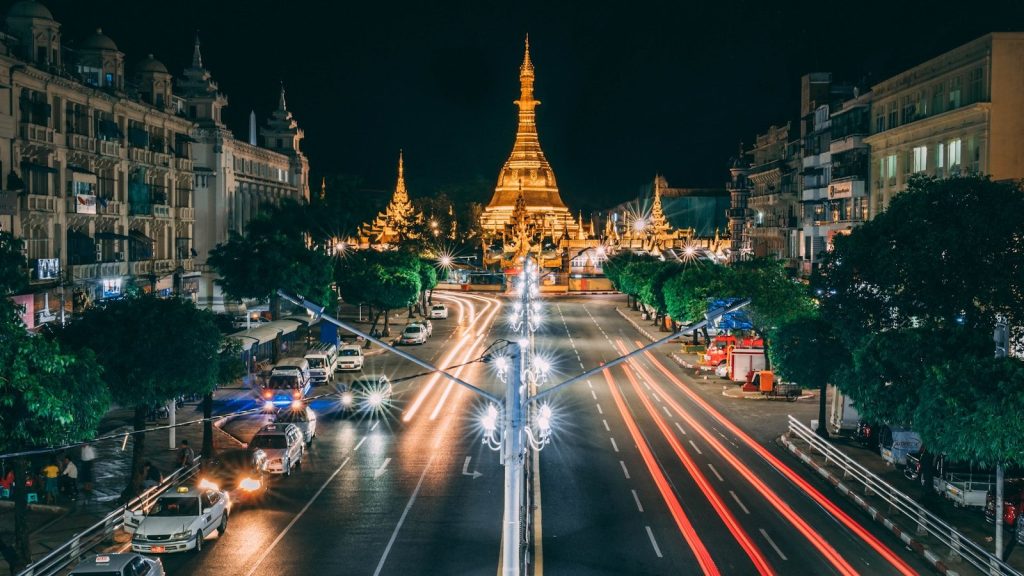
Yangon is the primary gateway for expats and remains the country’s commercial and cultural center. Most embassies, international organizations, and private-sector opportunities are based here. Neighborhoods like Bahan, Yankin, Sanchaung, and Golden Valley are particularly popular among foreigners due to their proximity to offices, international schools, and dining options.
Institutions like the International School of Myanmar attract expat families, reinforcing Yangon’s position as the main relocation destination.
Mandalay – Emerging alternative
Mandalay, Myanmar’s second-largest city, has a growing expat presence, particularly in manufacturing, logistics, and education sectors. It offers a different pace less cosmopolitan than Yangon but still economically active.
Smaller cities and regions
Locations such as Bagan, Inle Lake, Mawlamyine, and Hpa-an attract niche expat groups, often tied to tourism or NGO work. These areas offer a quieter lifestyle but come with fewer services and infrastructure limitations.
Choosing where to live in Myanmar largely depends on your work, tolerance for limited infrastructure, and preference for either community density or solitude.
Visas and long-term stay options in Myanmar
Myanmar’s visa system is relatively structured but heavily dependent on purpose of stay. Most long-term expats rely on employer sponsorship.
Common visa types
- Tourist eVisa
Issued via the official Myanmar eVisa Portal, this allows a 28-day stay and is not valid for employment. - Business eVisa
Typically valid for up to 70 days, with some multi-entry options. Often used by consultants and short-term professionals. - Employment Visa / Work Visa
Requires sponsorship from a local employer, NGO, or international organization. - Social Visa (Multiple Entry)
A longer-term option (often one year) for family-related stays or extended visits. - Specialized visas
Includes education, religious, and official visas issued through the Ministry of Foreign Affairs Myanmar.
Key considerations
- Work permits are typically tied to your visa.
- Extensions are possible but often require local agents.
- Rules can change quickly, so consulting a visa agent in Yangon is common practice.
Myanmar is not a “visa-run” friendly country long-term residency usually requires formal sponsorship.
Cost of living in Myanmar: what to budget
The cost of living in Myanmar varies significantly depending on lifestyle and location. Yangon is the most expensive city, while Mandalay and smaller towns are more affordable.
Estimated monthly budget (USD equivalent)
| Category | Yangon | Mandalay | Smaller towns |
|---|---|---|---|
| Rent | $500–$1,500 | $300–$800 | $200–$600 |
| Food | $200–$400 | $150–$300 | $100–$250 |
| Transport | $50–$150 | $40–$100 | $30–$80 |
| Utilities & Internet | $100–$250 | $80–$200 | $50–$150 |
| Total | $900–$2,300 | $600–$1,500 | $400–$1,100 |
Myanmar uses the Myanmar Kyat, and the economy is largely cash-based. Exchange rate fluctuations can impact expat budgets, so many maintain USD reserves.
Electricity outages and inconsistent internet should be factored into your living costs, particularly if you work remotely.
The Complete Guide
Finding housing: renting and living in Myanmar
Housing in Myanmar is typically furnished, and expats rarely need to import furniture. Rental agreements often include utilities, though this varies.
What to expect
- Security deposits: Usually 1–3 months’ rent
- Lease terms: Flexible but often informal
- Registration: Foreign tenants must be registered with local authorities such as the Yangon City Development Committee
Housing options
- Furnished apartments (most common)
- Expat compounds (for NGOs and diplomats)
- Guesthouses (short-term stays)
Working with local agents is common, but due diligence is essential to avoid disputes or unclear lease terms.
Healthcare and medical services in Myanmar
Healthcare in Myanmar is improving but remains limited compared to regional standards. Public hospitals are under-resourced, while private clinics in Yangon offer better but still limited care.
Many expats rely on international health insurance providers such as Bupa or SafetyWing.
Key realities
- Serious medical cases often require evacuation to Thailand or Singapore
- Pharmacies are widely available but quality varies
- Emergency services are limited
Having a comprehensive insurance plan with medical evacuation coverage is strongly recommended.
Taxes, banking, and money in Myanmar
Myanmar operates a tax system overseen by the Internal Revenue Department Myanmar. Tax residency rules apply to foreigners working in the country, and compliance can be complex.
Banking challenges
- Limited international banking access
- Difficulty with SWIFT transfers
- Heavy reliance on cash
Major local banks include:
- KBZ Bank
- CB Bank
- AYA Bank
Most expats maintain offshore accounts and use remittance services when needed.
Work, teaching, and limited remote-work options
Employment opportunities for expats are concentrated in a few sectors:
- NGOs and international organizations
- Education (especially English teaching)
- Consulting and development work
Government oversight comes from the Ministry of Labour Myanmar, and most roles require employer sponsorship.
Remote work is possible but challenging due to infrastructure and visa limitations. Coworking spaces exist in Yangon but are limited.

Day-to-day life: language, culture, and integration
Myanmar’s culture is deeply influenced by Buddhism, and social norms emphasize respect, modesty, and community.
Learning basic Burmese can significantly enhance your experience, especially outside expat circles.
Integration tips
- Join expat groups in Yangon or Mandalay
- Participate in festivals like Thingyan (Water Festival)
- Engage with local communities through volunteering
Cultural awareness such as respecting monks and religious spaces is essential for smooth integration.
Transport, safety, and environment
Transport options include taxis, buses, and limited ride-hailing services. Traffic in Yangon can be congested, while intercity travel relies on buses and domestic flights.
Safety overview
- Petty crime exists but is relatively low
- Political sensitivity requires awareness
- Embassy advisories should be monitored
The tropical climate brings intense heat and monsoon rains, while air quality in Yangon can fluctuate.
Bureaucracy, risks, and expat mistakes to avoid
Myanmar’s bureaucracy can be slow and unpredictable. Regulations may change with little notice.
Common mistakes
- Arriving without a job or visa sponsorship
- Signing unclear rental agreements
- Underestimating financial and insurance needs
- Ignoring political and infrastructure risks
Working with local experts lawyers, visa agents, and relocation consultants can reduce friction.
The Complete Guide
Checklist: step-by-step before you move to Myanmar
6–3 months before
- Secure a job and visa sponsorship
- Research housing and schools
- Arrange international health insurance
1–2 months before
- Apply for visa (eVisa or work visa)
- Book temporary accommodation
- Prepare cash reserves
Arrival week
- Register with local authorities
- Set up housing and utilities
- Join expat networks
Conclusion – Is moving to Myanmar right for you in 2026?
Moving to Myanmar in 2026 is not for everyone. It offers a low-cost lifestyle, rich cultural immersion, and a uniquely close expat community particularly in Yangon. However, these benefits come with trade-offs, including political uncertainty, limited infrastructure, and complex logistics.
For professionals with employer sponsorship, strong adaptability, and a willingness to navigate challenges, Myanmar can be a deeply meaningful place to live and work.
Before making the move, consider consulting an expat-focused legal advisor, joining community groups, and preparing thoroughly. In Myanmar, preparation isn’t optional it’s essential.