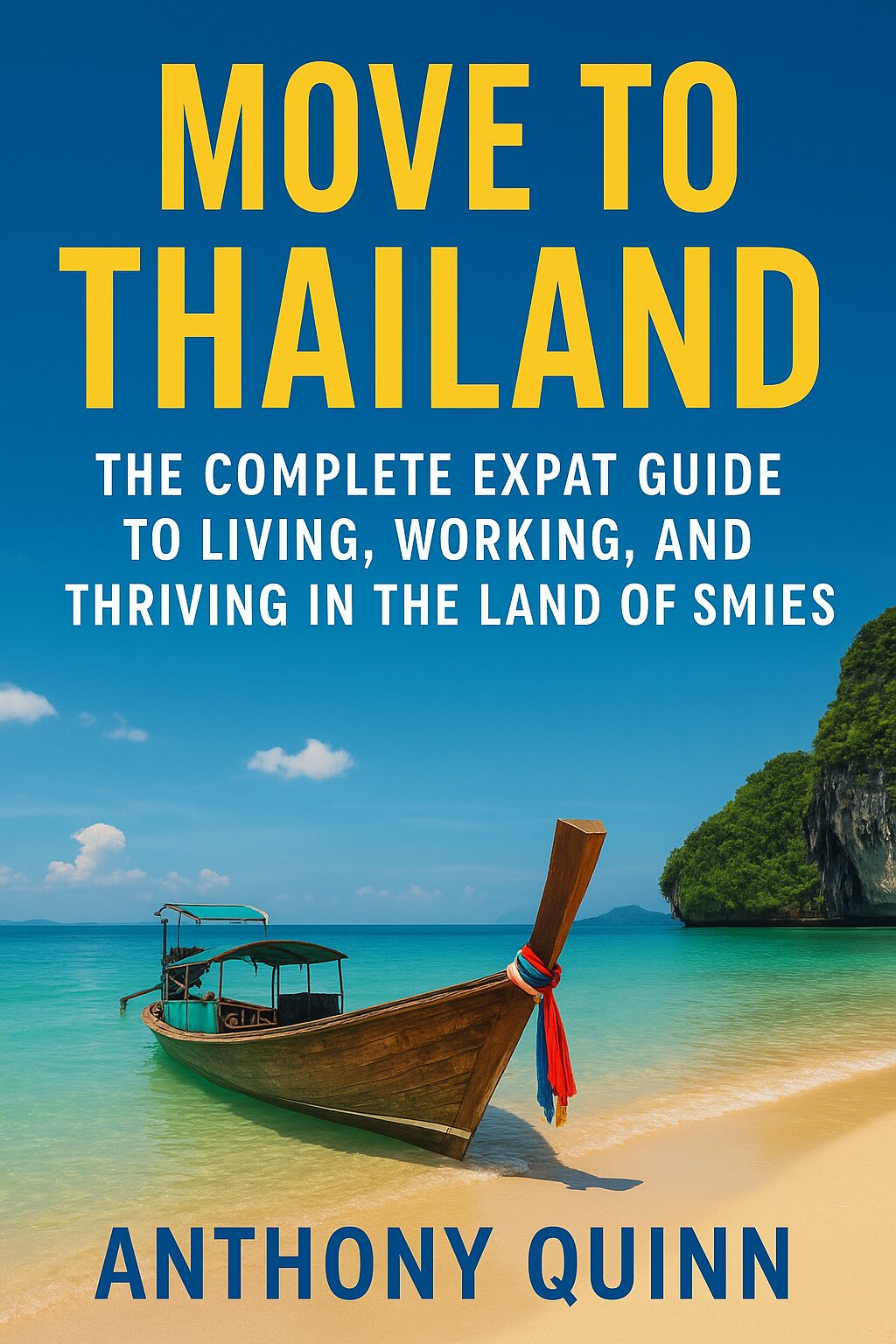
Moving to Thailand in 2026: The Complete Expat, Retiree and Digital Nomad Relocation Guide
Thailand has been doing this longer than almost anywhere else in Southeast Asia. For decades long before “digital nomad” entered the vocabulary, long before location independence became a lifestyle category Thailand was drawing foreigners in and quietly converting them from visitors into residents.
The reasons have remained remarkably consistent across that time: a tropical climate that delivers warmth and beauty in roughly equal measure, a cost of living that allows a genuinely comfortable life on an income that would produce a much more constrained existence at home, a food culture that is among the world’s most exciting, and a Buddhist-inflected social culture that tends toward warmth, tolerance, and a genuine hospitality toward outsiders.
What has changed is the breadth of the offer. Thailand in 2026 is not just a destination for backpackers extending their stay, retirees chasing the sun, or English teachers building a life in the gap between what they expected and what they found.
It is a country with a rapidly improving digital infrastructure, a government that has deliberately courted remote workers and high-value investors through visa reform, a private healthcare sector that rivals anything in the region, and a quality of urban life particularly in Bangkok and Chiang Mai that competes seriously with cities costing several times as much to live in.
This guide covers the full picture: which visa actually applies to your situation, where to live and why, what things genuinely cost, how to find housing, how healthcare works, how the tax system affects you as a foreign resident, and what the common mistakes are that you can avoid with good preparation.
Is Thailand the Right Place for You?
Thailand suits a remarkably wide range of expat profiles, which is part of why it has sustained such a large and diverse international community for so long. But it is not the right fit for everyone, and understanding the genuine trade-offs is more useful than either uncritical enthusiasm or reflexive caution.
Thailand works exceptionally well for:
- Retirees seeking a warm, affordable, and culturally rich base with excellent private healthcare and a well-established expat infrastructure. The Non-Immigrant O-A retirement visa exists precisely for this profile, and the communities that have built up around it particularly in Chiang Mai, Hua Hin, Pattaya, and parts of Phuket are mature and supportive.
- Digital nomads and remote workers earning in dollars, pounds, euros, or Australian dollars who want to dramatically reduce their cost of living without sacrificing quality of life. Chiang Mai in particular has been one of the world’s premier digital nomad cities for a decade, and the infrastructure reflects it.
- English teachers for whom Thailand represents one of the best-compensated and most accessible teaching markets in Asia. Both government schools and international schools hire regularly, and the TEFL market is well-developed.
- Entrepreneurs and small business operators attracted by the relatively accessible business registration process, the consumer market of 70 million people, and the tourism economy that surrounds it.
- Families seeking outdoor lifestyle, good international schools, and the particular kind of childhood that warm weather and a less pressured culture can provide.
- Long-term lifestyle migrants who have concluded that daily quality of life food, climate, pace, social warmth, natural environment deserves more weight in their decisions than proximity to a career ladder or a property market.
An honest assessment:
Pros: genuinely warm and hospitable local culture, outstanding and affordable private healthcare, very low cost of living particularly outside Bangkok, exceptional food at every price point, strong and diverse expat communities in major cities, relatively good digital infrastructure, extraordinary natural environment from mountains in the north to islands in the south, improving visa frameworks for remote workers and retirees, easy regional travel within ASEAN.
Cons: bureaucratic complexity and periodic rule changes with limited warning, extreme heat for much of the year (40 degrees Celsius in Bangkok during April is not unusual), significant air pollution in Bangkok and critically severe seasonal smoke from agricultural burning in Chiang Mai between February and April, traffic congestion in Bangkok that tests most people’s patience, language barrier more significant than in some other expat destinations, and a regulatory environment around work and business that requires careful navigation.
Thailand’s Main Cities and Where to Live
Thailand’s geography stretches from the mountainous north bordering Myanmar and Laos to the peninsular south extending into Malaysia, with the Gulf of Thailand to the east and the Andaman Sea to the west. Within this range, the lifestyle differences between regions are as significant as the cost differences.
Bangkok
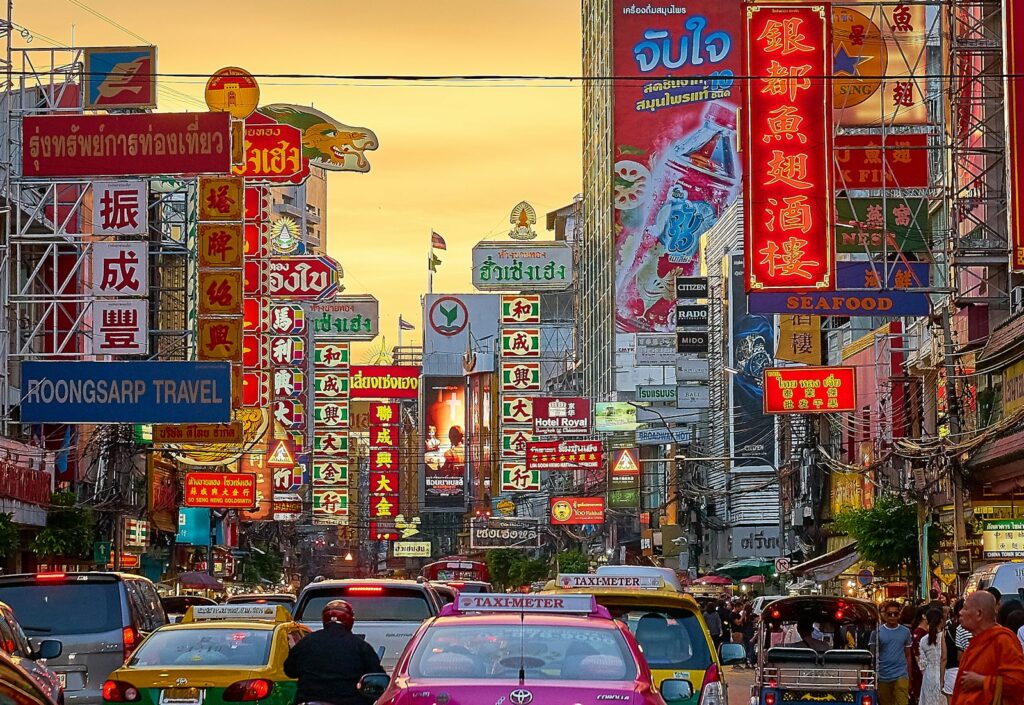
Thailand’s capital of over ten million people is the default entry point for most expats and, for many, the permanent base. Bangkok is a city of extraordinary contrasts and genuine urban sophistication gleaming skyscrapers and elevated rail lines above street-level chaos, world-class restaurants in air-conditioned malls and exceptional pad thai from pavement carts, ancient temples next to craft cocktail bars that would hold their own in London or New York.
For expats, Bangkok offers what no other Thai city can match: the full range of international services, the most developed corporate job market, the strongest concentration of international schools, the best hospitals, and a BTS Skytrain and MRT metro network that makes significant portions of the city navigable without a car. The key expat neighbourhoods each have their own character:
- Sukhumvit — the longest road in Thailand and the spine of Bangkok’s international community. Lower Sukhumvit (Nana, Asok, Phrom Phong) is denser, noisier, and home to a large Middle Eastern and South Asian expat community alongside long-established Western residents. Upper Sukhumvit (Thong Lor, Ekkamai, Phra Khanong, On Nut) is more residential, increasingly popular with younger expats and digital nomads for its coffee shops, restaurants, and more manageable street life.
- Sathorn and Silom — Bangkok’s financial district, popular with corporate expats and those working in finance and professional services
- Ari and Phahol — popular with younger Thai professionals and a growing contingent of expats seeking a more local, less tourist-facing neighbourhood experience
- Riverside — quieter, more spacious, attractive to those who prioritise space over nightlife access
Bangkok’s costs are higher than the rest of Thailand but remain well below equivalent Southeast Asian capitals like Singapore.
Chiang Mai
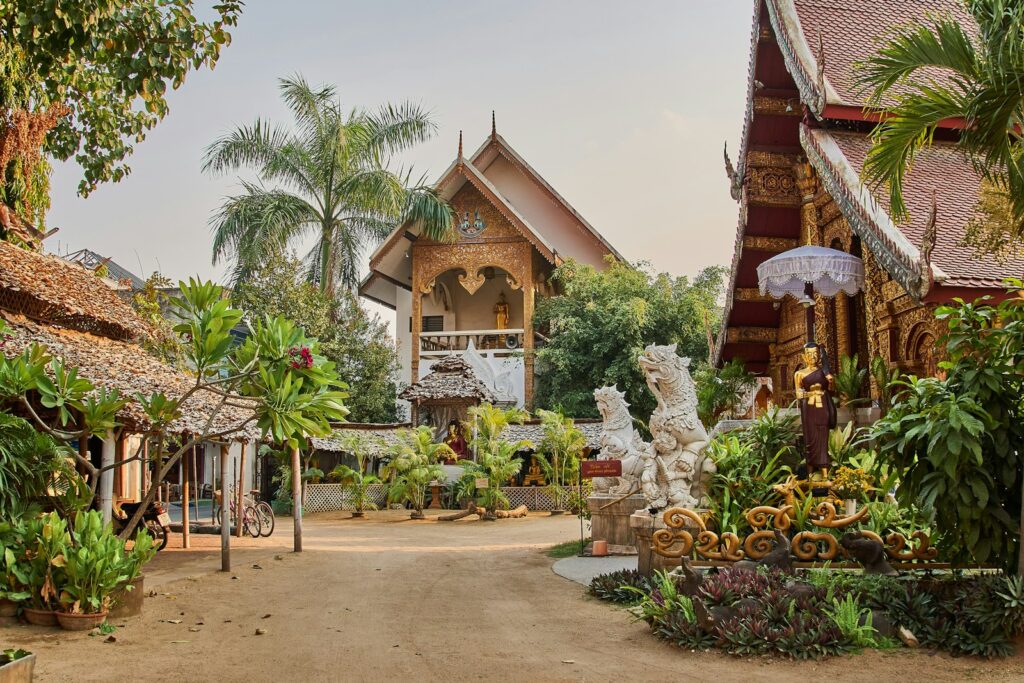
Chiang Mai is Thailand’s second city and, for digital nomads in particular, possibly its most famous expat destination globally. Sitting in a valley surrounded by mountains at an altitude of 300 metres which moderates the heat compared to Bangkok, at least outside the February to April burning season the city combines a significant cultural heritage (over 300 Buddhist temples within the old city moat), a genuinely vibrant café and coworking scene, excellent international food, and a pace of life considerably more relaxed than the capital.
The cost of living in Chiang Mai is among the lowest of any city in Thailand with genuine expat infrastructure, and the combination of low costs, excellent internet, a large and supportive international community, and the natural environment of the surrounding mountains has made it a perennial top-five city in remote worker and digital nomad rankings for years.
The seasonal air quality issue is, however, serious and should not be dismissed. Between February and April, agricultural burning across northern Thailand and Myanmar creates smoke pollution in Chiang Mai that reaches hazardous levels. Many long-term Chiang Mai residents leave the city for these months, treating it as a given rather than an inconvenience. Those with respiratory conditions should factor this seriously into their decision.
Phuket and Krabi
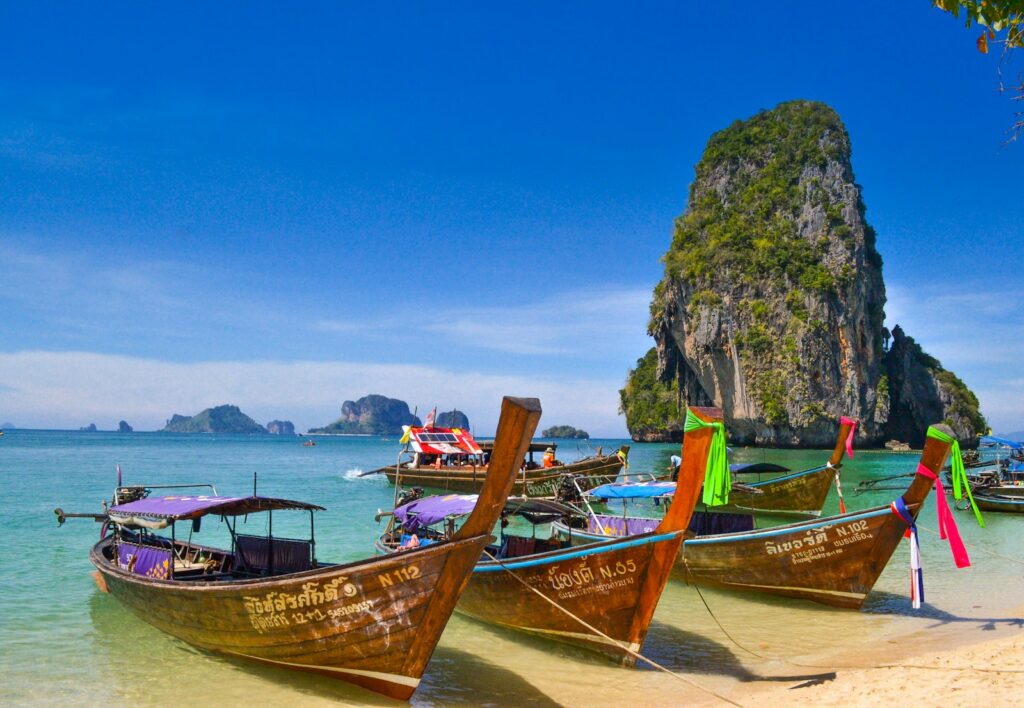
Phuket is Thailand’s largest island and the heart of its coastal expat community. The infrastructure is well-developed good private hospitals, international schools, strong English language penetration, regular direct international flights and the beaches, while busy in high season, are genuinely beautiful.
The expat community skews older than Chiang Mai and Bangkok, with retirees and semi-retirees making up a significant proportion. Costs in Phuket are higher than the Thai average, driven by tourism demand and the island’s relative isolation from supply chains.
Krabi and the Andaman coast south of Phuket offer a less developed alternative smaller towns, better value on accommodation, equally beautiful beaches, and a slower pace. Ao Nang and Krabi Town have small but established expat communities.
Hua Hin, Pattaya, and Koh Samui
Hua Hin, three hours south of Bangkok on the Gulf coast, is a well-established retirement destination with a large European expat community, a pleasant beach town atmosphere, and reasonable proximity to Bangkok for those who need city access periodically.
Pattaya has a large and diverse expat community and better infrastructure than its reputation suggests, though the entertainment-district character of certain areas colours first impressions. Koh Samui, in the Gulf of Thailand, offers island living with better infrastructure than most comparable Thai islands, though costs are higher and the ferry dependence creates logistical friction for regular travellers.
Visas and Long-Term Stay Options in Thailand
Thailand’s visa framework has undergone significant reform in recent years as the government has made a deliberate effort to attract higher-value, longer-term foreign residents particularly remote workers, retirees, and investors. The result is a more varied menu of options than was available five years ago, though the system retains complexity that rewards careful research and, in many cases, professional advice.
The Royal Thai Immigration Bureau administers visa and residency matters, and its website provides official current information on requirements and procedures.
Tourist Visa and Visa Exemption
Most Western nationalities including the United States, United Kingdom, Australia, Canada, and EU member states receive a 30-day visa exemption on arrival, extendable once for a further 30 days at an immigration office within Thailand. For stays of up to 60 days this is the standard entry mechanism. A traditional tourist visa (TR), available in advance from a Thai embassy or consulate, provides 60 days initially with a 30-day extension available in-country.
These are short-stay mechanisms, not a pathway to long-term residency, and relying on repeated tourist visa entries as a long-term strategy has become increasingly risky as Thai immigration has tightened scrutiny of so-called “perpetual tourists.”
Non-Immigrant O-A Visa — Retirement
The Non-Immigrant O-A visa is Thailand’s primary long-term residency pathway for retirees aged 50 and above.
Requirements include:
- Age 50 or above at time of application
- No criminal record from home country (police clearance certificate required)
- Health insurance covering Thailand with minimum coverage of 40,000 THB for outpatient and 400,000 THB for inpatient treatment
- Financial proof: either 800,000 THB (approximately $22,000 USD) deposited in a Thai bank account, or a monthly income/pension of at least 65,000 THB (approximately $1,800 USD), or a combination
The O-A is initially valid for one year and can be renewed annually within Thailand. Many long-term retirees have maintained this status for years or decades through annual renewals.
Long-Term Resident (LTR) Visa — 10 Years
Introduced in 2022 and progressively refined, the LTR visa is Thailand’s most significant recent visa innovation and one of the most competitive long-term residency products in Southeast Asia. It provides a 10-year renewable visa (issued in two five-year tranches) with multiple re-entry permission, a 90-day reporting extension to annual, and for qualifying categories significant tax benefits.
The LTR is available in four categories:
- Wealthy Global Citizen: minimum $1 million USD in assets, minimum $80,000 USD income in the preceding two years, and a $500,000 investment in Thai assets
- Wealthy Pensioner: age 50 or above with minimum $80,000 USD annual income from pension or passive sources, or $40,000 combined with a $250,000 Thai investment
- Work-from-Thailand Professional: employed by a publicly listed company or internationally recognised organisation with minimum $80,000 USD annual income (or $40,000 with relevant Master’s degree, IP ownership, or Series A funding)
- Highly Skilled Professional: expertise in targeted industries (science, technology, advanced manufacturing, etc.) with minimum $80,000 USD annual income
The LTR’s tax benefit is particularly notable: qualifying Work-from-Thailand and Highly Skilled Professional holders pay a flat 17% personal income tax rate on Thai-sourced income, compared to the standard progressive rates reaching 35%.
Foreign-sourced income brought into Thailand is not subject to Thai income tax for LTR holders. More information is available through the Thailand Board of Investment’s LTR portal.
Digital Nomad and Remote Work Options — DTV
Thailand’s Destination Thailand Visa (DTV), introduced in 2024, provides a five-year visa specifically targeting digital nomads, remote workers, and freelancers. It requires proof of remote work arrangement or freelance income, health insurance, and a minimum balance of 500,000 THB (approximately $14,000 USD) in a bank account.
The DTV allows multiple entries and stays of up to 180 days per entry, making it genuinely practical for those who spend significant time in Thailand while maintaining some travel flexibility.
Education Visa
The Non-Immigrant ED (Education) visa is issued for enrolment in accredited language schools, universities, or training programmes. It has historically been used by some long-term expats as a legal stay mechanism alongside genuine language study, though scrutiny of this approach has increased.
Work-Based Visas and Work Permits
Those employed by Thai companies or organisations require a Non-Immigrant B (Business) visa and a formal work permit (bai anuyat thamngarn) issued by the Ministry of Labour. Work permits are tied to specific employers and specific positions, and working without one even for seemingly minor activities carries legal risk.
Thailand visa summary:
| Visa Type | Who It Suits | Duration | Key Requirement |
|---|---|---|---|
| Visa Exemption / Tourist | Short stays only | 30–60 days | Passport from qualifying country |
| Non-Immigrant O-A | Retirees aged 50+ | 1 year (renewable) | 800,000 THB in bank or 65,000 THB/month income |
| LTR Visa | High-value professionals, pensioners, investors | 10 years | Income/asset thresholds by category |
| DTV (Digital Nomad) | Remote workers, freelancers | 5 years (180 days/entry) | 500,000 THB bank balance, remote income proof |
| Non-Immigrant B + Work Permit | Locally employed expats | 1 year (renewable) | Thai employer sponsorship |
Cost of Living in Thailand: What to Budget
Thailand’s cost of living is the foundation of its appeal for most expats, and the contrast with Western countries remains substantial even as prices in Bangkok and tourist-heavy areas have risen over the past decade. The figures below reflect realistic 2026 estimates across different lifestyle levels and locations.
| Category | Bangkok (Monthly) | Chiang Mai (Monthly) | Phuket (Monthly) |
|---|---|---|---|
| Rent — 1 bed condo / apartment | 15,000 – 35,000 THB ($420 – $980) | 8,000 – 18,000 THB ($220 – $500) | 12,000 – 28,000 THB ($330 – $780) |
| Rent — 2 bed apartment | 22,000 – 55,000 THB ($615 – $1,540) | 12,000 – 28,000 THB ($330 – $780) | 18,000 – 45,000 THB ($500 – $1,260) |
| Utilities (electricity, water) | 2,000 – 5,000 THB ($56 – $140) | 1,500 – 4,000 THB ($42 – $112) | 2,000 – 5,500 THB ($56 – $154) |
| Groceries (couple) | 6,000 – 15,000 THB ($168 – $420) | 5,000 – 12,000 THB ($140 – $336) | 6,500 – 16,000 THB ($182 – $448) |
| Eating out (mix of local and western) | 4,000 – 12,000 THB ($112 – $336) | 3,000 – 9,000 THB ($84 – $252) | 4,000 – 13,000 THB ($112 – $364) |
| Transport (BTS/MRT pass, Grab, taxi) | 3,000 – 8,000 THB ($84 – $224) | 2,000 – 5,000 THB ($56 – $140) | 2,500 – 7,000 THB ($70 – $196) |
| Mobile data and internet | 800 – 1,800 THB ($22 – $50) | 700 – 1,500 THB ($20 – $42) | 800 – 1,800 THB ($22 – $50) |
| International health insurance (individual) | 2,800 – 7,000 THB ($78 – $196) | 2,800 – 7,000 THB ($78 – $196) | 2,800 – 7,000 THB ($78 – $196) |
A single person living comfortably in Bangkok a decent one-bedroom condo in Thong Lor or Phra Khanong, regular restaurant meals at a mix of local and international establishments, health insurance, BTS pass, and entertainment can expect to spend between 40,000 and 70,000 THB ($1,100 to $1,960) per month.
In Chiang Mai, the equivalent lifestyle costs 25,000 to 45,000 THB ($700 to $1,260). In smaller provincial towns and cities, 18,000 to 30,000 THB ($500 to $840) covers a comfortable life.
Street food remains one of Thailand’s great value propositions. A bowl of khao man gai (chicken and rice) from a street stall, a plate of pad see ew from a wok cart, or a som tam from a market vendor costs between 40 and 80 THB under $2.50 and is genuinely excellent by any standard.
Thailand’s 7-Eleven network (over 13,000 outlets across the country) provides a ubiquitous source of basic provisions, snacks, and convenience items at low prices. Larger supermarkets including Tesco Lotus and Big C, and premium options like Tops Market and Gourmet Market in Bangkok, serve the full range of expat grocery needs.
The Thai baht (THB) is managed by the Bank of Thailand and has historically been relatively stable against major currencies. Monitoring the THB/USD and THB/GBP rate through services like Wise is worthwhile for those converting regular income from abroad.
Finding Housing: Renting and Buying in Thailand
Thailand’s rental market is well-developed and genuinely accessible for foreign nationals the country’s long history of welcoming expats means that landlords in major cities and expat-heavy areas are experienced at working with international tenants and, in tourist and expat zones, actively court them.
Key points for renters:
- The primary listing platforms are DDproperty.com, Hipflat.com, and FazWaz.com, all of which carry listings across Bangkok, Chiang Mai, Phuket, and other major markets with prices in both Thai baht and USD.
- Rental contracts typically run for 12 months minimum for long-term leases, with 6-month options sometimes available at a slight premium. Shorter stays are covered by serviced apartments or monthly-rate condos.
- The standard security deposit is two months’ rent, with the first month also due upfront meaning three months of rent is typically required at contract signing.
- Utilities electricity, water, and internet are either included in the rent (less common) or billed separately. Electricity charged by the landlord sometimes carries a mark-up above the Metropolitan Electricity Authority tariff; clarifying the billing method before signing is important.
- Air conditioning is the dominant electricity cost, and Bangkok’s heat makes it non-negotiable for most expats. Budgeting 2,000 to 5,000 THB per month for electricity alone in an air-conditioned Bangkok condo is realistic.
Typical housing options by type:
- Condominiums are the dominant expat housing form in Bangkok and increasingly in Chiang Mai and Phuket modern, secure, typically with pool, gym, and security guard, available from around 10,000 THB per month in Chiang Mai to 20,000 THB and above in Bangkok
- Serviced apartments offer hotel-like services with longer-stay pricing higher per-month cost but fewer administration requirements and flexible terms, popular for new arrivals during the initial settling-in period
- Houses and townhouses in suburban Bangkok and throughout Chiang Mai and coastal areas offer more space at competitive rates popular with families and those working from home
- Pool villas in Chiang Mai’s Mae Rim area, Phuket’s Rawai and Chalong districts, and Koh Samui are available at prices that would secure a modest apartment in many Western cities
Buying property in Thailand:
Foreign property ownership in Thailand is significantly restricted. Foreigners cannot own land in their own name. The two main pathways for property ownership are:
- Condominium freehold ownership — the Condominium Act permits foreign nationals to own freehold title to condominium units provided that foreign-owned units do not exceed 49% of total floor area in the building. This is the most legally secure form of foreign property ownership in Thailand and the one strongly recommended by independent legal advisors.
- Leasehold — land and houses can be leased by foreigners for a maximum of 30 years, registrable at the Land Office, with the possibility of contractual renewal clauses. While leasehold provides long-term usage rights, it does not confer ownership and carries risks around renewal that require careful legal documentation.
Nominee ownership arrangements where a Thai national holds land title on behalf of a foreign national are technically illegal in Thailand and carry real legal and financial risks. They should be avoided.
Engaging an independent Thai property lawyer (not the selling agent’s recommended lawyer) for due diligence and contract review before any property transaction is essential. The Law Society of Thailand provides a directory of registered practitioners.
Healthcare and Medical Services in Thailand
Thailand’s private healthcare sector is one of the strongest arguments for the country as an expat destination and is, for many retirees and health-conscious expats, the single most compelling practical advantage over competing Southeast Asian destinations.
The major private hospital networks in Thailand deliver care at a standard that is internationally accredited and genuinely world-class. The combination of excellent clinical capability, English-speaking medical staff, modern equipment, and costs that are a fraction of equivalent treatment in the United States or Australia has made Thailand a significant medical tourism destination the same facilities and physicians that serve medical tourists are available to resident expats on a routine basis.
Leading private healthcare providers serving expats:
- Bumrungrad International Hospital (Bangkok) — arguably the most internationally renowned private hospital in Southeast Asia. JCI-accredited, with specialist capabilities across all major disciplines and a large English-speaking medical staff. bumrungrad.com
- Bangkok Hospital Group — operates a network of hospitals across Thailand including Bangkok Hospital (Bangkok), Bangkok Phuket Hospital, and Bangkok Hospital Chiang Mai. Consistently high standards across the network.
- Samitivej Hospital (Bangkok, multiple locations) — popular with expat families, particularly the Sukhumvit branch. Strong paediatric and obstetric departments.
- Chiang Mai Ram Hospital and Chiang Mai International Hospital — the primary private options in northern Thailand, with good general capabilities and English-speaking staff
- Phuket International Hospital and Bangkok Phuket Hospital — the leading private facilities on Phuket
Public hospitals in Thailand operated by the Ministry of Public Health provide affordable care for Thai nationals enrolled in the national health scheme but are not generally practical for expats outside emergencies, with significant waiting times and limited English capability.
International health insurance is essential for all expat categories in Thailand. The O-A retirement visa mandates minimum coverage thresholds, and the LTR and DTV visas have their own requirements.
Beyond the visa requirement, the cost of hospitalisation at major private hospitals while significantly cheaper than equivalent treatment in the United States can reach hundreds of thousands of baht for serious conditions, making adequate insurance non-negotiable.
Recommended international health insurers with strong Thailand coverage include Cigna Global, AXA International, Bupa Global, Pacific Cross (particularly strong for Southeast Asia networks), and SafetyWing for those seeking a more budget-conscious option with acceptance of higher risk tolerance.
Annual premiums for an individual in their 40s range from approximately 30,000 to 100,000 THB ($840 to $2,800) depending on coverage level, deductible, and insurer.
Taxes, Banking, and Money in Thailand
The Thai Tax System
Thailand’s tax system has become an important consideration for expats following a significant regulatory update that took effect from January 2024. Under revised rules issued by the Revenue Department, foreign-source income remitted to Thailand by tax residents regardless of when it was earned is subject to Thai income tax.
Previously, a common strategy involved deferring remittance of foreign income to the following tax year, which many expats used to avoid Thai tax liability on offshore earnings. This approach no longer works as intended under the new rules.
Thai tax residency is triggered by spending 180 days or more in Thailand in a calendar year. Tax residents are liable for Thai income tax on income remitted into the country. The Thai Revenue Department administers the system, and its official guidance on the 2024 changes is the authoritative source.
Thai personal income tax rates for residents operate on a progressive scale:
| Annual Taxable Income (THB) | Tax Rate |
|---|---|
| 0 – 150,000 | 0% |
| 150,001 – 300,000 | 5% |
| 300,001 – 500,000 | 10% |
| 500,001 – 750,000 | 15% |
| 750,001 – 1,000,000 | 20% |
| 1,000,001 – 2,000,000 | 25% |
| 2,000,001 – 5,000,000 | 30% |
| Above 5,000,000 | 35% |
Thailand has double taxation agreements with over 60 countries, including the United States, United Kingdom, Australia, Canada, and most EU member states. Whether the DTA protects specific income streams from Thai taxation depends on the income type and the specific treaty terms professional tax advice is essential.
Recommended expat-specialist tax advisors in Thailand include DFDL Thailand, Tilleke and Gibbins, and various boutique firms in Bangkok and Chiang Mai that specialise in foreign resident taxation.
The LTR tax advantage: Qualifying LTR visa holders in the Work-from-Thailand Professional and Highly Skilled Professional categories pay a flat 17% on Thai-sourced income, and foreign-sourced income is not subject to Thai income tax a significant structural advantage for higher earners over standard tax resident treatment.
Banking in Thailand
Opening a Thai bank account is straightforward for expats with a valid long-stay visa. The major banks serving the expat community are:
- Bangkok Bank — Thailand’s largest private bank, with the most comprehensive international service capabilities and English-language support. bangkokbank.com
- Kasikornbank (KBank) — excellent mobile banking app (K PLUS) widely regarded as the best digital banking experience in Thai retail banking
- Siam Commercial Bank (SCB) — major bank with good English-language service and strong mobile banking
- Krung Thai Bank — state-owned, widest ATM network in Thailand
Required documentation typically includes a valid passport, your current visa (long-stay visa or O-A preferred), proof of address in Thailand, and sometimes a letter from your embassy. Account opening requirements vary slightly by branch and can depend on individual branch managers’ discretion visiting a branch in an expat-heavy area often yields a smoother experience than branches without regular international clientele.
PromptPay Thailand’s national QR code payment and instant bank transfer system has transformed everyday payments in the country. Linked to a Thai bank account and phone number or national ID equivalent, it allows instant transfers and QR-code payments at markets, restaurants, and shops. Most Thai merchants now accept PromptPay QR, and it is the standard payment method for local transactions.
For international transfers, Wise and Revolut provide significantly better exchange rates than Thai bank international transfer services and are widely used by the expat community for converting regular income from abroad.
Work, Teaching, and Remote-Work Opportunities
Thailand’s employment landscape for expats has two distinct tiers: the formal local job market (which requires a work permit tied to a specific employer and position) and the remote/freelance economy (for which the DTV and LTR visas now provide proper legal pathways).
Common expat employment paths:
- English teaching remains the most accessible formal employment pathway for expats without specialist qualifications. Government school positions pay modestly (typically 30,000 to 45,000 THB per month) but come with visa sponsorship and relative stability. International school positions pay significantly more 60,000 to 120,000 THB per month for qualified teachers and require recognised teaching qualifications alongside TEFL/CELTA certification. The Thai Ministry of Education provides the framework for foreign teacher licensing.
- Startup and tech sector employment is concentrated in Bangkok, where a growing ecosystem of technology companies both Thai-owned and regional headquarters of international firms employs qualified foreign professionals with appropriate work permits.
- NGO and international organisation roles are available primarily in Bangkok, where regional offices of UN agencies, international NGOs, and bilateral development organisations are concentrated.
- Tourism and hospitality employs a significant number of expats in management and specialist roles in Phuket, Koh Samui, and Bangkok, though formal work permits are required.
- Remote work and freelancing for those using the DTV or LTR visa to live in Thailand while working for foreign employers or clients, the country offers an excellent base: low overheads, good internet, and a supportive community of like-minded professionals.
Coworking spaces worth knowing:
- The Hive (Bangkok, multiple locations) — well-established coworking network popular with startups and digital nomads. thehive.asia
- Hubba (Bangkok) — community-oriented coworking hub with a strong startup culture
- CAMP (Chiang Mai) — the original Chiang Mai digital nomad institution, attached to Maya Mall; free wifi and coffee is the entry ticket
- Mango (Chiang Mai) — popular, reliable, good air conditioning a meaningful consideration during hot season
- Keeha (Chiang Mai) — newer, well-equipped, popular with the remote working community
Day-to-Day Life: Language, Culture, and Integration
Thai is the foundation of meaningful integration in Thailand, and the common assumption among arriving expats that English is sufficient for a full life in the country is only partially correct. In Bangkok’s Sukhumvit corridor, in international schools and hospitals, in tourist-facing businesses, English works well.
Everywhere else government offices, local markets, neighbourhood relationships, domestic staff management, landlord negotiations Thai matters, and the absence of it creates a dependency on intermediaries for basic interactions that limits both autonomy and genuine connection.
Thai is a tonal language five tones in standard Thai which makes it genuinely challenging for most English speakers. Getting pronunciation right takes sustained effort, and tonal errors can produce meanings entirely different from what was intended.
That said, Thais are notably patient and encouraging toward foreigners attempting the language, and even modest competency in Thai greetings, polite particles, numbers, basic requests is received with warmth and appreciation disproportionate to the effort involved.
Resources for learning Thai:
- AUA Thai Language School (Bangkok, Chiang Mai) one of the most respected Thai language institutions in the country, using an audio-visual comprehension approach. auathai.com
- Wilai’s Thai Language School and various private language centres in Chiang Mai, many of which also provide education visa sponsorship for enrolled students
- Apps including Ling (specifically designed for Thai), Pimsleur, and the Manee reader series for those who want to learn the script
- Language exchange apps including Tandem and HelloTalk connect you with Thai speakers learning English a mutually beneficial arrangement with zero cost
Culturally, Thailand is shaped by Theravada Buddhism in ways that permeate daily life far more deeply than the tourist-facing temple experience suggests. Respect for monks yielding on public transport, not touching, women maintaining physical distance is genuine social expectation rather than performative courtesy.
The monarchy is held in deep reverence, and lèse-majesté laws are seriously enforced this is not an area for casual commentary. The concept of sanuk (fun, enjoyment) and the related value of not causing others to lose face shape social interactions in ways that take time to fully understand but, once understood, make Thai social life considerably easier to navigate.
Key festivals and public holidays:
- Songkran (Thai New Year, April 13-15) the world’s largest water fight, celebrated across the country with water-throwing, religious ceremonies, and family gatherings. Bangkok and Chiang Mai are the most intense celebrations.
- Loy Krathong (full moon, November) one of the world’s most beautiful festivals, with illuminated lotus-shaped floats (krathong) released on waterways and, in Chiang Mai’s Yi Peng variation, thousands of sky lanterns released simultaneously.
- Makha Bucha, Visakha Bucha, and Asanha Bucha Buddhist holy days on which alcohol sales are restricted and temple activities are central
- Vegetarian Festival (Phuket, October) nine days of elaborate rituals, vegetarian food stalls, and street processions that are among the most visually extraordinary public events in Thailand
Transport, Safety, and Environment
Getting Around Thailand
Thailand’s internal transport is generally reliable and improving, though the contrast between Bangkok’s relatively sophisticated urban network and the more limited options in provincial areas is significant.
Bangkok’s urban transport network:
- BTS Skytrain — the elevated rail system covering key corridors across central Bangkok, connecting Sukhumvit, Silom, Sathorn, and extending to the suburbs. The rabbit card provides a rechargeable payment option. bts.co.th
- MRT — the underground metro network, extending the coverage of Bangkok’s rail system into areas not covered by BTS
- Airport Rail Link (ARL) — connects Suvarnabhumi Airport to central Bangkok in approximately 30 minutes, significantly cheaper than taxis for airport transfers
- Grab — the dominant ride-hailing app across Thailand, providing car, taxi, and motorbike options at transparent pre-agreed prices. grab.com/th
- Tuk-tuks — iconic three-wheeled vehicles; romantic but rarely practical for regular commuting due to price negotiation friction and exposure to traffic
Between cities:
- Thai Airways and Bangkok Airways operate domestic flights connecting Bangkok with Chiang Mai, Phuket, Koh Samui, and other destinations. Low-cost alternatives including AirAsia, Lion Air, and Nok Air serve most routes at competitive fares when booked in advance.
- State Railway of Thailand overnight sleeper trains connecting Bangkok with Chiang Mai (approximately 12 hours), southern destinations, and the northeast. Comfortable, scenic, and popular with both Thais and expats who prefer surface travel. railway.co.th
- Intercity buses operated by Transport Co. and private operators, covering routes not served by rail. Reliable for most major routes, variable for provincial destinations.
Safety
Thailand is generally safe for expats exercising ordinary awareness, and serious violent crime targeting foreigners is uncommon.
The most frequently reported issues are:
- Scams — tuk-tuk commission scams (the “closed temple” routine is decades old and still catches new arrivals), gem scams, overpriced tourist activities, and increasingly sophisticated online scams targeting expats. Healthy scepticism about approaches from strangers in tourist areas is the primary defence.
- Traffic — Thailand’s road safety statistics are among the worst in the world, and traffic accidents are the leading cause of injury and death among expats. Motorbike accidents in particular cause significant harm; if riding, always wear a helmet, never ride after drinking, and avoid night riding on unfamiliar roads.
- Petty theft — bag snatching and pickpocketing in crowded tourist areas and on public transport; standard precautions apply.
Your home country’s embassy in Bangkok the US Embassy, British Embassy, and relevant missions maintains current safety advisories and emergency contact information.
Climate and Environment
Thailand’s tropical climate means heat and humidity for most of the year, with regional variation in rainfall patterns. Bangkok’s hottest months (March to May) see temperatures regularly above 38 degrees Celsius.
The rainy season (June to October in Bangkok, slightly different timing in other regions) brings afternoon downpours that provide temperature relief but can cause significant flooding in low-lying areas of Bangkok.
Chiang Mai’s February to April burning season when smoke from agricultural burning across northern Thailand and Myanmar creates air quality index readings that regularly reach hazardous levels is the most serious environmental health concern for expats in Thailand. Investing in a high-quality HEPA air purifier for your home and monitoring air quality through IQAir during this period is strongly advisable.
Drinking tap water in Thailand is not safe and bottled water or a good filtration system is essential. Dengue fever is endemic, with risk elevated during and after the rainy season consistent mosquito bite prevention is sensible precaution year-round.
Bureaucracy, Pitfalls, and Expat Mistakes to Avoid
Thailand’s immigration system has become more sophisticated and, in some respects, more strictly enforced over the past several years. Strategies that worked reliably a decade ago repeated visa runs, perpetual tourist entries, creative use of the education visa carry increasing legal risk, and understanding where the genuine risk lies is an important part of planning a sustainable long-term stay.
Common bureaucratic friction points:
- Visa rules that change with limited public notice following expat forums and immigration-specialist groups is the most reliable way to stay current on real-world implementation
- The 90-day reporting requirement for holders of long-stay visas, requiring either an in-person visit to the nearest immigration office or an online report confirming current address
- Annual financial reporting requirements for O-A holders, verifying that the 800,000 THB bank balance is maintained
- Inconsistent application of rules between different immigration offices, which creates confusing experiences for expats who move between provinces
The most consequential mistakes to avoid:
- Overstaying your visa. Thailand’s overstay penalties are graduated 500 THB per day up to a maximum of 20,000 THB but repeat offences or flagrant overstays can result in entry bans lasting one to ten years. Track your visa carefully and plan extensions well in advance.
- Relying on “visa-run” strategies for long-term stay. Land border visa runs leaving Thailand and re-entering to reset a tourist visa exemption have been significantly restricted. Immigration officers have discretion to refuse re-entry to individuals who appear to be using repeated exemption entries as a long-term residency strategy. Those planning to live in Thailand long-term should obtain the appropriate long-stay visa rather than relying on exemptions.
- Signing a lease without clear written terms on deposits and early termination. Thai landlords in expat-facing markets are generally straightforward, but verbal agreements about deposit refund conditions are difficult to enforce. Ensure everything is in writing.
- Working without a work permit. The definition of “work” in Thai immigration law is broader than many expats assume any activity that could be considered providing a service, even unpaid, can technically require a work permit. For remote workers using the DTV or LTR visa, income from outside Thailand does not require a local work permit, but any locally compensated activity does.
- Not maintaining required health insurance for O-A holders. Annual O-A renewals require evidence of health insurance meeting the minimum coverage thresholds. Letting your policy lapse creates a renewal problem.
Checklist: Step-by-Step Before You Move to Thailand
Six to three months before departure:
- Determine your visa pathway based on age, income, employment status, and intended length of stay O-A for retirees aged 50+, LTR for qualifying high-income professionals and pensioners, DTV for digital nomads and remote workers, Non-Immigrant B for locally employed workers
- Gather required documents: passport with at least 18 months of validity, passport photos, proof of income or financial means (bank statements, pension letters), criminal background check from home country, and health insurance meeting visa-specific requirements
- Research target city and neighbourhood based on lifestyle priorities, budget, and required infrastructure
- Arrange international health insurance that meets the requirements of your chosen visa category do not leave this until after application
- Begin the visa application through your nearest Thai embassy or consulate allow four to eight weeks for processing in most locations
- Download and register with Wise or a similar service for international currency transfers you will need to convert income into THB regularly and bank rates are significantly worse than specialist services
One to two months before departure:
- Book temporary accommodation for the first four to eight weeks serviced apartments or monthly-rate condos are the standard approach, allowing time to explore neighbourhoods in person before committing to a longer-term lease
- Research international schools if relocating with children popular institutions have waiting lists and early contact is essential
- Arrange any prescription medications for at least three months’ supply most common medications are available in Thailand but availability of specific brands and formulations is variable
- Join the key expat Facebook groups and forums for your target city: Expats in Bangkok, Chiang Mai Expats, and city-specific housing groups are valuable sources of current, practical information
- Prepare a cash buffer of at least $3,000 to $5,000 USD equivalent in accessible funds for initial setup costs
Arrival week:
- Obtain a local SIM card at the airport — True Move H, AIS, and DTAC all offer tourist and long-term SIM packages; AIS and True Move H have the best coverage nationally. A data-heavy SIM costs approximately 300 to 600 THB per month.
- Open a Thai bank account as soon as your visa status permits — bring your passport, visa, and proof of address to a branch in an expat-friendly area
- Register with Bangkok Bank’s online banking and set up PromptPay linked to your account and phone number
- Begin the neighbourhood walk-around — visiting target areas on foot, visiting potential apartments in person, and talking to expats in coworking spaces and cafés gives infinitely more useful information than online research
- Register your 90-day reporting obligation start date — know when your first report is due and set a calendar reminder well in advance
Conclusion — Is Moving to Thailand Right for You in 2026?
Thailand in 2026 is more sophisticated as an expat destination than at any point in its history better visa options, better healthcare, better digital infrastructure, and a government that has demonstrated genuine commitment to attracting the kind of long-term foreign residents who contribute economically without creating administrative burden.
The LTR visa and DTV represent real improvements on the patchwork of workarounds that long-term expats previously relied on, and the private healthcare sector continues to improve at a rate that leaves many Western systems behind on value.
The challenges are equally real. The 2024 tax changes require careful planning for anyone with meaningful foreign income. The heat, particularly Bangkok’s April temperatures and Chiang Mai’s burning season smoke, is a genuine quality-of-life issue that requires either adaptation or planned absence. The bureaucracy, while improving, remains inconsistent enough to require either specialist professional support or a high tolerance for administrative ambiguity.
But for the retiree seeking warmth and excellent healthcare at a fraction of the cost at home. For the remote worker who wants their dollar to go further without sacrificing access to great food, good internet, and an interesting life. For the family drawn by international schools and an outdoor lifestyle their children will remember.
For the entrepreneur drawn by market opportunity and low overheads. For all of these people, Thailand in 2026 delivers something that is genuinely hard to replicate elsewhere: a full, rich, affordable life in one of the world’s most warm-hearted countries.
The paperwork is navigable. The language is learnable. The heat adapts to, mostly. And what waits on the other side is a daily existence of real pleasure and real community, in a country that has been making foreigners feel welcome for longer than most of its competitors have been trying.