Moving to the Malaysia: What You Need to Know
Malaysia occupies a particular position in the Southeast Asian expat landscape that no other country in the region quite replicates. It is modern enough to feel immediately functional reliable infrastructure, English widely spoken at all levels of society, world-class private hospitals, excellent international schools, fast internet, and a public transport network in Kuala Lumpur that actually works.
It is affordable enough to deliver a genuinely comfortable life on a budget that would feel constrained in Singapore, Sydney, or London. And it is culturally rich enough the Malay, Chinese, and Indian communities that coexist within it creating a food culture, a festival calendar, and a daily social texture of extraordinary variety to reward deep engagement rather than merely tolerating it.
For expats from North America, Europe, and Australia in 2026, Malaysia represents something increasingly rare: a developed-infrastructure destination at developing-world prices, with a government that has through the Malaysia My Second Home (MM2H) programme and its various iterations demonstrated at least intermittent willingness to create accessible long-term residency pathways for foreign nationals who want to call it home.
The complications are real and worth understanding clearly. The MM2H programme has undergone significant changes in recent years, with requirements tightened considerably in 2021 and subsequently revised in 2023. The bureaucracy is genuine and occasionally exasperating. The heat and humidity require adjustment. And Malaysia’s Muslim-majority social framework creates cultural contexts that require awareness and respect that go beyond surface-level tourism accommodation.
This guide covers everything you need to approach the move with clarity: the visas that actually work in 2026, where to live and why, what things genuinely cost, how to find housing, how healthcare operates, what the tax situation means for your circumstances, and the practical sequence of steps from decision to settled life.
Is Malaysia the Right Place for You?
Malaysia suits a wider range of expat profiles than many people expect, primarily because of the combination of English proficiency, functional urban infrastructure, and a cost of living that delivers genuine quality without the premium attached to Singapore or Hong Kong.
Malaysia works particularly well for:
- Retirees and those with passive income seeking a warm, English-friendly, modern base with excellent private healthcare, a well-established expat community, and the structured long-term residency framework of the MM2H programme. Malaysia has been a retirement destination for British, Australian, and American expats for decades, and the infrastructure that has built up around this community is mature.
- Expat professionals employed by multinational companies with Malaysian operations the country hosts significant regional headquarters for technology, finance, manufacturing, and energy companies, creating a real corporate employment market that draws skilled foreign workers.
- Families drawn by the quality and accessibility of international schools, the English-language environment that removes one of the most significant early barriers to children’s adjustment, and a suburban residential culture in Mont Kiara and Bangsar that provides the amenities families need.
- Digital nomads and remote workers who want modern urban infrastructure, fast internet, and low costs without the formal digital nomad visa of Thailand or Indonesia. Malaysia does not have a standalone digital nomad permit, but the MM2H and various corporate structures provide legal pathways for those who plan ahead.
- Entrepreneurs and investors attracted by Malaysia’s strategic ASEAN location, its English-language business environment, and a government that has made real investment in making the country a regional business hub, including through the Malaysia Digital Economy Corporation (MDEC) and various investment incentive programmes.
An honest assessment:
Pros: English widely spoken and functionally universal in business and services, modern and reliable urban infrastructure particularly in Kuala Lumpur, excellent private healthcare at very competitive costs, strong and diverse international school sector, genuinely low cost of living relative to the quality of life delivered, well-established and mature expat communities in KL and Penang, multicultural society creating extraordinary food culture, Muslim-majority country with genuine religious tolerance toward other faiths, strategic ASEAN location for regional travel.
Cons: MM2H programme requirements have tightened and the pathway is now less accessible than it was pre-2021, bureaucratic complexity and processing times that test patience, heat and humidity year-round with a pronounced haze season from Indonesian agricultural burning, no standalone digital nomad visa requiring alternative legal structuring for remote workers, cultural sensitivities around alcohol, dress codes in certain contexts, and public displays of affection that require awareness particularly outside the major cities, and traffic congestion in Kuala Lumpur despite improving public transport.

The Complete Guide
Malaysia’s Main Cities and Where to Live
Malaysia’s geography a peninsula stretching south from the Thai border, plus the states of Sabah and Sarawak on the island of Borneo creates lifestyle options that range from the hyper-urban intensity of Kuala Lumpur to the island pace of Penang and the extraordinary nature environment of Borneo. Most expats concentrate in a handful of locations.
Kuala Lumpur
Malaysia’s capital of over eight million in the metropolitan area is the default for expats whose relocation is driven by employment or business, and for many families prioritising access to the widest range of international schools, the best specialist healthcare, and the most developed professional network.
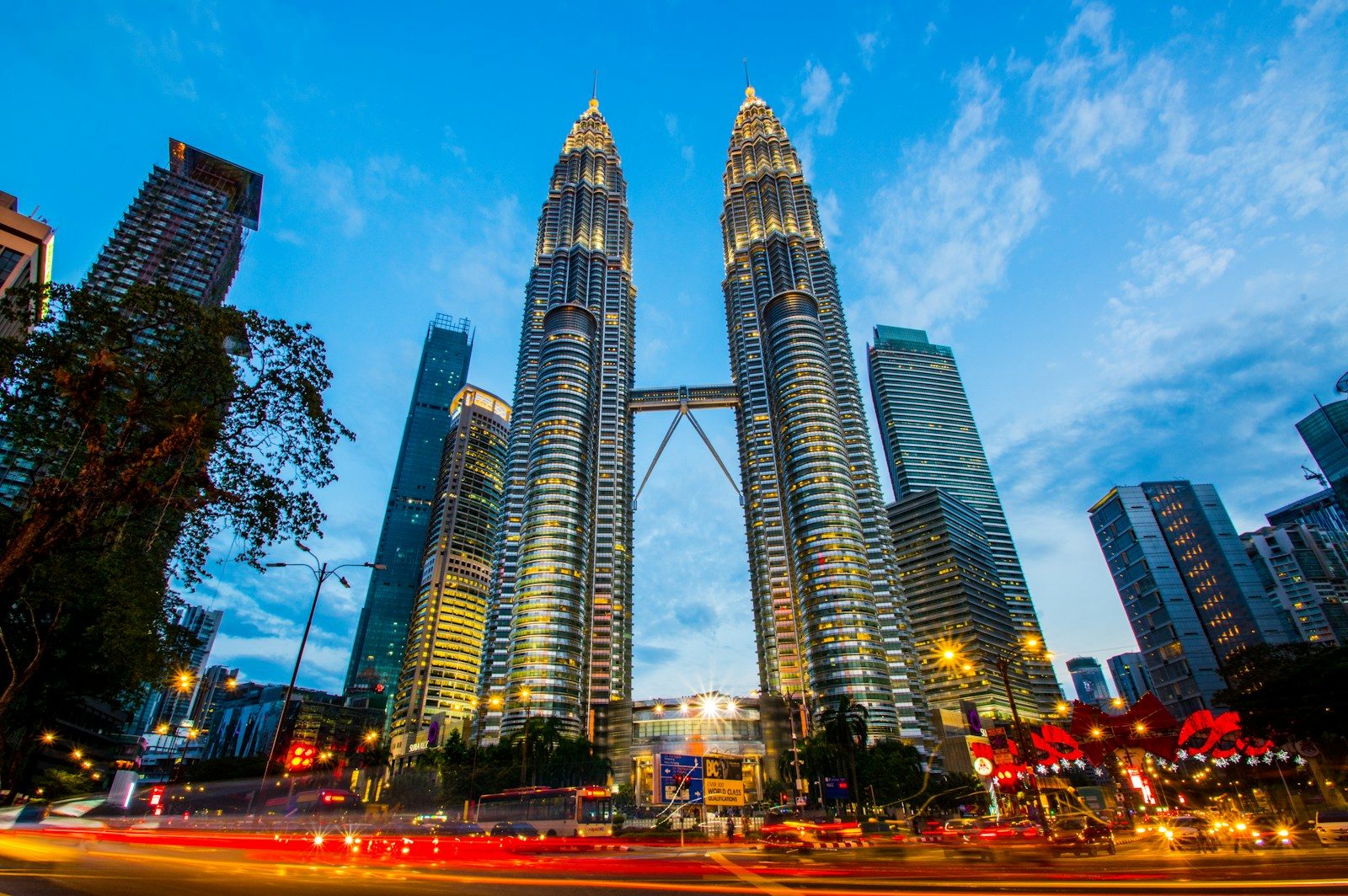
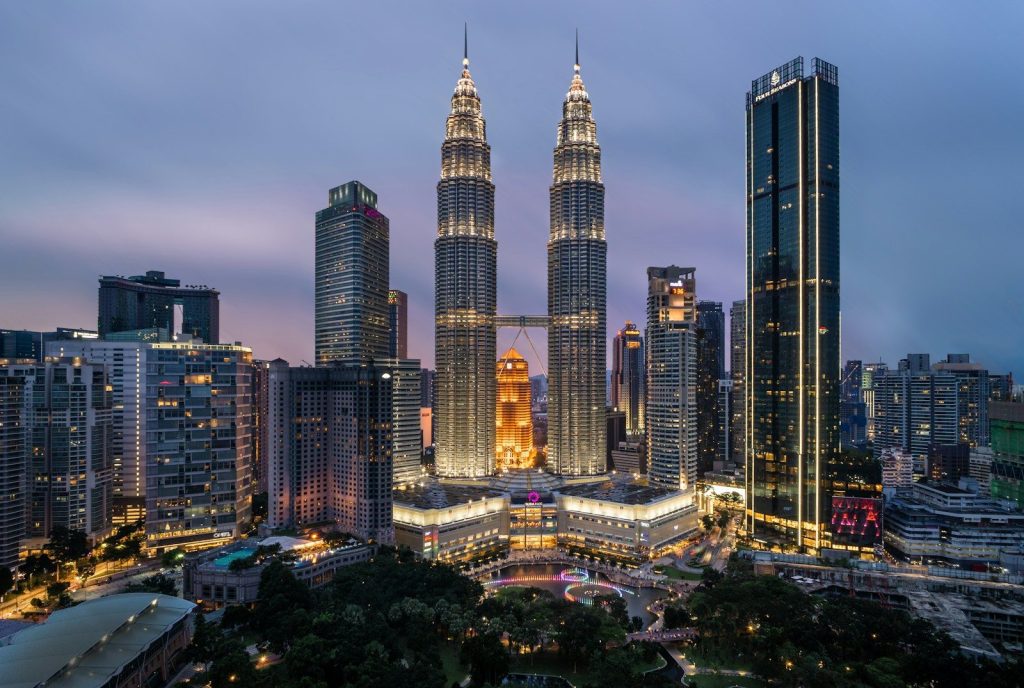
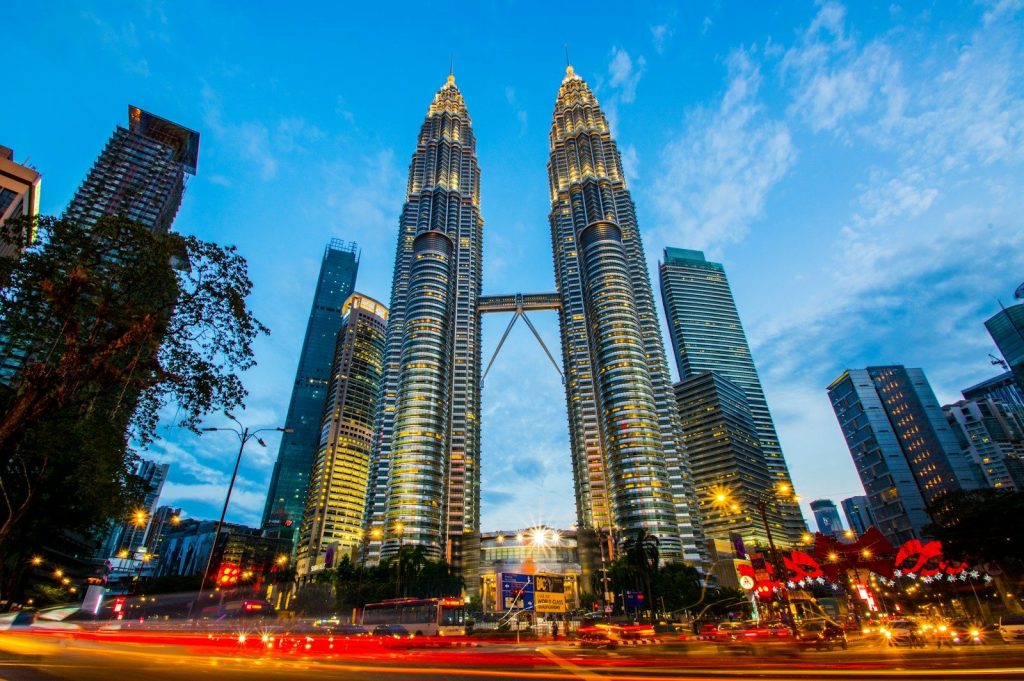
KL is a genuinely sophisticated city the Petronas Twin Towers are the obvious symbol, but the city’s restaurant scene, its cultural diversity, its art and music underground, and its quality of shopping and leisure infrastructure tell a more complete story.
The primary expat neighbourhoods each have distinct characters:
- Mont Kiara — the most concentrated expat neighbourhood in Malaysia, characterised by high-rise condominium towers, international schools clustered nearby, international restaurants and supermarkets, and a community dominated by expat families on corporate packages. Comfortable, well-equipped, somewhat insulated from the wider Kuala Lumpur experience, and priced accordingly.
- Bangsar — slightly older, more locally rooted than Mont Kiara, popular with younger expats and professionals who want proximity to the city centre without the corporate package atmosphere. Good restaurants and bars, independent cafés, and a more genuinely mixed Malaysian and expat population.
- KLCC (Kuala Lumpur City Centre) — the high-rise residential towers surrounding the Petronas Towers provide city centre living with immediate access to the Suria KLCC mall and KLCC Park. Popular with corporate professionals who value walkability to the office district.
- Petaling Jaya (PJ) — a suburban satellite city immediately west of KL proper, popular with families who want space, lower costs, and proximity to international schools in the Subang Jaya and Damansara corridor.
Penang
Penang specifically George Town, the capital of Penang island is Malaysia’s most beloved expat destination and consistently ranks near the top of international retirement destination lists.
The combination of a UNESCO World Heritage colonial streetscape, extraordinary food culture (Penang’s hawker centres are widely acknowledged as among the world’s best), a sea-level tropical climate moderated by sea breezes, lower costs than Kuala Lumpur, and a long-established Western expat community creates an environment that many people visit and promptly decide they would rather live in permanently.
George Town’s Gurney Drive area, the northeastern coast, and the suburban Tanjung Bungah to Tanjung Tokong corridor are the primary expat residential zones. Property prices both rental and purchase are significantly lower than KL, the pace is noticeably more relaxed, and the food char kway teow, assam laksa, nasi kandar, cendol is genuinely extraordinary and available from hawker stalls at prices that feel almost implausibly low.
Johor Bahru
Johor Bahru sits on Malaysia’s southern tip, connected to Singapore by the Causeway one of the world’s busiest border crossings. For expats who work in Singapore but want to live at Malaysian cost and the cost differential is enormous JB provides a practical solution, with large Malaysian condominium complexes catering specifically to the Singapore-commuter market.
The city itself is less charming than Penang and less sophisticated than KL, but it has invested in retail and leisure infrastructure to serve its affluent cross-border population, and costs for comparable accommodation are a fraction of Singapore equivalents.
Quieter Alternatives
Ipoh in Perak a former tin-mining city with well-preserved colonial architecture, increasingly good food, and very low costs has attracted growing expat interest from those seeking authentic Malaysian character at minimal expense. Malacca (Melaka), another UNESCO World Heritage city, has a smaller but established expat community drawn by its history and pace.
Kota Kinabalu in Sabah, Borneo, and Kuching in Sarawak offer extraordinary natural environments Mount Kinabalu, Bako National Park, Sarawak’s orangutan reserves alongside functioning urban infrastructure at very low cost, for those willing to accept reduced international connectivity.

Visas and Long-Term Stay Options in Malaysia
Malaysia’s visa framework is administered by the Immigration Department of Malaysia (JIM) and provides several well-defined pathways for long-term foreign residents, though the most accessible of these the MM2H programme has undergone significant changes in recent years that affect the calculus for many prospective applicants.
Social Visit Pass (Tourist Visa)
Most Western nationalities including citizens of the United States, United Kingdom, Australia, Canada, and EU member states receive a 90-day social visit pass on arrival, functioning as a tourist visa. This can be extended at JIM offices for short periods, but is not a basis for long-term legal residency. Those planning to live in Malaysia long-term should establish a proper visa category.
MM2H — Malaysia My Second Home
The MM2H is Malaysia’s flagship long-term residency programme for foreign nationals and, despite the restrictions introduced in 2021, remains one of the most accessible and comprehensive long-term residency options in Southeast Asia for qualifying applicants.
The current MM2H requirements (as revised in 2023) are:
| Requirement | Standard | Sarawak MM2H | Sabah MM2H |
|---|---|---|---|
| Minimum Age | 35 years | 35 years | 35 years |
| Offshore Income (monthly) | RM 40,000 (~$8,500) | RM 10,000 (~$2,130) | RM 10,000 (~$2,130) |
| Fixed Deposit (MYR) | RM 1,000,000 (~$213,000) | RM 150,000 (~$32,000) | RM 150,000 (~$32,000) |
| Liquid Assets | RM 1,500,000 (~$320,000) | RM 350,000 (~$74,600) | RM 350,000 (~$74,600) |
| Stay Requirement | 90 days per year | 60 days per year | 60 days per year |
| Validity | 5 years (renewable) | 5 years (renewable) | 5 years (renewable) |
The Sarawak and Sabah MM2H variants administered by the respective state governments rather than the federal government have significantly lower thresholds and are worth serious consideration for those who do not meet the federal programme requirements.
Applicants under these programmes must be based in Sarawak or Sabah respectively, though movement within Malaysia is not restricted once the pass is granted.
MM2H holders can bring dependent spouses and children under 21 under the same pass, import one personal car duty-free, and unlike most other long-stay categories are not required to have a Malaysian employer sponsor.
Applications are processed through the MM2H Centre of the Ministry of Tourism, Arts and Culture. Given the documentation requirements and the specificity of the financial evidence needed, engaging a reputable MM2H agent with a track record of successful applications is strongly recommended.
Employment Pass
The Employment Pass (EP) is the standard long-term residency mechanism for expats employed by Malaysian companies. It is tied to a specific employer and position, requires a minimum monthly salary threshold (currently RM 5,000 for Category 2 and RM 10,000 for Category 1 passes), and must be renewed when employment changes.
The employer applies for an Approval in Principle (AIP) before the employee applies for the visa, and the process typically takes four to eight weeks for straightforward applications through the Expatriate Services Division (ESD) of the Immigration Department.
Professional Visit Pass
The Professional Visit Pass (PVP) covers short-term professional engagement training, specialist consulting, and project-based work for periods up to 12 months. It is not a pathway to permanent residency but serves as a bridge for professionals between longer-term arrangements.
Investor and Entrepreneur Visas
Foreign investors establishing businesses in Malaysia can access residency through the Malaysia Digital (formerly MSC Malaysia) status for technology companies, through the Business Visa for investment-related activities, or through various Economic Corridor investment schemes.
The Malaysia Investment Development Authority (MIDA) provides the official framework for investment-linked residency pathways.
Malaysia visa options summary:
| Visa Type | Who It Suits | Duration | Key Requirement |
|---|---|---|---|
| Social Visit Pass | Short stays only | 90 days | Qualifying nationality |
| MM2H (Federal) | Retirees, wealthy residents | 5 years (renewable) | RM 1M fixed deposit, RM 40K/month income |
| MM2H (Sarawak/Sabah) | Those preferring state programmes | 5 years (renewable) | RM 150K fixed deposit, RM 10K/month income |
| Employment Pass | Locally employed expats | 1–3 years | Malaysian employer, minimum salary |
| Professional Visit Pass | Short-term professionals | Up to 12 months | Sponsoring Malaysian company |
The Complete Guide
Cost of Living in Malaysia: What to Budget
Malaysia delivers one of the best cost-to-quality ratios in Southeast Asia, and the gap between what you pay in Kuala Lumpur or Penang and what the equivalent lifestyle costs in Singapore, Sydney, or London is genuinely significant.
| Category | Kuala Lumpur — Mont Kiara / KLCC (Monthly) | Kuala Lumpur — Bangsar / PJ (Monthly) | Penang (Monthly) | Smaller Cities (Monthly) |
|---|---|---|---|---|
| Rent — 1 bed condo / apartment | RM 2,500 – 5,500 ($530 – $1,170) | RM 1,800 – 3,500 ($383 – $745) | RM 1,200 – 2,800 ($255 – $596) | RM 600 – 1,500 ($128 – $319) |
| Rent — 2 bed condo / apartment | RM 3,500 – 8,000 ($745 – $1,702) | RM 2,500 – 5,500 ($532 – $1,170) | RM 1,800 – 4,000 ($383 – $851) | RM 1,000 – 2,500 ($213 – $532) |
| Utilities (electricity, water) | RM 200 – 500 ($43 – $106) | RM 180 – 450 ($38 – $96) | RM 150 – 400 ($32 – $85) | RM 100 – 300 ($21 – $64) |
| Groceries (couple, mix local/imported) | RM 800 – 2,000 ($170 – $426) | RM 700 – 1,700 ($149 – $362) | RM 600 – 1,500 ($128 – $319) | RM 400 – 1,000 ($85 – $213) |
| Eating out (mix local and western) | RM 800 – 2,500 ($170 – $532) | RM 600 – 2,000 ($128 – $426) | RM 500 – 1,800 ($106 – $383) | RM 300 – 1,000 ($64 – $213) |
| Transport (Grab, LRT/MRT, car) | RM 400 – 1,200 ($85 – $255) | RM 350 – 1,000 ($74 – $213) | RM 300 – 900 ($64 – $191) | RM 200 – 600 ($43 – $128) |
| Mobile data and internet | RM 80 – 200 ($17 – $43) | RM 80 – 200 ($17 – $43) | RM 80 – 200 ($17 – $43) | RM 60 – 150 ($13 – $32) |
| International health insurance | RM 400 – 1,000 ($85 – $213) | RM 400 – 1,000 ($85 – $213) | RM 400 – 1,000 ($85 – $213) | RM 350 – 900 ($74 – $191) |
(Exchange rates approximate at RM 4.70 per USD — verify current rates through Bank Negara Malaysia)
A single person living comfortably in Mont Kiara, Kuala Lumpur a decent one-bedroom condominium, regular restaurant meals at a mix of local and international establishments, health insurance, Grab and LRT for transport, and entertainment can expect to spend between $1,200 and $2,000 USD per month. In Penang’s Gurney Drive corridor, the equivalent lifestyle costs $800 to $1,500 USD. In Ipoh or Malacca, a comfortable life is achievable for $500 to $900 USD.
Malaysia’s hawker centre and mamak restaurant culture is one of its great lifestyle assets and great economic values. A plate of nasi lemak (coconut rice with various accompaniments) from a hawker stall costs RM 3 to 8. A bowl of char kway teow in Penang costs RM 6 to 10.
A full mamak meal (roti canai, teh tarik, curry) costs RM 8 to 15. Even in the most expat-facing areas of Mont Kiara, a meal at a proper local restaurant rarely exceeds RM 20 to 40 per person.
The Malaysian ringgit (RM) is managed by Bank Negara Malaysia and has shown moderate depreciation against the dollar over the past decade, which benefits expats earning in hard currencies. For income conversion, Wise provides significantly better exchange rates than Malaysian bank international transfer services.

Finding Housing: Renting and Buying in Malaysia
Malaysia’s rental market is well-developed and accessible for foreign nationals, with a condominium sector in Kuala Lumpur, Penang, and Johor Bahru that actively courts the expat and MM2H market.
Key points for renters:
- The primary property listing platforms are iProperty Malaysia, PropertyGuru Malaysia, and Mudah.my. For expat-specific listings and recommendations, Facebook groups KL Expats Housing, Penang Expats, and similar city-specific groups are among the most active and current channels.
- Standard rental contracts in Malaysia run for one or two years with an option to renew. The standard deposit structure is:
- Two months’ deposit
- Half a month’s utility deposit
- First month’s rent in advance
- This means 3.5 months of rent equivalent is typically required at contract signing
- Rental agreements in Malaysia are stamped at a Lembaga Hasil Dalam Negeri (LHDN Inland Revenue Board) office the stamp duty cost is nominal but the stamping is important for the agreement’s legal enforceability
- Utilities electricity (Tenaga Nasional Berhad for peninsular Malaysia, Sabah Electricity for Sabah), water (state water boards), and internet are set up separately by the tenant. Unifi (Telekom Malaysia) and Maxis Fibre are the primary broadband providers.
- Air conditioning dominates electricity costs in the tropical climate. Monthly electricity bills for a one-bedroom condominium with regular air conditioning use run approximately RM 150 to 400 per month.
Typical housing options by type:
- Condominiums are the dominant expat housing form in Kuala Lumpur and Penang modern high-rises with security, pool, gym, and management office, available from RM 1,500 per month for a basic unit to RM 8,000 and above for premium Mont Kiara addresses
- Serviced apartments (service residences) offer hotel-like management with longer-stay pricing popular with new arrivals during the initial settling-in period
- Bungalows and semi-detached houses in gated communities are popular with families who need outdoor space and more rooms than a condominium typically provides. Damansara Heights, Kenny Hills, and Bangsar provide established bungalow zones in KL.
- Shophouses the iconic two-story commercial-residential buildings of George Town, Penang provide a distinctive alternative for those who want character and location in the UNESCO heritage zone
Buying property in Malaysia:
Foreign nationals can purchase property in Malaysia subject to minimum price thresholds set by state governments.
As a general rule:
- The minimum purchase price for foreigners in most states is RM 1,000,000 (~$213,000), though thresholds vary by state and property type
- Foreign ownership in any single development is typically subject to a 30% cap
- Foreigners can own both freehold and leasehold titles the distinction matters for resale value and long-term security, with freehold preferred
- Foreign purchases require Foreign Investment Committee (FIC) approval, though this is now largely integrated into the standard conveyancing process
- MM2H holders can purchase property up to RM 1,000,000 in value without additional approval in most states, and in some states benefit from reduced thresholds
The purchase process involves a Sale and Purchase Agreement (SPA) executed before a Malaysian lawyer (advocate and solicitor), payment of stamp duty (currently on a tiered scale from 1% to 4% of the purchase price), and registration with the relevant Land Office.
Engaging an independent Malaysian property lawyer for due diligence and transaction management is essential. The Malaysian Bar provides a directory of registered practitioners.
Healthcare and Medical Services in Malaysia
Malaysia’s private healthcare sector is one of the strongest arguments for the country as an expat destination and is, along with Singapore’s, among the best in Southeast Asia. The combination of internationally trained physicians, modern equipment, JCI-accredited facilities, and costs that are a fraction of equivalent treatment in the United States or Australia makes Malaysia a significant medical tourism destination the same facilities and physicians are available to resident expats on a routine basis.
The public hospital system Ministry of Health hospitals provides care for Malaysian citizens and permanent residents at heavily subsidised rates. Foreign nationals pay higher gazetted foreigner rates, which are still reasonable by international standards but come with the practical limitations of waiting times and language barriers in some facilities outside the major cities.
Leading private healthcare providers serving expats:
- Gleneagles Kuala Lumpur — part of the Parkway Pantai network, one of KL’s most respected private hospitals with comprehensive specialist capabilities and strong international patient services. gleneagles.com.my
- Pantai Hospital Kuala Lumpur — another well-regarded private facility in the Bangsar area, with good general and specialist capability and a strong expat patient base
- KPJ Healthcare — Malaysia’s largest private hospital group, operating facilities across the country from its flagship KPJ Damansara in KL to regional hospitals throughout peninsular Malaysia and Sabah and Sarawak. kpjhealth.com.my
- Sunway Medical Centre — a major private hospital in Petaling Jaya, well-regarded for its comprehensive services and modern facilities
- Penang Adventist Hospital — the leading private hospital in Penang, associated with the Seventh-Day Adventist church’s international healthcare network, with a long history of serving both the local and international community. pah.com.my
- Loh Guan Lye Specialists Centre (Penang) — well-regarded private specialist centre popular with the Penang expat and local community
International health insurance is strongly recommended for all expats in Malaysia, even though the private healthcare costs are significantly lower than in the West. For complex or serious conditions requiring extended specialist treatment, costs can accumulate significantly, and adequate coverage provides peace of mind and access to the full range of private specialist care without out-of-pocket financial stress.
MM2H applications require evidence of health insurance, making it a visa condition rather than merely an advisory.
Recommended providers include Cigna Global, AXA International, Pacific Cross (strong regional network), Bupa Global, AIA Malaysia (strong local provider with extensive network), and SafetyWing for more budget-conscious profiles. Annual premiums for an individual in their 40s typically run $900 to $2,200 depending on coverage level and provider.
The Complete Guide
Taxes, Banking, and Money in Malaysia
The Malaysian Tax System
Malaysia’s tax framework is one of its most attractive features for foreign residents, and a 2022 policy change that initially created concern has been substantially addressed for most expat profiles.
Malaysia taxes residents on Malaysia-sourced income. Historically, foreign-sourced income remitted to Malaysia was exempt from tax a policy that made Malaysia particularly attractive for retirees and those with overseas pension or investment income. A 2022 announcement proposed taxing foreign-sourced income from 2023, which alarmed the expat and MM2H community.
Subsequent clarifications have provided significant exemptions, including for employment income, dividends, and certain passive income categories, that preserve most of the practical tax advantages for the expat profiles to which they apply. Professional tax advice on your specific income type and sources is essential the rules are specific enough that general guidance is insufficient.
For Malaysian-sourced employment income, the progressive tax scale administered by the Inland Revenue Board of Malaysia (LHDN) is:
| Annual Chargeable Income (RM) | Tax Rate |
|---|---|
| 0 – 5,000 | 0% |
| 5,001 – 20,000 | 1% |
| 20,001 – 35,000 | 3% |
| 35,001 – 50,000 | 8% |
| 50,001 – 70,000 | 13% |
| 70,001 – 100,000 | 21% |
| 100,001 – 400,000 | 24% |
| 400,001 – 600,000 | 25% |
| 600,001 – 2,000,000 | 26% |
| Above 2,000,000 | 30% |
Malaysia has double taxation agreements with over 75 countries, including the United States, United Kingdom, Australia, Germany, and most major expat-origin nations. The LHDN treaty list provides current coverage details.
Tax residency in Malaysia is triggered by residing in Malaysia for 182 days or more in a calendar year. Non-residents pay a flat rate of 30% on Malaysian-sourced income and are not eligible for personal reliefs.
Banking in Malaysia
Opening a Malaysian bank account is generally straightforward for those with long-stay visas, employment passes, or MM2H status.
The major banks serving the expat community include:
- Maybank (Malayan Banking Berhad) — Malaysia’s largest bank by assets, with the most extensive branch and ATM network and the Maybank2u online banking platform that is widely regarded as one of the better digital banking experiences in the country. maybank2u.com.my
- CIMB Bank — part of the CIMB Group with operations across ASEAN, providing strong cross-border capabilities and the CIMB Clicks digital banking platform
- Public Bank — well-regarded private bank with solid service quality and a strong track record of customer satisfaction in Malaysia
- Hong Leong Bank — mid-size bank with excellent digital banking infrastructure and competitive products for personal banking
- RHB Bank — strong presence across Malaysia with good English-language service in expat-facing urban branches
Malaysia’s digital payment landscape has evolved considerably:
- DuitNow — Malaysia’s national QR code and bank transfer system, equivalent to Thailand’s PromptPay, enabling instant transfers between banks and QR payments at merchants
- Touch ‘n Go eWallet — the dominant digital wallet in Malaysia, integrated with the Touch ‘n Go card system used for highway tolls and public transport, with broad merchant acceptance
- GrabPay — integrated within the Grab super-app, widely accepted at restaurants, retailers, and services
For international income conversion, Wise and Revolut are used widely by the Malaysia expat community for better exchange rates than Malaysian bank international transfer services.
Work, Teaching, and Remote-Work Opportunities
Malaysia’s employment landscape for expats operates primarily through the formal Employment Pass framework for those working with Malaysian companies, and through the MM2H or various corporate structures for those working remotely.
Common expat employment paths:
- Corporate and professional roles at the regional headquarters of multinational companies in KL technology (Microsoft, IBM, HP, Intel all have significant Malaysian operations), financial services, oil and gas (Petronas and its supply chain), and manufacturing provide the primary formal employment market for qualified foreign professionals.
- English teaching at international schools is the most accessible professional employment pathway for qualified educators. KL’s international school corridor the Garden International School, Mont Kiara International School, and others in the Mont Kiara and Damansara area provides competitive packages. The Ministry of Education Malaysia regulates international school teacher registration.
- BPO and shared services Malaysia has positioned itself as a regional shared services hub, with a significant sector employing both Malaysian and some foreign staff in KL and Cyberjaya.
- Startup and tech sector Malaysia’s digital economy has grown substantially, with coworking spaces and incubators particularly active in KL’s Bangsar South and Cyberjaya tech corridor.
- Remote work for MM2H holders or those on appropriate visa arrangements working for foreign employers, Malaysia provides an excellent base. The country does not have a standalone digital nomad visa, but the combination of MM2H status and remote work for non-Malaysian income sources represents the most legally clean arrangement currently available.
Coworking spaces:
- WORQ (Kuala Lumpur, multiple locations) — well-regarded Malaysian coworking network with professional facilities and a strong startup and professional community. worq.com.my
- Colony (Kuala Lumpur) — premium coworking operator with design-forward spaces in KLCC and Mont Kiara, popular with corporate expats and creative professionals
- The Co (Penang and KL) — community-oriented coworking spaces popular with freelancers and digital nomads
- Common Ground (multiple KL locations) — well-established coworking brand with consistent quality and strong community programming
Day-to-Day Life: Language, Culture, and Integration
Malaysia’s linguistic environment is one of its most immediately accessible aspects for English-speaking expats. Bahasa Malaysia (Malay) is the national language and the medium of public school instruction, but English functions as the de facto language of business, higher education, the legal system, the private healthcare sector, and in urban areas much of daily social interaction.
The Chinese Malaysian community, which makes up approximately 23% of the population, typically speaks Mandarin and/or various Chinese dialects alongside Malay and English. The result is a genuinely multilingual society where English-only expats can function effectively from day one.
Learning basic Bahasa Malaysia is not required for daily function in KL or Penang but is received with genuine appreciation by Malaysian people of all ethnic backgrounds. Bahasa Malaysia is not tonal, uses the Latin script, and has a relatively regular grammatical structure basic conversational competency is achievable within two to three months of consistent study.
Resources for learning Bahasa Malaysia:
- Universiti Malaya and other public universities offer Bahasa Malaysia programmes for foreigners
- Private language centres in KL and Penang offer structured instruction
- Apps including Duolingo (Malay module), Pimsleur, and Ling provide accessible daily practice
- Language exchange through Tandem and HelloTalk connects you with Malaysian speakers learning English
Culturally, Malaysia requires more contextual awareness than some other expat destinations, primarily because it is a Muslim-majority country (approximately 61% of the population) in which Islamic values are embedded in the legal and public framework in ways that require respectful navigation. Key cultural points worth understanding early:
- Dress codes — while KL’s shopping malls and expat neighbourhoods have no restrictions, mosques and some government buildings require modest dress (covered shoulders, knees, and hair for women entering mosques). Conservative dress is expected in more traditional areas outside the major cities.
- Alcohol — legally available in Malaysia and sold in supermarkets, bottle shops, and restaurants serving non-Muslim customers, but restricted in certain zones and unavailable in areas designated as alcohol-free. Non-Muslim expats will not find their social lives significantly constrained in KL or Penang, but awareness of context matters.
- Ramadan — during the fasting month (dates shift annually on the Islamic lunar calendar), eating and drinking in public in the daytime is generally avoided out of respect for fasting Muslims. Most restaurants continue to serve, but in areas with large Muslim populations, discretion is appropriate.
- The greeting — in multicultural Malaysia, the appropriate greeting varies by community. Salam (Islamic greeting) for Malay Muslims, a nod or handshake for Chinese Malaysians, and similar for Indian Malaysians. Paying attention to what the other person initiates and following suit is the reliable approach.
Key festivals Malaysia’s multicultural calendar:
- Hari Raya Aidilfitri (Eid al-Fitr) — the end of Ramadan, celebrated with open houses across the country. Malaysians of all ethnic backgrounds are typically invited to each other’s homes during this period — one of the most genuinely cross-cultural aspects of Malaysian social life.
- Chinese New Year — a 15-day celebration, with lion dances, fireworks, and the open-house tradition extending across communities. Penang’s Chinese New Year celebrations are particularly atmospheric.
- Deepavali (Diwali) — the Hindu festival of lights, celebrated by the Tamil Indian community with oil lamps, rangoli, and family gatherings.
- Wesak Day — the Buddhist celebration of Buddha’s birth, enlightenment, and death, observed with temple activities and candlelit processions particularly in Penang.
Joining expat Facebook groups KL Expats, Penang Expats, Malaysia MM2H Community provides immediate access to practical, current knowledge from the established expat community.
The Complete Guide
Transport, Safety, and Environment
Getting Around Malaysia
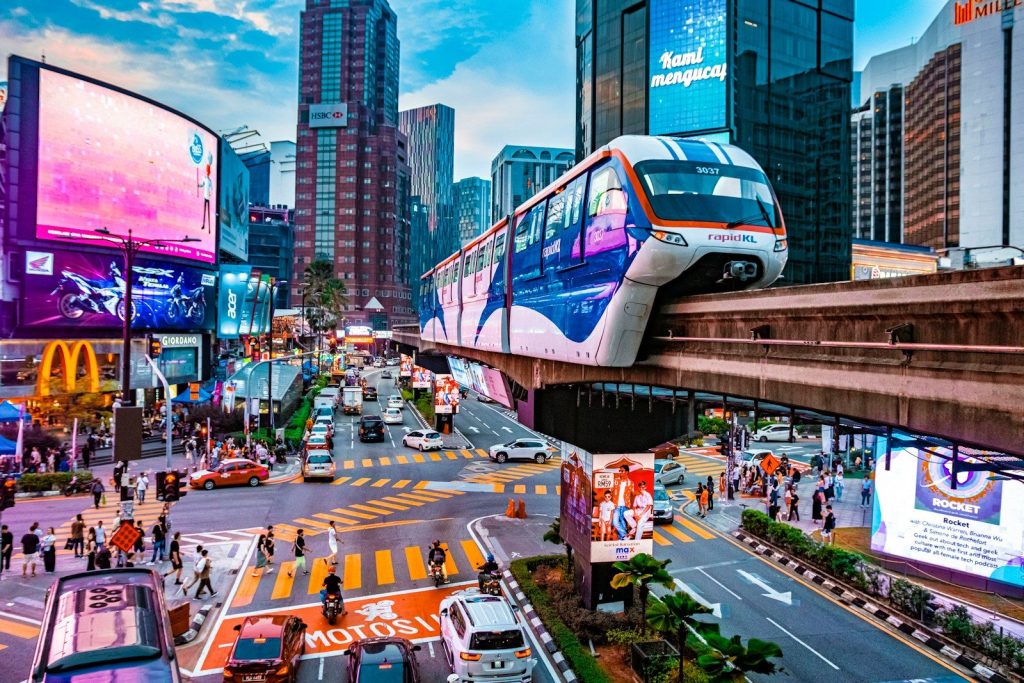
Kuala Lumpur’s public transport network is considerably better than its reputation suggests and continues to improve, making car ownership less necessary than it was a decade ago for those based in the central zones served by rail.
Within Kuala Lumpur:
- MRT (Mass Rapid Transit) — the Klang Valley MRT network covers KL’s major corridors with two operational lines (Kajang Line and Putrajaya Line) and is clean, air-conditioned, and reliable. The most practical transport option for many urban journeys. myrapid.com.my
- LRT (Light Rail Transit) — the Ampang and Kelana Jaya lines cover additional KL corridors, integrated with MRT and KTM Komuter through a unified Rapid KL payment system
- KTM Komuter — the commuter rail network covering KL’s suburban corridors and connecting to Seremban, Port Klang, and other satellite towns
- Grab — the dominant ride-hailing app in Malaysia, essential for journeys not covered by rail and widely used by expats for airport transfers and suburban journeys. grab.com/my
- Private car — useful for suburban living areas and essential outside KL and Penang, where public transport is limited. Driving in Malaysia is on the left (British convention), and international driving licences are accepted for the period of a tourist visit; an official licence conversion is required for long-term residents.
Between cities and to East Malaysia:
- Intercity coaches — Malaysia’s intercity bus network, operating from KL’s TBS (Terminal Bersepadu Selatan), connects cities across peninsular Malaysia at very low cost. Comfortable modern coaches serve the KL-Penang (3.5 hours), KL-JB (4 hours), and KL-Malacca (2 hours) routes regularly.
- Domestic flights — Malaysia Airlines, AirAsia, and Firefly serve domestic routes including the essential KL to Kota Kinabalu and KL to Kuching connections to East Malaysia. AirAsia’s fares when booked in advance are among the cheapest in the world. airasia.com
Safety
Malaysia is generally safe by Southeast Asian standards, and serious violent crime targeting foreigners is uncommon. The most frequently reported issues for expats are:
- Petty theft — bag snatching, pickpocketing in crowded markets and public transport, and phone theft in tourist areas. Standard urban awareness precautions address the majority of reported incidents.
- Traffic — road safety in Malaysia requires attention, and motorcycle accidents are common. Defensive driving habits, consistent seatbelt use, and avoiding driving in unfamiliar areas at night reduce risk.
- Scams — gem scams, overpriced taxi services, and online fraud targeting expats. Using Grab eliminates taxi-related scams entirely; online transaction caution addresses the majority of fraud risk.
Your home country embassy the US Embassy Kuala Lumpur, British High Commission Kuala Lumpur, and relevant missions maintains current safety advisories and emergency contact information.
Climate and Environment
Malaysia’s equatorial climate delivers heat and humidity year-round, with average temperatures between 25 and 35 degrees Celsius across most of the country. The monsoon seasons northeast monsoon (November to February) affecting the east coast of peninsular Malaysia, and southwest monsoon (May to August) affecting the west coast bring periodic heavy rainfall without fundamentally changing the basic tropical character of the climate.
The haze smoke from agricultural burning in neighbouring Indonesia and, to a lesser extent, Malaysia itself is the most significant environmental health challenge for Malaysia-based expats.
The haze season is most pronounced from June to October, with the worst episodes reducing visibility dramatically and pushing Air Quality Index readings into unhealthy ranges. Monitoring through IQAir Malaysia and maintaining a quality HEPA air purifier at home is strongly advisable during haze season.
Tap water in Kuala Lumpur and major cities is treated and technically meets WHO standards, but most expats and many Malaysians use bottled water or filtration systems for drinking, both as a precaution and due to old pipe infrastructure in some buildings. Most condominiums in the expat market have in-unit water filtration systems installed.
Bureaucracy, Pitfalls, and Expat Mistakes to Avoid
Malaysia’s administrative system is functional but characterised by documentation requirements, processing times, and periodic policy changes that can significantly affect expats who are not adequately prepared or professionally supported.
Common bureaucratic friction points:
- MM2H application processing times have extended as the programme has been restructured and the application volume managed through a more selective approval process. Allow six to nine months for a complete federal MM2H application cycle.
- Employment Pass applications require thorough documentation from both the employer and the employee, and incomplete applications are returned rather than queried, causing significant delays
- Foreign property purchases require multiple layers of approval and documentation Land Office registration, stamp duty assessment, and in some cases state consent for foreign ownership that take longer than comparable processes in Australia or the UK
- The LHDN tax filing system requires navigation in both English and Malay, and the tax treatment of foreign-sourced income requires professional clarification given recent regulatory changes
The most consequential expat mistakes:
- Overstaying the Social Visit Pass. JIM enforces overstay rules strictly, with fines, deportation, and entry bans as graduated consequences. If you are in the process of MM2H or Employment Pass application and need more time in-country than your pass allows, an authorised extension through JIM or departure and re-entry is the correct approach.
- Assuming the original MM2H conditions apply. Many expats research Malaysia based on the pre-2021 MM2H requirements the current programme is significantly more demanding financially. Verify current requirements directly through the MM2H Centre or a reputable MM2H agent.
- Signing a lease without a properly stamped agreement. Unstamped tenancy agreements have limited legal enforceability in Malaysia. Ensure the agreement is stamped at LHDN within 30 days of signing.
- Working without an Employment Pass. Working without proper authorisation in Malaysia carries fines and deportation risk. This applies to remote workers whose employer is outside Malaysia but who conduct local business meetings, client entertainment, or related activities that may constitute “working” under Malaysian immigration law.
- Not arranging health insurance. Even though Malaysian private healthcare is affordable by international standards, the cost of serious hospitalisation and potential medical evacuation is significant without adequate coverage. MM2H applications require health insurance evidence, making it a condition of the programme.
- Underestimating initial setup costs. The combination of 3.5 months’ rent equivalent at contract signing, MM2H fixed deposit requirements, vehicle purchase or rental, and administrative and legal fees means the first three months of Malaysian residency carry significantly higher financial requirements than ongoing monthly costs suggest.
Checklist: Step-by-Step Before You Move to Malaysia
Six to three months before departure:
- Determine your visa pathway: based on your profile MM2H for retirees and those with sufficient passive income and assets, Employment Pass for locally employed workers, state-level MM2H programmes (Sarawak/Sabah) for those who do not meet federal MM2H thresholds
- Gather required documents: passport with at least 18 months of validity, apostilled birth and marriage certificates, criminal background check from all countries of residence in the past five years, health insurance covering Malaysia, financial documentation (bank statements, pension letters, investment portfolios) meeting the relevant visa threshold
- For MM2H applicants: engage a reputable MM2H agent with a documented track record of successful applications the process is complex enough that professional facilitation is strongly recommended. The MM2H official agent list provides registered agents.
- Research target city and neighbourhood: based on lifestyle priorities, required infrastructure (schools, healthcare, employment proximity), and budget
- Arrange comprehensive international health insurance: covering Malaysia this is a condition of the MM2H application and strongly advisable for all other visa categories
One to two months before departure:
- Book temporary accommodation for the first four to eight weeks serviced apartments in Mont Kiara or KLCC, Airbnb in Penang, or established guesthouses in other cities provide flexibility while you search for a longer-term property in person
- Research international schools if relocating with children KL’s most sought-after international schools have waiting lists that require early contact. The Malaysian Ministry of Education list of approved international schools provides the official registry.
- Arrange prescription medications for at least three months’ supply
- Join the key expat Facebook groups for your target city KL Expats, Penang Expats, Malaysia MM2H Forum, and location-specific housing groups provide current practical knowledge
- Set up Wise for receiving income from abroad and converting to ringgit the rate differential versus Malaysian bank international transfer services compounds meaningfully over time
- Prepare a cash and liquid asset buffer of $5,000 to $10,000 USD (or significantly more for MM2H fixed deposit placement) for initial setup costs
Arrival week:
- Obtain a local SIM card at the airport — Maxis, Celcom (now CelcomDigi after merger with Digi), and U Mobile offer competitive data plans; a monthly SIM with substantial data costs approximately RM 30 to 80 ($6 to $17)
- Download and set up Grab before landing — you will need it from the airport and for daily transport
- Open a Maybank or CIMB account as soon as your visa status permits — bring your passport, visa documentation, proof of Malaysian address, and Employment Pass or MM2H card
- Set up Touch ‘n Go eWallet for daily payments and toll payments if driving
- Complete the stamping of your tenancy agreement at LHDN within 30 days of signing
- Connect with your MM2H agent or immigration lawyer for the completion of any outstanding documentation the fixed deposit placement at a Malaysian bank must be completed within specific timeframes after MM2H approval
- Begin the neighbourhood walk-around in your target area visiting condominiums and serviced apartments in person, eating at local hawker centres, and absorbing the ground-level character of different neighbourhoods gives information that no online research can substitute
The Complete Guide
Conclusion — Is Moving to Malaysia Right for You in 2026?
Malaysia in 2026 is a country that quietly overdelivers on almost every metric that matters for expat quality of life: the food is extraordinary, the infrastructure works, the healthcare is world-class by regional standards, the English environment removes significant daily friction, and the cost of living is genuinely low relative to what it provides.
These are not minor qualifications they are the foundations of daily life, and Malaysia gets them right more consistently than most countries in its cost bracket.
The challenges are real and require clear-eyed acknowledgment. The MM2H programme has become meaningfully more demanding, which reduces its accessibility for those with more modest financial profiles and makes professional facilitation effectively essential rather than merely helpful.
The bureaucracy around work permits and property transactions requires patience and often professional support. The cultural context of a Muslim-majority society requires ongoing awareness and respect that goes beyond what short-term tourism accommodation demands.
For retirees who meet the MM2H thresholds and want a warm, English-friendly, medically well-equipped base at reasonable cost. For corporate professionals drawn to KL’s genuine regional business hub status. For families who want the widest range of international schools in Southeast Asia alongside a suburban lifestyle with all the amenities they need.
For entrepreneurs who see opportunity in a strategically located, English-language ASEAN market of 33 million people. For all of these people, Malaysia in 2026 delivers something that represents genuinely good value for what it costs a comfortable, rich, well-supported life in one of Southeast Asia’s most competently run and culturally fascinating countries.
The paperwork is navigable with the right support. The cultural context rewards genuine engagement rather than mere compliance. And what waits on the other side of the administrative process is a life of real quality, real community, and real daily pleasure laksa for breakfast, a functioning LRT to the office, world-class specialist healthcare ten minutes away, and a society that has been making diverse communities feel genuinely at home for considerably longer than most of its neighbours have been trying.