Moving to the Vietnam: Complete Guide for Expats, Digital Nomads & Foreigners
Vietnam has a way of getting inside people. It happens differently for everyone for some it is the first bowl of pho eaten at a plastic stool on a Hanoi pavement at six in the morning, the broth so deeply flavoured and the scene so alive that it reconfigures what breakfast means.
For others it is the moment in Da Nang when the South China Sea comes into view and the realisation arrives that this beach, this light, this warmth, could be the backdrop to a working Wednesday rather than a two-week holiday. For others still it is simpler: the moment the monthly budget is calculated and the number that appears is less than half of what the same quality of life costs at home.
Vietnam in 2026 draws expats from every corner of the world, and the pipeline is not slowing. The country has invested deliberately in its digital infrastructure, making it one of Southeast Asia’s more capable environments for remote work. The e-visa system extended to 90 days in 2023 and now among the more generous short-stay entry frameworks in the region has removed a significant administrative barrier to initial exploration.
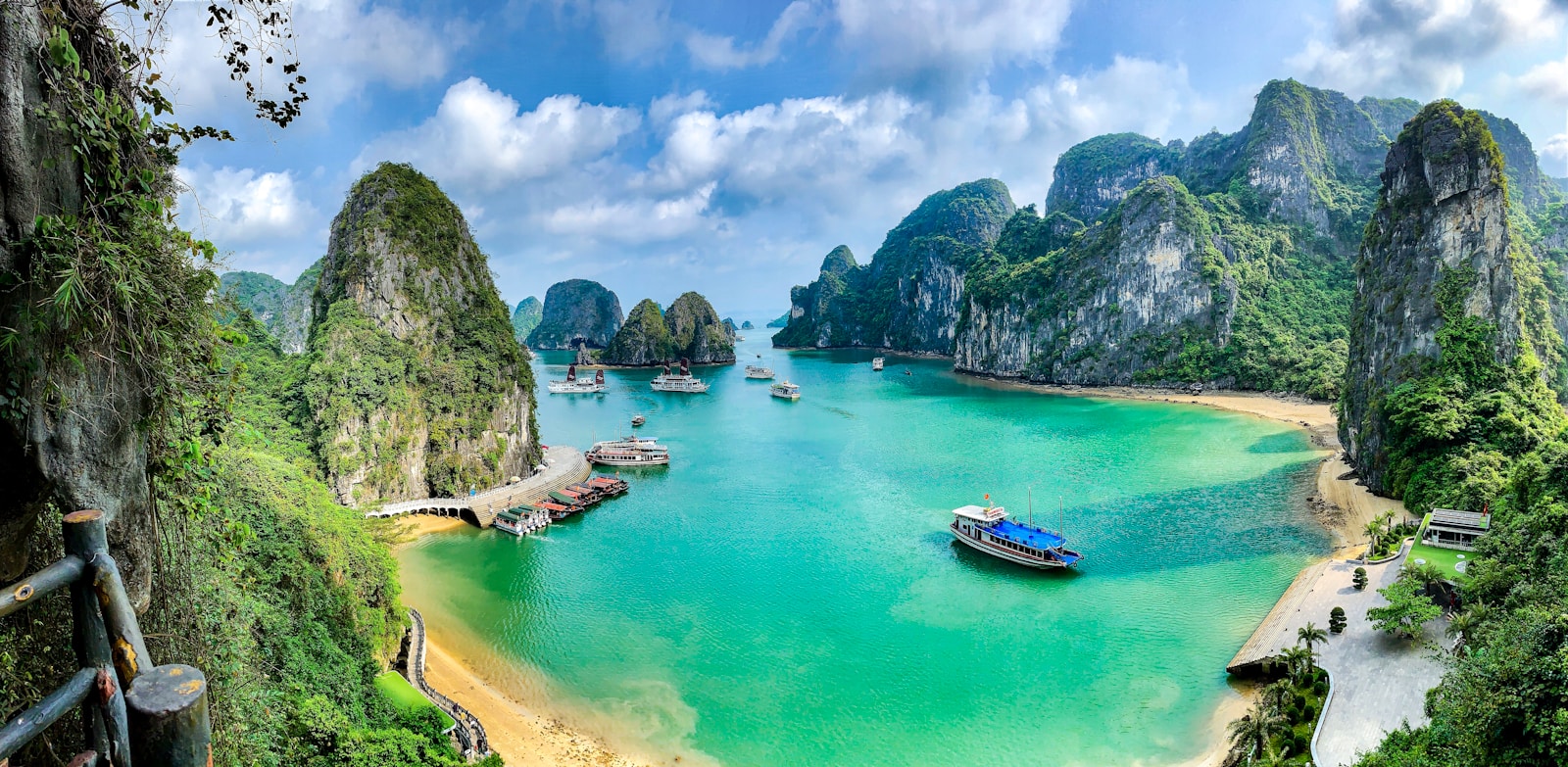
The cost of living, while rising in Ho Chi Minh City and Hanoi relative to a decade ago, remains genuinely low by any Western benchmark. And the food, the coffee culture, the energy of the cities, and the extraordinary landscape that stretches from the northern highlands to the Mekong Delta — all of it remains as compelling as it has always been.
The complications are real too. Vietnam does not have a formal retirement visa or a purpose-built digital nomad permit, which means long-term legal residency requires navigation of a framework designed primarily for investors and employed workers.
The language is tonal and genuinely challenging. Traffic in both major cities requires fortitude. And bureaucracy operates at a pace that tests the patience of anyone accustomed to efficient administrative systems.
This guide covers everything you need to approach that navigation with clarity: the visas that actually work, where to live and why, realistic costs, housing rules for foreigners, how healthcare functions, what the tax situation means for your specific circumstances, and the practical steps from decision to settled life.

Is Vietnam the Right Place for You?
Vietnam suits a specific and growing range of expat profiles, but being honest about who it works for and who it frustrates saves a great deal of adjustment cost after arrival.
Vietnam works exceptionally well for:
- Digital nomads and remote workers earning in dollars, pounds, euros, or Australian dollars who want very low overheads, genuinely fast internet in major cities, excellent food and coffee at minimal cost, and an environment that is stimulating and energising rather than soporific. Ho Chi Minh City and Da Nang in particular have built real ecosystems around this profile.
- English teachers for whom Vietnam provides one of Southeast Asia’s most competitive markets. Both international schools and English language centres hire regularly, compensation is solid relative to the cost of living, and the administrative pathways for teacher work permits are relatively well-established.
- Expat professionals employed by multinational companies with Vietnamese operations, international organisations, or NGOs, for whom Vietnam’s developing economy provides genuine career opportunities alongside an excellent quality of daily life.
- Long-term lifestyle migrants who have decided that the combination of low cost, high sensory richness, and genuine cultural depth that Vietnam delivers is worth the administrative inconvenience of a residency framework that was not designed with them specifically in mind.
- Entrepreneurs and investors who see opportunity in a rapidly developing economy of 97 million people with a young, digitally connected consumer base, and who are prepared to navigate the regulatory environment with professional support.
Vietnam is more challenging for retirees who need straightforward long-term legal residency without employment or investment the framework simply does not provide a clean retirement visa equivalent, and managing ongoing legal status requires more active attention than comparable destinations.
It is also harder for those who find tonal language learning deeply frustrating, who are uncomfortable with traffic that requires constant vigilance, or who need specialist healthcare immediately accessible.
An honest assessment:
Pros: extremely low cost of living even in major cities, genuinely fast internet infrastructure in Ho Chi Minh City and Hanoi, extraordinary food culture at every price point, vibrant and energising urban environments, warm and hospitable Vietnamese culture, strong and well-established expat communities in both major cities, 90-day e-visa system that provides easy initial entry, spectacular national landscape, easy regional ASEAN travel.
Cons: no formal retirement or digital nomad visa requiring creative navigation of an employment/investment-oriented framework, Vietnamese language that is genuinely difficult for most English speakers, severe traffic congestion in both Ho Chi Minh City and Hanoi, significant air quality issues particularly in Hanoi, bureaucratic complexity around Temporary Residence Cards and work permits, limited specialist healthcare outside the major cities, and periodic policy changes with limited advance notice.

The Complete Guide
Vietnam’s Main Cities and Where to Live
Vietnam’s north-south geography the country is roughly S-shaped, extending 1,650 kilometres from the Chinese border to the Mekong Delta means that the climate, culture, and character of its major cities differ significantly. Understanding these differences is important before committing to a base.
Ho Chi Minh City (Saigon)
Ho Chi Minh City called Saigon by virtually everyone who lives or has lived there, and officially by many road signs and businesses is Vietnam’s largest city, its commercial capital, and the home of its largest and most diverse expat community. With a population of over nine million in the city proper and considerably more in the wider metropolitan area, it is an intense, loud, perpetually moving city that operates at a pace unlike anywhere else in the country.
For expats, Ho Chi Minh City offers the fullest urban infrastructure: the strongest concentration of international schools, the best private hospitals, the most developed coworking ecosystem, the widest range of international restaurants and nightlife, and the most accessible professional and entrepreneurial networks.
The primary expat neighbourhoods each have their own character:
- District 2 (Thu Duc City) Thao Dien — the traditional heart of the HCMC expat community. A riverside neighbourhood of villas, serviced apartments, international schools, and the full complement of English-language services. Comfortable, arguably slightly insulated from the wider Vietnamese urban experience, but well-equipped and genuinely pleasant.
- Binh Thanh District — closer to the city centre, more affordable than Thao Dien, increasingly popular with younger expats and digital nomads who want more authentic urban texture alongside modern amenities.
- District 1 (Ben Nghe, Ben Thanh) — the historic city centre, close to the major landmarks, restaurants, and nightlife, but denser, noisier, and typically higher in commercial rent than residential alternatives.
- District 7 (Phu My Hung) — a planned urban development popular with Korean and Japanese expat communities, with a calmer atmosphere and good family-oriented infrastructure at slightly lower costs than Thao Dien.
The traffic in Ho Chi Minh City is something that every expat adjusts to in their own way and timeline. The sheer volume of motorbikes an estimated eight million in the city creates an experience that is genuinely chaotic by Western standards and requires active participation rather than passive observation. Most long-term residents acquire a motorbike fairly quickly; those who prefer not to ride rely on Grab for virtually every journey.
Hanoi
Vietnam’s capital is a different city in almost every respect from Saigon. Older, more formal, more politically conscious, and considerably more conservative in its social character, Hanoi sits in the north with a genuine four-season climate winters are cool and occasionally cold enough for a jacket, summers are hot and humid, and the spring and autumn are genuinely beautiful.
The city’s French colonial architecture, its network of lakes, and the ancient streets of the Old Quarter create an aesthetic that many expats find richer and more layered than Saigon’s more commercial energy.
The primary Hanoi expat neighbourhood is Tay Ho (West Lake) a peninsula jutting into Ho Tay (West Lake) that has become the de facto expat village of the capital. International restaurants, cafés, yoga studios, international schools in the surrounding area, and a community of diplomatic, NGO, and long-term resident expats create a self-contained lifestyle environment that is comfortable without being entirely removed from Vietnamese daily life.
Hanoi’s air quality is a genuine and serious concern. The combination of coal-fired power plants in the region, vehicle emissions, and the city’s location in a river valley that traps pollution creates air quality index readings that regularly reach unhealthy levels, particularly in autumn and winter.
Monitoring through IQAir and investing in a quality HEPA air purifier for home use is strongly advisable for Hanoi residents, particularly those with children or respiratory conditions.
Da Nang and Hoi An
Da Nang is Vietnam’s third-largest city and its fastest-growing expat destination. Situated at the geographic midpoint of the country on a 30-kilometre stretch of beach backed by the Marble Mountains and the Hai Van Pass, it combines a genuine coastal lifestyle with improving urban infrastructure and a pace of life considerably more relaxed than either Saigon or Hanoi.
The expat community in Da Nang has grown substantially over the past five years, attracted by the combination of beach access, lower costs than the major cities, improving internet infrastructure, and a quality of daily life that many people find superior to the intensity of HCMC or Hanoi.
My Khe beach is the primary expat-facing residential and hospitality zone; An Thuong neighbourhood has become particularly popular with the digital nomad community for its concentration of cafés, coworking spaces, and affordable apartment options
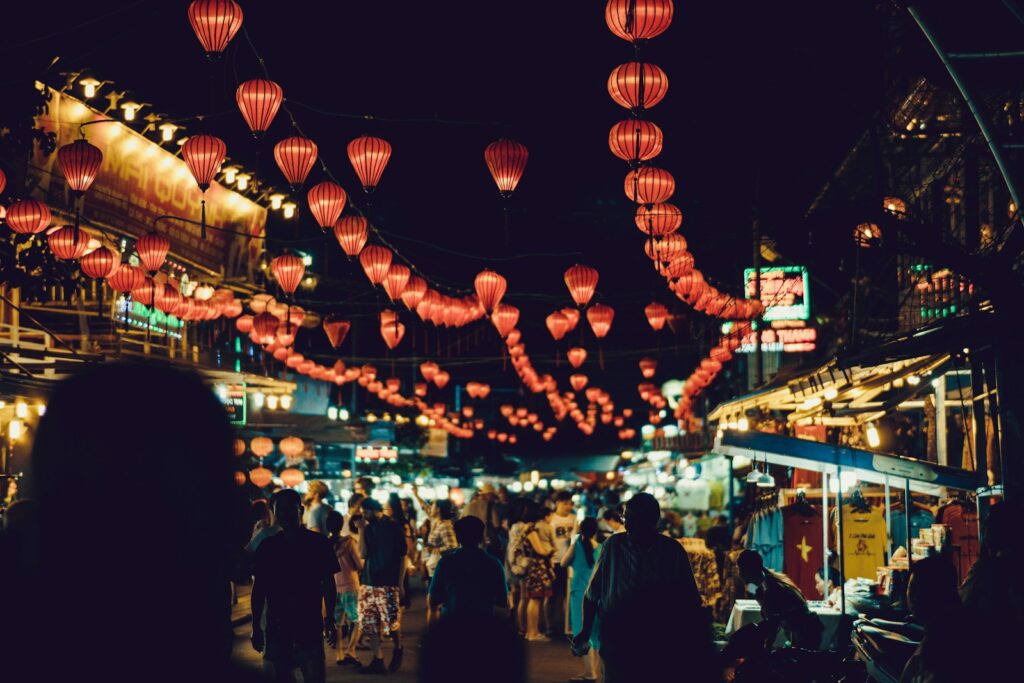
Hoi An, 30 kilometres south of Da Nang, is one of Southeast Asia’s most beautiful small towns a UNESCO World Heritage Site of ancient trading port architecture, lantern-lit streets, and extraordinary tailoring shops. It functions primarily as a base for retirees and remote workers who want beauty and tranquillity over urban infrastructure, with Da Nang close enough for hospital visits and airport access.
Quieter Options — Dalat, Nha Trang, and Beyond
Dalat in the Central Highlands sits at 1,500 metres altitude, giving it a permanently mild climate unlike anywhere else in Vietnam’s tropics. It has attracted a small but growing community of remote workers who appreciate the cool air, the pine forests, the coffee culture, and the dramatically lower costs. Infrastructure is improving but remains limited compared to the major cities.
Nha Trang is a beach resort city that has developed a large Russian expat community alongside a broader international population, with good beach access and lower costs than Da Nang. Can Tho in the Mekong Delta offers a genuinely authentic slow-paced Vietnamese river life at very low cost, with a small but growing interest from those seeking maximum immersion and minimum tourist infrastructure.
Visas and Long-Term Stay Options in Vietnam
Vietnam’s visa system underwent significant liberalisation in 2023 extending the e-visa to 90 days and making it available to virtually all nationalities and the framework remains one of the more accessible in the region for initial entry.
The challenge is that long-term legal residency pathways are primarily designed for employed workers and investors rather than retirees or lifestyle migrants, which requires more creative navigation than comparable countries.
The Vietnam Immigration Department administers all visa and residency matters, and its official e-visa portal is the starting point for most initial applications.
E-Visa (Thị Thực Điện Tử)
The 90-day multiple-entry e-visa is the most accessible and commonly used entry mechanism for most Western nationalities. Available online through the official Vietnam e-visa portal at approximately $25 USD, it provides 90 days of stay with the ability to enter and exit multiple times within the validity period. Processing typically takes three business days.
For many digital nomads using Vietnam as a base, the e-visa provides a workable if informal long-stay mechanism entering on a 90-day e-visa, exiting briefly to a neighbouring country (Thailand, Cambodia, or Laos are convenient options), and re-entering on a fresh 90-day visa.
This approach is tolerated in practice but is not a formal long-term residency strategy, and immigration officers retain discretion to question or restrict re-entry for those who appear to be using it as a permanent workaround.
Temporary Residence Card (TRC — Thẻ Tạm Trú)
The TRC is Vietnam’s primary mechanism for longer-term legal residency and is the document that most serious long-term expats pursue once their initial visa situation is established. It is issued for periods of one, two, or three years depending on the underlying visa category and eliminates the need for frequent border exits and visa renewals.
TRC eligibility is linked to specific visa categories:
- Holders of work visas (LD) sponsored by a Vietnamese employer
- Holders of investor visas (DT) who have made qualifying investments in Vietnam
- Spouses and children of Vietnamese nationals
- Holders of business visas (DN) with appropriate corporate sponsorship
The TRC application is made at the Provincial Immigration Department in the province of residence, requires a sponsoring entity (employer, investment company, or family member), and must be renewed periodically based on the underlying visa duration.
Work Visa (LD) and Work Permit
Foreign nationals employed by Vietnamese companies or organisations require a work visa (LD) linked to a formal work permit (giấy phép lao động) issued by the Ministry of Labour, Invalids and Social Affairs (MOLISA). The work permit certifies that the specific position requires foreign expertise not available from the Vietnamese labour market and must be renewed annually or biennially.
Work permit exemptions apply in specific circumstances foreign lawyers registered with the Vietnamese bar, representatives of foreign NGOs, and certain technical expert categories. The rules are specific enough that professional legal advice on eligibility for exemption is worthwhile before proceeding through the full permit pathway.
Investor Visa (DT) and Business Visa (DN)
The investor visa (DT) is available to foreign nationals who make a qualifying capital contribution to a Vietnamese business entity.
Investment tiers determine the visa validity period and TRC duration available:
| Investment Capital (VND) | Investment Capital (USD approx.) | Visa Validity |
|---|---|---|
| 3 billion – 50 billion VND | ~$120,000 – $2,000,000 | 1 year |
| 50 billion – 100 billion VND | ~$2,000,000 – $4,000,000 | 3 years |
| Above 100 billion VND | Above ~$4,000,000 | 5 years |
The business visa (DN) is the category most commonly used by self-employed expats and those working through their own Vietnamese company structures it requires corporate sponsorship but does not mandate the same capital investment thresholds as the DT visa.
Vietnam visa options summary:
| Visa Type | Who It Suits | Duration | Key Requirement |
|---|---|---|---|
| E-visa | Initial entry, digital nomads | 90 days multiple entry | Online application, $25 fee |
| Work Visa (LD) | Locally employed expats | 1–2 years | Vietnamese employer + work permit |
| Investor Visa (DT) | Investors in Vietnamese businesses | 1–5 years by investment tier | Qualifying capital contribution |
| Business Visa (DN) | Corporate sponsors, business activities | 1 year | Vietnamese sponsoring entity |
| Temporary Residence Card (TRC) | Long-stay residents on qualifying visas | 1–3 years | Underlying eligible visa category |
The Complete Guide
Cost of Living in Vietnam: What to Budget
Vietnam remains one of the most affordable countries in Southeast Asia for expats earning in hard currencies, and even the rising costs of Ho Chi Minh City and Hanoi represent exceptional value by any Western benchmark.
| Category | HCMC — Thao Dien / D1 (Monthly) | Hanoi — Tay Ho (Monthly) | Da Nang (Monthly) | Smaller Cities / Towns (Monthly) |
|---|---|---|---|---|
| Rent — 1 bed serviced apt | $500 – $1,200 | $450 – $1,100 | $300 – $700 | $150 – $400 |
| Rent — 2 bed apartment / villa | $800 – $2,000 | $700 – $1,800 | $500 – $1,200 | $250 – $600 |
| Utilities (electricity, water) | $50 – $150 | $50 – $140 | $40 – $120 | $30 – $90 |
| Groceries (couple, mix local/imported) | $150 – $400 | $140 – $380 | $120 – $300 | $80 – $200 |
| Eating out (mix local and western) | $120 – $400 | $110 – $380 | $90 – $300 | $60 – $180 |
| Transport (Grab, motorbike rental) | $50 – $150 | $50 – $140 | $40 – $120 | $25 – $80 |
| Mobile data and internet | $15 – $40 | $15 – $40 | $15 – $40 | $10 – $30 |
| International health insurance | $80 – $220 | $80 – $220 | $80 – $220 | $80 – $220 |
A single person living comfortably in Thao Dien, Ho Chi Minh City a decent one-bedroom serviced apartment, regular restaurant meals at a mix of local and expat-facing establishments, health insurance, Grab for transport, and entertainment can expect to spend between $1,200 and $2,000 USD per month.
In Hanoi’s Tay Ho area, the equivalent lifestyle costs $1,100 to $1,800. In Da Nang, the same quality of life is achievable for $700 to $1,400 USD. In smaller cities and towns, $500 to $900 covers a comfortable existence.
Vietnam’s street food and local café culture are among the country’s great economic gifts. A bowl of bun bo Hue from a pavement stall costs 30,000 to 50,000 VND (under $2.50). A full Vietnamese coffee the iconic ca phe trung (egg coffee) in Hanoi or a ca phe sua da (iced milk coffee) in Saigon costs 25,000 to 45,000 VND.
A full dinner of multiple dishes at a mid-range Vietnamese restaurant rarely exceeds 150,000 to 300,000 VND per person. Even in the most expat-facing areas of District 2 or Tay Ho, a good meal at a proper restaurant costs a fraction of equivalent dining in a Western city.
Electricity costs deserve specific mention. Vietnam’s electricity tariff is government-managed through EVN (Electricity of Vietnam) but rates for expats in serviced apartments and villas are sometimes charged at a landlord premium. Air conditioning is the dominant utility cost in the tropical climate budget $50 to $150 per month for electricity alone in an air-conditioned HCMC or Hanoi apartment.
The Vietnamese dong (VND) is managed by the State Bank of Vietnam and has historically depreciated slowly against the dollar. For expats converting regular income from abroad, services like Wise provide significantly better exchange rates than Vietnamese bank international transfer services.

Finding Housing: Renting and Buying in Vietnam
Vietnam’s rental market is well-developed and generally accessible for foreign nationals, though the norms particularly around payment terms and deposit arrangements require understanding before you start searching.
Key points for renters:
- The primary property listing platforms are Batdongsan.com.vn (Vietnamese-language, largest national portal), Chotot.com (classified listings), and various international-facing portals including Savills Vietnam for higher-end properties. For expat-specific listings, Facebook groups Expat Housing HCMC, Hanoi Expats Housing, Da Nang Expats are among the most active and current channels.
- Rental contracts in Vietnam typically run for six months to one year, with longer leases available for those who negotiate them. Unlike some Southeast Asian countries, advance full-year payments are not standard monthly or quarterly is the norm.
- Security deposits of one to two months’ rent are standard. Ensure deposit return conditions are clearly written in any agreement and that the landlord’s obligations for deposit return are explicitly documented.
- Utilities electricity (EVN), water (local municipal provider), and internet are typically billed separately from rent and either transferred to the tenant’s name or billed through the landlord at the published tariff rate. Clarify the billing methodology before signing.
- Temporary residence registration (đăng ký tạm trú) all foreign nationals residing in Vietnam are legally required to register their temporary residence with the local police within 24 hours of arrival at a new address. Most landlords in the expat market handle this routinely, but confirming it is explicitly part of the lease arrangement is important, as failure to register creates administrative complications for TRC applications.
Typical housing options:
- Serviced apartments — the dominant expat housing form particularly for new arrivals. Fully furnished with included management, internet, and often utilities, they provide a turnkey solution while you explore longer-term options. Available from approximately $400 in smaller cities to $2,000 and above in premium HCMC and Hanoi locations.
- Villas — popular with families and those who need space and outdoor areas. Available in the villa compounds of Thao Dien and the surrounding Thu Duc area, and in Da Nang’s villa zones near the beach, at prices that are very competitive by international standards.
- Standard apartments — unfurnished or partly furnished apartments in residential buildings are the most economical long-term option and offer the most authentic Vietnamese residential experience.
- Shared housing and co-living — increasingly formalised in Da Nang and parts of HCMC through purpose-built co-living spaces, popular with new arrivals and solo digital nomads building community from scratch.
Buying property in Vietnam:
Foreign nationals can legally own residential property in Vietnam under the Housing Law amendments that took effect from 2015, subject to specific conditions:
- Ownership is limited to 50-year leasehold (renewable for a further 50 years), not freehold permanent ownership
- Foreign ownership in any single condominium building or residential area is capped at 30% of total units or 10% of villas in a zone, to preserve community character in residential areas
- Foreigners must hold a valid visa or residence permit to qualify for purchase
- Land use rights (the underlying land) cannot be owned by foreigners only the structure built upon it
The process involves notarised sale and purchase agreements, registration with the local land registry, and payment of applicable transfer taxes. Engaging an independent Vietnamese property lawyer for due diligence and transaction management is essential. The Vietnam Bar Federation provides a directory of registered practitioners.
Healthcare and Medical Services in Vietnam
Vietnam’s private healthcare sector has developed considerably over the past decade, particularly in Ho Chi Minh City and Hanoi, and delivers routine and increasingly complex medical care at costs that are dramatically lower than equivalent treatment in Western countries.
The challenge remains specialist capability for complex conditions, for which evacuation to Bangkok, Singapore, or further afield is still the practical protocol for those with adequate insurance.
The public hospital system administered by the Ministry of Health provides care for the Vietnamese population and is accessible to foreigners in emergency situations, but resource constraints and language barriers make it unsuitable for most expat routine healthcare needs. The private sector is the practical default for all expat medical interaction beyond emergencies.
Leading private healthcare providers serving expats:
- Vinmec International Hospital — the flagship of the Vietnamese Vingroup conglomerate’s healthcare division, with hospitals in Hanoi, Ho Chi Minh City, Da Nang, and several other cities. Modern facilities, English-speaking physicians, and comprehensive specialist capabilities across most medical disciplines. vinmec.com/en
- Hoan My Medical Corporation — one of Vietnam’s largest private hospital networks, with facilities in HCMC, Da Nang, and other major cities. Popular with the local middle class and expat community for general and specialist care.
- Columbia Asia Hospital (Ho Chi Minh City) — international-standard private hospital in District 7, well-regarded by the HCMC expat community for English-language service and consistent quality.
- Hanoi International Hospital — the primary international-standard private hospital in the capital, with comprehensive general and specialist services and English-speaking medical staff.
- Thu Cuc International Hospital (Hanoi) — respected private facility popular with the Hanoi expat and diplomatic community
- Family Medical Practice — a clinic network operating in HCMC, Hanoi, and Da Nang that caters specifically to the expat community with GP services, routine specialist consultations, and English-language care as a core offering. vietnammedicalpractice.com
International health insurance is essential for all expats in Vietnam. The combination of limited public system accessibility for foreigners and the real risk of requiring medical evacuation to Thailand or Singapore which costs $20,000 to $50,000 or more without insurance makes adequate coverage with an evacuation benefit non-negotiable.
Recommended providers include Cigna Global, Pacific Cross (strong regional network coverage), AXA International, Bupa Global, and SafetyWing for more budget-conscious profiles. Annual premiums for an individual in their 40s typically run $1,000 to $2,500 depending on coverage level and evacuation inclusion.
The Complete Guide
Taxes, Banking, and Money in Vietnam
The Vietnamese Tax System
Vietnam taxes residents on worldwide income once tax residency is established. Tax residency is triggered by residing in Vietnam for 183 days or more in a calendar year, or by maintaining a regular place of abode in Vietnam for the full year. The General Department of Taxation (GDT) administers the system.
Vietnamese personal income tax for residents operates on a progressive scale:
| Monthly Taxable Income (VND) | Annual Equivalent (VND) | Tax Rate |
|---|---|---|
| 0 – 5,000,000 | 0 – 60,000,000 | 5% |
| 5,000,001 – 10,000,000 | 60,000,001 – 120,000,000 | 10% |
| 10,000,001 – 18,000,000 | 120,000,001 – 216,000,000 | 15% |
| 18,000,001 – 32,000,000 | 216,000,001 – 384,000,000 | 20% |
| 32,000,001 – 52,000,000 | 384,000,001 – 624,000,000 | 25% |
| 52,000,001 – 80,000,000 | 624,000,001 – 960,000,000 | 30% |
| Above 80,000,000 | Above 960,000,000 | 35% |
Foreign-source income income earned from employers or clients based entirely outside Vietnam is a complex area. In principle, resident taxpayers are liable for tax on worldwide income.
In practice, enforcement of tax on foreign-source income for expats on e-visas or short-stay arrangements has been inconsistent, but this is an area of increasing regulatory attention and professional tax advice is essential for anyone with meaningful foreign income and plans for long-term residency.
Vietnam has double taxation agreements with approximately 80 countries, including the United States, United Kingdom, Australia, Germany, France, and most major expat-origin nations.
The specific treaty provisions determine how different income streams are treated between jurisdictions, and the interaction between these treaties and Vietnamese domestic tax law requires professional navigation reputable tax advisory firms with Vietnam operations include KPMG Vietnam, Deloitte Vietnam, and several boutique expat-specialist firms in HCMC and Hanoi.
Banking in Vietnam
Opening a Vietnamese bank account requires a valid passport and either a work permit, TRC, or at minimum a long-stay visa tourist visa holders technically cannot open standard accounts at most banks, though implementation varies.
The major banks serving the expat community include:
- Vietcombank (Bank for Foreign Trade of Vietnam) — the largest and most internationally connected Vietnamese bank, with the best infrastructure for international transfers and foreign currency accounts. Generally considered the most practical option for expats. vietcombank.com.vn
- Techcombank — Vietnam’s leading private commercial bank with excellent digital banking infrastructure and a modern mobile app experience
- ACB (Asia Commercial Bank) — well-regarded private bank with good English-language service in expat-facing branches
- BIDV (Bank for Investment and Development of Vietnam) — large state-owned bank with comprehensive branch coverage
- TPBank — newer, digitally focused bank popular with younger Vietnamese and the digital nomad community for its streamlined app experience
Vietnam’s digital payment ecosystem is maturing rapidly:
- MoMo — Vietnam’s dominant mobile wallet, with over 31 million users and acceptance at most merchants, utility payments, and government services. momo.vn
- ZaloPay — integrated into the Zalo messaging app (Vietnam’s equivalent of WhatsApp, used by virtually every Vietnamese smartphone user), providing payment capabilities within the app environment
- VNPay — QR code payment system used across banking apps and increasingly at point of sale
Vietnam is still a predominantly cash economy for many transactions, particularly in markets, local restaurants, and smaller establishments. ATMs are widely available in major cities Vietcombank ATMs offer the most reliable international card acceptance but carry a transaction fee of approximately 50,000 to 90,000 VND per withdrawal. Maintaining adequate cash on hand for daily spending remains a practical necessity.
Work, Teaching, and Remote-Work Opportunities
Vietnam’s employment landscape for expats operates across the formal local job market which requires a work permit linked to a sponsoring Vietnamese employer and the growing remote work economy, which operates primarily through the e-visa framework with the additional legal complexity that formal remote worker permits do not yet exist.
Common expat employment paths:
- English teaching remains the most accessible formal employment pathway for expats without specialist qualifications. The Vietnamese government school system hires foreign English teachers, and the private English language centre market dominated by chains including VUS, Wall Street English, Apax English, and various international brands creates a large and consistently renewing market. International schools in HCMC and Hanoi pay significantly higher salaries ($2,000 to $4,000 USD per month for qualified teachers) and typically provide visa and housing support.
- Corporate and professional roles at multinational companies with Vietnamese operations manufacturing, logistics, retail, finance, and technology employ foreign nationals in management and specialist roles through formal work permit arrangements.
- NGO and development sector Vietnam hosts significant operations from major international organisations including UN agencies, bilateral development missions, and international NGOs, concentrated in both Hanoi and HCMC.
- Startup and tech sector Vietnam’s technology ecosystem has grown substantially, centred in HCMC’s District 1 and District 2 and in Hanoi’s tech corridors, creating opportunities for technically qualified expats particularly in product and engineering roles.
- Remote work and digital nomad income for those working for foreign employers or clients on the e-visa framework, Vietnam provides an excellent practical base. There is no formal legal framework for this activity and the regulatory grey area requires awareness, but it is the reality for many thousands of expats who live productively in Vietnam under the current system.
Coworking spaces:
- The Factory (Ho Chi Minh City, District 2) — a well-established creative and coworking hub popular with the HCMC digital nomad and startup community. thefactory.vn
- Up Coworking (Ho Chi Minh City, multiple locations) — well-equipped coworking network with professional facilities and a strong startup community
- Toong (Hanoi and HCMC, multiple locations) — Vietnam’s largest homegrown coworking network, reliable and well-managed
- AN Coworking (Da Nang) — well-regarded in Da Nang’s growing digital nomad community for reliable internet and community atmosphere
- Enouvo Space (Da Nang) — popular community-oriented coworking space in the An Thuong area

Day-to-Day Life: Language, Culture, and Integration
Vietnamese is one of the more challenging languages for English speakers, and the honest answer to “how much Vietnamese do I need?” is: more than you might hope, and less than you fear. English proficiency in Ho Chi Minh City and Hanoi particularly among younger people and in the service sector is improving rapidly and genuinely functional in most expat-facing contexts. In smaller cities and provinces, it drops off significantly.
Vietnamese is a tonal language with six tones in the northern dialect and five in the southern, each of which changes the meaning of a word entirely. The tonal system is the primary barrier for most English speakers, and getting it wrong produces meanings entirely different from what was intended with results ranging from mild confusion to genuine social embarrassment.
The script, however, uses the Latin alphabet (romanised as Quốc ngữ since the colonial period) which means there is no new writing system to learn, and basic reading of signs, menus, and addresses is achievable quickly.
Even modest Vietnamese greetings, numbers, polite address terms (the Vietnamese pronoun system is complex and using the correct form is important for respectful interaction), basic requests transforms daily life. Vietnamese people are notably enthusiastic about foreigners who attempt the language, and the social dividend of minimal Vietnamese effort is disproportionately large.
Resources for learning Vietnamese:
- University of Social Sciences and Humanities (Vietnam National University) offers Vietnamese language programmes for foreigners in both HCMC and Hanoi campuses
- Private language centres in HCMC and Hanoi offer structured instruction specifically for expats Saigon Language School and Hanoi Language Link are well-regarded
- Apps including Pimsleur (Vietnamese module), Duolingo, and Glossika provide accessible daily practice Pimsleur is particularly useful for tonal pronunciation practice
- Language exchange through Tandem and HelloTalk connects you with Vietnamese speakers learning English
Culturally, Vietnam is shaped by thousands of years of Chinese cultural influence Confucian values of filial piety, respect for hierarchy, and community over individualism are deeply embedded combined with a fierce national independence that has defined the country’s modern history.
Respect for elders is genuine and observable in daily interactions: using both hands when giving or receiving objects, deferring to older people in conversation, and addressing people with appropriate honorifics are basic courtesies that matter.
Key festivals and public holidays expats should experience:
- Tết Nguyên Đán (Vietnamese Lunar New Year, late January or early February) the most important festival in the Vietnamese calendar, celebrating the lunar new year with family gatherings, dragon dances, fireworks, and the widespread giving of red envelopes (lì xì). Ho Chi Minh City and Hanoi both largely shut down for the core Tết period as people return to their home provinces plan accordingly for both the cultural richness and the logistical reality of reduced services.
- Mid-Autumn Festival (Tết Trung Thu) a children’s festival in mid-September celebrating the full moon with lantern processions, mooncakes, and dragon dances. One of the most visually charming events in the Vietnamese calendar.
- Hue Festival a biennial festival (even years) in the former imperial capital, showcasing traditional Vietnamese performing arts, court music, and cultural ceremonies that are genuinely extraordinary in scale and quality.
- Reunification Day April 30th, commemorating the end of the Vietnam War in 1975. A national public holiday observed with genuine ceremony.
Joining expat Facebook groups Expats in Ho Chi Minh City, Hanoi Massive, Da Nang Expats provides the most current and practically useful community knowledge. Most long-term Vietnam expats are generous with advice, and the accumulated practical knowledge about visa agents, landlords, schools, and healthcare that circulates in these communities is genuinely valuable.
Transport, Safety, and Environment
Getting Around Vietnam
Vietnam’s transport landscape is defined by the motorbike approximately 67 million registered motorcycles in a country of 97 million people, a ratio that explains the character of traffic in every Vietnamese city. Understanding this before arrival prevents significant shock.
Within cities:
- Grab — the dominant ride-hailing app across Vietnam, providing motorbike (GrabBike), car (GrabCar), and food delivery services. Essential for anyone who does not ride a motorbike and the practical transport solution for most daily journeys in HCMC and Hanoi. grab.com/vn
- Motorbike rental — the transport mode of choice for most long-term expats who are comfortable on two wheels. Monthly rental rates run approximately $30 to $80 USD for a basic scooter. Always wear a helmet it is legally required and practically essential given traffic conditions. Riding without helmet risks a fine and significantly greater physical risk.
- Xe ôm (motorcycle taxi) — the traditional motorbike taxi using independent drivers, now largely displaced by Grab in major cities but still operating in smaller towns and older residential areas
- Public buses — available in both HCMC and Hanoi at very low cost (around 6,000 to 7,000 VND per journey) but slow and navigating the routes requires Vietnamese language capability or significant research
Between cities:
- Vietnam Railways — the Reunification Express (Tàu Thống Nhất) runs the full length of Vietnam from Hanoi to Ho Chi Minh City, approximately 1,700 kilometres in 30 to 36 hours on the fastest service. Comfortable sleeper berths are available on overnight services and provide a genuinely beautiful way to experience the country’s length. Booking through Vietnam Railways or third-party platforms like Baolau is recommended for confirmed seats.
- Domestic flights — Vietnam Airlines, VietJet Air, and Bamboo Airways serve all major domestic routes at competitive fares when booked in advance. The HCMC to Hanoi route a 2-hour flight compared to 36 hours by train is heavily trafficked and essential for business travel. vietjetair.com
- Intercity coaches (xe khách) — comfortable sleeper coaches operated by companies including Phương Trang (FUTA) and Kumho Samco connect cities and towns across Vietnam at very low cost, serving routes the trains do not cover.
Safety
Vietnam is generally safe for expats exercising ordinary awareness, and violent crime targeting foreigners is uncommon by regional standards.
The most frequently reported issues are:
- Traffic accidents — the most significant practical safety risk for virtually all Vietnam-based expats, particularly motorbike riders. Vietnam’s road fatality rate is high. Defensive riding, consistent helmet use, sobriety on two wheels, and avoidance of night riding in unfamiliar areas reduces risk but does not eliminate it.
- Bag snatching from motorbikes — common in Ho Chi Minh City, where thieves operating from moving motorbikes snatch bags, phones, and cameras from pedestrians and other riders. Keeping bags on the body side away from the road, avoiding visible phone use while walking, and using inside pockets significantly reduces exposure.
- Scams — taxi overcharging (using Grab eliminates this entirely), currency exchange fraud, and tourist-area commission scams. Using Grab for all taxi needs and official cambio services for currency exchange addresses the majority of reported scam types.
- Petty theft in crowded markets, tourist areas, and on public transport
Your home country embassy the US Embassy in Hanoi, British Embassy Hanoi, and relevant missions maintains current safety advisories and emergency contact information.
Climate and Environment
Vietnam’s climate varies significantly by region. The south (HCMC and the Mekong Delta) is tropical with two seasons a hot dry season (November to April) and a wet season (May to October) with heavy afternoon rainfall.
The central coast (Da Nang, Hoi An) has a more variable pattern, with a typhoon season from September to December and a dry season from January to August. The north (Hanoi, Sapa) has four genuine seasons cool winters, warm springs, hot and humid summers, and pleasant autumns.
Air quality in Hanoi is the most serious environmental health concern for Vietnam-based expats. The city consistently records some of the worst air quality readings in Southeast Asia during autumn and winter. Monitoring through IQAir Vietnam and investing in a quality HEPA air purifier for home use is strongly advisable for Hanoi residents.
Drinking tap water anywhere in Vietnam is unsafe. Bottled water (La Vie and Dasani are the most widely available trusted brands) or a quality filtration system is essential. Dengue fever is endemic and mosquito bite prevention is sensible year-round, with risk elevated during and immediately after the wet season.
The Complete Guide
Bureaucracy, Pitfalls, and Expat Mistakes to Avoid
Vietnam’s administrative system is functional but characterised by paperwork volume, inconsistent rule application, and a pattern of policy changes that are sometimes announced with limited advance notice. The framework was designed primarily for employed workers and investors rather than lifestyle expats, which means those outside those categories must navigate carefully.
Common bureaucratic friction points:
- Work permit applications require extensive documentation educational qualifications (apostilled), professional experience certificates (notarised and legalised), criminal background checks and the process from initial application to permit issuance takes four to eight weeks in straightforward cases
- TRC applications require a Vietnamese sponsoring entity and cannot be self-sponsored, which creates dependency on an employer or company structure that must be maintained for the TRC to remain valid
- Temporary residence registration at local police stations must be completed within 24 hours of moving to a new address landlords in the expat market typically handle this, but confirming it is being done correctly matters for TRC and work permit applications
- Visa rule changes and enforcement interpretations shift with limited public notice following active expat Facebook groups and specialist immigration lawyers’ updates is the most reliable way to stay current
The most consequential expat mistakes:
- Overstaying your e-visa or visa. Vietnam’s overstay penalties include fines, deportation, and entry bans. The 90-day e-visa is genuinely 90 days there is no standard extension mechanism. Track your visa expiry carefully and plan border exits or new applications with adequate buffer.
- Assuming e-visa re-entry is indefinitely available. Immigration officers at Vietnamese entry points retain discretion to question or deny re-entry to individuals who appear to be using repeated e-visa entries as a permanent residency workaround without a proper long-stay visa. Those planning to stay in Vietnam long-term should pursue the appropriate visa category work visa, investor visa, or business visa rather than relying indefinitely on e-visa cycles.
- Signing a lease without written deposit terms and explicit temporary residence registration obligations. Verbal agreements about deposit conditions are unenforceable. Ensure the contract explicitly documents both the deposit amount and return conditions, and confirms the landlord’s obligation to complete temporary residence registration.
- Not arranging private health insurance before arrival. Medical costs for serious incidents in Vietnam particularly evacuation to Bangkok or Singapore are financially devastating without adequate coverage. This is the most consequential financial mistake expats in Vietnam make.
- Working on a tourist or business visa without a work permit. Vietnam’s Ministry of Labour enforces work permit requirements, and working without one carries fines and deportation risk. For remote workers earning from outside Vietnam, the regulatory situation is less clear but professional advice on the current enforcement environment is worthwhile for those planning a long-term stay.

Checklist: Step-by-Step Before You Move to Vietnam
Six to three months before departure:
- Determine your visa pathway: based on your income source and planned length of stay e-visa for initial exploration and short-term digital nomad stays, work visa (LD) for local employment, investor visa (DT) if establishing a Vietnamese business, business visa (DN) for corporate sponsorship arrangements
- Gather required documents: passport with at least 12 months of validity (18 months preferred), passport photographs, criminal background check from your home country (apostilled for work permit applications), educational and professional qualifications (notarised and legalised for work permit applications), and proof of income or financial means
- If applying for a work permit: begin gathering educational qualification documentation and professional experience certificates the apostille and legalisation chain takes time, particularly for documents from multiple countries
- Research target city and neighbourhood based on lifestyle priorities, required infrastructure, and commute considerations
- Arrange comprehensive international health insurance: covering Vietnam with a medical evacuation benefit do not arrive without this
- Apply for your e-visa: through the official portal if using this for initial entry processing takes three business days and costs approximately $25 USD
One to two months before departure:
- Book temporary accommodation for the first four to eight weeks serviced apartments in Thao Dien or Tay Ho, Airbnb in Da Nang, or guesthouses in smaller cities allow in-person neighbourhood research before committing to a longer lease
- Research international schools if relocating with children HCMC and Hanoi international schools have waiting lists that open well in advance
- Arrange any prescription medications for at least three months’ supply most common medications are available in Vietnamese pharmacies (many without prescription requirements that apply at home) but specific brand availability varies
- Join the key expat Facebook groups for your target city Expats in Ho Chi Minh City, Hanoi Massive, Da Nang Expats, and city-specific housing groups provide current, practically useful community knowledge that no guide can fully substitute
- Set up Wise for receiving income from abroad and converting to VND the rate differential versus Vietnamese bank international transfer services is significant over time
- Prepare a cash buffer of $2,000 to $4,000 USD equivalent for initial setup costs
Arrival week:
- Obtain a local SIM card at the airport: Viettel (widest national coverage), Vinaphone, and Mobifone all offer competitive data plans; a monthly SIM with substantial data costs approximately 100,000 to 200,000 VND ($4 to $8)
- Download and set up Grab: before or immediately after landing you will need it from the airport and for virtually every journey thereafter
- Complete temporary residence registration: at your accommodation address confirm your landlord is handling this within the legally required 24-hour window
- Begin the Vietnamese bank account: opening process once your visa status is confirmed bring your passport and visa documentation to a Vietcombank or Techcombank branch
- Set up MoMo for daily local payments: registration requires a Vietnamese phone number and can be completed quickly after SIM purchase
- Begin the neighbourhood walk-around in your target area: visiting serviced apartments and residential buildings in person, sitting in local cafés, and talking to expats in coworking spaces gives ground-level knowledge that no amount of online research can provide
- Connect with a reputable local immigration lawyer or visa agent: for work permit or TRC planning if your stay will exceed the e-visa window recommendations circulate actively in the expat Facebook community
Conclusion — Is Moving to Vietnam Right for You in 2026?
Vietnam in 2026 is a country of genuine tension between its extraordinary appeal and its administrative complexity. There is no retirement visa, no formal digital nomad permit, and no clean pathway to indefinite legal residency for lifestyle migrants who do not invest, employ themselves through a Vietnamese company, or find local employment. That is a real limitation and worth acknowledging clearly.
And yet the country that these limitations protect access to is remarkable. The cost of living that allows a genuinely rich life on a modest income. The food culture the pho, the banh mi, the bun bo, the ca phe that is so embedded in daily life and so consistently excellent that it becomes a source of genuine daily pleasure rather than novelty.
The energy of Ho Chi Minh City, which is unlike any other city in Southeast Asia in its velocity and ambition. The calm of Hanoi’s Hoan Kiem Lake at dawn. The beach at Da Nang on a quiet Tuesday morning. The extraordinary landscape that stretches across the entire length of the country.
The expats who thrive in Vietnam are those who approach the administrative complexity with patience and professional support, who invest enough in the language to navigate daily life with dignity and genuine connection, and who engage with the culture its festivals, its food, its history, its people rather than retreating into the considerable comfort of the expat bubble that both major cities provide.
For digital nomads who want low costs and high stimulation. For English teachers building international careers. For entrepreneurs who see opportunity in a rapidly developing economy. For lifestyle migrants who have decided that richness of daily experience matters more than administrative convenience.
For all of these people, Vietnam in 2026 delivers something that is genuinely difficult to find at anything approaching the same price point: a life of real depth, real beauty, real community, and real daily pleasure.
The visa is navigable. The language opens gradually. The traffic becomes background. And on the other side of the initial complexity is a country that rewards sustained engagement with a generosity human, cultural, and culinary that most of its expats find, once experienced, very hard to give up.