Moving to Malta in 2026: The Complete Guide for Expats, Retirees and Digital Nomads
There is a particular kind of expat who ends up in Malta and cannot quite explain why they waited so long. The island was always there a compact, sun-baked archipelago in the middle of the Mediterranean, EU member since 2004, English-speaking since the British colonial period, and possessed of a cultural history that stretches back over seven thousand years.
But for much of its recent past, Malta operated below the radar of the internationally mobile professional class, overshadowed by the sunnier reputations of Spain, Portugal, and Italy.
That has changed substantially. The combination of a well-structured digital nomad visa, a growing iGaming and financial services sector, a Global Residence Programme for retirees and investors, and the practical advantage of English as a co-official language has positioned Malta as one of the most genuinely accessible EU residency options available to non-European nationals.
The Nomad Residence Permit, in particular, is now one of the cleaner and better-administered digital nomad visa programmes in Europe, with clear income thresholds, a reasonable application fee, and a processing time that compares favourably with comparable programmes in Portugal, Greece, and Croatia.
Malta is not a place for everyone, and this guide will be honest about its limitations as well as its strengths. But for the right profile of expat the remote worker seeking Mediterranean climate and EU access, the retiree wanting warmth and English-speaking services, the investor looking for a stable EU base it delivers more than its modest geographical footprint suggests.
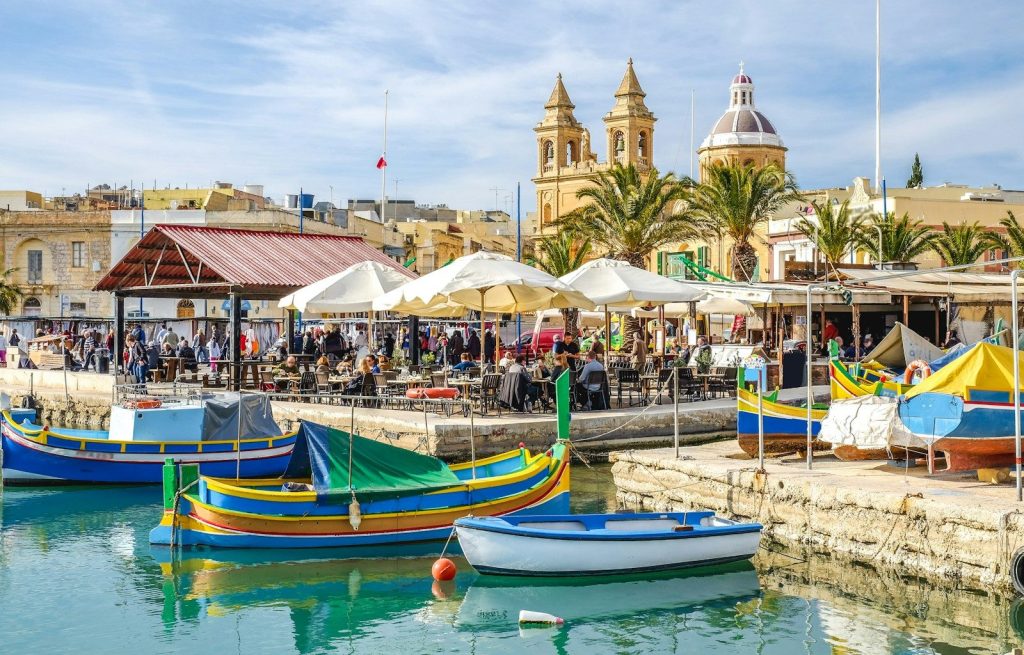
Is Malta Right for You?
The country fits several distinct profiles very well, and being clear about which one you are before diving into the details will help you use this guide more effectively.
Retirees from outside the EU particularly British nationals post-Brexit, Australians, Canadians, and Americans find Malta among the most accessible EU residency pathways available to them.
The Global Residence Programme (GRP) and the Malta Retirement Programme (MRP) both provide structured pathways for retirees with pension income, and the English-speaking environment means that healthcare, legal, banking, and administrative interactions can all be managed without language barriers.
The year-round warmth and the relative affordability compared to western European capitals make the island genuinely comfortable on a pension income.
Digital nomads and remote workers who are non-EU nationals have a dedicated and functioning pathway through the Nomad Residence Permit, which requires a minimum gross income of €42,000 per year and employment with a foreign-registered employer or clients. The combination of solid fibre broadband, a growing co-working scene, and an expat community with genuine critical mass makes the remote working infrastructure functional and social.
EU and EEA citizens can move to Malta freely, register with the authorities, and work or establish businesses without any visa process. For EU professionals in sectors like iGaming, fintech, and financial services all of which have substantial operations in Malta the island offers a genuinely active job market at Mediterranean conditions.
Families with children find Malta workable, particularly given the international school sector and the bilingual English-Maltese public education system. The caveat is that Malta is small, and family life on an island without the scale of a major European city requires some adjustment in terms of activities, socialising, and the range of services available.
The honest limitations are worth addressing directly. Malta is an island, and island constraints are real: limited space, limited diversification of landscape, traffic congestion in the main coastal corridor, and a summer tourist season that raises prices, fills restaurants, and makes the quieter residential rhythms of winter feel like a different country.
Housing in the most desirable areas has become noticeably more expensive over the past several years. And the bureaucratic systems, while improving with digitisation, still carry friction points that require patience and, in some cases, professional support.

The Complete Guide
Malta’s Main Regions and Best Places to Live
Malta’s compact size 27 kilometres by 14.5 kilometres means that the island is entirely driveable in about 45 minutes, and the choice of neighbourhood is therefore more about lifestyle and price point than about access to different parts of the island. That said, the differences between areas are genuine and matter significantly for daily life.
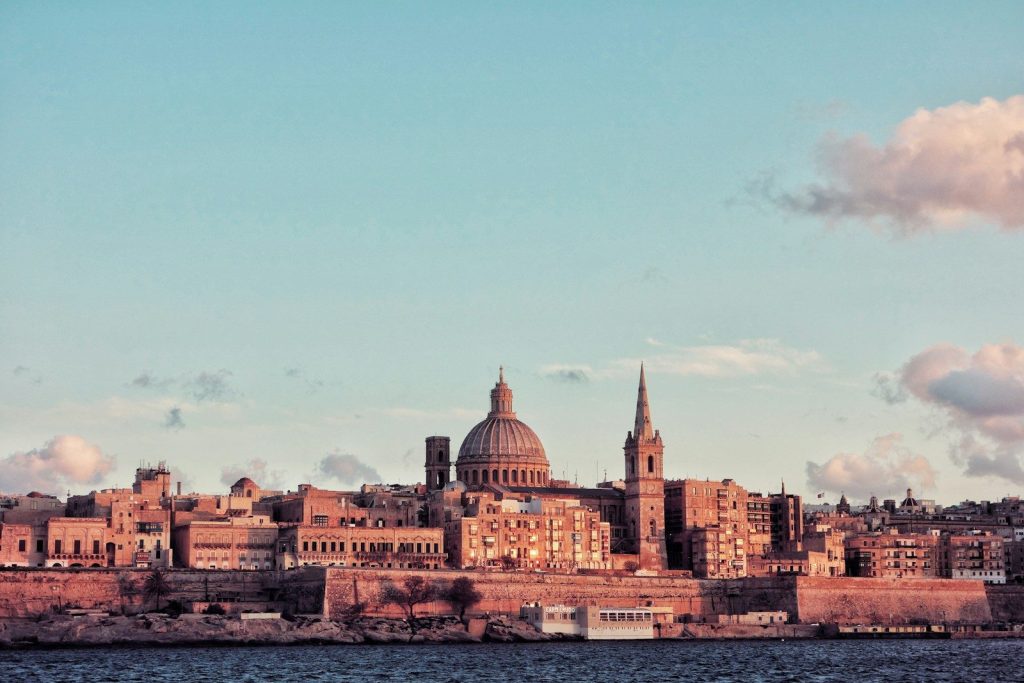
Valletta and Floriana form Malta’s historic heart. Valletta a UNESCO World Heritage Site and one of the smallest and most architecturally coherent capital cities in Europe is a concentrated experience of Baroque urban design, with the Grand Harbour on one side and Marsamxett Harbour on the other.
Living in Valletta means living inside one of Europe’s great heritage cities, with government offices, museums, restaurants, and cultural institutions on your doorstep. It is not the best choice for families needing space, but for professionals and lifestyle migrants who value cultural immersion and walkability over square footage, it is extraordinary.
Sliema and St. Julian’s are the commercial and social hub of Malta’s expat and tourist-facing economy. The waterfront promenade in Sliema faces Valletta across Marsamxett Harbour and is lined with cafés, restaurants, and international retail. St. Julian’s particularly the Paceville entertainment district and the Portomaso Marina development is the centre of Malta’s nightlife and its most cosmopolitan urban experience.
These areas command the highest rents on the island and carry the highest density of both residents and tourists. For digital nomads who want co-working spaces, international social scenes, and reliable connectivity in a seafront setting, this corridor is the default landing point.
Msida, Ta’ Xbiex, and Gżira represent the value alternative to Sliema that an increasing number of more budget-conscious expats are discovering. Gżira in particular sits seven minutes on foot from the Sliema promenade and ten minutes from the Valletta ferry crossing, with rents typically 20 to 35 percent below equivalent Sliema properties.
A one-bedroom apartment in Sliema or St. Julian’s typically costs €1,100 to €1,500 per month, while in Gżira and Msida the equivalent costs €750 to €1,100. Ta’ Xbiex, with its marina frontage and quiet residential character, has long been popular with diplomatic families and established expats who want proximity to Valletta and Sliema without the tourist density.
Mellieħa and the Northern Towns offer a slower, more family-oriented experience. Mellieħa in particular has excellent beaches Mellieħa Bay is the largest sandy beach on the island a strong community feel, and a residential market that is meaningfully more affordable than the south-eastern coastal corridor. The tradeoff is distance from the commercial centre, though on an island this small, “distance” is relative Sliema is about 25 minutes by car.
Gozo and Comino are a different proposition entirely. Gozo, accessible by ferry from Cirkewwa (approximately 25 minutes), is Malta’s sister island, smaller and considerably more rural. The pace of life is genuinely different from the main island, and the landscape stone-built villages, rolling farmland, dramatic coastline has an authentic charm that the developed coastal strip of Malta proper sometimes lacks.
Rents in Gozo typically run €500 to €750 per month for a one-bedroom apartment roughly half the cost of equivalent property in Sliema making it genuinely attractive for remote workers and retirees who do not need the services and social density of the main island. The practical limitation is the ferry dependency for accessing the main island’s healthcare, airport, and services.
Visas, Residency and Long-Stay Options
Malta’s immigration framework offers a notably varied set of pathways for different profiles of newcomer, and the options have expanded and matured considerably since 2020.
EU, EEA, and Swiss citizens can relocate freely to Malta, register with Identità (formerly Identity Malta Agency) as residents within three months of arrival, and work or establish businesses without any visa requirement. The registration process involves registering at the local council (Kunsill Lokali) and obtaining an eResidence card. For EU citizens, Malta is one of the most administratively straightforward EU member states to register in.
The Malta Nomad Residence Permit is the dedicated pathway for non-EU, non-EEA, and non-Swiss remote workers. The permit requires a minimum gross annual income of €42,000 approximately €3,500 per month from remote employment with a foreign-registered employer, from a business or partnership registered outside Malta, or from freelance and consulting services provided to clients whose permanent establishments are outside Malta.
Critically, permit holders cannot work for Maltese employers or serve Maltese clients the permit is specifically structured for income generated entirely outside Malta.
The permit is issued for one year initially and can be renewed up to three times, allowing a total residence period of up to four years, provided the holder spends at least five months in Malta during each validity period. Family members including spouse or partner and dependent children can be included in the application.
The application fee is €300 per person, with an additional €100 for the physical residence card issued by Identità. Applications are submitted through the Residency Malta Agency’s online portal at residencymalta.gov.mt, and processing typically takes four to six weeks.
A notable tax feature: Nomad Residence Permit holders are exempt from Maltese income tax on their foreign-sourced income for the first twelve months of residence. After that period, remitted income may qualify for a flat 10 percent tax rate, compared to the standard progressive rate of up to 35 percent for other residents. This makes the permit one of the more financially attractive digital nomad schemes in the EU.
The Global Residence Programme (GRP) is Malta’s primary residency pathway for retirees and passive income recipients from non-EU countries. It requires either purchasing a property in Malta at a minimum value (€275,000 in most areas, €220,000 in the south of Malta or Gozo) or renting at a minimum annual rate (€9,600 in most areas, €8,750 in the south or Gozo), and the payment of a minimum annual tax of €15,000 on foreign-sourced income remitted to Malta.
GRP holders benefit from a flat 15 percent tax rate on income remitted to Malta. Full current details are maintained by Residency Malta Agency.
The Malta Retirement Programme (MRP) is specifically designed for EU, EEA, and Swiss nationals who have retired and wish to establish Malta as their primary residence. It similarly requires accommodation and a minimum annual Malta tax payment, and it offers the flat 15 percent rate on remitted foreign pension income.
The Single Permit covers employment-based residency for non-EU nationals with a job offer from a Malta-registered employer. Applications are submitted to Identità (Malta’s national identity and registration authority, formerly Identity Malta Agency), and the process typically takes two to three months. For skilled professionals in iGaming, finance, or technology, employer-sponsored Single Permit applications are the standard route.
Cost of Living in Malta: What to Budget
Malta occupies a middle position in the European cost-of-living spectrum. It is considerably more affordable than London, Paris, Amsterdam, or Copenhagen, but more expensive than Portugal’s interior towns, Central European cities, or rural Spain. The overall cost of living for a single expat in Malta ranges from approximately €1,300 to €2,200 per month, depending on location and lifestyle, with rent being the dominant variable.
The table below gives a working monthly budget for a single professional across three location tiers.
| Expense Category | Gozo / Southern Malta | Msida / Gżira / Birkirkara | Sliema / St. Julian’s |
|---|---|---|---|
| Rent (1-bed apartment) | €500 – €750 | €750 – €1,100 | €1,100 – €1,500 |
| Utilities (electricity, water, internet) | €80 – €130 | €100 – €160 | €120 – €180 |
| Groceries | €200 – €280 | €250 – €320 | €280 – €380 |
| Transport (bus pass or partial car use) | €100 – €250 | €50 – €150 | €50 – €120 |
| Dining out (moderate frequency) | €150 – €250 | €200 – €350 | €300 – €500 |
| Private health insurance | €80 – €120 | €80 – €150 | €100 – €180 |
| Leisure / gym / social | €100 – €200 | €150 – €250 | €200 – €400 |
| Approximate Monthly Total | €1,210 – €1,980 | €1,580 – €2,480 | €2,150 – €3,260 |
Several specific costs deserve individual comment. Malta’s public bus pass (the Tallinja card) costs just €26 per month for unlimited travel one of the cheapest in Europe. However, bus routes outside the main Sliema-Valletta-Buġibba corridor are unreliable, and many expats find that a car becomes practically necessary within their first few months, particularly if they are not living in the central coastal strip.
Car insurance for a new arrival with no local claims history is substantially more expensive than many expect a comprehensive policy can cost €400 to €800 per year, rising to €1,200 or more for younger drivers.
Electricity costs carry a specific local quirk worth knowing. Malta uses a tiered tariff system that penalises heavy consumption. During the summer months June through September air conditioning is not optional in most apartments, and electricity bills rise sharply.
Combined utilities including electricity, water, and internet typically cost €80 to €160 per month on average, but summer months can push this considerably higher if air conditioning runs continuously in an inefficient apartment. If your landlord has not filed the appropriate household declaration with ARMS (the utility company), you may be billed at the more expensive domestic tariff rather than the residential rate always check your first bill carefully.
Internet connectivity is genuinely good. The three main providers GO, Melita, and Epic all offer fibre connections up to 2.5 Gbps with monthly costs of €25 to €45 for a standard 100 Mbps or above package. Mobile data is similarly affordable, and 5G coverage is available across the main populated areas.
The Complete Guide
Finding Housing: Renting vs Buying
The Malta rental market is active and moves quickly. A one-bedroom apartment in Gozo costs €500 to €700 per month roughly half the cost of an equivalent apartment in Valletta or Sliema. The national average for a one-bedroom apartment sits around €900 per month, but as the budgeting table above illustrates, the variance between areas is dramatic. Good apartments in popular areas particularly Sliema, St. Julian’s, and the Gżira-Msida corridor are let within 24 to 48 hours of listing, and hesitation can cost you the property.
Standard lease terms in Malta are typically one year, renewable. Deposits are usually one to two months’ rent. Agency fees where a property agent is used are commonly split between landlord and tenant, though practice varies and is worth clarifying before engaging. Furnished apartments are the norm rather than the exception in Malta, particularly in the expat-oriented rental market, which is a welcome difference from Germany’s notoriously bare apartments.
For property purchase, the median asking price for an apartment in Malta in 2026 sits at approximately €317,000, or roughly €3,270 per square metre. Non-EU nationals face some restrictions on property purchase generally limited to one property for personal use unless they qualify under one of the residence programmes but EU citizens can buy freely.
The purchase process involves a notary (as in many civil law countries), a title search through the Malta Land Registry, and a stamp duty of 5 percent on the purchase price. Conveyancing typically takes two to four months from the signing of a preliminary agreement (konvenju) to completion.
The main property search portals in Malta are MaltaProperty.com and Frank Salt Real Estate, both of which maintain comprehensive listings with English-language interfaces. For the Gozo market, Gozo-specific agencies including Jason Micallef Properties carry the most comprehensive local inventory.
Healthcare and Health Insurance
Malta’s healthcare system has two tiers that operate in parallel, and understanding both is important for new residents.
The public system, managed through the Ministry of Health and delivered primarily through Mater Dei Hospital the main general hospital on the island and the network of primary care health centres (ċentri tal-saħħa), provides comprehensive care to residents who are registered and contributing to the social security system.
EU citizens holding a valid European Health Insurance Card (EHIC) or Global Health Insurance Card (GHIC) can access the public system for necessary treatment during initial stays. Once resident, EU nationals who are employed or self-employed in Malta contribute to the national insurance system and gain full public health entitlement.
For non-EU residents including Nomad Residence Permit holders public healthcare access is not automatic and depends on specific circumstances. Most non-EU expats rely on private health insurance, which is both required for the Nomad Residence Permit application and practically advisable regardless.
The private sector in Malta is well developed: private hospitals and clinics including St. James Hospital, Capua Palace, and the Barts Medical School affiliate clinic (part of Queen Mary University of London’s Malta campus) all offer good-quality care at costs below equivalent UK or Swiss private rates.
Private health insurance for a healthy adult in their thirties or forties typically costs €80 to €150 per month for a standard plan with comprehensive cover. International providers including AXA, Cigna Global, and Allianz Care all operate in Malta and are commonly used by the expat community. Gozo General Hospital serves the sister island and handles most non-emergency care, with Mater Dei on the main island accessible for more complex cases via the Gozo Channel ferry.
One practical note: dental care in Malta is largely private and not covered by the public system for adults beyond emergency treatment. Dental costs are comparable to or slightly below UK private rates, and there is a well-developed dental sector serving both residents and medical tourists.
Taxes, Banking and Money Matters
Malta’s tax system is progressive and, for most ordinary residents, fairly standard by EU member state norms. Understanding the specific features that are relevant to expats and digital nomads, however, matters considerably.
Malta’s Commissioner for Revenue administers personal income tax at rates ranging from zero on income up to €9,100, rising progressively to 35 percent on income above €60,001. Tax residency is established by spending more than 183 days per calendar year in Malta or by maintaining a habitual residence there.
Once tax resident, worldwide income is in principle subject to Maltese tax, though remittance basis rules and double taxation treaties significantly affect the practical outcome for most expats. Malta has concluded double taxation agreements with approximately 80 countries, including the UK, US, Australia, Germany, France, and Canada. Current treaty information is published on the Commissioner for Revenue website.
For Nomad Residence Permit holders, the tax position is particularly favourable: foreign-sourced income is exempt from Maltese income tax for the first twelve months of residence, and remitted income may qualify for a flat 10 percent rate thereafter. This is meaningfully better than Malta’s standard progressive rate and is one of the genuine financial advantages of the permit.
For residents under the Global Residence Programme or Malta Retirement Programme, the applicable rate on remitted foreign income is a flat 15 percent, with a minimum annual tax liability of €15,000. The MRP programme applies the same rate specifically to pension income for EU/EEA/Swiss retirees.
Banking in Malta is well-developed and increasingly accessible to incoming residents. The main retail banks are Bank of Valletta (BOV) and HSBC Malta, both of which offer full current account services, online banking, and SEPA transfers. Both require proof of Maltese residency (an eResidence card or equivalent) and identity documentation to open a personal account.
Account opening timelines typically run two to four weeks. Digital banks including Revolut and Wise are widely used by the expat community for international transfers and multicurrency management, and work smoothly within Malta’s Euro/SEPA infrastructure.
VAT in Malta is levied at a standard rate of 18 percent, which is among the lower standard rates in the EU. There is no wealth tax, and capital gains are treated differently depending on asset type property capital gains are subject to a final withholding tax of 8 percent in most cases
The Complete Guide
Work, Study and Doing Business
Malta’s job market is dominated by a handful of sectors that have become genuine European centres of gravity, and the professional opportunities reflect that concentration.
iGaming is Malta’s most internationally prominent industry, and the Malta Gaming Authority (MGA) is one of the most respected gaming regulators in the world. The island hosts dozens of licensed gaming operators and their associated service providers payment processing, legal, compliance, software development and this ecosystem creates consistent demand for international professionals in technology, operations, and legal roles. For professionals in this sector, Malta is genuinely competitive as a career destination.
Financial services and fintech are growing rapidly, supported by the Malta Financial Services Authority (MFSA), which has developed a reputation as a thoughtful and accessible regulator for funds, insurance, and following some turbulence in the crypto licensing space blockchain-related financial services. The MFSA website provides current information on licensed entities and regulatory frameworks.
Remote work remains the entry point for many new arrivals who establish their professional base elsewhere while taking advantage of Malta’s residency infrastructure. The co-working scene is centred in Sliema, St. Julian’s, and Valletta, with spaces including The Hub Malta, SOHO Office Space, and Regus Malta meeting the demand from an expanding digital nomad population.
Study options include the University of Malta which teaches in English across its full range of programmes and a dense network of English language schools that draw student populations from across Europe and beyond. The University of Malta campus at Msida is significant by Maltese standards, with approximately 12,000 students, and it sits at the centre of a lively student-oriented residential market.
Business setup in Malta is straightforward for EU nationals, with company registration handled through the Malta Business Registry and Malta Enterprise providing investment incentives for qualifying sectors.
Education and Family Life
Malta’s education system is bilingual by design Maltese and English are both official languages, and school instruction operates in both. Public schools are free to all resident children, follow the Maltese national curriculum, and are generally of reasonable quality, though class sizes and resource levels vary between schools and localities.
International schools form a well-established sector catering to the expat and returning Maltese population. Options include Verdala International School, St. Edward’s College, and the Lourdes Secondary School, among others. Fees typically range from €8,000 to €20,000 per year depending on the school and year group meaningfully lower than equivalent international school fees in the Gulf, Singapore, or Switzerland.
Application timelines at the most popular schools can be competitive, and families planning a move to Malta for the school year should begin their school search and applications as early as possible ideally six to nine months before the desired start date.
Childcare and kindergarten provision exists in both the state and private sectors. State kinder services are subsidised and increasingly accessible, though availability varies by locality. Private nurseries and childcare centres in the main residential areas typically charge €400 to €700 per month for full-time care.
Extracurricular activities sports clubs, language classes, music are available across the island and are generally affordable.
Day-to-Day Life: Language, Culture, and Integration
One of Malta’s most underappreciated practical advantages is language. English is a co-official language of Malta, has been in continuous use since the British colonial period, and is the medium of instruction in schools, courts, business, and most government services.
This means that an English-speaking expat can manage virtually every aspect of daily life banking, healthcare, legal matters, social interaction without learning Maltese. The contrast with moves to Germany, Portugal, or Poland, where language learning is a practical necessity, is significant.
That said, making the effort to learn basic Maltese Il-Malti is appreciated and creates genuine connection. The language is unique: a Semitic language (related to Arabic) written in a Latin script, with heavy influences from Italian, Sicilian, and English. It sounds unlike any European language, and the warmth that Maltese people extend to visitors who have made any effort with it is genuine.
Maltese culture revolves substantially around the Catholic Church and the cycle of festas elaborate street festivals that villages and towns dedicate to their patron saints, featuring brass band marches, fireworks, and communal gatherings. The festa calendar runs through summer and into autumn, and they are one of the most vivid expressions of Maltese community life. For newcomers, they are an accessible and welcoming entry point into local neighbourhoods.
Food culture is Mediterranean with a distinctly Maltese character. Traditional dishes rabbit stew (fenek), ftira (the Maltese flat bread), pastizzi (flaky pastry filled with ricotta or mushy peas), and the slow-cooked lamp stew called braġjoli reflect the island’s mix of Arabic, Italian, and British culinary influences.
Fish and seafood from the surrounding sea are excellent and relatively affordable. The restaurant scene in Valletta and Sliema has developed well beyond its previous tourist-facing orientation, and there are genuinely good dining options across a range of cuisines and price points.
Integration into local life takes the usual effort. Expat Facebook groups and Internations Malta provide immediate community; volunteering through local councils or charitable organisations provides a more grounded connection to neighbourhood life.
Transport, Safety and Environment
Malta’s public transport is operated by the Malta Public Transport network, trading as Tallinja, and consists exclusively of buses there is no metro, tram, or light rail system. The Tallinja monthly pass costs €26 for unlimited travel, one of the cheapest public transport passes in Europe.
The main corridors Valletta to Sliema, Valletta to Buġibba, Valletta to the airport are reasonably frequent and reliable. Outside these corridors, particularly in the northern towns and southern villages, frequency drops significantly and journey times can be disproportionate to actual distance.
The Gozo Channel Line operates the car and passenger ferry between Cirkewwa (northern Malta) and Mġarr (Gozo), with services roughly every 45 to 75 minutes during the day and less frequently overnight. The crossing takes approximately 25 minutes. For Gozo residents who need to travel to the main island regularly for specialist healthcare, major shopping, or professional meetings the ferry dependency requires factoring into daily scheduling.
Car ownership is common and, for residents living outside the main Sliema-Valletta corridor, practically necessary. Malta drives on the left (a British legacy), and the road network, while comprehensive for an island this size, is heavily congested during rush hours on the main arterial routes. Parking in Valletta and Sliema is constrained and expensive. International driving licences are recognised, and EU licences are valid without conversion.
Safety in Malta is excellent. The country consistently ranks among the safest in the EU and maintains a low violent crime rate. Petty theft in tourist areas during peak summer season warrants standard precautions, but the overall security environment is calm and is one of the genuine quality-of-life advantages of island living.
The environmental picture is more complicated. Malta has limited freshwater resources and relies significantly on seawater desalination, which contributes to higher utility costs and some restrictions on water use. Coastal development pressure has been a source of ongoing debate, and the construction boom of recent years has transformed parts of the island particularly in the northern tourist zone in ways that not everyone finds aesthetically welcome.
The Environment and Resources Authority (ERA) regulates environmental matters, though enforcement has been a contested topic in recent Maltese public discourse.
Bureaucracy, Pitfalls and Common Mistakes
Malta’s administrative systems are improving Identità (the national agency formerly known as Identity Malta) has invested in digitisation, and the online application processes for several key permits are now genuinely functional. That said, friction points remain, and the mistakes that catch expats out tend to be consistent and avoidable.
Not registering within the required timeframe. EU citizens must register as residents within three months of arrival. Non-EU nationals on visitor or visa entry must not remain beyond their permitted stay before their permit is formalised. Missing these deadlines creates complications that are difficult to resolve quickly.
Misjudging summer rental prices. The Malta rental market is seasonal, and furnished apartments in coastal areas particularly anything marketed as short-term or holiday let carry substantial summer premiums. Expats who arrive in June, July, or August and try to secure accommodation at that point face a compressed market with elevated prices. Arriving in autumn or winter, when long-term rental supply is better and prices are lower, is a meaningful practical advantage.
Underestimating utility bills. The electricity tariff structure described above catches a significant number of newcomers off guard, particularly in their first summer. Establishing your correct tariff category from the outset and choosing an apartment with either newer climate control systems or good natural ventilation will materially affect your bills from June through September.
Skipping private health insurance. The assumption that EU membership or a Nomad Residence Permit automatically confers public healthcare access in all circumstances is incorrect. Non-EU permit holders and newly arrived residents during the transition to full entitlement should have private health insurance in place from day one.
Poor due diligence on rental contracts. Maltese rental contracts are in Maltese or English, but the standard clauses particularly around maintenance responsibilities, deposit return conditions, and break clauses vary between landlords. Having a local solicitor or experienced relocation agent review any lease before signing is worth the modest fee.
Assuming Identità processing will be fast. Residence card and permit processing times at Identità have historically been variable, and planning around optimistic timelines can create gaps in your administrative status. Build buffer time into your planning, particularly for permit renewals and any changes of address or employer that require updating your records.
The Complete Guide
Practical Pre-Move Checklist
Six to three months before:
Choose your residency pathway Nomad Residence Permit, GRP, MRP, Single Permit, or EU free movement registration and begin gathering the required documentation. Have all foreign documents apostilled and, if not in English, translated by a certified translator.
Begin your property search from abroad, using Maltapark, Frank Salt, and the Malta residential Facebook groups as research tools. Identify international health insurance options and take out cover before departure this is required for the Nomad Permit application and is generally advisable regardless. Research schools if moving with children and initiate contact with your preferred options.
One month before:
Submit your Nomad Residence Permit application online through the Residency Malta Agency portal if applicable, or finalise your employment-based permit through your employer’s HR team. Confirm temporary accommodation for your first month a furnished short-term apartment through Airbnb or a local agency is standard while you search for a long-term rental.
Notify your home country tax authority of your planned departure and intended Malta residency. Arrange a Wise or Revolut account for international transfers to bridge the period before your Maltese bank account is established.
Arrival week:
Register your address at your local Kunsill Lokali (local council) you will need your rental contract. Initiate the eResidence card application at Identità. Open a bank account at BOV or HSBC Malta using your passport and registration documentation. Set up utilities through ARMS and confirm your tariff category. Book your GP registration at the nearest primary care health centre if accessing the public system. Collect your residence card from Identità once notified.
Ongoing:
File your Maltese income tax return through the Commissioner for Revenue’s online portal annually by June 30 for the preceding tax year. Monitor your Nomad Permit renewal deadline and submit renewal applications at least two months before expiry. Invest in basic Maltese social integration joining a local club, attending a festa, or engaging with the local community meaningfully improves the quality of expat life on a small island.
Is Moving to Malta Right for You in 2026?
Malta is, for the right profile of person, one of the most underrated relocation destinations in the European Union. The combination of English as an official language, EU membership and Schengen access, a functioning digital nomad visa with genuine tax advantages, a Mediterranean climate with over 300 days of sunshine per year, and a cost of living that, while not as low as it was five years ago, remains meaningfully below comparable western European cities these factors combine to create a genuinely compelling case.
The honest tradeoffs are equally real. Island life is island life: constrained space, seasonal dynamics, limited diversity of landscape, and a social scene that some expats find either intimately connected or slightly claustrophobic depending on their temperament. The rental market in premium areas is expensive by southern European standards, bureaucratic processes require patience, and the summer tourist season transforms the island’s character in ways that not everyone enjoys.
For the remote worker earning in euros or dollars who wants warmth, English, EU access, and a reasonable quality of life at a manageable cost, Malta delivers consistently. For the retiree who wants security, familiar language, good healthcare access, and genuine Mediterranean climate without the complexity of learning Italian or Portuguese, it is difficult to better. For the EU professional in iGaming, fintech, or financial services, it is a live and active job market.
Wherever you sit in that spectrum, the practical starting point is the Residency Malta Agency for residency pathway guidance, the Commissioner for Revenue for tax framework information, and Malta Enterprise if business formation is part of your plan. For the human dimension the community questions, the neighbourhood choices, the what-it-is-actually-like the established expat community on the island is accessible, English-speaking, and generally generous with advice to people who are planning a serious move rather than a short-term experiment.