
How to Move to the Philippines: Visas, Cost of Living & Lifestyle Guide
The Philippines has an advantage that almost no other Southeast Asian country can claim with the same confidence: you can land in Manila, Cebu, or Davao without speaking a word of the local language and be fully functional within hours.
English is not merely a tourist-facing courtesy in the Philippines it is a genuine co-official language embedded in the education system, the legal framework, the business world, and the everyday conversation of an overwhelming majority of the population.
For expats from the United States, Australia, the United Kingdom, and Canada, this removes one of the most significant early barriers to settling into life in Southeast Asia.
That linguistic accessibility is only the beginning. The Philippines in 2026 offers a combination that is rare in the region: genuinely low cost of living, an extraordinary archipelago of over 7,000 islands that provides lifestyle variety from cosmopolitan urban intensity to remote beach solitude, a population with a cultural warmth toward foreigners that is genuine and well-documented, improving digital infrastructure particularly in Metro Manila and Cebu, and a visa landscape that while complex provides multiple pathways for retirees, remote workers, and investors.
None of this means the Philippines is uncomplicated. Traffic in Metro Manila is legendary in its severity. Bureaucracy moves at its own pace. Infrastructure outside major cities varies considerably. Typhoon season is real and requires preparation.
But for those who approach the country with clear expectations and adequate preparation, what waits is one of the most hospitable and genuinely affordable environments in Southeast Asia for building a life on your own terms.
This guide covers the complete picture: visas that actually work, where to live and why, realistic costs, housing rules for foreigners, how healthcare operates, what the tax situation means for you, and the practical sequence of steps that leads to a smooth arrival and settlement.
Is the Philippines Right for You?
The Philippines suits a broader range of expat profiles than most Southeast Asian competitors, primarily because the English language eliminates one of the most significant barriers that complicates daily life elsewhere in the region. But it is not the right fit for everyone, and honest self-assessment before you book the flights is more useful than either uncritical enthusiasm or uninformed caution.
The Philippines works particularly well for:
- Retirees on pension or passive income who want a warm, affordable, English-speaking base with good private healthcare access and a genuinely welcoming culture. The Special Resident Retiree’s Visa (SRRV) was built specifically for this profile and has been running successfully for decades.
- Digital nomads and remote workers earning in dollars, pounds, or euros who want very low overheads, fast internet in major cities, and the lifestyle variety of an island archipelago. The new digital nomad visa, rolling out in 2025-2026, formalises this pathway legally.
- Call-centre and BPO professionals for whom the Philippines is the world’s leading outsourcing destination the country’s massive BPO sector employs hundreds of thousands and creates a genuinely large English-language professional job market that no other Southeast Asian country can match.
- English teachers who will find one of the more competitive teaching markets in the region, with international schools in Manila and Cebu paying salaries that compare favourably to the local cost of living.
- NGO and development sector workers the Philippines hosts substantial operations from major international organisations, concentrated primarily in Metro Manila.
- Entrepreneurs attracted by the English-language consumer market, the young and digitally connected population, and a government that has made increasing effort to improve the investment climate.
- Families drawn by the English-medium schooling environment, the outdoor island lifestyle, and the cultural emphasis on family values that creates a genuinely child-friendly social environment.
An honest assessment:
Pros: English widely spoken at all levels of society, genuinely low cost of living outside premium Manila areas, extraordinary island and beach lifestyle, warm and hospitable Filipino culture, strong expat communities particularly in Makati and BGC, good private healthcare in major cities, SRRV and digital nomad visa providing accessible long-term pathways, easy regional ASEAN travel.
Cons: severe traffic congestion in Metro Manila that genuinely limits quality of life in ways that are difficult to fully appreciate without experiencing, bureaucratic complexity and slow administrative processing, infrastructure variability outside major cities, annual typhoon season that requires preparedness particularly in Luzon and the Visayas, limited specialist healthcare outside Manila and Cebu, political environment that requires awareness without necessarily dominating daily life, and noise and air pollution in dense urban areas.

The Complete Guide
Philippines’ Main Regions and Where to Live
The Philippines’ archipelago geography three main island groups, Luzon, the Visayas, and Mindanao creates lifestyle options that range from dense metropolitan living to genuine island solitude. Most expats concentrate in a handful of locations that combine adequate infrastructure with the lifestyle elements they came for.
Metro Manila — Makati, BGC, and Beyond
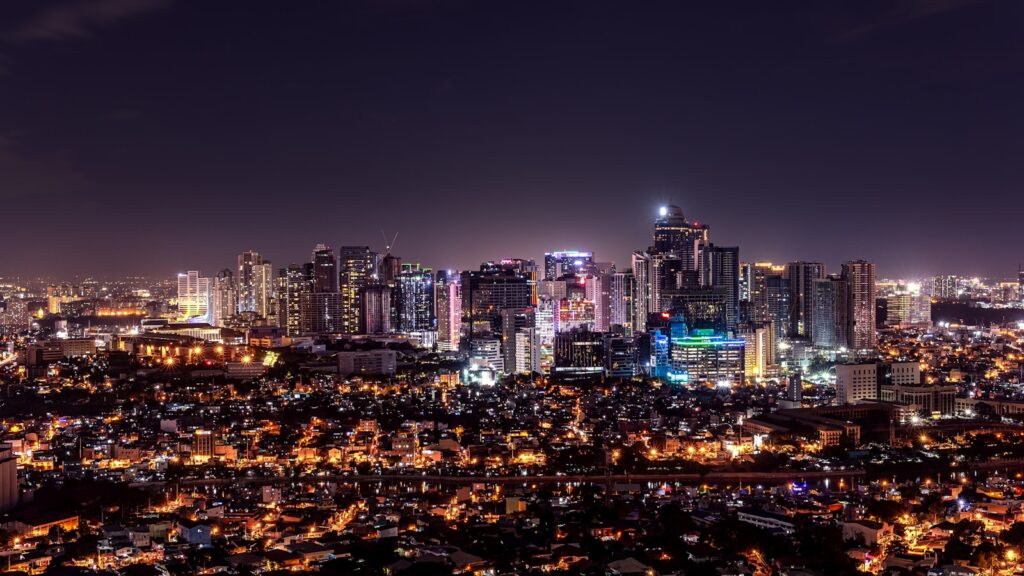
Metro Manila is a conurbation of seventeen cities and municipalities with a combined population of over thirteen million, making it one of the densest urban environments in the world. For expats whose relocation is driven by employment, business, or the need for comprehensive urban infrastructure, it is the default and in many cases the only realistic base.
Within Metro Manila, the expat experience varies dramatically by neighbourhood:
- Makati — the historic heart of Manila’s corporate and expat community. The CBD is dense with office towers, luxury malls (Greenbelt, Glorietta, Power Plant), international restaurants, and high-rise condominiums. The residential streets of Bel-Air and San Antonio Village provide a quieter complement to the CBD energy. Makati is the most established expat zone in the Philippines and the infrastructure reflects it.
- Bonifacio Global City (BGC) — a planned urban development in Taguig that has become the preferred address for younger expats and corporate professionals. Cleaner, more walkable than most of Metro Manila, with wide tree-lined streets, good cycling infrastructure, a concentration of international restaurants and cafés, and the High Street and Uptown Mall shopping areas. BGC has become arguably the most liveable urban environment in the Philippines by expat consensus.
- Quezon City — the largest city in Metro Manila by area and population, offering more residential space at lower costs than Makati or BGC. Less polished but more authentically Filipino, with good food options and a large middle-class residential infrastructure.
- Pasig and Ortigas — another corporate and residential hub, somewhat more affordable than Makati, with the Ortigas CBD and the massive SM Megamall anchoring the area’s commercial life.
Cebu City and Mactan-Cebu
Cebu is the Philippines’ second-largest city and the most significant expat destination outside Metro Manila. Smaller, less frantic, and considerably more affordable than the capital, Cebu offers genuine urban amenities good private hospitals, international schools, a growing tech and BPO sector, reliable internet, and an established expat community without the traffic and density that makes Manila challenging for many people.
The Mactan-Cebu area the island connected to Cebu City by bridge, home to the international airport has a strong beach lifestyle component that distinguishes it from purely urban expat destinations. Cebu’s IT Park district has become a centre for the digital nomad and remote working community, with coworking spaces, cafés, and an active social scene built around the growing technology sector.
Davao City and Mindanao
Davao is consistently cited as one of the Philippines’ safest and most liveable cities, with a strong local government, good basic infrastructure, and a lower cost of living than either Manila or Cebu. It serves as the gateway to Mindanao’s natural attractions Mount Apo (the country’s highest peak), the Samal Island resort area, and the wider Mindanao countryside.
The expat community in Davao is smaller than Manila or Cebu but growing, attracted primarily by the lower costs, the relative safety, and the quality of daily life in a city that has invested meaningfully in public infrastructure.
It is worth noting that parts of Mindanao outside Davao have experienced conflict and instability checking current travel advisories from your home country embassy before travelling beyond Davao City is always advisable.
Islands — Boracay, Siargao, El Nido, and Puerto Galera
For the digital nomad or lifestyle migrant drawn specifically by the island experience, the Philippines offers options that are genuinely among the world’s most beautiful.
Boracay has the most developed infrastructure of the major resort islands, with fast internet, good restaurants, and a well-established expat community rebuilt and improved after the government’s 2018 rehabilitation closure. Siargao has become the Philippines’ premier surfing destination and a growing digital nomad hub, with improving internet infrastructure and a strong community of remote workers.
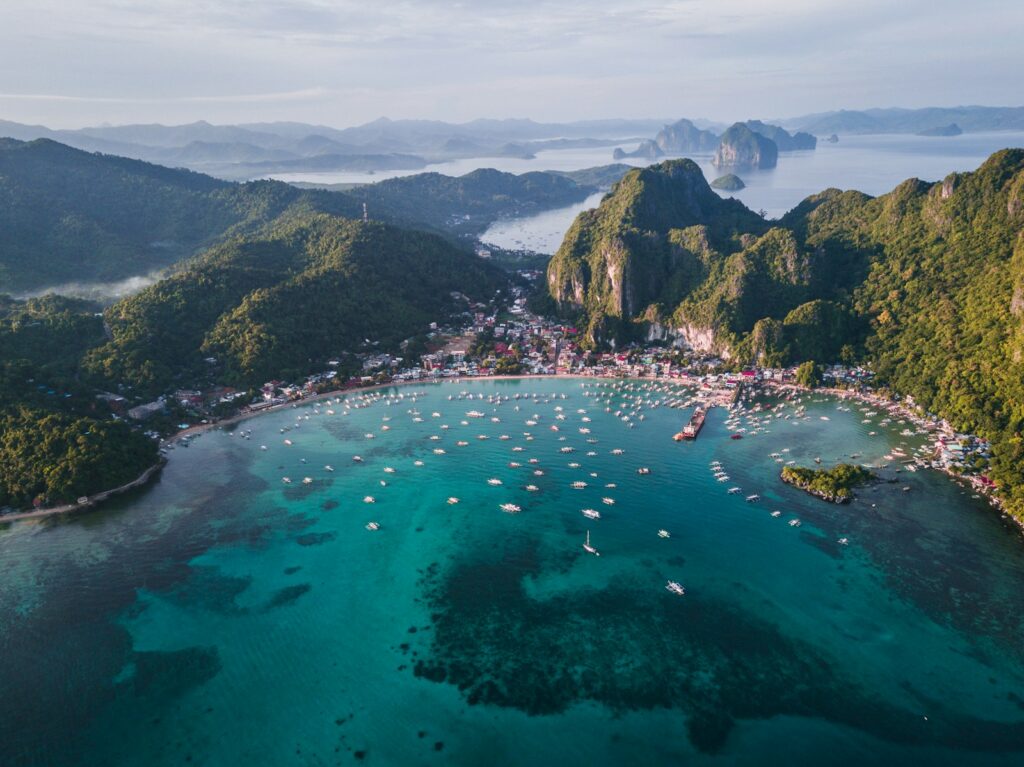
El Nido in Palawan offers extraordinary natural scenery the limestone karst islands and turquoise lagoons are world-class but infrastructure remains limited and suited primarily to those who can accept lower connectivity in exchange for extraordinary environment. Puerto Galera near Manila is popular for its accessibility from the capital and its dive sites.
The honest reality of island living in the Philippines is that infrastructure outside Boracay is genuinely limited, power outages occur, and high-speed internet reliability requires verification before committing to a specific location for productive remote work.
Visas and Long-Term Stay Options in the Philippines
The Philippines’ visa framework offers several well-defined long-term pathways, administered primarily by the Bureau of Immigration (BI) and for retirees the Philippines Retirement Authority (PRA). Understanding which category applies to your situation before you arrive prevents the administrative complications that catch many expats off guard.
Tourist Visa (9A) and Extensions
Most Western nationalities including US, UK, Australian, Canadian, and EU citizens receive a 30-day visa-free entry stamp on arrival. This can be extended at Bureau of Immigration offices for up to a cumulative 36 months from the date of initial entry, with extensions issued in increments of one or two months.
The BI’s extension process is functional but administratively involved for longer stays, which is why most long-term expats establish a formal visa category rather than relying on tourist extensions.
Special Resident Retiree’s Visa (SRRV) — Philippines Retirement Authority
The SRRV is the Philippines’ flagship long-term residency product for foreign retirees and one of the more accessible retirement visa programmes in Southeast Asia. Administered by the Philippines Retirement Authority, the SRRV provides indefinite residency (not requiring periodic renewal) with multiple-entry privileges.
The main SRRV categories and their requirements are:
| SRRV Category | Minimum Age | Minimum Deposit (USD) | Key Features |
|---|---|---|---|
| SRRV Smile | 35+ (with pension) / 50+ (without pension) | $10,000 | Basic programme, pension or deposit proof |
| SRRV Classic | 50+ (with pension) / 35+ (without) | $10,000 – $20,000 | Most popular category, flexible age tiers |
| SRRV Human Touch | 35+ | $10,000 | For those with medical conditions requiring care |
| SRRV Courtesy | 50+ (former Filipino / spouse) | $1,500 | Reduced deposit for qualifying applicants |
The required USD deposit is held in a Philippine bank in a peso time deposit or investment account and generates interest that accrues to the holder it is not a fee but a maintained deposit. The deposit can be used (with PRA approval) to purchase a condominium unit, pay for long-term accommodation, or fund retirement-linked investments.
SRRV holders are exempt from exit clearance requirements, enjoy duty-free importation of household goods on initial entry, and can bring dependent spouses and children under 21 under the same visa. The SRRV is a genuinely strong product for qualifying retirees and deserves serious consideration as an alternative to the annual renewal cycle of most other long-stay pathways.
Digital Nomad Visa — 2025-2026 Rollout
The Philippines began rolling out a formal digital nomad visa framework in 2025, providing a one-year multiple-entry visa for remote workers and digital nomads who earn their income from employers or clients based outside the Philippines.
Key requirements as currently defined include:
- Proof of remote employment or freelance income from non-Philippine sources, with a minimum annual income of approximately $24,000 USD
- Comprehensive health insurance covering the Philippines
- Clean criminal background record from home country
- Valid passport with at least 12 months of validity
The digital nomad visa is intended to be renewable annually and provides a clear legal framework for those who have historically navigated long-term Philippines stays through tourist visa extensions. Verify current requirements through the Bureau of Immigration or the Department of Tourism, as the programme specifics continue to be refined.
The Complete Guide
Work Visa (9G) and Alien Employment Permit (AEP)
Foreign nationals employed by Philippine companies require a 9G pre-arranged employment visa sponsored by their employer, combined with an Alien Employment Permit (AEP) issued by the Department of Labor and Employment (DOLE).
The AEP certifies that no qualified Filipino is available for the position and must be renewed annually. The employer typically manages the bulk of the application process.
Family-Based and Spouse Visas
Foreign nationals married to Filipino citizens can apply for a non-quota immigrant visa (13A) that provides permanent residency linked to the marriage. It is initially provisional for two years, converting to permanent status on confirmation of the ongoing marriage. This is one of the most straightforward long-term residency pathways for those with Filipino spouses.
Cost of Living in the Philippines: What to Budget
The Philippines offers genuinely low cost of living across most of the country, with Metro Manila’s premium BGC and Makati areas at the higher end of a range that drops substantially once you move to Cebu, Davao, or the provinces.
| Category | Manila — Makati / BGC (Monthly) | Cebu City (Monthly) | Davao City (Monthly) | Boracay / Island Areas (Monthly) |
|---|---|---|---|---|
| Rent — 1 bed condo / apartment | PHP 25,000 – 65,000 ($440 – $1,145) | PHP 15,000 – 35,000 ($264 – $617) | PHP 12,000 – 28,000 ($212 – $494) | PHP 18,000 – 45,000 ($317 – $793) |
| Rent — 2 bed condo / apartment | PHP 40,000 – 100,000 ($705 – $1,763) | PHP 22,000 – 55,000 ($388 – $970) | PHP 18,000 – 42,000 ($317 – $741) | PHP 25,000 – 60,000 ($441 – $1,058) |
| Utilities (electricity, water) | PHP 3,000 – 8,000 ($53 – $141) | PHP 2,500 – 7,000 ($44 – $123) | PHP 2,000 – 6,000 ($35 – $106) | PHP 2,500 – 7,500 ($44 – $132) |
| Groceries (couple, mix local/imported) | PHP 8,000 – 20,000 ($141 – $352) | PHP 6,000 – 15,000 ($106 – $264) | PHP 5,000 – 13,000 ($88 – $229) | PHP 7,000 – 18,000 ($123 – $317) |
| Eating out (mix local and western) | PHP 6,000 – 18,000 ($106 – $317) | PHP 4,000 – 12,000 ($70 – $212) | PHP 3,500 – 10,000 ($62 – $176) | PHP 5,000 – 16,000 ($88 – $282) |
| Transport (Grab, jeepney, MRT) | PHP 3,000 – 8,000 ($53 – $141) | PHP 2,000 – 6,000 ($35 – $106) | PHP 1,500 – 5,000 ($26 – $88) | PHP 2,000 – 6,000 ($35 – $106) |
| Mobile data and internet | PHP 1,000 – 2,500 ($18 – $44) | PHP 900 – 2,000 ($16 – $35) | PHP 800 – 2,000 ($14 – $35) | PHP 1,000 – 2,500 ($18 – $44) |
| International health insurance | PHP 4,500 – 11,000 ($79 – $194) | PHP 4,500 – 11,000 ($79 – $194) | PHP 4,500 – 11,000 ($79 – $194) | PHP 4,500 – 11,000 ($79 – $194) |
(Exchange rates approximate at PHP 56-57 per USD verify current rates through Bangko Sentral ng Pilipinas)
A single person living comfortably in BGC Manila a decent one-bedroom condo, regular restaurant meals at a mix of local and international establishments, health insurance, Grab for transport, and entertainment can expect to spend between $1,200 and $2,200 USD per month.
In Cebu, the equivalent lifestyle costs $800 to $1,500. In Davao, the same quality of life is achievable for $600 to $1,200 USD. Island locations like Boracay sit somewhere between Cebu and Manila depending on season and specific lifestyle choices.
Electricity costs deserve specific attention. The Philippines has among the highest electricity tariffs in Southeast Asia, and air conditioning non-negotiable for comfort in the tropical heat makes electricity the dominant utility cost. Budget PHP 3,000 to 8,000 per month for electricity alone in an air-conditioned Manila or Cebu apartment.
Street food and local carinderias (small casual eateries) remain one of the Philippines’ great values. A heaped plate of sinangag at tapsilog (garlic rice, cured beef, and egg) costs PHP 80 to 150.
Adobo, sinigang, kare-kare, and the full range of Filipino rice-based meals at local eateries rarely exceeds PHP 100 to 200. Even in the BGC café and restaurant scene, a good meal at a mid-range Filipino or international restaurant costs PHP 400 to 800 a fraction of equivalent costs in Western cities.
The Philippine peso (PHP) is managed by the Bangko Sentral ng Pilipinas and has shown moderate volatility against the dollar in recent years. For expats converting regular income from abroad, services like Wise provide significantly better exchange rates than Philippine bank international transfer services.
Finding Housing: Renting and Buying in the Philippines
The Philippines’ rental market is well-developed and generally accessible for foreign nationals, with the condominium sector in Manila and Cebu specifically configured to serve the international market.
Key points for renters:
- The primary property listing platforms are Lamudi Philippines, Property24 Philippines, and OLX Philippines. Facebook Marketplace and expat-specific Facebook groups Manila Expats Housing, Cebu Expats, BGC Community Board are also active and often provide more current listings than formal portals.
- Standard rental contracts in the Philippines run for one year, with most landlords requiring two months’ advance rent plus two months’ security deposit at contract signing meaning four months of rent outlay before move-in.
- The Rent Control Act of the Philippines provides tenant protections for residential units below a certain monthly rent threshold, including caps on annual rent increases. Units above the threshold are subject to free market terms.
- Utilities electricity (Meralco in Metro Manila and parts of Luzon, various regional electric cooperatives elsewhere), water (MWSS in Metro Manila), and internet are billed separately from rent and set up independently by the tenant.
- Air conditioning units are standard in condominiums and most apartments marketed to the expat community. Verify whether they are included in a furnished unit or require separate arrangement.
Typical housing options by type:
- Condominiums are the dominant expat housing form in Metro Manila and Cebu, ranging from studio units starting around PHP 15,000 per month to premium high-rise apartments in BGC at PHP 80,000 and above. Major developers include Ayala Land (Alveo and Avida), SMDC, Megaworld, DMCI, and Federal Land.
- Townhouses and houses in gated subdivisions (villages) are popular with families and those who need more space than a condo provides. Alabang and Las Piñas in the south of Metro Manila, and the Ateneo corridor in Quezon City, are established residential areas with a significant expat presence.
- Serviced apartments and apartelles offer hotel-like facilities with longer-stay pricing popular with new arrivals during the initial settling-in period before a longer-term lease is established.
- Island accommodations on Boracay, Siargao, and similar destinations range from simple fan-cooled rooms near the beach to well-appointed beachfront villas, with pricing typically higher in peak tourist season (December to April in most Visayan islands).
Buying property in the Philippines:
Foreign nationals cannot own land in the Philippines this is a constitutional restriction similar to Indonesia’s. The two primary legal pathways for foreign property participation are:
- Condominium freehold ownership — the Condominium Act of the Philippines (Republic Act 4726) permits foreign nationals to own condominium units outright, provided that foreign-owned units do not exceed 40% of the total floor area of the building. This is the most legally secure form of property ownership available to foreigners in the Philippines and the standard vehicle for foreign property investment.
- Long-term leasehold — land can be leased by foreigners for an initial period of 50 years, renewable for a further 25 years. This provides long-term usage rights for house and lot properties but does not confer ownership.
As in other Southeast Asian countries, nominee arrangements where a Filipino national holds land title on a foreigner’s behalf carry serious legal and financial risk and should be firmly avoided.
Engaging an independent Philippine property lawyer (not the developer’s or agent’s recommended counsel) for due diligence and contract review before any property transaction is essential. The Integrated Bar of the Philippines provides a directory of registered practitioners.
The Complete Guide
Healthcare and Medical Services in the Philippines
The Philippines’ private healthcare sector in Metro Manila and Cebu delivers care at a standard that is genuinely competitive by Southeast Asian standards, at costs that are a fraction of equivalent treatment in the United States or Australia.
For many American expats in particular, the combination of English-speaking physicians, familiar medical protocols, and dramatically lower costs makes the Philippines’ healthcare one of its most compelling practical advantages.
The public hospital system administered by the Department of Health provides care for the general population and is accessible to foreigners in emergency situations, but the resource constraints are significant and the private sector is the practical choice for virtually all expat healthcare needs.
Leading private healthcare providers serving expats:
- St. Luke’s Medical Center — widely regarded as the Philippines’ premier private hospital, with flagship facilities in BGC and Quezon City. JCI-accredited, with comprehensive specialist capabilities and English-speaking physicians across all major disciplines. stlukes.com.ph
- Makati Medical Center — established private hospital in the heart of the Makati CBD, long-serving the Makati expat community. Strong general and specialist capability.
- The Medical City — large private network with the primary facility in Pasig (Metro Manila) and branches across the country. JCI-accredited flagship.
- Cebu Doctors’ University Hospital — the leading private hospital in Cebu, with good general medical capabilities and English-speaking staff serving the Cebu expat community
- Chong Hua Hospital (Cebu) — another well-regarded Cebu private facility popular with the local and expat population
PhilHealth the Philippines’ national health insurance programme is accessible to foreign nationals with long-term residency status (SRRV holders, 13A visa holders, and work permit holders can enrol as voluntary members).
PhilHealth contributions provide partial coverage for hospitalisation at accredited facilities and reduce the out-of-pocket cost of inpatient care. Enrolment is worth pursuing for long-term residents as it reduces healthcare costs even when combined with private international insurance.
International health insurance is essential for all expats in the Philippines. PhilHealth coverage alone is insufficient for the full range of expat healthcare needs, and the cost of serious hospitalisation at private Manila hospitals while lower than in the US is significant enough to make adequate supplementary insurance non-negotiable.
Recommended providers include Cigna Global, Pacific Cross (strong regional network coverage), AXA International, Bupa Global, and SafetyWing for budget-conscious expats with higher risk tolerance. Annual premiums for an individual in their 40s typically run $900 to $2,500 depending on coverage level, deductible, and whether evacuation is included.

Taxes, Banking, and Money in the Philippines
The Philippine Tax System
The Philippines taxes residents on worldwide income, with tax residency generally triggered by residing in the Philippines for 183 days or more in a calendar year. The Bureau of Internal Revenue (BIR) administers the system.
Philippine personal income tax for residents operates on a progressive scale reformed under the TRAIN (Tax Reform for Acceleration and Inclusion) Law:
| Annual Taxable Income (PHP) | Tax Rate |
|---|---|
| 0 – 250,000 (~$4,400) | 0% |
| 250,001 – 400,000 (~$7,053) | 15% on excess over 250,000 |
| 400,001 – 800,000 (~$14,106) | PHP 22,500 + 20% on excess over 400,000 |
| 800,001 – 2,000,000 (~$35,265) | PHP 102,500 + 25% on excess over 800,000 |
| 2,000,001 – 8,000,000 (~$141,062) | PHP 402,500 + 30% on excess over 2,000,000 |
| Above 8,000,000 | PHP 2,202,500 + 35% on excess over 8,000,000 |
SRRV holders enjoy a specific tax advantage: income earned from sources outside the Philippines is not subject to Philippine income tax, provided it is not remitted and used within the country for business purposes. This mirrors the treatment applied to most long-stay foreign retirees and makes the SRRV particularly attractive for those with pension or passive income from abroad.
Digital nomad visa holders earning exclusively from non-Philippine sources are similarly not expected to be liable for Philippine income tax on that foreign-source income, though the specific regulatory framework for the digital nomad visa is still being formally codified professional tax advice is essential before making plans that depend on this treatment.
The Philippines has double taxation agreements with approximately 43 countries including the United States, United Kingdom, Australia, Germany, and most major expat-origin nations. US citizens retain their worldwide income tax obligations to the IRS regardless of residency, requiring specialist US expat tax advice firms including Bright!Tax and Greenback Expat Tax Services specialise in this area.
Banking in the Philippines
Opening a Philippine bank account is straightforward for long-term visa holders. The major banks serving the expat community include:
- BDO Unibank — the Philippines’ largest bank by assets, with the most extensive branch and ATM network and reliable digital banking through BDO Online. bdo.com.ph
- BPI (Bank of the Philippine Islands) — one of the oldest and most trusted Philippine banks, with strong digital banking (BPI Online app) and good English-language service
- Metrobank — major private bank with broad branch network and solid institutional reputation
- Security Bank — mid-size bank popular with expats for its service quality and less crowded branches
- RCBC (Rizal Commercial Banking Corporation) — growing digital banking capabilities, popular with the expat community in Makati
Philippines’ digital payment ecosystem has matured rapidly and transformed daily transactions:
- GCash — the dominant mobile wallet in the Philippines, with over 90 million registered users. Accepts bill payments, peer-to-peer transfers, and merchant QR payments across the country. gcash.com
- Maya (formerly PayMaya) — GCash’s main competitor, offering similar functionality with a virtual and physical Mastercard. Expats can open a basic Maya account with just a passport.
- PayMaya — now rebranded under Maya, maintains its merchant acceptance network
For the initial period before a Philippine bank account is established, Wise and Revolut provide international debit cards accepted at Philippine ATMs and merchants, with better exchange rates than traditional bank card withdrawals.
Work, Teaching, and Remote-Work Opportunities
The Philippines’ employment landscape for expats operates across several distinct sectors, each with its own legal framework and market dynamics.
Common expat employment paths:
- English teaching in international schools is the most established professional pathway for qualified educators. Metro Manila’s international school sector includes institutions such as the International School Manila, Brent International School, and the British School Manila, paying internationally competitive salaries in USD that compare very favourably to the local cost of living. Cebu, Davao, and other major cities have their own international school markets at slightly lower salary points.
- BPO and call-centre sector the Philippines is the world’s leading English-language BPO destination, and the sector employs both Filipino staff and some foreign nationals in management, training, and specialist roles. The Manila BPO corridor along Ayala Avenue and in BGC is the centre of this industry.
- Startup and tech sector a growing ecosystem centred in BGC and the Cebu IT Park is creating opportunities for technically qualified expats, particularly in product management, software development, and growth marketing.
- NGO and development sector international organisations including UN agencies, bilateral missions, and major international NGOs maintain significant Manila operations with roles for qualified development professionals.
- Remote work and digital nomad income for those using the digital nomad visa to live in the Philippines while working for foreign employers or clients, the combination of very low overheads, English-language environment, and improving internet infrastructure makes the Philippines a genuinely compelling base.
Coworking spaces:
- Clock In (BGC and Makati) well-regarded coworking network serving the Manila digital nomad and startup community
- KMC Solutions (multiple Manila locations) established flexible office and coworking operator with strong expat clientele
- Cebu IT Park itself functions as a de facto coworking ecosystem, with numerous café-coworking hybrids and formal coworking spaces within walking distance of each other
- Outpost Siargao one of the better-equipped island coworking options for those choosing a more remote digital nomad lifestyle
Day-to-Day Life: Language, Culture, and Integration
The Philippines’ most immediately obvious advantage for English-speaking expats the near-universal English proficiency can, paradoxically, become a subtle obstacle to deeper integration if it removes the motivation to engage with Filipino language and culture.
Filipino (Tagalog-based) and the regional languages Cebuano in the Visayas and Mindanao, Ilocano in northern Luzon, and over 170 other languages across the archipelago represent a cultural depth that English-only engagement never fully accesses.
Learning basic Filipino is not difficult for English speakers the language uses the Latin script, has no tones, and shares a significant number of borrowed Spanish and English words that feel familiar from the first encounter. Basic conversational Filipino is achievable within one to two months of consistent study and is received by Filipinos with warmth and genuine delight.
Resources for learning Filipino:
- University of the Philippines Open University offers language programmes accessible online
- Private language schools in Manila and Cebu offer structured Filipino instruction for foreigners
- Apps including Pimsleur (Filipino module), Duolingo, and Glossika provide accessible daily practice
- Language exchange through Tandem or HelloTalk connects you with Filipino speakers learning English a mutually beneficial arrangement at no cost
Culturally, the Philippines is shaped by a unique combination of indigenous Austronesian traditions, 300 years of Spanish colonial influence (which embedded Catholicism so deeply that the Philippines is one of the world’s most devout Catholic nations), and American colonial and post-colonial cultural ties that explain both the English language and many Filipino cultural reference points that feel immediately familiar to Americans and Australians.
The concept of hiya (a form of social shame or embarrassment that governs public behaviour) and pakikisama (the value of getting along with the group) shape social interactions in ways worth understanding early.
Direct confrontation is generally avoided; concerns are communicated indirectly. Maintaining face for everyone in an interaction is a social priority. These are not obstacles to genuine relationship they are simply a different and equally sophisticated framework for human connection.
Key festivals and public holidays expats should know:
- Christmas Season the Philippines claims the world’s longest Christmas season, beginning with the “BER months” (September) and running through January. The cultural enthusiasm for Christmas lights, carols, family gatherings, the extraordinary Simbang Gabi nine-day pre-Christmas dawn masses is infectious and one of the most distinctive aspects of life in the Philippines.
- Sinulog Festival (Cebu, January) one of the Philippines’ most spectacular festivals, honouring the Santo Niño with street dancing, elaborate costumes, and processions that draw visitors from across the country.
- Fiesta season every barangay (neighbourhood) and municipality celebrates its patron saint’s feast day, creating a rolling calendar of local festivals throughout the year that provides genuine access to community life.
- Eid al-Fitr and Eid al-Adha national public holidays acknowledging the Philippines’ significant Muslim population, particularly in Mindanao and the Bangsamoro Autonomous Region.
Joining expat Facebook groups Manila Expats, BGC Community, Cebu Expats, and island-specific groups provides the most current and practically useful community knowledge. Most long-term Philippines expats are generous with advice and their accumulated knowledge about visa agents, landlords, schools, and healthcare is genuinely valuable.
Transport, Safety, and Environment
Getting Around the Philippines
Transport in the Philippines ranges from Metro Manila’s improving rail network to the gloriously chaotic jeepney culture that defines Filipino road transport, with ferry connections linking the islands and domestic aviation serving the broader archipelago.
Within Metro Manila:
- MRT-3 (Metro Rail Transit Line 3) — runs along EDSA, the main north-south corridor of Metro Manila, connecting Quezon City to Pasay. Heavily used and often crowded during peak hours, but dramatically faster than road transport in the corridor. dot.gov.ph/mrt3
- LRT-1 and LRT-2 (Light Rail Transit) — the LRT lines extend Manila’s rail coverage, with Line 1 running from Pasay to Cavite and Line 2 covering the east-west Recto to Antipolo corridor
- Grab — the dominant ride-hailing app, essential for any journey not covered by rail. grab.com/ph
- Jeepney — the iconic elongated jeeps that have served as Manila’s primary public transit for decades. Dramatically cheap (PHP 13 minimum fare), culturally essential, and navigable once you learn the routes though the transition to modern e-jeepneys is ongoing
- UV Express — shared vans serving specific routes, faster than jeepneys and useful for medium-distance trips
Between cities and islands:
- Domestic flights — essential for inter-island travel across the archipelago. Philippine Airlines, Cebu Pacific, and AirAsia Philippines serve the main routes. Cebu Pacific in particular offers very competitive fares when booked in advance. cebupacificair.com
- 2GO Travel — the primary inter-island ferry operator, connecting Manila to Cebu, Davao, and numerous other destinations. Slower and more scenic than flying, with passenger accommodation ranging from economy deck to air-conditioned cabins.
- RORO ferries — roll-on, roll-off ferries connecting shorter island routes, widely used for both passenger and vehicle transport
Safety
The Philippines’ safety situation requires nuanced assessment rather than either dismissal or exaggeration. For expats in Metro Manila, Cebu, and Davao within established expat-friendly areas, the practical safety picture is generally manageable with ordinary awareness.
The issues most commonly affecting foreign residents are:
- Traffic accidents — the most significant practical safety risk for most Philippines-based expats, particularly those using motorcycles for transport. Road fatality rates are high.
- Petty theft and pickpocketing — common in crowded public transport, markets, and tourist areas. Keeping phones and valuables secure in public, using inside pockets, and avoiding displays of expensive equipment reduces risk substantially.
- Scams — taxi commission scams, money-changing fraud, and online scams targeting expats. Using Grab instead of flagging street taxis, using official cambio services for currency exchange, and applying healthy scepticism to online transactions addresses most of the risk.
- Parts of Mindanao beyond Davao — travel to certain areas of Mindanao and the Sulu Archipelago carries genuine security risks. Always check the latest travel advisories from your home country embassy before travelling beyond established safe zones.
Your home country embassy the US Embassy in Manila, British Embassy Manila, and relevant missions maintains current safety advisories and emergency contact information.
Climate and Environment
The Philippines has a tropical climate with a pronounced wet season (broadly June to October, though timing varies by region) and a dry season (November to May). Typhoons are a real and annual consideration the Philippines experiences an average of 20 typhoons per year, with the most active season between July and October. Luzon and the eastern Visayas are the most frequently affected areas; Davao in Mindanao lies outside the main typhoon belt.
Preparedness for typhoons knowing evacuation routes, maintaining emergency supplies, and following advisories from PAGASA (the Philippine Atmospheric, Geophysical and Astronomical Services Administration) is part of responsible life in the Philippines, not a reason to avoid it.
The Filipino community’s resilience and mutual support during and after typhoon events is one of the country’s most striking and admirable cultural characteristics.
Metro Manila’s air quality is a genuine concern, driven by vehicle emissions and industrial activity. Monitoring through IQAir and investing in a HEPA air purifier for home use is advisable for long-term Manila residents, particularly those with respiratory sensitivities.
Drinking tap water in the Philippines is not safe in most locations. Bottled water (Absolute and Wilkins are the most widely available national brands) or a quality filtration system is essential.

Bureaucracy, Pitfalls, and Expat Mistakes to Avoid
The Philippines’ immigration and administrative system is functional but characterised by paperwork volume, processing delays, and occasional rule changes that catch unprepared expats off guard. Understanding where the genuine friction points lie is essential for planning a sustainable long-term stay.
Common bureaucratic friction points:
- Bureau of Immigration offices in Metro Manila handle very high application volumes, and appointment wait times for SRRV applications, visa extensions, and other services can be significant
- Document requirements for visa applications and extensions are specific and must be met precisely incomplete applications are returned rather than queried
- The Annual Report requirement all foreigners holding long-stay permits must report annually to the BI is a straightforward but easily overlooked administrative obligation that carries fines for non-compliance
- Work permit (AEP) requirements are enforced, and the definition of work in Philippine immigration law is broader than many expats assume
The most consequential expat mistakes:
- Allowing your tourist extension to lapse. The BI imposes fines for overstay starting from the first day beyond the authorised period, with escalating consequences for longer overstays including detention and deportation for serious cases. Track your authorised stay carefully and extend well before expiry.
- Relying indefinitely on tourist extensions for a long-term stay. While the Philippines technically permits tourist extensions for up to 36 months cumulative, immigration officers exercise discretion on continued extensions for those who appear to be using the system as an indefinite residency workaround. Those planning to stay long-term should establish a proper visa category SRRV, digital nomad visa, or work-based visa.
- Signing a lease without written deposit terms. Verbal agreements about deposit return conditions are difficult to enforce. Ensure any lease agreement specifies the deposit amount, the conditions for return, and the timeline explicitly.
- Underestimating initial setup costs. The combination of four months’ rent (two advance plus two deposit), initial household setup, health insurance setup, and administrative fees for visa processing means the first month in the Philippines costs significantly more than subsequent months. Budget at least $2,000 to $4,000 above your regular monthly budget for the setup period.
- Skipping international health insurance. Even with PhilHealth access, the cost of serious hospitalisation at a major Manila private hospital can reach hundreds of thousands of pesos for complex conditions. Adequate international insurance is non-negotiable.
- Buying land in a nominee arrangement. Constitutional prohibition on foreign land ownership is strictly enforced and nominee arrangements carry documented legal and financial risk. Always structure property involvement through the legally sound condominium freehold pathway.
The Complete Guide
Checklist: Step-by-Step Before You Move to the Philippines
Six to three months before departure:
- Determine your visa pathway: SRRV for qualifying retirees, digital nomad visa for remote workers meeting the income threshold, 9G work visa for locally employed workers, or 13A for those with Filipino spouses
- Gather required documents: passport with at least 18 months of validity, passport photographs, criminal background check from your home country (authenticated and apostilled), proof of income or pension, medical certificate, and any visa-specific financial documentation
- For SRRV applicants: open correspondence with the Philippines Retirement Authority and begin the document preparation process the SRRV requires comprehensive documentation and professional facilitation is strongly recommended
- Research target city and neighbourhood: based on your lifestyle priorities, required infrastructure, and proximity to healthcare and schools
- Arrange comprehensive international health insurance: covering the Philippines do not arrive without this, as it is a visa requirement for SRRV and digital nomad applications and a practical essential regardless
- Begin the visa application: through your nearest Philippine embassy or consulate if applying from abroad allow six to ten weeks for processing in most locations
One to two months before departure:
- Book temporary accommodation for the first four to eight weeks serviced apartments and apartelles in Makati and BGC, Airbnb in Cebu, or guesthouses in island destinations allow time for in-person neighbourhood research before committing to a longer lease
- Research international schools if relocating with children Manila’s most sought-after international schools have waiting lists and early contact is essential
- Arrange prescription medications for at least three months’ supply most common medications are available in Philippine pharmacies but specific brands and formulations vary
- Join the key expat Facebook groups for your target city Manila Expats, BGC Community, Cebu Expats, and location-specific housing groups are active sources of current, practical knowledge
- Set up Wise or a similar service for receiving income from abroad and converting to PHP the rate differential versus Philippine bank international transfer services is significant over time
- Prepare a cash or easily accessible buffer of $3,000 to $5,000 USD for initial setup costs
Arrival week:
- Obtain a local SIM card at the airport Globe and Smart are the two main networks; both offer competitive data plans. A monthly unlimited data SIM costs PHP 299 to 799 ($5 to $14). Globe’s data coverage is generally stronger in Metro Manila; Smart performs better in some provincial areas.
- Download and set up GCash and Maya before or immediately after arrival most Philippine merchants, utilities, and government services now accept these platforms
- Begin the visa extension or SRRV processing immediately upon arrival do not let the initial tourist entry stamp approach expiry without the process underway
- Open a bank account at BDO or BPI once your visa status is confirmed bring your passport, visa documentation, and proof of Philippine address
- Begin the neighbourhood walk-around in your target area visiting apartments and condominiums in person, talking to expats in cafés and coworking spaces, and absorbing ground-level knowledge that no online research can substitute
- Connect with a reputable Manila or Cebu visa agent for SRRV or other long-stay processing recommendations circulate reliably in the expat Facebook community
Conclusion — Is Moving to the Philippines Right for You in 2026?
The Philippines in 2026 is a country that genuinely rewards those who approach it on its own terms. The traffic in Metro Manila is real and requires either strategic neighbourhood selection or genuine patience. The bureaucracy operates at its own pace and resists urgency. The typhoon season demands preparedness rather than anxiety. These are real features of life in the Philippines, not minor footnotes.
And yet. The English-language immersion that makes daily life instantly accessible. The Filipino warmth and hospitality the bayanihan spirit of community support, the infectious enthusiasm for Christmas, the family-centredness that makes the Philippines one of the most genuinely people-oriented societies in Asia.
The extraordinary value that a Western income delivers across almost every spending category. The island diversity that means your weekend options range from surfing in Siargao to diving in Tubbataha to hiking in the Cordilleras. The private healthcare sector that delivers quality care in English at costs that American expats find almost implausibly low.
For retirees drawn by the SRRV’s indefinite residency and the English-language healthcare environment. For digital nomads who want low overheads, fast internet in major cities, and a built-in English-speaking social world. For families attracted by international schools and a culture that places children at the centre of social life.
For entrepreneurs who see opportunity in a market of 110 million English-speaking consumers. For all of these people, the Philippines in 2026 delivers something genuinely difficult to replicate elsewhere at anywhere near the same cost.
The paperwork is navigable. The language opens up quickly. The traffic has workarounds. And what waits beyond the early friction is a country of remarkable warmth, extraordinary natural beauty, and daily life at a cost and quality that consistently surprises and sustains the growing number of people who have chosen to call it home.